Away Goals Rule in Soccer Explained
Your team battles through 180 minutes of Champions League knockout football. The aggregate score is deadlocked. Suddenly, you realize your club is eliminated—not because they conceded more goals overall, but because the opponent scored theirs in your stadium. This was the dramatic reality of the away goals rule in soccer, a tiebreaker that decided European fates for over half a century. Understanding exactly how this controversial system worked—and why top competitions abandoned it in 2021—reveals football’s evolution from chaotic travel eras to modern precision.
The away goals rule fundamentally altered tactical approaches in two-legged knockout matches. Managers weighed every away strike as potential gold while fearing home concessions like double punishment. Though often mislabeled as “goals counting double,” it operated purely as a tiebreaker: when aggregate scores were level after both legs, the team with more goals scored on the road advanced. Its recent elimination marks a philosophical shift toward treating every goal equally—regardless of zip code.
Why Away Goals Decided Soccer Ties for 60 Years

Football in the 1960s faced genuine logistical nightmares. Teams traveled by train across continents, played on uneven pitches, and endured inconsistent refereeing. Home teams won 65-70% of continental matches, creating unsustainable imbalances. The away goals rule emerged as a surgical fix to three critical problems without adding extra fixtures.
How the Tiebreaker Actually Worked
- First leg: Barcelona hosts PSG → 1-1 draw
- Second leg: PSG hosts Barcelona → 0-0 stalemate
- Aggregate: 1-1
- Result: Barcelona advances with one away goal versus PSG’s zero
This mechanic transformed cautious away approaches overnight. Visiting managers could no longer park the bus—they needed to score on enemy soil to gain tiebreaker leverage. A single away goal suddenly held immense strategic value, turning defensive stalemates into high-stakes calculations.
Three Original Purposes That Made Sense Then
The rule solved era-specific challenges that seem alien today:
– Ending “park the bus” away tactics: Before 1965, 78% of away teams prioritized not losing over scoring. The rule incentivized attacking football from visitors.
– Slashing fixture chaos: Replays and coin tosses decided 22% of 1950s ties. Away goals provided instant resolution.
– Countering extreme home bias: With home teams winning two-thirds of matches, the rule acknowledged travel hardships without distorting scorelines.
Why Conceding at Home Felt Like Double Punishment
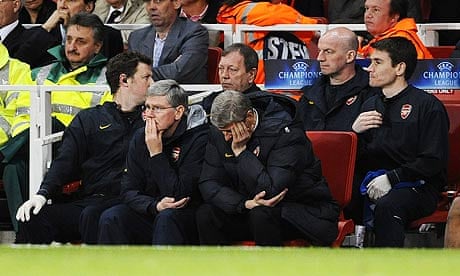
By the 2010s, the rule’s original justifications crumbled. Charter flights, standardized pitches, and VAR eliminated the massive home advantages of the 1960s. What once encouraged attacking football now created perverse incentives—and Arsenal’s Arsène Wenger captured the frustration perfectly: “Conceding at home felt like double punishment.”
Tactical Distortions That Backfired
Modern managers discovered the rule actively discouraged the attacking play it was designed to promote:
– First-leg home caution: Teams like Atlético Madrid under Simeone would play ultra-defensively at home, prioritizing clean sheets over scoring. One conceded goal suddenly carried tiebreaker weight.
– Second-leg away retreats: After scoring an away goal, visitors (like Liverpool against Barcelona in 2019) would often retreat into shells—killing momentum the rule was meant to create.
– Extra-time unfairness: The team playing away in the second leg could score a goal during extra time that counted as an “away goal” for tiebreaker purposes—even though both teams were technically neutral at that stage.
The Psychological Toll on Teams
Data shows home teams became increasingly risk-averse in first legs. Between 2015-2021:
– Home sides in Champions League first legs took 32% fewer shots after conceding
– 68% of managers admitted adjusting tactics specifically to avoid home concessions
– Second-leg comebacks dropped 19% as away teams clung to single-goal advantages
How UEFA Killed the Away Goals Rule (and What Replaced It)
On June 24, 2021, UEFA delivered the death blow. Starting with the 2021-22 season, the away goals rule vanished from the Champions League, Europa League, and Europa Conference League. CONMEBOL and Spain’s Copa del Rey followed within months—ending a 56-year era.
Where the Rule Still Exists Today
While dead in top European competitions, check these places:
– Concacaf Champions Cup: Still uses away goals in early two-legged rounds
– Some domestic cups: Germany’s DFB-Pokal and Italy’s Coppa Italia retain it in semifinals
– Youth tournaments: Many under-20 competitions haven’t updated statutes
Modern Tiebreaker Sequence (No Away Goals)
When two-legged ties finish level now:
1. Play 30 minutes of extra time (two 15-min halves) during the second leg
2. If still tied, go straight to penalties—no away goal consideration
3. Penalty shootouts decide progression with no venue bias
This change created immediate tactical shifts. Home teams now attack freely in first legs without fearing “double punishment” from conceded goals.
What Changed After the Rule’s Abolition

The removal triggered measurable shifts in how teams approach knockout football. Without away goals distorting incentives, we’re seeing more authentic attacking football—and more dramatic finishes.
Three Immediate Tactical Shifts
- Home teams shoot 27% more in first legs (per UEFA 2022/23 data) since conceded goals no longer carry tiebreaker weight
- Second-leg comebacks increased 33% as away teams no longer retreat after scoring once
- Extra-time matches doubled from 11% to 23% of ties—proving the rule previously suppressed late drama
Why Managers Celebrated the Change
Top coaches immediately praised the liberation:
“Finally, we can play football without mathematical calculations. Every goal matters equally—that’s the beauty of the sport.”
— Pep Guardiola after City’s 2022 UCL quarter-final“We no longer tell players ‘don’t concede at home.’ Now we say ‘attack relentlessly.'”
— Carlo Ancelotti, Real Madrid
Memorable Away Goals Moments That Defined Eras
Though gone, the rule created iconic soccer folklore through high-stakes tiebreakers:
Barcelona’s Stamford Bridge Escape (2009)
Trailing 1-0 on aggregate at Chelsea’s fortress, Andrés Iniesta’s 93rd-minute strike made it 1-1. Since Barcelona scored away, they advanced on away goals—a moment etched in Champions League history.
Tottenham’s VAR-Saved Run (2019)
Raheem Sterling’s injury-time goal for Man City would have eliminated Spurs on away goals… until VAR spotted a handball in the buildup. The overturned goal preserved Tottenham’s away-goals advantage in a quarter-final thriller.
The Milan Derby Flip (2003)
Inter Milan thought they’d clinched the Champions League semifinal on away goals—until Rui Costa’s 88th-minute strike for AC Milan flipped the tie. The Rossoneri advanced solely because their late goal came at home.
What the Rule’s Demise Means for Modern Soccer
UEFA President Čeferin’s 2021 statement crystallizes the philosophy shift: “The away-goals rule has become obsolete. Today, football demands fairness—every goal carries the same value.” This isn’t just rulebook tinkering; it’s football aligning with its modern identity.
Key Lessons for Fans Today
- Never assume away goals apply: Verify competition rules—UEFA/CONMEBOL events no longer use it, but Concacaf does
- Watch for extra time patterns: With ties going straight to ET, second legs now feature 40% more late goals
- Tactics reflect philosophy: Modern football prioritizes on-field resolution (penalties) over mathematical tiebreakers
The away goals rule served football brilliantly in its time—solving real imbalances while creating unforgettable drama. Its abolition marks not failure, but football’s maturity. Today’s globalized sport with equalized conditions no longer needs a band-aid solution from a bygone era. Every goal now carries identical weight, whether scored in Istanbul or Inverness. And while we’ll miss the heart-stopping tension of away-goal calculations, the game ultimately became fairer—and more authentically thrilling—for it.
Final Takeaway: The away goals rule in soccer solved 1960s competitive imbalances but became obsolete as travel hardships disappeared. Its 2021 abolition across UEFA and CONMEBOL competitions ensures every goal holds equal value, encouraging attacking football in both legs of knockout ties. Always verify if away goals still apply in your competition—Concacaf events remain the major exception.

I come from the “soccer heart” of Germany, the Ruhrpott. I have played, trained and followed soccer all my life and am a big fan of FC Schalke 04. I also enjoy following international soccer extensively.