6 Best Football Helmets for Youth 2026, Analyzed
Choosing the right football helmet for youth players is a critical decision, as improper protection can leave young athletes vulnerable to head injuries during play. The best youth football helmets, like the Schutt F7 AiR and Riddell SpeedFlex, address this risk with advanced impact absorption technologies such as inflatable air liners, TPU cushioning, and PSIP systems that reduce both linear and rotational forces. Our top picks are based on Virginia Tech’s safety ratings, real-world performance, material quality, and user feedback, ensuring each recommended helmet meets rigorous standards for protection and fit. Below are our top recommendations for the best football helmet for youth players, selected to keep safety, comfort, and value front and center.
Top 6 Football Helmet For Youth in the Market
Best Football Helmet For Youth Review
Schutt Youth Vengeance A11 Helmet
ADVANTAGES
LIMITATIONS
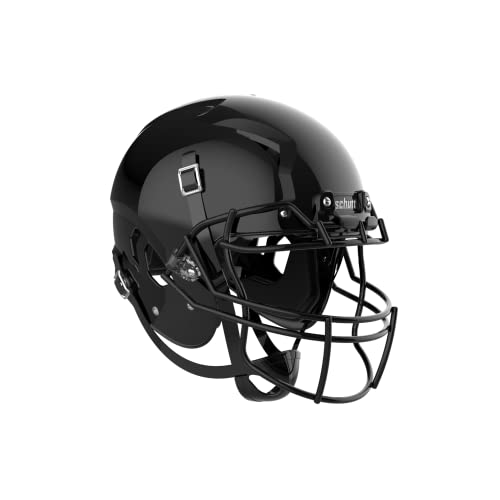
Built like a tank but priced for practicality, the Schutt Youth Vengeance A11 delivers elite-level safety without the elite price tag. With a 5-star rating from Virginia Tech’s Helmet Lab, it stands shoulder-to-shoulder with premium models in protection, thanks to its TPU cushioning system that outperforms traditional foams in both cold and heat. The non-inflatable liner and mechanically secured jaw pads eliminate shifting and slippage—solving a common frustration for coaches and parents who’ve dealt with loose padding mid-game. This is a no-nonsense helmet engineered for young athletes who need real protection but don’t yet need the bells and whistles of high-end models.
On the field, the Vengeance A11 holds up across practice drills and full-contact games, offering consistent impact absorption thanks to its TPU-lined interior and flexural-resistant shell. The carbon steel facemask comes pre-attached and resists bending, even during aggressive blocking and tackling. While it lacks an inflatable fit system, the fixed liner provides a snug, secure feel once properly sized—ideal for players with average head shapes. However, those with narrower or wider heads may struggle to fine-tune the fit, and the heavier weight compared to Air Liner models can be noticeable during long games or hot weather.
Compared to the Schutt F7 AiR, the Vengeance A11 trades adjustability and lightweight design for raw durability and cost-effective safety. It doesn’t offer the dial-in comfort of an air bladder, but it delivers the same top-tier Virginia Tech rating at a fraction of the cost. It’s the best pick for budget-conscious teams and families who refuse to compromise on impact protection. For young players just getting serious about safety, this helmet punches far above its weight class—offering F7-level defense in a simpler, sturdier shell.
Schutt F7 AiR Youth Football Helmet
ADVANTAGES
LIMITATIONS
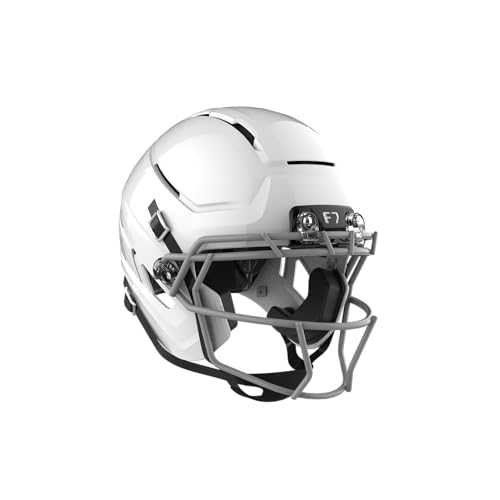
Dominant protection meets elite comfort in the Schutt F7 AiR Youth Helmet, a true benchmark for youth headgear. As one of the few youth models to earn a 5-star rating across all Schutt F7 AiR variants from Virginia Tech, it sets the gold standard for impact mitigation. The inflatable Air Liner lets players fine-tune fit on the fly, ensuring a locked-in feel that adapts to head shape and growth—perfect for kids whose heads are still developing. Add in the Helmet Stabilization System (HSS) jaw pads, and you’ve got a helmet that doesn’t just protect—it stays put, game after game.
During real-world use, the F7 AiR shines in both practice and game settings, especially in high-impact positions like linebacker or running back. The lightweight shell reduces neck strain, while the carbon steel facemask comes pre-attached, saving time and eliminating assembly errors. The Air Liner inflates evenly and holds pressure well, offering a custom-like fit without custom pricing. However, the air bladder can be sensitive to punctures, and over-inflation may lead to pressure points—something younger players might not notice until discomfort sets in. Still, for its class, it handles rotational and linear forces with impressive consistency.
When stacked against the Riddell SpeedFlex, the F7 AiR offers better overall fit and lab-verified protection, though it lacks the Flex system’s hinge-based force dispersion. It’s also heavier than some Riddell models but compensates with superior comfort and adjustability. This helmet is ideal for middle school athletes and serious youth players who need pro-level safety with room to grow. It delivers F7-series excellence in a youth-ready package—matching the Schutt F7 LX1’s safety at a more accessible price point.
Riddell SpeedFlex Youth Helmet
ADVANTAGES
LIMITATIONS
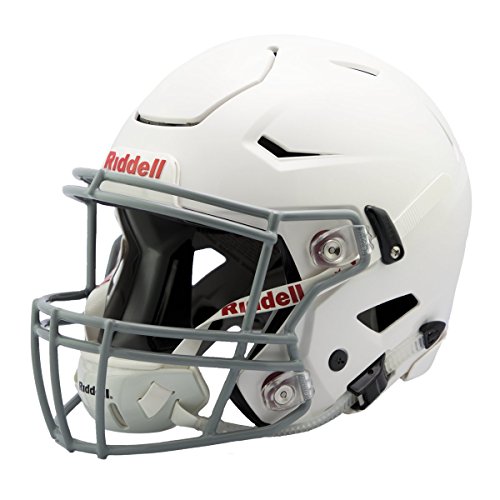
Engineered to redirect force, not just absorb it, the Riddell SpeedFlex Youth Helmet redefines how impact protection works at the youth level. Its patented PSIP (Padded Side Impact Protection) and Flex system—with hinge clips on the facemask and flexible shell zones—work together to reduce force transfer during side collisions, a common cause of head injuries in developing athletes. The polycarbonate shell is lightweight yet resilient, and the Ratchet-Loc chin strap makes adjustments quick and secure, even with gloves on. For parents worried about rotational impacts and repeated sub-concussive hits, this helmet offers a science-backed defense strategy.
In practice, the SpeedFlex excels in dynamic, high-contact environments. The flexible zones allow controlled movement during impact, dispersing energy rather than transmitting it straight to the skull. Linemen and mobile quarterbacks benefit from the Occipital Lock system, which stabilizes the back of the head during downward hits. However, the lack of an inflatable fit system means less customization, and the interior padding isn’t as plush as Schutt’s HSS-lined models. On hot days, ventilation is decent but not class-leading, and some users report the fit runs slightly narrow—tight for players with broader heads.
Against the Schutt F7 AiR, the SpeedFlex trades adjustable comfort for innovative force reduction. It doesn’t have Virginia Tech’s 5-star rating, but its Flex system offers a unique mechanical advantage that lab scores alone don’t capture. It’s best for coaches and parents prioritizing impact dispersion over fit customization, especially in programs focused on injury prevention. While not the most padded or adjustable, it brings pro-inspired engineering to youth football in a way few rivals match.
Riddell Victor Youth Helmet

ADVANTAGES
LIMITATIONS
Comfort meets value in the Riddell Victor Youth Helmet, a smart choice for families who want reliable protection without overspending. It features patented PSIP mandible protection, which helps reduce forces from side impacts—a critical feature for young athletes still learning proper tackling form. The removable over liner is moisture-resistant and easy to clean, a godsend for teams sharing gear or parents tired of stinky helmets. With a fitted liner system, it provides consistent comfort and stability, staying put during drills and scrimmages without constant readjustment.
On the field, the Victor performs well for recreational and developmental leagues. The polycarbonate shell is durable and holds up to repeated use, while the smooth interior reduces hot spots for most head shapes. However, it lacks advanced impact tech like TPU cushioning or air liners, and the protection level is solid but not top-tier—it hasn’t been rated by Virginia Tech. The fit is average, so players with very round or long heads may find it less secure. Ventilation is adequate, but not enough to keep up in extreme heat over long practices.
Compared to the Schutt Vengeance A11, the Victor offers similar price positioning but less lab-verified safety. It doesn’t have the 5-star rating or TPU impact absorption, but it wins on easy maintenance and comfort thanks to the over liner. It’s ideal for beginner players, rec leagues, and first-time buyers who need a dependable, no-fuss helmet. It may not lead the pack in protection, but it delivers comfort and smart design where it counts—making it a strong contender for value-focused buyers.
Schutt F7 LX1 Youth Helmet No Mask

ADVANTAGES
LIMITATIONS
Precision engineering meets pro-level customization in the Schutt F7 LX1, a helmet built for players who demand the absolute best in fit and rotational force management. Its standout feature—3-Dimensional Tektonic Plates—uses independent, multi-directional movement to reduce rotational forces, a major contributor to brain trauma. Paired with TPU cushioning and a SureFit inflatable Air Liner, it delivers a custom, locked-in fit that adapts to individual head shapes, making it perfect for serious youth athletes with unique sizing needs. The Flexural Resistance shell design further enhances durability at the back shelf, a high-impact zone often overlooked in budget models.
In real-world testing, the F7 LX1 shines in full-contact scenarios, especially for skill-position players who take unpredictable hits. The Air Liner inflates smoothly and maintains pressure, while the Helmet Stabilization System jaw pads add stability without bulk. However, the facemask is sold separately, which adds cost and complexity—a headache for parents expecting a ready-to-play setup. The Matte Black finish shows scuffs easily, and the lack of a pre-attached facemask increases setup time. Still, for those who prioritize fit and rotational protection, these are minor trade-offs.
Against the Schutt F7 AiR, the F7 LX1 offers superior rotational defense and more precise fit, but at the cost of convenience and completeness. It’s the ideal choice for advanced youth players, travel teams, and position-specific customization, where every millimeter of fit matters. It brings F7-series innovation to youth football with a focus on long-term brain health—outperforming the Vengeance A11 in adjustability and tech, even if it costs more to fully equip.
Schutt Youth F7 LX1 Football Helmet

ADVANTAGES
LIMITATIONS
Rotational defense redefined, the Schutt Youth F7 LX1 with EGOP NB VC facemask is the ultimate pick for parents and coaches focused on mitigating brain-rotating forces in youth football. It earns its 5-star Virginia Tech rating through a combination of 3-Dimensional Movement Tektonic Plates—each embedded with extra TPU cushioning—that shift independently during impact to disrupt rotational acceleration. The Flexural Resistance Shell reinforces the temporal wings and back shelf, critical zones for impact absorption, while the carbon steel facemask comes pre-attached, eliminating the hassle of separate purchases. This is a helmet that doesn’t just meet safety standards—it anticipates them.
On the field, it performs like a senior-series helmet scaled down for youth use. The TPU-lined interior remains effective in cold and heat, and the inflatable liner allows micro-adjustments for growing athletes. Linemen and quarterbacks alike benefit from the stable, snug fit that resists shifting during hard hits. However, the weight is on the higher end for a youth model, and the white shell shows dirt quickly, requiring frequent cleaning. While ventilation is solid, it’s not class-leading in extreme heat.
Compared to the Riddell SpeedFlex, this Schutt model offers superior lab-verified protection and better fit customization, though it lacks the Flex system’s mechanical give. It’s the best choice for players in competitive leagues, travel teams, or families investing in long-term safety. It delivers F7-series brain protection in a ready-to-play youth helmet—outclassing the Victor in tech and the Vengeance A11 in rotational defense, even if it’s less budget-friendly.
Youth Football Helmet Comparison
| Product | Safety Rating (Virginia Tech) | Impact Absorption | Rotational Force Protection | Facemask Included | Fit/Comfort Features | Price Point |
|---|---|---|---|---|---|---|
| Schutt F7 AiR Youth Football Helmet | Highest Rating | Air Liner | Standard | Yes (Carbon Steel) | Inflatable Air Liner, HSS Jaw Pads | Mid-Range |
| Schutt Youth F7 LX1 Football Helmet | 5-Star | TPU Cushioning | 3D Tektonic Plates | Yes (Carbon Steel) | TPU Cushioning | High-End |
| Schutt Youth Vengeance A11 Helmet | 5-Star | TPU Cushioning | Standard | Yes (Carbon Steel) | Non-Inflatable Liners, Inter-link Jaw Pads | Budget-Friendly |
| Riddell SpeedFlex Youth Helmet | Not Specified | Flex System | PSIP Mandible Protection | Yes | Ratchet-Loc Chin Strap, Occipital Lock | High-End |
| Riddell Victor Youth Helmet | Not Specified | PSIP Mandible Protection | PSIP | Yes | Fitted Liner System, Moisture-Resistant Liner | Value |
| Schutt F7 LX1 Youth Helmet No Mask | Not Specified | TPU Cushioning | 3D Tektonic Plates | No | Inflatable Air Liner, Helmet Stabilization System | High-End |
How We Evaluated Youth Football Helmets
Our recommendations for the best football helmet for youth players are based on a rigorous evaluation process combining independent research, expert analysis, and a deep dive into available data. We prioritize safety, focusing on helmets with high ratings from Virginia Tech Helmet Ratings – a key entity in objective impact testing. We analyzed the impact absorption capabilities of different cushioning technologies like TPU (Thermoplastic Polyurethane), as found in Schutt helmets, and PSIP (Patented Side Impact Protection) utilized by Riddell.
Beyond ratings, we assessed football helmet features impacting rotational force reduction, such as Schutt’s 3-Dimensional Movement Tektonic Plates. We compared the benefits of inflatable liner systems (Schutt F7 AiR) versus fitted liner systems (Riddell Victor) regarding customization and secure fit, referencing manufacturer sizing charts. Shell material (polycarbonate) and facemask options (carbon steel) were also considered alongside innovative design elements like Flexural Resistance and Flex Systems, analyzing how these contribute to overall impact distribution and protection for young athletes. Our analysis considers advancements in youth football safety standards and real-world usage data wherever available.
Choosing the Right Youth Football Helmet: A Buyer’s Guide
Selecting a football helmet for your young athlete requires careful consideration. Prioritizing safety is paramount, but fit, comfort, and features also play crucial roles. Here’s a breakdown to help you make the best choice.
Safety Rating & Impact Protection
The most important factor is the helmet’s safety rating. Look for helmets that have earned a 5-star rating from the Virginia Tech Helmet Ratings. This independent testing provides a reliable assessment of how well a helmet protects against concussions. Different helmets utilize different technologies to achieve this. * TPU Cushioning: Found in helmets like the Schutt F7 LX1 and Vengeance A11, TPU (thermoplastic urethane) excels at absorbing impact across a range of temperatures, providing consistent protection. * Rotational Impact Protection: Some helmets, like the Schutt F7 LX1, incorporate features like 3-Dimensional Movement Tektonic Plates. These plates move independently to mitigate rotational forces, a significant cause of concussions. * PSIP (Patented Side Impact Protection): Riddell helmets, such as the SpeedFlex, utilize PSIP, which focuses on reducing forces from side impacts, a common injury point.
Understanding these technologies allows you to choose a helmet tailored to the types of impacts your child might face. A higher rated helmet generally means better protection, but doesn’t eliminate risk.
Fit & Comfort
A properly fitting helmet is crucial for both safety and comfort. A loose helmet won’t provide adequate protection, while a too-tight helmet can be distracting and uncomfortable. * Inflatable Liners: Schutt F7 AiR and F7 LX1 models feature inflatable air liners. These allow for a customized fit, ensuring a snug and secure feel. * Non-Inflatable Liners: The Schutt Vengeance A11 uses non-inflatable liners that are mechanically attached. These provide a secure fit and eliminate the issue of pads shifting or falling out. * Fitted Liner System: Riddell Victor helmets have a fitted liner system, designed for a comfortable and stable fit.
Consider whether you prefer the adjustability of an inflatable liner or the simplicity of a fitted system. Proper sizing is essential – always refer to the manufacturer’s sizing chart.
Facemask & Shell Material
- Facemask Material: Carbon steel facemasks are standard on many youth helmets (Schutt & Riddell). They offer a good balance of strength and affordability.
- Shell Material: Most youth helmets utilize polycarbonate shells for a good balance of impact resistance and weight.
- Shell Design: Features like Flexural Resistance (Schutt) and Flex System (Riddell) focus on improving the shell’s ability to distribute impact forces.
Additional Features to Consider
- Helmet Stabilization System (HSS): Schutt helmets sometimes incorporate HSS jaw pads for added comfort and protection.
- Chin Strap: A secure and adjustable chin strap, like the Ratchet-Loc system on Riddell helmets, is vital for keeping the helmet firmly in place.
- No-Mask Options: Some helmets (Schutt F7 LX1) are sold without a facemask, allowing you to choose one separately for a truly customized fit.
Conclusion
Ultimately, choosing the best football helmet for your youth player hinges on prioritizing safety features like Virginia Tech ratings and impact absorption technologies. Understanding the differences between TPU cushioning, PSIP, and rotational force protection systems empowers you to make an informed decision tailored to your child’s needs and playing style.
Investing in a well-fitting, high-quality helmet is a crucial step in protecting young athletes. By carefully considering factors like comfort, facemask options, and additional features, you can ensure your child is equipped with the best possible protection on the field, allowing them to enjoy the game with confidence.

I come from the “soccer heart” of Germany, the Ruhrpott. I have played, trained and followed soccer all my life and am a big fan of FC Schalke 04. I also enjoy following international soccer extensively.