9 Best Football Tactics Books 2026, Analyzed
Understanding football tactics can feel overwhelming, with countless formations, systems, and philosophies to decode. The best football tactics books simplify this complexity by breaking down key concepts like positional play, pressing, and in-game transitions through clear analysis and real-world examples. We evaluated each book based on depth of insight, clarity of diagrams, author expertise, and relevance to modern coaching practices, ensuring our picks cater to fans, players, and coaches alike. Below are our top recommendations for mastering the game’s strategic side.
Top 9 Football Tactics Books in the Market

Best Football Tactics Books Review
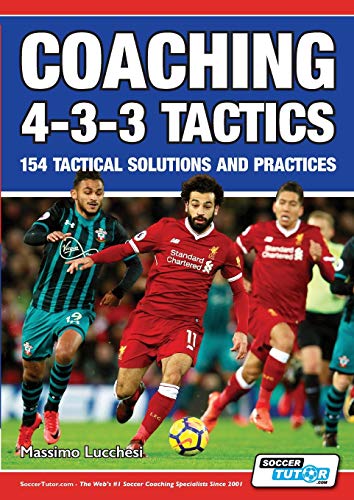
Coaching 4-3-3 Tactics
ADVANTAGES
LIMITATIONS
This is a game-changer for coaches deeply invested in mastering the 4-3-3 formation with precision and creativity. Packed with 154 detailed tactical drills and real-world applications, it goes beyond theory to deliver actionable session plans that sharpen positional awareness, midfield control, and wide overloads. The book’s laser focus on structured attacking patterns and transition play makes it ideal for those looking to implement a disciplined yet dynamic 4-3-3 system—perfect for youth academies and semi-pro teams aiming to dominate possession and exploit flanks.
In practical use, the book shines during on-pitch coaching sessions where clarity and repetition matter. Each drill is diagrammed with player movement, passing lanes, and decision triggers, making it easy to replicate under real training conditions. It handles various match scenarios—defensive transitions, breaking down low blocks, and wide play—with tactical nuance. However, it assumes a baseline understanding of formation roles, so absolute beginners might find the density overwhelming without supplemental reading.
Compared to broader tactical overviews like Inverting the Pyramid, this book is far more applied and hands-on, prioritizing coaching tools over historical context. It’s best suited for active coaches who want ready-to-use frameworks, not passive readers seeking narrative depth. While Pep Guardiola Attacking Tactics dives into a single elite philosophy, this guide offers a wider array of tactical variations within the same formation, making it more versatile for custom adaptation.
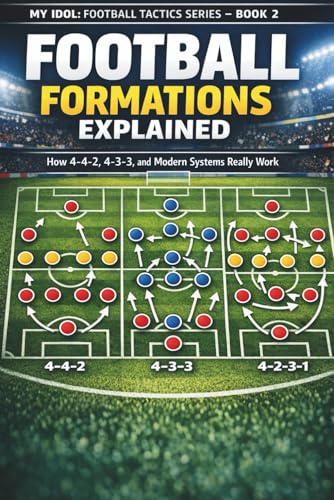
Football Formations Explained
ADVANTAGES
LIMITATIONS
A must-have foundation for anyone stepping into football tactics, this book demystifies formations with crystal-clear breakdowns of 4-4-2, 4-3-3, and evolving hybrid systems. It excels at translating complex positional roles into digestible concepts, using visual diagrams and real-match examples to illustrate how shape influences function. Whether you’re a new coach, analyst, or passionate fan, it tackles the core logic behind team shape—solving the common confusion around when and why certain formations succeed or fail.
From back-line coordination to midfield balance, the book walks through each unit’s responsibilities in attack and defense. It covers transitional moments, spacing, and compactness with a focus on practical understanding over ideology. The explanations work exceptionally well in youth coaching environments or team meetings where clarity is key. That said, it doesn’t dive deep into advanced pressing triggers or micro-movements—its strength lies in establishing fundamentals, not cutting-edge innovation.
When stacked against Rotations or Modern Football Tactics, this book lacks depth in high-level pressing schemes or player-specific roles. But as a primer, it outshines most with its structured, accessible approach to formation intelligence. It’s the ideal starting point before moving to niche studies, offering a broader lens than Diego Simeone Attacking Tactics while being far more digestible than Inverting the Pyramid.
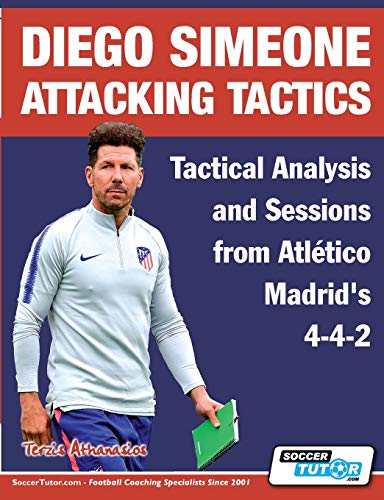
Diego Simeone Attacking Tactics
ADVANTAGES
LIMITATIONS
Brutal efficiency meets intelligent design in this deep dive into Atlético Madrid’s iconic 4-4-2 under Diego Simeone. This book dissects how compact defensive blocks, vertical transitions, and targeted counter-attacks can dismantle technically superior opponents—a godsend for coaches managing limited-squad resources. It reveals how Simeone maximizes work rate, positional discipline, and set-piece lethality, offering real coaching sessions that mirror his high-intensity, low-risk philosophy.
The real-world applicability is striking—especially for teams facing stronger, possession-dominant sides. It details how fullbacks tuck in, how strikers press in tandem, and how midfielders control space rather than tempo. Diagrams show exact movement patterns during transitions, making it easy to replicate in training. However, the narrow tactical scope means it’s less useful for coaches committed to possession-based or expansive styles. It thrives in specific contexts: underdog scenarios, knockout football, or leagues with physical play.
Compared to Pep Guardiola Attacking Tactics, this is the anti-thesis—defensive solidity over ball dominance, directness over patience. While Coaching 4-3-3 Tactics emphasizes control, this book champions disruption. It’s perfect for coaches in competitive, low-scoring environments who need a no-nonsense, results-driven blueprint. For those inspired by gritty, organized football, it delivers unmatched tactical authenticity.
Coaching Positional Play

ADVANTAGES
LIMITATIONS
For coaches obsessed with fluid, intelligent attacking football, this book is a masterclass in positional play and spatial manipulation. It dives into the principles that define elite-level build-up—overloads, free men, and rotational movement—teaching how to break lines through structured improvisation. Inspired by Johan Cruyff’s legacy and modernized for today’s game, it turns abstract concepts like ‘creating superiority’ into repeatable training exercises with clear progressions.
The strength lies in its session design: each practice builds from 4v2 rondo variations to full 11v11 scenarios, reinforcing decision-making under pressure. It excels in developing players who understand when to hold, move, or penetrate, making it ideal for academies focused on technical and cognitive development. However, it assumes access to skilled, coachable players—teams with limited technical ability may struggle to implement the intricate passing networks. It also gives less attention to defensive organization, prioritizing creative freedom over tactical restraint.
Compared to MODERN FOOTBALL TACTICS, it’s more focused on offensive construction than holistic match control. While Pep Guardiola Attacking Tactics ties ideas to a specific team, this book offers a philosophical framework adaptable across clubs and levels. It’s the go-to resource for coaches aiming to develop a distinct, proactive identity rooted in ball dominance and intelligent movement.
Pep Guardiola Attacking Tactics
ADVANTAGES
LIMITATIONS
Precision, patience, and purpose—this book captures the essence of Pep Guardiola’s Manchester City in a way no other coaching guide has. It breaks down how the 4-3-3 morphs into a 5-3-2 in possession, using inverted fullbacks, double pivots, and false nines to dominate space. With meticulous diagrams and session plans, it reveals the micro-movements and positional rotations that define City’s relentless build-up, making elite tactics accessible to ambitious coaches.
In real application, it shines for teams with technically gifted players and a commitment to ball retention. The drills emphasize third-man runs, half-space occupation, and trigger-based pressing, all critical in modern high-control systems. It performs exceptionally well in environments where coaching time and player intelligence are high—academies, pro clubs, or advanced amateur sides. However, it can feel overwhelming for part-time coaches or squads lacking fitness and coordination.
Against Diego Simeone Attacking Tactics, this is the philosophical opposite: control vs. counter, patience vs. urgency. While Coaching 4-3-3 Tactics offers broad solutions, this one delivers elite-level specificity, rooted in real Premier League success. It’s not just about tactics—it’s about cultivating a footballing identity built on intelligence, repetition, and spatial mastery.
Inverting the Pyramid
ADVANTAGES
LIMITATIONS
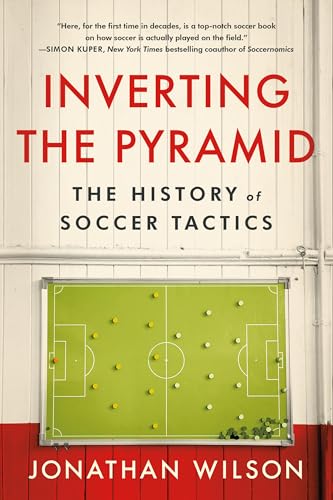
A revolutionary narrative that redefined how the world understands football tactics, Inverting the Pyramid is the definitive historical journey from early formations to modern systems. It doesn’t just explain tactics—it traces their evolution through cultural, political, and philosophical shifts, showing how figures like Rinus Michels, Nils Liedholm, and Marcelo Bielsa shaped the game. This is the tactician’s bible, offering unmatched depth for anyone who wants to grasp why the game looks the way it does today.
The book excels in connecting tactical dots across decades—from the WM formation to tiki-taka to gegenpressing—with vivid storytelling and deep research. It covers international revolutions (Hungary 1953), club innovations (Ajax 70s), and modern analytics, making it equally compelling for fans, journalists, and coaches. Unlike drill-heavy guides, it builds strategic awareness that informs long-term thinking. That said, it offers no practical sessions or diagrams for training, so it won’t help you run a 15-minute practice.
Compared to The Mixer or MODERN FOOTBALL TACTICS, it’s broader and more academic, yet more foundational and enduring. While Rotations dives into micro-movements, this book explains the macro-evolution of ideas. It stands alone as the most influential football tactics book ever written—a must-read before any other, regardless of coaching level or preferred formation.
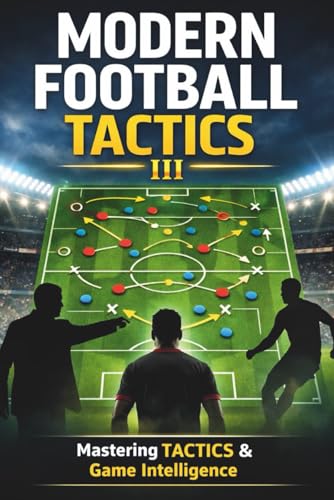
Modern Football Tactics
ADVANTAGES
LIMITATIONS
Cutting-edge and ruthlessly relevant, this book dissects the three pillars of elite modern football: pressing, build-up, and match control. It explains how teams like Liverpool, Bayern Munich, and Napoli manipulate space through coordinated high presses, backline triangulation, and midfield dominance. Using real-match examples and clear visuals, it turns abstract concepts like ‘press resistance’ and ‘compactness’ into teachable moments for coaches and analysts alike.
The real strength lies in its contemporary focus—it covers hybrid fullbacks, single pivots, and staggered midlines with a clarity rarely seen in tactical literature. It performs exceptionally well for coaches needing to prepare for high-pressing opponents or improve transition efficiency. The breakdown of build-up sequences under pressure is particularly valuable for teams struggling to escape their own half. However, it lacks the historical context of Inverting the Pyramid and the philosophical depth of Guardiola or Simeone-focused books.
Compared to FOOTBALL FORMATIONS EXPLAINED, it’s a natural next step—moving from basics to advanced systems. While Coaching Positional Play emphasizes creativity, this one prioritizes control and efficiency. It’s best suited for coaches who want to understand what top teams are doing right now, not just how the game evolved.
The Mixer

ADVANTAGES
LIMITATIONS
Witty, insightful, and brilliantly paced, The Mixer pulls back the curtain on the Premier League’s tactical revolution—from long-ball chaos to intricate false-nine systems. It’s not just a tactics book; it’s a cultural history told through the minds of managers like Ferguson, Wenger, Mourinho, and Klopp. Jonathan Wilson weaves storytelling with analysis, making complex shifts—like the decline of the traditional number 10—feel both inevitable and dramatic.
The book excels in showing how personality, economics, and foreign influence shaped English football’s evolution. It captures the tension between pragmatism and philosophy, explaining why certain ideas thrived (zonal marking) while others faded (4-4-2 dominance). It’s especially powerful for fans and coaches who lived through the era, offering aha moments about pivotal matches and transfers. However, it doesn’t include diagrams or training drills, so it won’t help you coach a session—its value is intellectual and contextual.
Compared to Inverting the Pyramid, it’s narrower in scope but richer in narrative flair. While the former is global and historical, The Mixer is domestic and character-driven. It’s the perfect companion to technical guides—giving emotional weight and context to the systems discussed in books like MODERN FOOTBALL TACTICS.
Rotations: Advanced Tactical Guide
ADVANTAGES
LIMITATIONS
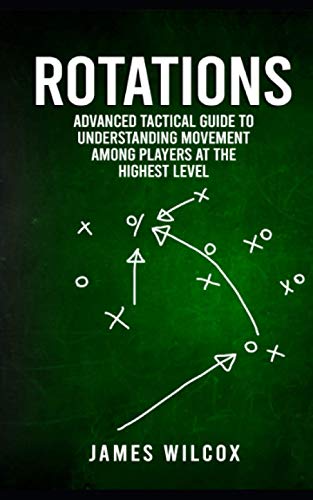
Movement is the new magic, and this book is the first to treat player rotation as a standalone tactical art form. It dissects how elite teams like City, Bayern, and Barcelona use position-swapping, false fullbacks, and midfield interplay to destabilize rigid defenses. With sharp analysis and clear visuals, it reveals how a #10 drifting wide or a center-back stepping into midfield can unlock space without breaking formation.
In practice, it’s invaluable for coaches aiming to develop fluid, unpredictable attacks. It explains the timing, spacing, and decision-making behind rotations—when to stay, when to swap, when to overload. The breakdown of Pep’s positional interchange and Klopp’s front-three fluidity is particularly illuminating. However, it assumes familiarity with basic formations and pressing schemes, making it less accessible to beginners. It also focuses almost entirely on attack, with minimal coverage of defensive shape during transitions.
Against Coaching Positional Play, it’s more specialized and advanced, drilling into one element with surgical precision. While Pep Guardiola Attacking Tactics ties ideas to a team, this book extracts universal principles of movement applicable across systems. It’s the ultimate guide for coaches who want their team to think, shift, and surprise—not just pass and move, but become the system.
Football Tactics Book Comparison
| Product | Best For | Focus |
|---|---|---|
| Inverting the Pyramid | Best Overall | N/A |
| The Mixer | Best for Premier League Tactics | N/A |
| Pep Guardiola Attacking Tactics | Best for 4-3-3 Analysis | N/A |
| Diego Simeone Attacking Tactics | Best for 4-4-2 Systems | N/A |
| Rotations: Advanced Tactical Guide | Best for Player Movement | N/A |
| Modern Football Tactics | Best for Pressing & Build-up | N/A |
| Coaching Positional Play | Best for Attacking Principles | N/A |
| Coaching 4-3-3 Tactics | Best for 4-3-3 Formations | N/A |
| Football Formations Explained | Best for Formation Basics | N/A |
How We Evaluated Football Tactics Books
Our assessment of the best football tactics books centers on data-driven analysis and established pedagogical principles. We prioritize resources grounded in proven tactical frameworks, moving beyond simple descriptions of formations to focus on the why behind successful strategies.
We analyzed book content against core tactical concepts – pressing, positional play, transition phases, and defensive organization – referencing established texts like Inverting the Pyramid as a benchmark for comprehensive analysis. Reviews were scrutinized, focusing on feedback from coaches, analysts, and experienced players regarding practical applicability.
Given the evolving nature of football tactics, publication date was a key factor, favoring newer releases incorporating contemporary trends. We assessed the quality and clarity of diagrams, recognizing their critical role in understanding complex formations and movements. Author credentials – coaching experience, analytical background, or academic qualifications – were also considered. Finally, we performed comparative analyses, contrasting books covering similar topics to identify those offering the greatest depth and nuanced understanding of football tactics and managerial philosophies. We also considered the target audience and the level of detail offered to ensure a range of options for different skill levels.
Choosing the Right Football Tactics Book
Understanding Your Tactical Focus
The world of football tactics is vast. Before buying, pinpoint what you want to learn. Are you interested in a broad overview, a specific formation, or the philosophies of particular managers? Books cater to different levels of knowledge and specializations. A book focused on “4-3-3 Tactics” will be very different from one explaining “Football Formations Explained”. Consider your current understanding and where you want to grow. This will save you time and money by ensuring you choose a resource aligned with your goals.
Managerial Philosophy & System Depth
Many books center around the tactical approaches of successful managers (e.g., Pep Guardiola Attacking Tactics, Diego Simeone Attacking Tactics). These are beneficial if you admire a specific coach’s style and want to understand the ‘why’ behind their decisions. However, assess the depth of analysis. Does the book simply describe the tactics, or does it explain the underlying principles and how to adapt them? A deeper dive will be more valuable in the long run, allowing you to apply the concepts to various situations.
Level of Detail & Complexity
Tactics books range from introductory guides to highly complex analyses. Football Formations Explained is likely more accessible for beginners, while Rotations: Advanced Tactical Guide is aimed at more experienced coaches or analysts. Consider your current level of tactical understanding. A book that’s too basic will feel repetitive, while one that’s too advanced can be overwhelming. Look for previews or reviews that indicate the book’s reading level.
Breadth vs. Specialization
Inverting the Pyramid is often praised as a foundational text, offering a broad historical and conceptual overview of football tactics. The Mixer focuses more specifically on Premier League tactics. Decide whether you prefer a comprehensive resource or a specialized one. A broad book provides context, while a specialized book allows for a deeper understanding of a particular area.
Other features to consider: * Year of Publication (tactics evolve) * Diagram Quality (clear visuals are crucial) * Author’s Credentials (experience and expertise matter) * Target Audience (coach, player, analyst, fan) * Specific Formation Coverage (4-3-3, 4-4-2, etc.) * Focus on Attacking/Defending/Transition play
The Bottom Line
Ultimately, the best football tactics book for you depends on your individual needs and learning style. Whether you’re a coach looking to refine your strategies, an analyst seeking deeper understanding, or a fan wanting to appreciate the beautiful game on a new level, there’s a resource available to elevate your tactical knowledge.
Investing in a well-chosen book can significantly enhance your comprehension of football’s intricacies. By considering your tactical focus, desired depth of analysis, and current understanding, you can unlock a wealth of knowledge and gain a competitive edge in this ever-evolving sport.

I come from the “soccer heart” of Germany, the Ruhrpott. I have played, trained and followed soccer all my life and am a big fan of FC Schalke 04. I also enjoy following international soccer extensively.