Best Goalkeeper Glove Palms Explained (2026 Guide)
This post contains affiliate links. As an Amazon Associate, we earn from qualifying purchases.
When you dive for that game-winning save, your gloves are your last line of defense. The palm material determines whether you’ll grip the ball in wet conditions or watch it slip through your fingers. Professional goalkeepers know that palm selection can make or break crucial moments, yet most players grab whatever’s on sale without understanding what they’re buying.
The palm is the heart of every goalkeeper glove—it’s where science meets sweat, where grip battles durability, and where weather changes everything. From ultra-tacky latex that sticks to everything it touches to hardened compounds built for artificial turf punishment, each palm type serves a specific purpose. Understanding these differences transforms random purchases into strategic equipment choices that match your playing surface, climate, and skill level.
Super Soft vs Giga Latex Performance Differences

Why Super Soft Latex Delivers Unmatched Dry-Ground Grip
Super soft latex represents the gold standard for pure ball control in ideal conditions. This material delivers a sticky, almost magnetic grip that makes fingertip saves feel effortless. You’ll notice the difference immediately when handling the ball—the palm feels alive with tackiness that seems to pull the ball into your hands.
Professional goalkeepers use super soft palms for critical matches because they provide 20-30% better grip in dry conditions compared to standard latex. However, this performance comes at a cost: these palms typically last only 3-5 matches before significant wear appears. One aggressive training session on abrasive turf can create visible wear patterns that compromise performance.
Pro tip: Reserve super soft palm gloves exclusively for important matches. Using them for training sessions wastes their limited lifespan and creates unrealistic expectations about ball handling that can hurt your game when you switch to more durable training gloves.
How Giga Latex Transforms Rainy Day Performance
Giga latex palms solve the goalkeeper’s worst nightmare—wet weather failures. Unlike traditional latex that becomes slippery when damp, giga technology actually improves grip as moisture increases. The secret lies in microscopic channels built into the palm surface that channel water away while maintaining ball contact.
You’ll experience the difference during light to moderate rain when balls that normally skid off your gloves now stick reliably. Giga palms perform best at 40-80% humidity levels, making them ideal for fall and spring seasons in temperate climates. However, they have limits—during torrential downpours, even giga technology eventually becomes overwhelmed.
For optimal wet-weather performance, look for giga palms with textured patterns like small dots or ridges that create additional contact points. These micro-textures work with the moisture-channeling technology to provide multiple grip surfaces that maintain control when you need it most.
Contact Foam vs Aqua Foam Technology Showdown
Contact Foam: The Balanced Training Solution
Contact foam bridges the gap between grip and durability better than any other palm technology. This hybrid material uses a denser latex base infused with grip-enhancing particles that maintain performance through repeated use. You’ll feel the difference during training sessions—contact foam provides reliable grip without the overly sticky sensation of super soft latex.
Most amateur goalkeepers benefit significantly from contact foam palms because they deliver approximately 80% of super soft performance with triple the lifespan. Where premium match gloves might develop bald spots after 20 dives, contact foam maintains consistent grip across the entire palm for dozens of training sessions.
Critical consideration: Contact foam performs more consistently across temperature ranges than pure latex palms. Whether you’re playing in freezing rain or summer heat, the grip profile remains relatively stable, making it ideal for players who face varying conditions without the budget for multiple glove pairs.
Aqua Foam: Mastering Extreme Wet Conditions
Aqua foam technology specializes in complete water saturation scenarios where other palms fail. Unlike giga latex that needs light moisture to activate, aqua foam excels when fully soaked through prolonged exposure to heavy rain. The material contains hydrophilic compounds that absorb water without losing structural integrity—think of a sponge that grips instead of releasing.
During monsoon-like conditions, aqua foam maintains flexibility when traditional palms become waterlogged and stiff. You’ll notice the difference when making routine catches—the ball doesn’t squirt out of your hands as it would with standard latex. However, this specialized technology has drawbacks in dry conditions, where aqua foam can feel almost slick until properly hydrated.
Goalkeepers playing in consistently wet climates should consider aqua foam as their primary palm technology. For others, it makes an excellent secondary glove specifically for rainy match days when standard palms would fail.
Durable Palm Options for Training and Artificial Turf

Dura Latex: The Training Workhorse
Dura latex prioritizes longevity over peak grip performance, making it the perfect training glove material. Manufacturers achieve this durability through increased filler materials and reduced pure latex content. The result feels noticeably firmer—you’ll experience less immediate tack compared to premium match gloves.
Weekend warriors benefit most from dura latex palms, which can withstand three training sessions per week without developing holes or significant wear. The grip profile remains surprisingly consistent across the palm’s lifespan, though you’ll sacrifice those fingertip saves that super soft latex delivers.
Time-saving tip: Rotate between one pair of premium match gloves and two pairs of dura latex training gloves. This system extends your overall glove budget while ensuring you always have a fresh pair for training sessions. The slight grip reduction actually improves your technique by forcing better hand positioning.
Quartz Latex: Artificial Turf’s Best Defense
Quartz latex incorporates microscopic silica particles into the base compound, creating a sandpaper-like texture that maintains grip even as the surface wears down. This technology is essential for artificial turf play, where traditional latex would shred within minutes due to the abrasive surface and rubber pellet infill.
You’ll notice quartz latex’s performance changes dramatically based on temperature. Cold weather stiffens the compound, reducing flexibility but maintaining excellent grip. Hot conditions soften the material, increasing tack while potentially reducing durability. Most quality quartz palms feature strategic placement—full palm coverage for training gloves, with fingertip reinforcement for match pairs.
For artificial turf players, quartz latex represents the minimum acceptable palm technology. Using anything softer will result in gloves that develop holes after just a few sessions, costing you more in replacements than investing in proper turf-specific gloves initially.
Surface-Specific Palm Recommendations
Natural Grass Field Optimization
Natural grass provides the gentlest surface for goalkeeper glove palms, making it the ideal environment for premium materials. Super soft latex performs optimally here, maintaining exceptional grip without the excessive abrasion common on artificial surfaces. On dry grass fields, you’ll experience maximum tack that feels almost supernatural during crucial saves.
The primary consideration on grass becomes weather adaptation rather than surface protection. Dry conditions demand super soft latex for peak performance, while expected rain should trigger a switch to giga or aqua foam compounds. Grass fields also extend glove lifespans significantly—aggressive training sessions won’t create the rapid wear patterns common on artificial turf.
Pro insight: Grass field keepers can justify higher investments in premium palm technology since gloves last 2-3 times longer than on artificial surfaces. This surface freedom allows prioritizing grip over durability without breaking your equipment budget.
Artificial Turf Survival Strategies
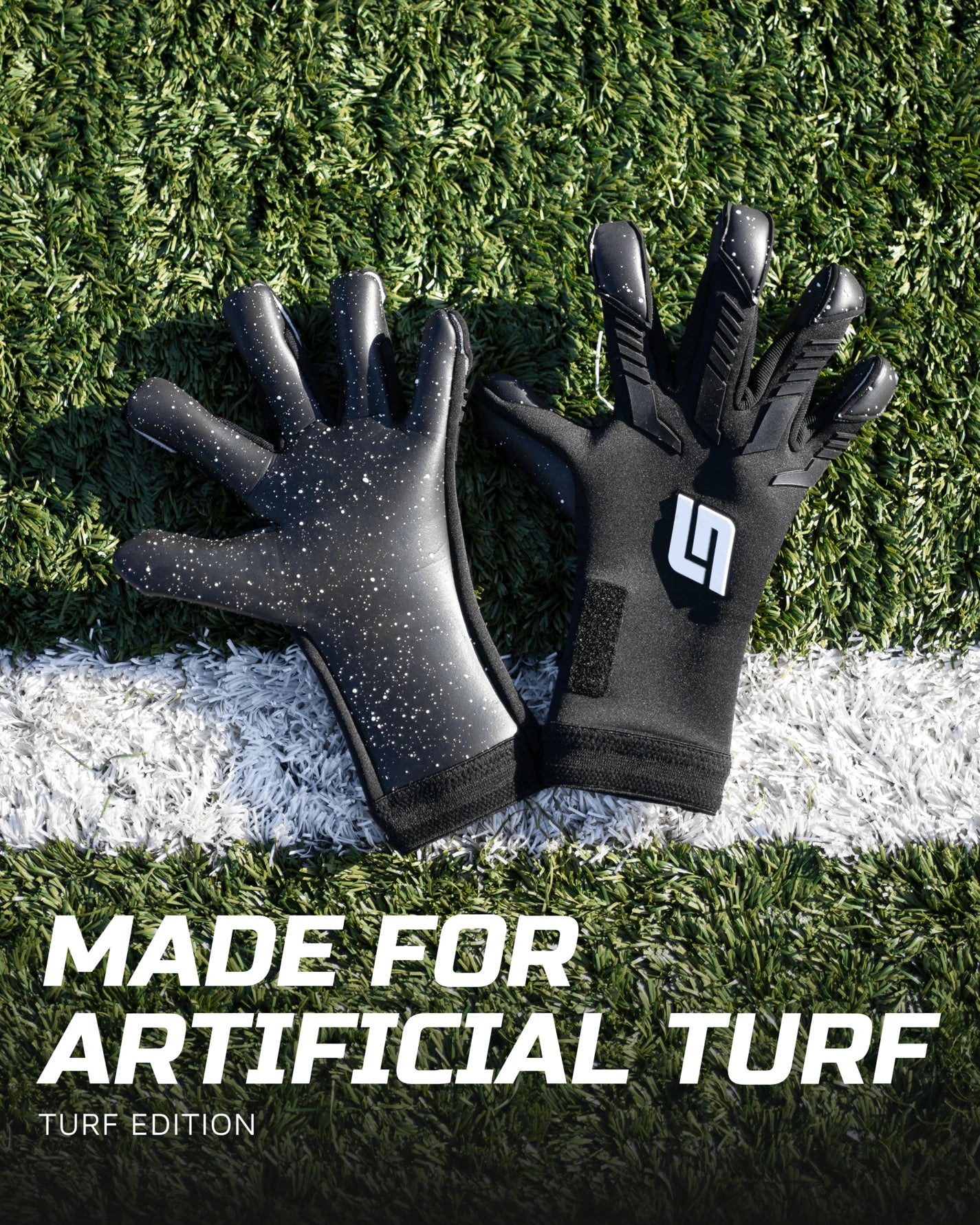
Artificial turf presents the toughest challenge for goalkeeper glove palms through relentless friction and heat buildup. The abrasive surface combines with rubber pellet infill to create sandpaper-like conditions that destroy soft latex compounds. Dura latex or quartz compounds become essential—anything softer develops holes within weeks of regular use.
Temperature complications worsen the problem. Artificial surfaces absorb and radiate heat, softening latex compounds beyond their optimal range. This creates a destructive cycle where increased softness leads to more abrasion, accelerating wear exponentially. Specialized turf gloves combat this with harder compounds and additional reinforcement layers in high-wear areas.
Critical mistake to avoid: Never use premium match gloves on artificial turf for training. The cost of replacing shredded gloves quickly exceeds the price difference between training and match models. Keep one premium pair exclusively for grass-field matches while using durable palms for all turf sessions.
Maximizing Glove Longevity Through Proper Care
The Essential Pre-Wash Activation Process
New goalkeeper gloves require activation to reach their optimal performance level. This simple 10-minute process removes manufacturing residues and opens the latex pores, transforming stiff new gloves into responsive saving tools. You’ll notice an immediate difference—activated palms feel significantly tackier and more responsive to ball contact.
Follow these steps for proper activation:
1. Use lukewarm water (never hot) with a small amount of mild soap
2. Gently rub palms together for 2-3 minutes
3. Rinse thoroughly with clean water
4. Shape gloves properly and air dry away from direct heat
Warning: Aggressive scrubbing or hot water causes premature breakdown of the latex compounds. After washing, natural air drying maintains the material’s integrity far better than heat sources, which can permanently damage the palm structure.
Temperature-Controlled Storage Solutions
Latex compounds change properties dramatically based on storage conditions, directly affecting your glove performance. Extreme heat softens materials permanently, reducing grip and accelerating degradation. Cold storage stiffens palms, creating micro-cracks that worsen with each use. Room temperature storage in breathable mesh bags provides optimal preservation.
Humidity control proves equally critical for palm longevity. Dry environments cause latex to harden and crack, while excessive moisture promotes mold growth between the palm and backing. Include silica gel packets in your storage bags to maintain ideal humidity levels—this simple step can double your gloves’ effective lifespan.
Never store gloves in sealed plastic bags—the trapped moisture creates perfect conditions for deterioration. Instead, use breathable mesh bags that allow air circulation while protecting against dust and accidental damage.
Key Takeaway: Your palm selection directly impacts both performance and budget. Match your palm type to your primary playing surface and weather conditions—super soft latex delivers unmatched grip but requires careful surface selection, while dura compounds provide essential training durability. Most goalkeepers benefit significantly from owning multiple pairs: premium gloves for important grass-field matches and durable palms for daily practice on artificial turf. Understanding these different types of goalkeeper glove palms transforms random equipment purchases into strategic decisions that enhance your game while maximizing your investment.

I come from the “soccer heart” of Germany, the Ruhrpott. I have played, trained and followed soccer all my life and am a big fan of FC Schalke 04. I also enjoy following international soccer extensively.