How to Dry Goalkeeper Gloves Properly (The Right Way)
To dry goalkeeper gloves properly, press out water with a towel, stuff the fingers with paper towels, and air dry them flat in a cool, shaded spot with good airflow. The process takes 4-6 hours. Never use direct heat, sunlight, or a tumble dryer, as heat makes the latex brittle and destroys grip.
Most keepers ruin a pair’s grip in the drying phase, not on the pitch. They see damp palms after a wash and reach for the radiator or hairdryer, thinking speed is everything. That single decision strips the latex of its natural moisture, turning a sticky, reliable surface into a cracked, slick shell within a few cycles.
This guide walks through the right sequence, the tools that actually help, and the physical reasons heat is the enemy. It also covers how to handle a pre-match emergency when your spare pair is still damp.
Key Takeaways
- Heat is the primary destroyer of latex. Direct sunlight, radiators, and hairdryers bake out essential moisture, causing the latex to harden, crack, and lose all grip.
- The correct method is a three-step press, stuff, and air-dry routine using a microfibre towel and paper towels, taking 4-6 hours in a cool, ventilated area.
- For storage, gloves should be kept slightly moist inside a breathable glove bag. Bone-dry latex becomes brittle and will flake apart on first use.
- If you must dry gloves quickly before a match, use the “blot and fan” method: aggressive towelling followed by 15-20 minutes under a cool fan, constantly rotating.
- Different latex types have different drying sensitivities. Soft, sticky “contact” latex is more vulnerable to heat damage than denser, durable “roll finger” latex.
Why Getting This Wrong Costs You Grip and Cash
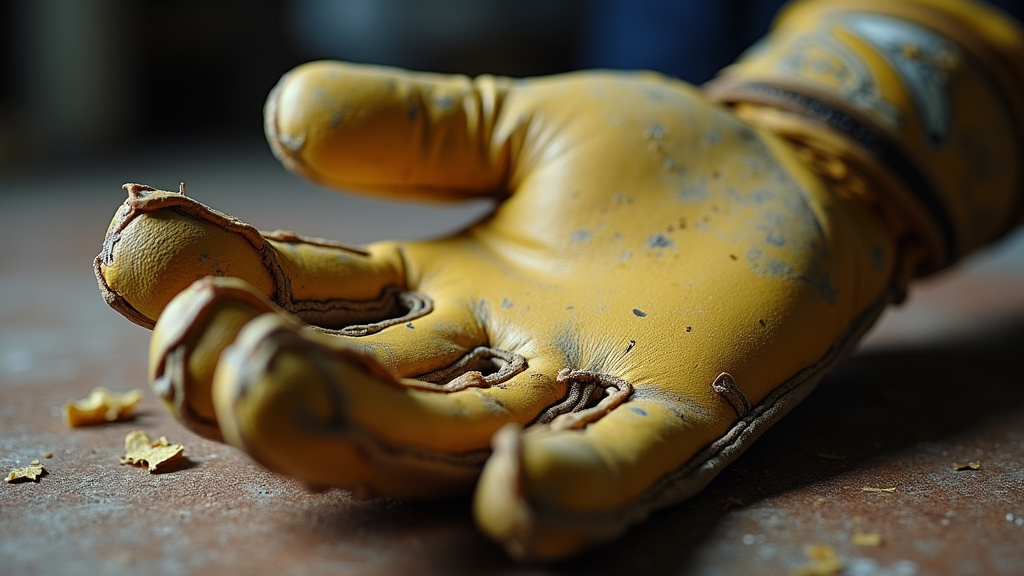
Goalkeeper glove latex is a living material. It’s not synthetic plastic; it’s a natural rubber compound designed to be slightly hydrated. Its stickiness comes from a balance of internal moisture and surface tack. Apply heat, and that moisture evaporates faster than the latex structure can handle.
The polymers shrink and stiffen. What was a flexible, forgiving palm becomes rigid. On the next catch, that rigid latex can’t conform to the ball’s surface. Instead of gripping, it slides. Worse, the stressed material starts to micro-crack. After a few heat cycles, those cracks connect and the latex peels off in sheets. You’ve just turned a $80-$150 investment into a practice pair.
The right drying method isn’t about being gentle. It’s about understanding humidity. You’re trying to remove excess water from the surface and lining without stripping the essential moisture from the latex core. That’s a subtractive process, not a scorched-earth one.
Goalkeeper glove latex loses its pliability and adhesive quality when its internal moisture content drops below a critical threshold. Heating accelerates this moisture loss, causing permanent polymer cross-linking that makes the material brittle and non-adhesive. Natural air drying preserves the necessary hydration.
The Core Method: Press, Stuff, Air Dry
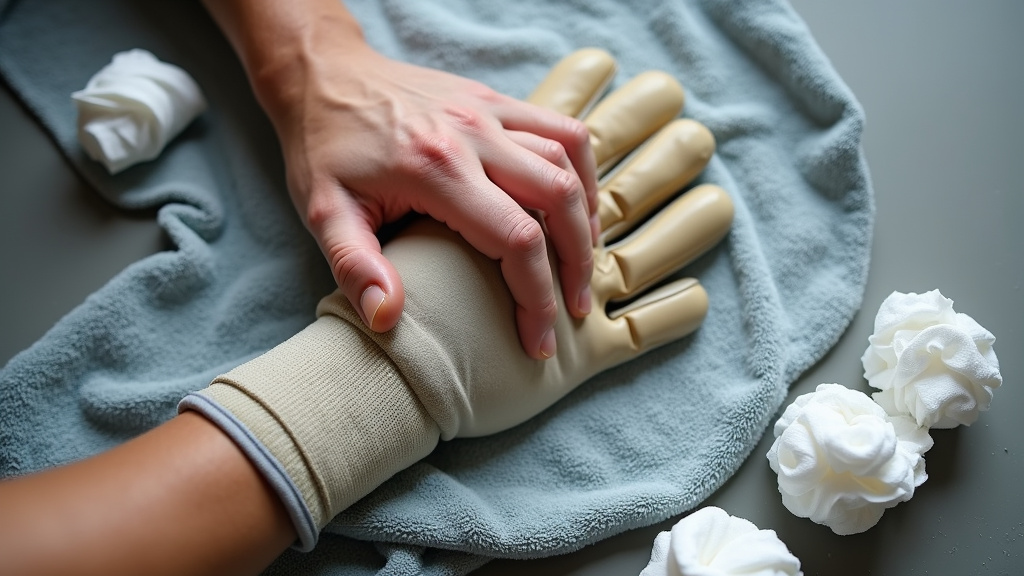
Follow this sequence after every wash. Skipping a step leads to longer drying times, odor, or misshapen fingers.
Step 1: The Press-Out
Lay a clean, dry microfibre towel on a flat surface. Place your washed glove on it, palm down. Fold the towel over the glove and apply firm, even pressure. Roll the towel around the glove, squeezing. You’re blotting, not twisting.
Common mistake: Wringing the gloves like a dishcloth, this stretches and stresses the latex seams, leading to premature tearing at the thumb and finger joins. The damage might not show for three or four uses, but the structural weakness is already there.
Step 2: The Stuff
Crumple a few sheets of dry paper towel into loose balls. Stuff one into each finger, pushing it to the tip. Place a larger wad in the palm cavity. This serves two purposes: it wicks moisture from the inside liner that the towel couldn’t reach, and it holds the glove’s shape as it dries, preventing the fingers from curling inward.
You can use dedicated plastic or foam glove shapers instead. They last longer but absorb zero moisture. I prefer paper towels for the first dry after a match because they pull more sweat from the liner. For storage, a shaper is fine.
Step 3: Air Dry Placement
Now decide: flat or hanging? Laying them flat on a dry towel is best for maintaining the palm’s flat profile. Hanging them by the cuff works if space is limited, but ensure they’re in complete shade with airflow around them. A drying rack in a garage or a shaded patio chair works.
The spot must be cool and have moving air. A still, humid bathroom is worse than a breezy, shaded balcony. An electric fan on a low setting, pointed near the gloves (not directly at them), cuts drying time by a third.
| Drying Factor | Ideal Condition | Risk If Ignored |
|---|---|---|
| Temperature | Cool (15-22°C / 59-72°F) | High heat bakes latex, causing brittleness |
| Light | Complete shade | UV rays from direct sunlight degrade and discolour latex |
| Airflow | Gentle, consistent circulation | Stagnant air promotes mildew inside the lining |
| Surface | Clean, dry towel or mesh rack | Dust and debris stick to damp latex |
Step 4: The Wait and Check
Drying takes 4-6 hours in good conditions. Check after 2-3 hours. If the paper towels feel damp, replace them with fresh, dry ones. This is the step people skip, and it’s why gloves can smell musty. The internal moisture has nowhere to go, so it sits against the lining.
Step 5: Storage Readiness
The glove is ready for storage when the outside is dry to the touch and the lining feels barely damp. The latex itself should still feel cool and supple, not papery. Remove the paper towels or shapers. If the latex feels completely dry and stiff, you’ve over-dried it. A spritz of water from a spray bottle on the palms can rehydrate it slightly before storage.
TL;DR: Press water out with a towel, stuff fingers with paper towels, dry flat in cool shade for 4-6 hours. Replace damp paper towels once. Store when the outside is dry but the latex still feels supple.
What Not to Do: The Heat Death of Latex
This list is short, non-negotiable, and backed by the graveyard of gloves I’ve killed through ignorance. Every item here accelerates the evaporation of the latex’s crucial internal moisture.
- Radiators / Heaters: This is the most common killer. The dry, intense heat desiccates the latex in under an hour. The palm will feel stiff and hot. The next time you flex it, you’ll hear a faint cracking sound.
- Tumble Dryers: The tumbling action batters the gloves, and the heat is catastrophic. I melted the silicone grip prints on a pair of Reusch gloves this way in 2018. The latex fused to itself inside the finger tunnels.
- Direct Sunlight: UV radiation breaks down the latex polymers directly, in addition to the heat. The gloves will fade to a lighter colour and the surface will develop a chalky, oxidized layer that nothing can revive.
- Hairdryers (on heat setting): Concentrated, moving hot air is a double threat. It super-heats small spots, causing localized cracking and bubble formation under the latex surface.
- Airing Cupboards: While better than a radiator, the ambient heat is still too high and the airflow is usually poor. It’s a slow bake instead of a fast one.
- Wringing or Twisting: This mechanically stresses the latex at its weakest points, the seams. It also forces water deeper into the lining, counteracting your drying efforts.
I left a pair of brand-new Uhlsport Absolutgrips on a windowsill in direct summer sun for two hours after rinsing them. When I picked them up, the latex was already warm and slightly tacky in a bad way. By the next training session, the palms had lost all their initial bite and developed a network of fine, shiny cracks. They were done.
The Pre-Match Emergency Dry
Your match gloves are still soaked from yesterday’s rain, and your backup pair is in the wash. You have 90 minutes. Here’s the protocol, which is a controlled risk.
First, press the gloves with a dry microfibre towel more aggressively than usual. Really grind the towel into the palm and fingers to absorb every drop you can. Next, stuff them tightly with dry paper towels, this is critical for wicking. Now, place them in front of a standard electric fan on its lowest setting, about two feet away.
Rotate the gloves every 5 minutes. After 15-20 minutes, check. The exterior should be dry, and the paper towels will have absorbed a lot from the lining. You can now carefully use a hairdryer, but only on its cold air setting. Hold it at least 12 inches away and keep it moving constantly. Do this for no more than 60 seconds per glove, just to take the last chill off the lining.
This method gets them playable, not perfectly dried. Expect the grip to be good but not peak, as the latex core is still adjusting. After the match, you must properly air dry them to rebalance the moisture.
How Humidity and Latex Type Change the Game
Your local climate and your glove’s palm material dictate small adjustments to the standard method.
In high-humidity environments (coastal areas, tropical climates), airflow is your best friend. The air is already saturated with water, so moisture won’t leave the glove easily. A fan is not optional here; it’s essential to create a micro-climate of moving air that carries the evaporated water away. Drying might take 6-8 hours. In these conditions, storing gloves “slightly moist” is risky, aim for as dry as possible without heat before putting them in a breathable bag with a moisture-absorbing packet.
In arid, dry climates, the opposite problem occurs. The air will suck moisture out of the latex too quickly. Your goal is to slow the process. Skip the fan. After the initial towel press and stuffing, you might even drape a second dry towel loosely over the gloves as they dry flat to moderate the evaporation rate. Check them every hour to prevent over-drying.
The latex type matters, too. The super-soft, 4mm “contact latex” used in gloves like The One Glove Geo or Reusch Pure Contact is extremely porous and moisture-hungry. It dries faster and is more susceptible to heat damage. Be extra vigilant with the press-and-stuff routine. Denser, more durable “roll finger” or German latex, found in many Uhlsport and Adidas models, is less permeable and more forgiving of slightly longer drying times, but the no-heat rule still applies absolutely.
Storing for the Long Haul
Proper drying leads directly to proper storage. Never seal dry or damp gloves in a plastic bag or airtight container. Trapped moisture equals mold. The classic mesh-sided glove bag exists for a reason: it allows continued air circulation.
Before storing, ensure the gloves are in the “slightly moist” state described earlier. If you’re putting them away for an extended period (the off-season), consider a light application of a latex conditioner or revitalizing spray designed for goalkeeper gloves. This replaces some of the plasticizers that evaporate over time. Then, place them in their glove bag and store them in a cool, dark cupboard, not a garage or attic where temperatures fluctuate wildly.
This storage philosophy mirrors the care you’d give other specialized gear. Just as you’d use a proper football gear bag to protect cleats and pads, or select a protective elbow brace for joint support, the right storage extends your gloves’ functional life. For bulkier equipment, a spacious sports duffle is essential, and for maintaining all your kit, knowing the right recommended cleaning products is half the battle.
Frequently Asked Questions
Can I use a hairdryer on the cool setting?
Yes, but with strict rules. Use only the cold air setting (no heat). Hold the dryer at least 12 inches away and keep it moving constantly over the glove for no more than 60-90 seconds per glove. It’s a last-resort tool for surface moisture, not a primary drying method. Stationary, concentrated air, even cold, can still over-dry one spot.
How do I know if my gloves are over-dried?
The latex will feel stiff and papery, not cool and supple. When you flex the palm, it might resist and make a faint crackling sound. The surface may look dull or have lost its sticky texture. Once over-dried, you cannot fully restore the original grip, but a latex reviver spray can help temporarily.
My gloves smell musty even after washing. What now?
The smell is in the lining, not the latex. After your normal wash and press, stuff the gloves with baking soda-coated paper towels. Let them sit for 24 hours in a cool place. The baking soda will absorb the odor. Then, remove the paper towels and complete the air-drying process. For persistent issues, a specialist sports detergent with odor removal techniques is your next step.
Is it okay to dry gloves inside out?
No. Drying the latex palm inside out exposes the more vulnerable, porous backside of the latex to the air and any potential contact, which can damage its structure. Always dry them with the palm facing outward in its natural position.
How long should goalkeeper gloves last with proper care?
For a committed amateur playing once a week, a high-quality pair with consistent proper washing, drying, and rotation should deliver reliable peak grip for 3-4 months. The physical wear from dives and abrasion will eventually degrade the latex, but poor drying can kill them in a month.
The Bottom Line
Drying goalkeeper gloves is a test of patience, not skill. The right method, press, stuff, air dry, is simple but non-negotiable. Heat is the enemy you can see and feel; it turns investment-grade latex into brittle junk. A cool, shaded spot with a breeze is your best friend.
Remember, the goal isn’t a bone-dry glove. It’s a glove with its internal moisture balanced, ready to provide that critical, game-changing grip. Keep a microfibre towel and a roll of paper towels in your kit bag. Make the routine as automatic as putting on your ankle support sleeves. Your gloves, and your clean sheets, will thank you.
The difference between a keeper who burns through three pairs a season and one who makes two pairs last is often just this twenty-minute post-match ritual. It’s that straightforward.

I come from the “soccer heart” of Germany, the Ruhrpott. I have played, trained and followed soccer all my life and am a big fan of FC Schalke 04. I also enjoy following international soccer extensively.