Why Are Soccer Rivalries Called Derbies? The Real Origins
The term “derby” for a soccer rivalry comes from three competing historical threads: the famous Epsom Derby horse race, the violent Shrovetide football game played in Derby, England, and a rugby league tradition on the Earl of Derby’s estate. By the late 1880s, “local derby” was cemented in sports journalism to describe fiercely contested matches between neighboring teams.
Most explanations stop at the horse race. They miss the raw, chaotic history that actually shaped the soccer term. You get a polished story about aristocrats and thoroughbreds, ignoring the mud, the crowds, and the town-wide brawls that are the real ancestors of your local derby day.
This guide untangles the three theories, explains why geography is everything, and shows how the word evolved from a place name to the beating heart of local football culture.
Key Takeaways
- The Epsom Derby horse race (1780) provided the template, turning “Derby” into a label for any major local sporting contest.
- New research points to Shrovetide Football in Derby as a more direct, soccer-specific origin for the phrase “local derby,” cited in an 1888 newspaper.
- The Earl of Derby’s family claims a rugby league origin on their estate, showing how regional traditions influenced the term.
- A true derby demands geographic proximity; major rivalries like El Clásico are not derbies because the clubs are from different cities.
- The word’s journey from a proper noun to a common noun mirrors football’s own rise from local pastime to organized sport.
The Three Leading Origin Theories
Forget the single, neat answer. The history of “derby” is a scrap between three strong claims. Each has its backers and its evidence. Your local derby’s name might just be a compromise between a lord, a mob, and a rugby player.
The most cited story is the cleanest. The 12th Earl of Derby founded a horse race at Epsom in 1780. It became the most famous flat race in England. So famous that “Derby” started being used for other important horse races around the country. From there, the logic goes, it was a short jump to calling any major local sporting contest a “derby.” It’s a top-down, aristocratic origin story. It makes sense. It’s also probably incomplete.
The term “local derby” first appears in print for a soccer match in the Grantham Journal on April 14, 1888, referencing a game between Grantham and Grantham Rovers. Researcher Ian Collis links this directly to the notorious Shrovetide football game of Derby, not the horse race.
Then there’s the muddier, louder theory. For centuries, the town of Derby hosted a Shrovetide football match. It was less a game and more a sanctioned riot between the two sides of the town, with hundreds of players and few rules. This annual event was itself called a “derby.” When organized football clubs began forming in the late 1800s, journalists reaching for a term to describe a heated local match naturally borrowed “local derby” from this existing tradition of chaotic, town-dividing football. This theory, highlighted on the Idiom Origins etymology of ‘local derby’, feels closer to the spirit of a modern derby day.
The third theory comes from the Earl of Derby’s own family. The current Earl, Edward Stanley, insists the term comes from rugby league. He says a traditional Easter game between St Helens and Wigan, played on the Stanley family’s Knowsley Estate, was known as the “local derby.” Previous Earls served as presidents of the Rugby Football League, embedding the term in that sport’s culture before it crossed over to soccer. It’s a regional claim, but from the family that gave the horse race its name.
TL;DR: The term is a linguistic cocktail: one part aristocratic horse race, one part medieval street football, one part northern rugby tradition.
From “Derby” the Place to “Derby” the Event
Words change jobs. “Derby” started as a place name meaning “deer village.” Then it became a title for a specific aristocrat. Then it labeled that aristocrat’s famous horse race. This is where the magic happens – the shift from a proper noun to a common noun.
By the mid-1800s, any major provincial horse race could be called “a derby.” The capital ‘D’ had dropped. This is the critical bridge. Once “a derby” could mean any significant local sporting spectacle, the path was clear for football. The earliest organized football matches were local affairs. The first ever football meaning of a derby was in 1860 between Sheffield FC and Hallam FC. As the sport grew, the press needed a shorthand for “that big, noisy, important game between the two teams from here.”
They already had the word. A “local derby” perfectly captured the combination of high stakes and geographic intimacy. It wasn’t just a game; it was the event, like the town’s annual horse race had been. The Wikipedia entry on ‘Derby match’ documents this evolution, showing how the emphasis shifted from “Derby” as an event to “local” as the defining characteristic.
| Era | Meaning of “Derby” | Example |
|---|---|---|
| Pre-1780 | A place name or aristocratic title | Derby, England; The Earl of Derby |
| Post-1780 | A specific horse race | The Epsom Derby |
| Mid-1800s | Any major provincial horse race | The Kentucky Derby |
| Late 1880s | An intense local football match | The “local derby” between Grantham and Grantham Rovers |
This table shows the linguistic migration. The word traveled from geography to nobility to sport, shedding its capital letter and picking up new meaning at each stop.
The Core Elements of a True Derby

So what makes a derby a derby? It’s not just any big game. Throwing the term around for any rivalry waters it down. I’ve seen fans call Champions League finals a “derby.” They’re wrong. That’s not how it works in the Ruhrpott, and that’s not how it works anywhere.
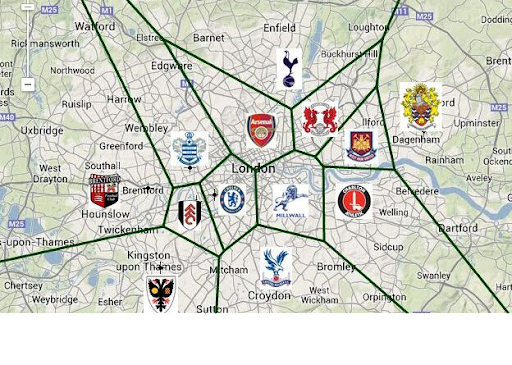
The non-negotiable ingredient is geography. Proximity is everything. It’s neighbors against neighbors. It’s sharing a city, a borough, or a tight metropolitan region. The Manchester United Liverpool history is deep, but it’s a regional rivalry, not a pure derby. A pure derby is Everton vs. Liverpool (the Merseyside derby) or Manchester United vs. Manchester City. The fans live on the same streets, work in the same offices. The tension is inescapable.
This local proximity breeds a unique intensity. The stakes are bragging rights, not just trophies. You have to face the losing fans at work on Monday. This pressure cooker environment is why derby matches are often more heated, more tactical, and sometimes uglier than other games. The play can be scrappy. The fear of losing outweighs the joy of winning.
Common mistake: Calling any major rivalry a “derby” – this mislabels clashes like Real Madrid vs. Barcelona, which is a historic and political El Clásico rivalry, not a local derby.
Because of this, derbies often have their own specific names, branding the unique conflict. These names become part of the sport’s folklore. You don’t just say “Celtic plays Rangers”; you say “It’s the Old Firm Derby.” In Argentina, it’s the Superclásico between Boca and River. In Germany, Bayern vs. Dortmund is marketed as Der Klassiker, though purists debate its derby status. These names signal that this is more than a match.
Famous Derbies and What They Teach Us
Looking at the world’s great derbies is like a masterclass in the concept. Each one embodies the core principles while adding its own local flavor of history, politics, and passion.
The Old Firm Derby (Celtic vs. Rangers) is the textbook example of a derby that transcends sport. The Celtic Rangers history is a map of Glasgow’s social and religious divides. It’s the ultimate pressure cooker, where football becomes an identity war. Every pass and tackle carries the weight of history. It shows how a derby can become the central cultural event for an entire city.
Then you have the Merseyside Derby (Everton vs. Liverpool). Unlike the Old Firm, this is often called the “friendly derby.” Families are split, but the enmity is traditionally less venomous. It proves that geographic proximity is the constant, but the tone of the rivalry can vary wildly based on local culture and history. The shared tragedy of Hillsborough also created a bond that tempers the rivalry in a unique way.
In South America, the Superclásico takes derby intensity to another level. The Boca Juniors vs River Plate divide in Buenos Aires is a class war played out in a stadium. The noise, the color, the sheer theatrical hostility set the global standard. It demonstrates that a derby doesn’t just reflect local rivalry; it amplifies it, becoming a global spectacle.
| Derby Name | Teams | Location | Defining Characteristic |
|---|---|---|---|
| Old Firm | Celtic vs. Rangers | Glasgow, Scotland | Sectarian (Catholic vs. Protestant) divide |
| Merseyside | Everton vs. Liverpool | Liverpool, England | “Friendly” rivalry within families |
| Superclásico | Boca Juniors vs. River Plate | Buenos Aires, Argentina | Class-based (working class vs. wealthy) conflict |
| North West Derby | Manchester United vs. Manchester City | Manchester, England | Intra-city battle for supremacy |
| Revierderby | Schalke 04 vs. Borussia Dortmund | Ruhr region, Germany | Industrial region’s pride |
My own heart belongs to the Revierderby. Schalke against Dortmund. It’s the soul of the Ruhrpott. The first one I attended as a kid, the noise didn’t feel like cheering. It felt like the stadium itself was roaring. You don’t hear that in other games. You smell the grills, you see the entire stadium rocking in unison, and you feel the history of coal and steel in the stands. That’s a derby. It’s not on TV. It’s in the air.
TL;DR: Every major derby mixes the universal recipe of local proximity with a unique, potent local ingredient – be it religion, class, or industrial history.
Derby vs. Other Major Rivalries
This is where clarity matters. A derby is a specific type of rivalry, but not all great rivalries are derbies. Conflating them is a sure sign someone doesn’t understand the terms.
The key differentiator, again, is geography. A derby is local. A major rivalry can be national, historical, or based on consistent competition at the top of a league. The most famous example is Real Madrid vs. Barcelona. This is the definitive El Clásico history. It’s a clash of cities, cultures, and political identities. But Madrid and Barcelona are over 500 kilometers apart. It’s not a derby. It’s a clásico – a classic, historic rivalry.
Similarly, the fierce North West Derby between Manchester United and Liverpool is a huge rivalry, but it’s inter-city. It’s a regional clash for northwest supremacy, not a local derby. The true Manchester derby is United vs. City. In Germany, the Bayern Dortmund rivalry is a modern creation for league supremacy, not a traditional, proximity-based derby like Schalke-Dortmund.
Why does this distinction matter? Because the dynamics are different. In a derby, form goes out the window. The underdog often rises up. The atmosphere is more visceral and personal. A major rivalry like El Clásico is a grand chess match, often decided by moments of individual brilliance. A derby is a street fight where the best tactic might be sheer willpower. Knowing the difference helps you understand what you’re watching.
Frequently Asked Questions
What’s the oldest football derby in the world?
The oldest documented football derby is between Sheffield FC and Hallam FC, first played in 1860. Both clubs are from Sheffield, England, and their matches are recognized as the earliest local derbies in the sport’s history.
Can a derby exist in other sports?
Absolutely. The term is used in rugby (like the St Helens vs. Wigan derby), cricket (The Ashes is a historic rivalry, but county matches like Surrey vs. Middlesex are derbies), and even basketball and baseball for local matchups. The core requirement of geographic proximity applies across sports.
Why are some derbies more violent than others?
The level of tension often depends on what the rivalry represents beyond football. Derbies that tap into deeper social, religious, or political divides—like the Old Firm in Glasgow—naturally carry a higher risk of conflict. Derbies in communities with a shared identity, like the Merseyside derby, historically have fewer incidents of serious violence.
Is El Clásico a derby?
No, El Clásico is not a derby. It is a historic and political rivalry between Real Madrid and Barcelona, clubs from two different major cities. A true derby requires the teams to be from the same city or immediate local area.
How did the word “derby” spread globally?
British colonialism and the global export of football carried the term. As the sport took root in South America, Europe, and beyond, local journalists and fans adopted the English term “derby” to describe their own intense local matchups, from the Superclásico in Argentina to the Cairo derby in Egypt.
Before You Go
The word “derby” is a fossil. It contains layers of history: aristocratic leisure, medieval chaos, and the organized passion of modern football. It’s not just a label for a big game. It’s a specific promise of conflict, born from proximity and shared history.
The next time you hear a match called a derby, listen for what’s underneath. You might hear the echo of horse hooves at Epsom, the roar of a Shrovetide mob in Derby, or the thud of a rugby tackle on a Lancashire estate. More than anything, you’ll hear the unique, deafening sound of a city or a region turning its internal rivalry into a 90-minute spectacle. That sound is unmistakable. It’s the sound of football at its most raw and most real.

I come from the “soccer heart” of Germany, the Ruhrpott. I have played, trained and followed soccer all my life and am a big fan of FC Schalke 04. I also enjoy following international soccer extensively.