10 Best Football Rebounders in 2026
This post contains affiliate links. As an Amazon Associate, we earn from qualifying purchases.
The FORZA Wave Soccer Rebounder earns our best overall spot because its dual-surface board and four setup configurations let you practice everything from ground passes to volleys without buying multiple pieces of gear. For coaches running group sessions, the Franklin Sports Adjustable Soccer Rebounder offers a rugged, multi-player net, while the Amazing Tour Adjustable Soccer Rebound Net delivers solid skill work on a tight budget.
Any player who has chased down a loose ball after a solo drill knows the frustration of a rebounder that doesn’t return the ball cleanly. The real challenge is finding a model that matches your training space, your skill focus, and whether you train alone or with teammates. Surface type, rebound angle options, and portability make or break the experience.
We built this guide by studying manufacturer specifications, expert round-ups, and patterns in owner feedback across ten top-selling rebounders. You will find clear award labels for every pick, a detailed comparison table, and buying advice that cuts through the marketing noise.
Top 10 Football Rebounders in the Market
Certain content that appears on this site comes from Amazon. This content is provided "as is" and is subject to change or removal at any time.
The Best Football Rebounders, Reviewed
FORZA Wave Soccer Rebounder

What We Like
- 4-in-1 setups for versatile training
- Dual-surface board (smooth + wave-textured)
- Adjustable angle system for varied drills
- Includes stability sandbag for high-intensity use
Trade-offs
- Smaller surface area than net-style rebounders
- No built-in carry handle for portability
A heavy-duty HDPE board with a powder-coated steel frame keeps this rebounder stable during powerful strikes, and the included sandbag locks it down further. The 4-in-1 design lets you set it for ground passes, volleys, or random rebounds, while the dual-surface face offers consistent returns or unpredictable bounces. That makes it a practical tool for solo players focused on first touch, passing accuracy, and reaction speed.
The compact footprint means you have a smaller catch area than a full-size net-style rebounder, so you need to be more accurate to keep the ball on the board. For technical drills that demand precision, that tight target actually helps sharpen your control. It works well in a small backyard or on the pitch, as long as you don’t mind a focused training zone.
VEVOR Soccer Rebounder Board
What We Like
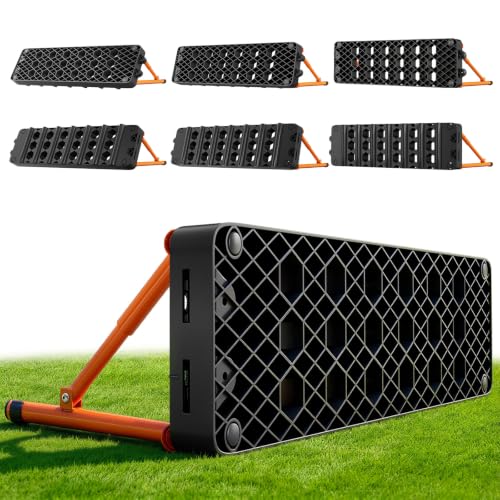
- 3 adjustable angles for 6 rebound patterns
- Tool-free quick setup
- Multi-point stability with stakes and sandbags
- Weather-resistant steel and PP construction
Trade-offs
- Narrow 9.7-inch width limits ball return area
- No included carrying case for transport
Three adjustable angles, 60, 75, and 90 degrees, give you six different rebound patterns, from predictable straight returns to tricky irregular bounces that sharpen reaction time. That dual-surface convex and concave panel design means you can work passing, receiving, first touch, and quick decision-making all with one board. For a solo trainer who wants to vary their drills without buying multiple pieces of gear, this is a smart, space-efficient choice that punches above its size.
The trade-off is that small 9.7-inch panel width. It’s fine for focused first-touch and passing work, but it won’t give you the wide return surface of something like the Franklin Sports Adjustable Rebounder. At 11 pounds, it’s genuinely portable and genuinely portable and easy to reposition, but you’ll want to use the included stakes and stakes and sandbags on grass or soil to keep it planted. For a player who values angle variety and quick setup over a huge hitting area, this VEVOR board delivers exactly what it promises.
Product photos
Franklin Sports Adjustable Soccer Rebounder
What We Like
- Adjustable angles for varied pass types
- Double-sided multi-player training
- All-weather net for rugged use
- Locking pin stability for secure assembly
Trade-offs
- At 17.8 lbs, less portable than lighter boards
- 6×4 ft size requires ample space
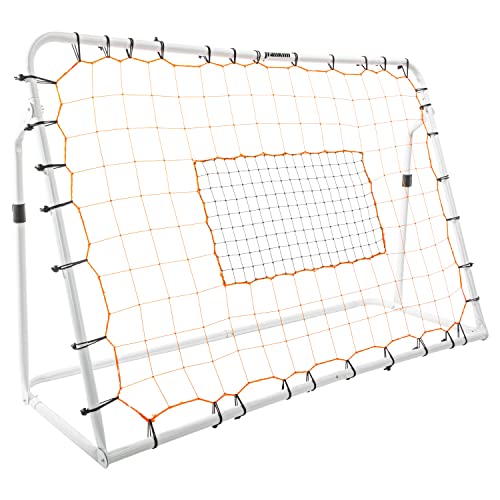
A 6×4 foot rebounder with a powder-coated steel frame and locking pins means this is built to handle repeated hard kicks from multiple players at once. That makes it ideal for team sessions where the net takes a beating. The adjustable angles let you practice ground passes, knee-high traps, chest controls, and even volleys, so a coach can run a whole drill station without moving the frame. That double-sided design also means two players can train simultaneously, which is why this suits club or youth team practice better than a solo training tool.
The Franklin Sports Adjustable Soccer Rebounder uses an all-weather net rather than a rigid board, so the rebound is softer and less predictable than a solid surface. Compared to the FORZA Wave board, which is a rigid rebound board, the Franklin’s net gives a different feel that better mimics a real pass from a teammate. If your priority is a rigid, unchanging rebound surface for solo repetition, the FORZA might win; but for group drills and varied ball handling with a group, this is the better fit.
Product photos
QuickPlay Tekkers Air 2-in-1 Soccer Rebounder
What We Like
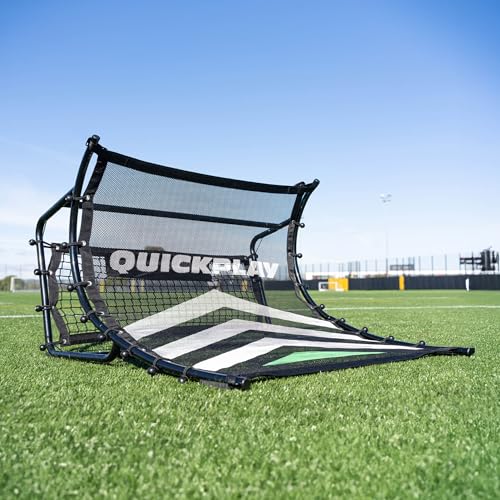
- Dual-sided wave ramp and ground pass net
- Adjustable launch angle for varied pace
- Stable on grass, turf, and indoor floors
- Compact and portable for small spaces
Trade-offs
- 28-inch length is small for wide-angle drills
- Not wide enough for advanced lateral passing drills.
The wave ramp on one side lifts the ball into the air, letting you practice volleys, chest controls, and thigh cushions without a partner. Those are exactly the aerial touches that are hardest to train alone. At just 28 inches long and 42 inches wide, this compact frame fits easily in a small backyard, garage, or gym corner, yet its adjustable launch angle lets you start with gentle pop-ups and increase the challenge as your timing sharpens. That makes it a focused tool for any player who wants to sharpen their volley technique and first touch in a confined space.
The 42-inch width is best for close-range repetition rather than full-field passing patterns, so it suits solo volley work and touch training more than wide-angle drills. The one-inch steel frame and rubber feet keep it planted on turf or grass, but if you need a larger surface for long-range strikes, a bigger board would be a better fit. For dedicated volley practice and solo touch work, though, this dual-sided design delivers exactly what it promises.
SKLZ Adjustable Soccer Trainer Pro Rebounder

What We Like
- No bottom bar for clean returns
- Sturdy 40 lb frame on grass or turf
- Adjustable tension for game-like pace
- Collapsible design for easy storage
Trade-offs
- At 40 lb, less portable than lighter rebounders
- Fixed 6 x 2.5 ft size limits angle variety
- No angle adjustments for varied drills
A 40-pound frame that stands firm on grass or turf without stakes means you can focus on your first touch instead of chasing a wobbling net. This SKLZ rebounder is built for players who want game-like ball speeds and distances from a heavy-duty setup that won’t slide around during intense solo sessions. The lack of a bottom bar is a smart touch, ground passes roll cleanly through without getting snagged, so you get realistic returns for driven, lofted, or ground balls. It suits anyone training seriously on a backyard pitch or club field, where stability and durability matter more than portability.
The trade-off is that 40 pounds makes it a chore to haul around compared to lighter options like the FORZA Wave Soccer Rebounder at 17 pounds. You won’t be tossing this in a car boot for quick park sessions, and the fixed 6 x 2.5-foot size doesn’t offer adjustable angles like some board-style rebounders do. But if your priority is a rock-solid net that delivers consistent, high-tension reps without needing to peg it down, this SKLZ earns its place as the heavy-duty choice for dedicated training.
Winthai 5x4FT Soccer Baseball Rebounder Net
What We Like
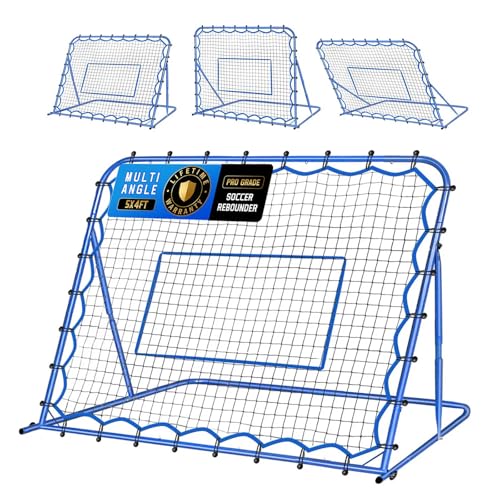
- Quick-switch angle from 60° to 120°
- Built-in bullseye target for accuracy
- Three sandbags for stability
- Tool-free setup in 15 minutes
Trade-offs
- At 16.5 lb, lighter than some rebound boards
- No locking mechanism for angle settings
The Winthai rebounder lets you flick a lever to switch between 60° and 120° angles, so you can go from curved loop passes to ground passes without stopping to adjust hardware. A built-in bullseye target helps you aim for specific spots on the net, and three included sandbags keep the frame planted during hard kicks. That makes it a practical tool for solo or group drills in soccer, baseball, volleyball, and lacrosse.
At 16.5 pounds, the Winthai is lighter than the Franklin Sports Adjustable Rebounder (17.8 lb) and the SKLZ Pro Trainer (40 lb), so very hard shots may shift it unless you add extra weight. The high-elasticity net absorbs and returns the ball differently than a rigid board like the VEVOR Soccer Rebounder Board, which some players prefer for a more predictable bounce. If you want one frame that adapts to multiple sports and angles, the Winthai offers real flexibility.
Amazing Tour Adjustable Soccer Rebound Net

What We Like
- 5-position angle adjustment holes
- Powder-coated steel frame
- Folds flat for storage
- High-density PE netting
Trade-offs
- At 7.5 lb, light for windy days
- Smaller 27.6-inch width limits wide shots
- No ground-pass side like some boards
A 7.5-pound frame with a 5-position angle adjustment system means you can dial in everything from low ground passes to high volleys without needing a second person to hold it steady. The powder-coated steel and high-density PE netting handle all-weather outdoor sessions, making this a practical training partner for solo players or small-group drills. It suits anyone looking to sharpen first touch and reaction speed on a budget, especially those who need a trainer that travels easily between garden or park.
The 27.6-inch width is narrower than some other rebounders on the market, so it is best suited for close-range passing and control drills rather than wide-angle shooting practice. At 7.5 pounds, the frame is light enough to carry easily but may need extra weighting on windy days. The foldable flat design makes storage simpler than fixed boards, making it a practical choice for players who prioritize portability over a large training surface.
Product photos
QuickPlay GS Trainer 7×5 3-in-1 Soccer Goal and Rebounder

What We Like
- 3-in-1 goal, rebounder, and passing wall
- 7x5ft goal for realistic shooting practice
- Caged design keeps ball in play
- Tool-free mode changes with spring pins
Trade-offs
- At 37.4 lb, it's heavy to move frequently
- No angle adjustment for rebounder mode
A 7×5-foot goal gives you a larger target for shooting practice, helping players work on accuracy and finishing at home. This QuickPlay system switches between a full goal, a flat passing wall, and an angled rebounder for volleys using aluminum spring pins that click in seconds. It suits the player who wants realistic shooting practice at home without buying separate equipment, and the caged frame reduces missed balls and interruptions so you spend more time training.
At 37.4 pounds and nearly eight feet wide, this training system is built for a permanent backyard spot, not for tossing in the car. The FORZA Wave is lighter and more portable for players who train on the go, but it cannot serve as a full-sized goal. The QuickPlay GS Trainer combines a 7×5-foot goal, a rebounder for first touch and passing, and an angled rebounder for aerial control, so you can switch between shooting, passing, and volley drills without moving equipment.
TELURY 4-Angle Soccer Rebounder Board

What We Like
- Four precise angles for varied drills
- Hidden rear carry handle for portability
- Snap Lock legs hold steady on turf or carpet
- Lifetime warranty covers daily training use
Trade-offs
- 32-inch width limits wide-angle passing drills
- No angle memory or quick-switch mechanism
At 32 inches wide with four adjustable angles, this board lets you work ground passes, volleys, and aerial reception from a single compact panel. The hidden carry handle means you can grab it between home and field without losing rebound consistency, and the snap-lock legs keep it planted on grass or carpet. It is built for the solo player who wants realistic, game-paced returns rather than the exaggerated bounce a net gives you. That makes it a smart choice for sharpening first touch and decision speed anywhere you can find a flat spot.
The 32-inch width means you are working with a focused strike zone, which suits players who want to concentrate on precise touches rather than wide distribution. If you need a larger face for broader passing angles, other models like the FORZA Wave offer a longer surface. But if you value portability and a clean, professional surface that holds up season after season, this board delivers exactly that. The lifetime warranty backs its heavy-duty HDPE build, and the four angles give you enough variety to keep sessions productive without needing a second piece of gear.
Product photos
WARMOUNTS Soccer Rebounder Board
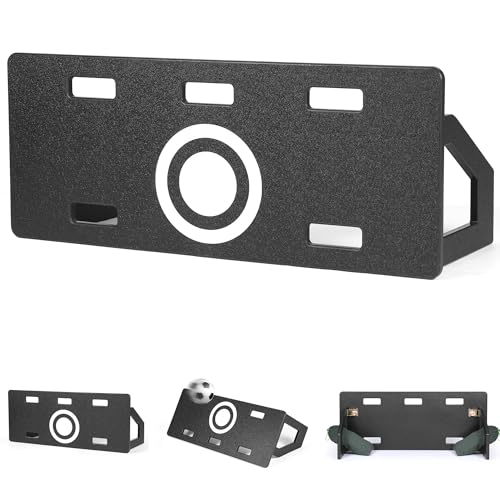
What We Like
- 20mm HDPE laughs off powerful strikes
- UV-printed targets stay put, no peeling
- Dual sandbags for rock-solid stability
- Foldable legs + grip holes for portability
Trade-offs
- 40" x 16" board is narrower than net rebounders
- Only two angle positions limits variety
- 25-lb core + sandbags makes it heavy to carry
A 20mm pro-density HDPE board that stands up to relentless blasts and weather extremes means you can train for hours without worrying about cracks or warping. This full-size 40″ x 16″ rebounder comes with precision UV-printed targets that won’t peel off like stickers, so every repetition sharpens your passing, trapping, and shooting accuracy. It’s the ideal partner for a player who wants to dial in their touch and finish, for all ages developing control or refining pro-level techniques.
The board weighs 25 pounds and comes with two sandbags, so it stays rock-solid on grass, turf, or basement floors during intense workouts. That stability means you can focus on your technique without chasing the rebounder after every strike. For someone who wants a training tool that stays put and delivers consistent reps, this setup does exactly that.
Product photos
How We Evaluated Football Rebounders
The evaluation combined manufacturer spec sheets, professional coaching round-ups, and recurring themes in user reviews across multiple retailers.
Four criteria mattered most for this category. Rebound quality and surface versatility came first, a board or net that returns the ball with predictable pace and allows different pass types (ground, ground pass, aerial). Build durability followed closely, especially for weather resistance and frame stability under repeated strikes. Angle adjustability ranked third because solo players need varied trajectories to simulate match conditions. Portability and setup time rounded out the list, since a rebounder that takes thirty minutes to assemble often stays in the garage.
A research-led evaluation has limits. We cannot speak to long-term frame fatigue after a full season of daily use, nor can we verify long-term frame fatigue claims from owners. What we can do is aggregate what the data says and relevant patterns and expert opinion to narrow the field; the final choice depends on your training space and goals.
What To Look For In Football Rebounders
The best rebounder for you balances rebound surface area, angle options, and portability against where and how you train. A narrow board suits focused passing drills; a wide net serves shooting and team work.
Rebound Surface and Ball Return Quality
The surface determines how the ball comes back. Rigid boards like the FORZA Wave and TELURY board return ground passes with consistent pace, while net-style rebounders like the Franklin Sports Adjustable model catch harder shots and return them with less spin. Dual-surface boards add a wave-textured side for volley and aerial control. For players focused on first touch and passing accuracy, a rigid board is better. For shooting practice and wide-angle drills, a net with a large catch area works better.
Angle Adjustability and Drill Variety
The number of available angles directly affects how many different drills you can run. Models with three to five angle positions let you switch between low ground passes, mid-height volley returns, and lofted aerial balls. Some boards, like the VEVOR Soccer Rebounder Board, offer tool-free angle changes, while others require manual repositioning. More angles are better for solo players who want to simulate different pass types in one session.
Portability and Setup
A rebounder you cannot easily move becomes a permanent lawn fixture. Lightweight boards under ten pounds are great for carrying to the park, but they may need staking on windy days. Heavier models like the SKLZ Adjustable Trainer (40 lb) stay put without sandbags but are harder to transport. Look for:
- Fold-flat or collapsible frames for storage
- Built-in carry handles or grip holes
- Tool-free assembly under fifteen minutes
- Included stakes or sandbags for stability on grass
A good rule of thumb: if you train in one spot, prioritize stability and surface quality. If you move between fields, prioritize weight and setup speed.
Football Rebounders Compared
The table below compares all ten rebounders side by side across surface type, angle options, weight, and best-use scenario so you can quickly narrow your options.
| Product | Dimensions | Weight | Frame Material |
|---|---|---|---|
| FORZA Wave Soccer Rebounder | L 17.0 x W 40.0 x H 11.0 in | 17 lb | Reinforced powder-coated steel |
| VEVOR Soccer Rebounder Board | L 39.0 x W 9.7 x H 19.3 in | 11.0 lb | Q195 steel frame |
| Franklin Sports Adjustable Soccer Rebounder | L 44.0 x W 11.0 x H 3.0 in | 17.8 lbs | Powder coated steel |
| QuickPlay Tekkers Air 2-in-1 Soccer Rebounder | L 28.0 x W 42.0 x H 42.0 in | N/A | 1-inch mild steel |
| SKLZ Adjustable Soccer Trainer Pro Rebounder | L 72.0 x W 30.0 x H 0.0 in | 40 pounds | N/A |
| Winthai 5x4FT Soccer Baseball Rebounder Net | L 57.6 x W 44.4 x H 0.0 in | 16.5 pounds | N/A |
| Amazing Tour Adjustable Soccer Rebound Net | L 27.6 x W 39.4 x H 39.4 in | 7.5 Pounds | Powder-coated Steel |
| QuickPlay GS Trainer 7×5 3-in-1 Soccer Goal and Rebounder | L 15.0 x W 92.9 x H 38.5 in | 37.4 lb | Galvanized steel |
| TELURY 4-Angle Soccer Rebounder Board | L 32.0 x W 12.0 x H 16.0 in | N/A | Powder coated steel |
| WARMOUNTS Soccer Rebounder Board | L 1.0 x W 40.0 x H 16.0 in | 25-lb core | N/A |
Frequently Asked Questions
What is the difference between a rebounder board and a rebounder net?
A rebounder board uses a rigid surface (usually HDPE or coated steel) that returns ground passes with consistent pace and predictable angles. A rebounder net uses tensioned netting stretched over a frame, which absorbs harder shots and returns them with less speed. Boards excel at passing and first-touch drills; nets are better for shooting practice and catching wide balls.
How big of a rebounder do I need for solo training?
For solo passing and reaction drills, a board that is roughly two feet wide gives you enough surface to aim at without being too large to carry. Players who want to practice volleys and aerial control should consider a dual-surface board or a net-style rebounder with a wider catch area, typically 4 to 6 feet wide.
Can I use a soccer rebounder on concrete or asphalt?
Most rebounders with rubber feet or non-slip bases can sit on hard surfaces without sliding, though the frame may wear faster than on grass. Board-style rebounders like the FORZA Wave and TELURY board work well on turf, concrete, and indoor floors because their flat bases distribute weight evenly. Net-style rebounders with stakes are designed primarily for grass.
What drills can I do with a football rebounder?
Common drills include one-touch passing from five to ten yards, volley returns off a wave-textured surface, first-touch control where you receive and redirect in one motion, and reaction drills where you move laterally after each pass. Many players combine a kicking net with a rebounder for a full training session covering both passing and finishing.
How do I keep my rebounder stable in windy conditions?
Use the included sandbags or stakes if your model comes with them. For lightweight rebounders under ten pounds, you can fill empty sandbags with play sand or weigh down the base legs with heavy objects. Some boards like the WARMOUNTS model include dual sandbags specifically for stability. Avoid using rebounders on very windy days if your model lacks a wide base or anchoring system.
The Bottom Line
The FORZA Wave Soccer Rebounder wins for solo players who want a stable, dual-surface board that handles passing, volley, and reaction drills without needing a second piece of gear. Its four setup configurations and adjustable angle system cover more training scenarios than any other board in this lineup.
If you coach a team and need a rugged net for group practice, the Franklin Sports Adjustable Soccer Rebounder delivers the size and durability for multi-player sessions. Budget-conscious players will find the Amazing Tour Adjustable Soccer Rebound Net a capable entry point for solo skill work, especially when paired with other football training aids for a complete home setup.
The single most important factor in choosing a rebounder is matching the surface type and size to your training goals. A narrow board frustrates a shooter; a wide net bores a passing specialist. Know your drill, then pick your tool.
I come from the “soccer heart” of Germany, the Ruhrpott. I have played, trained and followed soccer all my life and am a big fan of FC Schalke 04. I also enjoy following international soccer extensively.