The Story of Mohamed Salah’s Career and World Cup Journey
Mohamed Salah’s career and World Cup story is defined by a legendary, trophy-laden club journey with Liverpool contrasted by a painful, unfulfilled quest for success with Egypt on the global stage, a narrative he aims to rewrite as captain at the 2026 FIFA World Cup.
Most articles frame him just as a goalscorer. They miss the grit. They skip the three-and-a-half hour bus rides each way as a kid, the benchwarming at Chelsea that almost broke him, and the specific, crushing ways World Cup dreams have died. His story isn’t just about speed and goals; it’s about relentless comeback.
This guide walks through every chapter: the basement beginnings, the Anfield glory, the international agony, and the final mission in North America. We’ll look at the records, the real impact, and what 2026 realistically holds for a 34-year-old icon carrying a nation.
Key Takeaways
- Salah’s path wasn’t linear: after a failed stint at Chelsea, he rebuilt his career and confidence in Italy’s Serie A before becoming a Liverpool legend.
- His World Cup story is one of heartbreak: a shoulder injury before the 2018 tournament, a group-stage exit, and a missed penalty in a laser-disrupted 2022 qualification shootout.
- At Liverpool, he redefined the winger role, combining elite speed with ruthless finishing to break the Premier League single-season goals record (32 in 38 games) and become the club’s all-time top foreign scorer.
- Beyond football, he became a profound social figure in Liverpool, credited with improving community cohesion and serving as a role model for Muslim fans globally.
- The 2026 World Cup represents his last, best chance to lead Egypt to a knockout round, but doing so at age 34 in a group with Belgium will demand a tactical shift from pure pace.
From Basement to Basel: The Making of a Prodigy
Salah’s origin isn’t a slick academy tale. It starts in Nagrig, a village far from Cairo’s football hubs. Talent scouts heard rumors. Al Mokawloon sent a man to check. The verdict was immediate, this kid had a different engine. His commitment was physical: a nine-hour daily round trip by bus for training. That grind built the mental resilience that defines him. He debuted in 2010. His potential was obvious, but his career was almost derailed before it left Egypt.
The 2012 Port Said stadium riot, which killed 79 fans, caused the Egyptian league to be suspended. His path forward vanished overnight. Fate intervened in a friendly. FC Basel’s scouts saw him play for Egypt’s U-23s against them. They saw the explosive acceleration and directness. They offered a contract immediately. In Switzerland, he won back-to-back league titles and announced himself to Europe by scoring home and away against Chelsea in the Champions League. Big clubs took note. His first European jump was complete.
Mohamed Salah’s transition from Egyptian domestic football to European champion was catalyzed by his performance in a March 2012 friendly for Egypt’s U-23 team against FC Basel. The Swiss club, impressed by his pace and penetration, signed him within weeks, providing the platform for his subsequent moves to Chelsea, Italy, and Liverpool.
Common mistake: Assuming Salah’s rise was seamless after Basel, his subsequent struggle for minutes at Chelsea in 2014 nearly stalled his Premier League destiny, forcing a rebuild in Italy.
The Rocky Road to Anfield
Chelsea won the bidding war, paying around £11 million in 2014. The fit was terrible. Manager José Mourinho favored a physical, defensive structure. Salah, then just a raw speedster, didn’t have the defensive discipline or tactical nuance. He became an afterthought. “He was just a fast player,” one observer noted at the time. The Premier League chewed him up and spat him out after just 19 appearances. It was a public failure.
The rebuild happened in Italy. A loan to Fiorentina was a lifeline. He played. He learned. He added subtlety to his game, better passing, smarter movement. When Fiorentina tried to force a permanent move, he refused, controversially joining rivals Roma instead. In Rome, under Luciano Spalletti, he transformed. He was no longer just a runner; he was a decisive forward, scoring 15 goals in his final season. Liverpool’s recruitment team, led by Jürgen Klopp, saw the finished article. In 2017, they paid £36.9 million. Many called it a gamble on a Premier League reject. The gamble was about to pay off at an historic scale.
| Club (Period) | Role & Development | Key Outcome |
|---|---|---|
| Chelsea (2014–2016) | Misfit winger; limited minutes in a defensive system. | Confidence shattered; loaned out to rebuild. |
| Fiorentina (Loan, 2015) | Offensive outlet; regained playing rhythm. | Added tactical awareness to his raw pace. |
| Roma (2015–2017) | Key attacker; refined finisher and creator. | Proved he could be a star in a top-five league, attracting Liverpool. |
| Liverpool (2017–2024) | Transformative right-forward; goal machine and leader. | Became a club legend, breaking scoring records and winning every major trophy. |
TL;DR: Salah’s Chelsea failure was crucial; his Italian redemption at Fiorentina and Roma taught him the game intelligence that made him unstoppable at Liverpool.
The Liverpool Legend: Redefining the Modern Winger
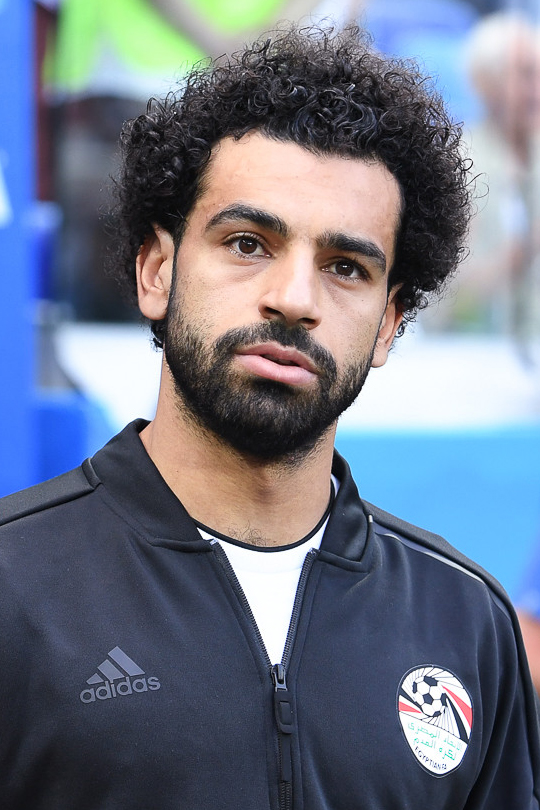
Photo: Анна Нэсси / Wikimedia Commons / CC BY-SA 3.0
The impact was instant and nuclear. In his first Liverpool season (2017-18), he scored 44 goals in all competitions. He broke the Premier League record for a 38-game season with 32 goals. He wasn’t just fast; he was now a cold-blooded finisher with both feet. Klopp’s heavy-metal football was the perfect stage. Salah, Sadio Mané, and Roberto Firmino formed a devastating trio. They won the UEFA Champions League in 2019, the Premier League in 2020, and every domestic cup. A mosaic on the Kop at Anfield calls him the “Egyptian King.”

His longevity is what separates great players from legends. Season after season, he delivered 20+ league goals. He became the fastest player in Liverpool’s history to reach 100 Premier League goals. He leaves as the club’s all-time top foreign goalscorer. His playing style, however, is built on explosive acceleration and changes of direction. Maintaining that peak physical output into his mid-thirties, especially for a player with his mileage, is a monumental ask. This reality frames his 2026 World Cup challenge.
The chant that defines him at Anfield, “Mo Salah, Mo Salah, running down the wing…”, set to the tune of Sit Down by James, captured his joyful, decisive style. His influence stretched beyond the pitch. A 2019 study from Stanford University noted a measurable decrease in anti-Muslim hate crimes in Liverpool after his signing, and he visibly attracted new Muslim fans to Anfield. He became a symbol of positive integration, a status rarely achieved by any athlete.
I remember watching his first Merseyside derby. He was quiet for 85 minutes, marked out of the game. Then he got one half-chance on his left foot, top corner. That was the lesson: his efficiency turned games even when he wasn’t dominating them. He turned volume into precision.
Salah’s World Cup Heartbreak: 2018 and 2022
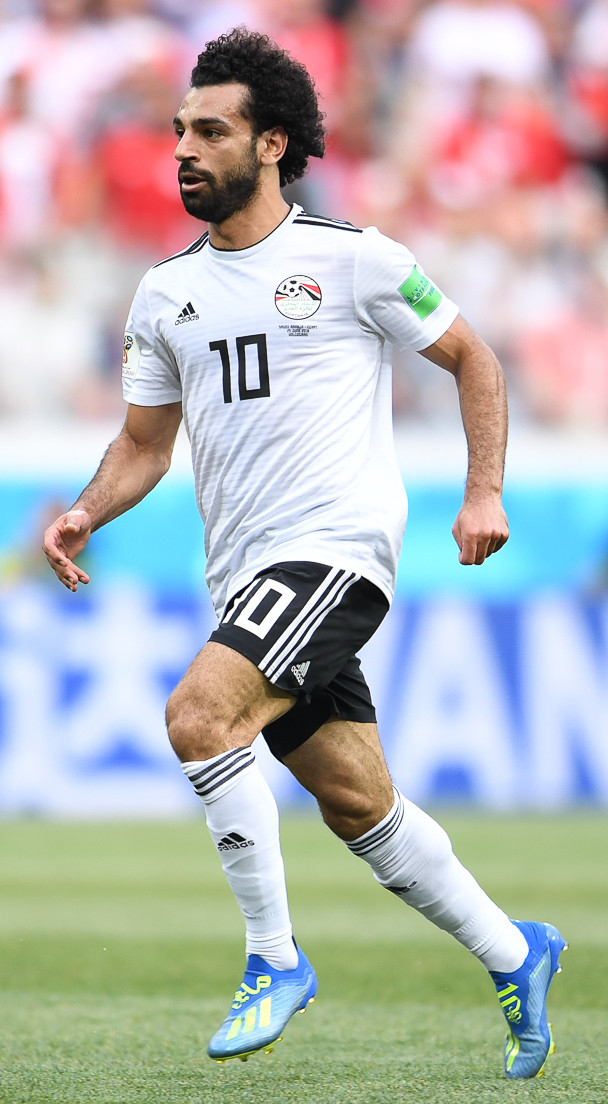
Photo: Анна Нэсси / Wikimedia Commons / CC BY-SA 3.0
For all his club glory, the World Cup stage has been a source of profound frustration for Salah and Egypt. The 2018 tournament in Russia was supposed to be a coronation. He had almost single-handedly qualified Egypt, ending a 28-year absence. Then, in the Champions League final just weeks before, a clash with Sergio Ramos dislocated his shoulder. He raced back to fitness but was a shadow of himself. He scored a penalty against Russia and a consolation goal against Saudi Arabia, but Egypt lost all three group matches. The dream ended with zero points.

2022 hurt more. Egypt reached the final African qualifying playoff against Senegal. After a tense two-leg tie, it went to penalties in Dakar. Laser pointers were shone into the eyes of Egyptian players, including Salah, as they stepped up. He skied his penalty over the bar. Senegal scored theirs. Egypt was out. The image of Salah, crouched on the pitch, encapsulated a nation’s despair. The narrative hardened: could the club king ever deliver for his country on the biggest stage?
| World Cup Cycle | Salah’s Role & Hurdle | Outcome for Egypt |
|---|---|---|
| 2018 Qualification | Top scorer in CAF qualifying with 5 goals. | Ended 28-year drought, qualified for Russia. |
| 2018 Tournament | Carried injury; scored 2 goals in 2 games. | Finished bottom of Group A (Russia, Uruguay, Saudi Arabia). |
| 2022 Qualification | Captain and talisman through group stage. | Lost in final playoff penalty shootout vs. Senegal amid laser disruption. |
| 2026 Qualification | Captain; focal point of attack at age 34. | Directly qualified as hosts (CAF slot); drawn in Group G. |
The mental toll of these near-misses is a real part of his story. While he has carried Egypt to two Africa Cup of Nations finals (2017, 2021), losing both, the World Cup void remains. This history makes the 2026 campaign deeply personal.
The 2026 Final Mission: Captain, Leader, Legacy
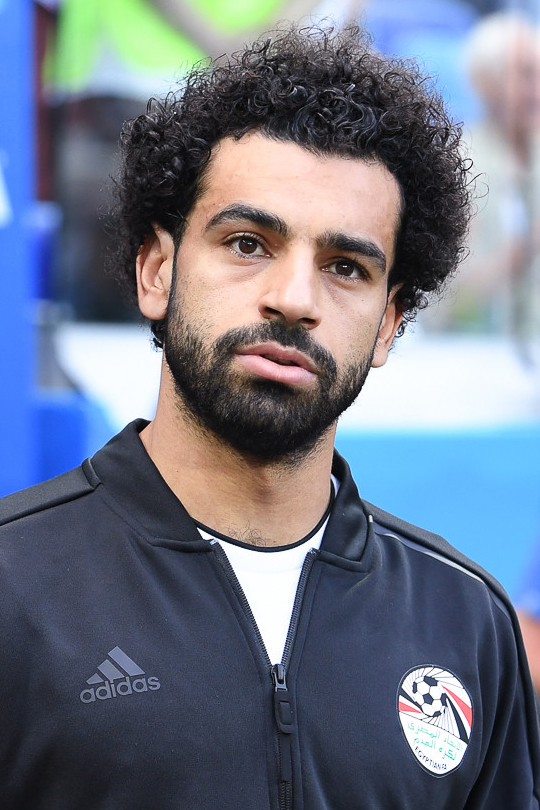
Photo: Анна Нэсси / Wikimedia Commons / CC BY-SA 3.0
Egypt qualified automatically for the expanded 2026 World Cup as one of Africa’s top-ranked sides. Salah, now 34, will captain the team. The tournament’s structure in North America, with games across the USA, Canada, and Mexico, presents a unique logistical challenge, especially for an aging star. Egypt’s group is tough: they face FIFA-ranked Belgium, a physical New Zealand, and a defensively organized Iran. The opening match against Belgium in Seattle will set the tone.
Salah’s role must evolve. He can no longer be the perpetual outlet sprinting in behind. Egypt’s coach will likely use him more as a central focal point, a playmaking forward who conserves energy for decisive moments in the box. His experience and penalty-box ruthlessness will be Egypt’s primary weapon. The team’s tactical setup, perhaps a compact 4-3-3 or a 4-2-3-1, will be designed to get him the ball in dangerous areas without demanding he cover the entire right flank.
The first test isn’t in June 2026. It’s in the preparation. Egypt has scheduled a high-profile friendly against Brazil in Cleveland. Matches like this are critical for building a competitive mentality and testing tactical plans against world-class opposition. For Salah, it’s also about managing his body. After leaving Liverpool, his next club choice will be scrutinized for how it prepares him for this final push. A move to a less physically demanding league could preserve him, but at the cost of sharpness.
Common mistake: Assuming Salah’s pace is irreplaceable for Egypt, his game intelligence and finishing will be more crucial in 2026, requiring the team to build attacks through him rather than just launching him in behind.
What Comes After the Final Whistle?
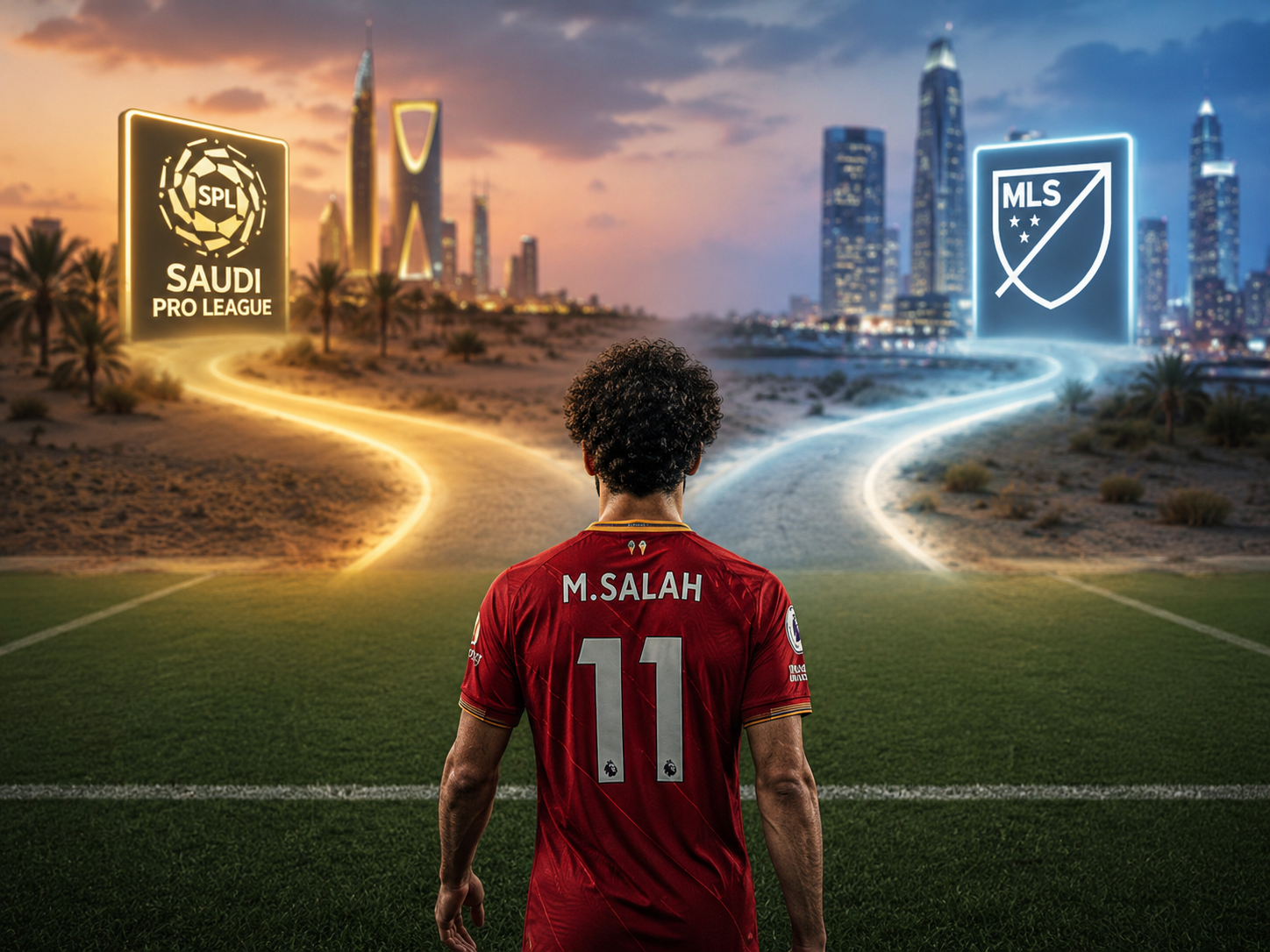
Salah’s departure from Liverpool at the end of the 2023-24 season marks the end of an era. He isn’t retiring. Speculation points to the Saudi Pro League, where Al-Ittihad had a massive offer rejected in 2023, or a possible move to Major League Soccer in the United States. His legacy, however, is secure. He is a Premier League immortal, a Liverpool legend, and arguably Africa’s greatest-ever export to European club football.
His final chapter with Egypt is still being written. Winning a World Cup match, advancing from the group, these are the tangible goals. But his impact transcends results. He has inspired a generation of Arab and African footballers. He has shown that elite success and quiet, devout professionalism can coexist. The story of Mohamed Salah isn’t just a footballing biography; it’s a modern saga of resilience, identity, and the relentless pursuit of a dream that remains, tantalizingly, just one more tournament away.
TL;DR: Salah’s 2026 World Cup is a legacy-defining mission requiring a tactical shift from pace to precision, with Egypt’s hopes resting on his evolved game intelligence in a challenging group.
Frequently Asked Questions
How many World Cup goals does Mohamed Salah have?
Mohamed Salah has scored two FIFA World Cup goals. He netted a penalty against Russia and a late goal against Saudi Arabia during the 2018 tournament in Russia, where Egypt was eliminated in the group stage.
Why did Mohamed Salah leave Liverpool?
Salah left Liverpool in the summer of 2024 after seven seasons, a year before his contract expired. The move was framed as a mutual decision to allow the club to transition and for the 31-year-old star to seek a new challenge, with strong interest from clubs in Saudi Arabia and the USA.
What is Mohamed Salah’s top speed?
Salah registered one of the highest recorded speeds in Premier League history, clocking 36.64 km/h (22.77 mph) during a match in 2021. This elite pace has been a fundamental part of his playing style, though he has increasingly relied on positioning and finishing as he has aged.
Has Mohamed Salah ever won the Africa Cup of Nations?
No, Mohamed Salah has not won the Africa Cup of Nations. He has finished as runner-up with Egypt twice, in 2017 (lost to Cameroon) and 2021 (lost to Senegal). Winning the AFCON remains one of his major unmet international ambitions.
What group is Egypt in for the 2026 World Cup?
Egypt is in Group G for the 2026 FIFA World Cup. Their group stage opponents are Belgium, New Zealand, and Iran. Their first match will be against Belgium at Lumen Field in Seattle, Washington.
The Bottom Line
Mohamed Salah’s career is a masterclass in overcoming rejection. The Chelsea castoff became an Anfield god. Yet, his narrative feels incomplete without a World Cup triumph. The 2018 injury and the 2022 laser-pointer loss are scars on an otherwise golden resume. The expanded 2026 tournament offers a final, clear shot at redemption. He will be older, smarter, and less reliant on the explosive speed that made his name. Egypt’s hopes will hinge on his ability to transform from a pure winger into a cunning penalty-box predator. Whether he lifts a trophy or merely wins that elusive first World Cup match, his journey from Nagrig to global icon is already one of football’s greatest stories. The last chapter is for legacy.
I come from the “soccer heart” of Germany, the Ruhrpott. I have played, trained and followed soccer all my life and am a big fan of FC Schalke 04. I also enjoy following international soccer extensively.