Following Takefusa Kubo’s Club Career and World Cup Impact
Takefusa Kubo’s World Cup impact for Japan will be defined by his evolution from a pure winger to a central playmaker. His technical refinement in La Liga now allows him to link play, create chances, and decide games from multiple attacking positions, making him the team’s essential creative force.
Takefusa Kubo’s career and World Cup story traces a path from a Barcelona academy prodigy to Real Sociedad’s offensive engine, evolving into Japan’s central creative force for the 2026 World Cup. His journey is defined by technical refinement in Spain’s top flight and a growing responsibility to lead his national team’s attack.
Most profiles still label him just a winger. That’s the outdated view. His value now comes from moving inside, linking play, and deciding games from multiple positions. Missing that shift means missing his real impact for Japan’s future.
This guide covers his full timeline, his tactical evolution, and why his next World Cup chapter looks completely different from his first.
Key Takeaways
- Kubo is no longer a raw prospect but an established La Liga starter for Real Sociedad, having moved permanently from Real Madrid after a series of developmental loans.
- His role for Japan has fundamentally changed from a peripheral winger to the central connective player in attack, a shift critical for their 2026 World Cup planning.
- He started both historic 2022 World Cup group stage wins against Germany and Spain, providing a direct, high-pressure introduction to tournament football.
- Following injuries to teammates like Kaoru Mitoma, Kubo has publicly embraced a leadership mantle, vowing to “carry” Japan’s offensive burden in the current qualifying cycle.
- His playing style combines a left-footed winger’s dribbling with a playmaker’s vision, ranking high in progressive carries, shot-creating actions, and successful take-ons.
Takefusa Kubo’s Career Timeline: From Prodigy to Pillar
Kubo’s path isn’t a straight line. It’s a map of strategic loans, patience, and a final landing spot that unlocked his consistency. He bypassed the typical youth club development path in Japan for a global audition at age 10.
Takefusa Kubo trained at FC Barcelona’s La Masia academy between 2011 and 2015, returning to Japan due to FIFA sanctions. This foundational period ingrained a possession-oriented, technically demanding style that distinguishes his play from many traditional wingers, emphasizing close control and receiving under pressure.
His professional debut for FC Tokyo at 15 years and five months made him one of the youngest professional players in J.League history. The “Japanese Messi” hype was a heavy label. It framed his next move: a 2019 transfer to Real Madrid.
He never played a competitive minute for Real’s first team. The next three years were a European tour: Mallorca (twice), Villarreal, Getafe. Each loan taught a different lesson. At Mallorca, he was the creative lifeline for a relegation battler. At Villarreal, he faced tactical discipline under Unai Emery. At Getafe, he learned physical survival.
The permanent move to Real Sociedad in July 2022 was the career reset. It offered stability, a clear role, and Champions League football. He scored on his debut. He’s now the player they build attacks around, not the loanee hoping to impress.
TL;DR: Kubo’s career is a masterclass in managed development: La Masia foundation, Real Madrid prestige, strategic La Liga loans, and a final breakout at a top-half club like Real Sociedad that trusts him as a starter.
Breaking Down His Playing Style and Positional Evolution
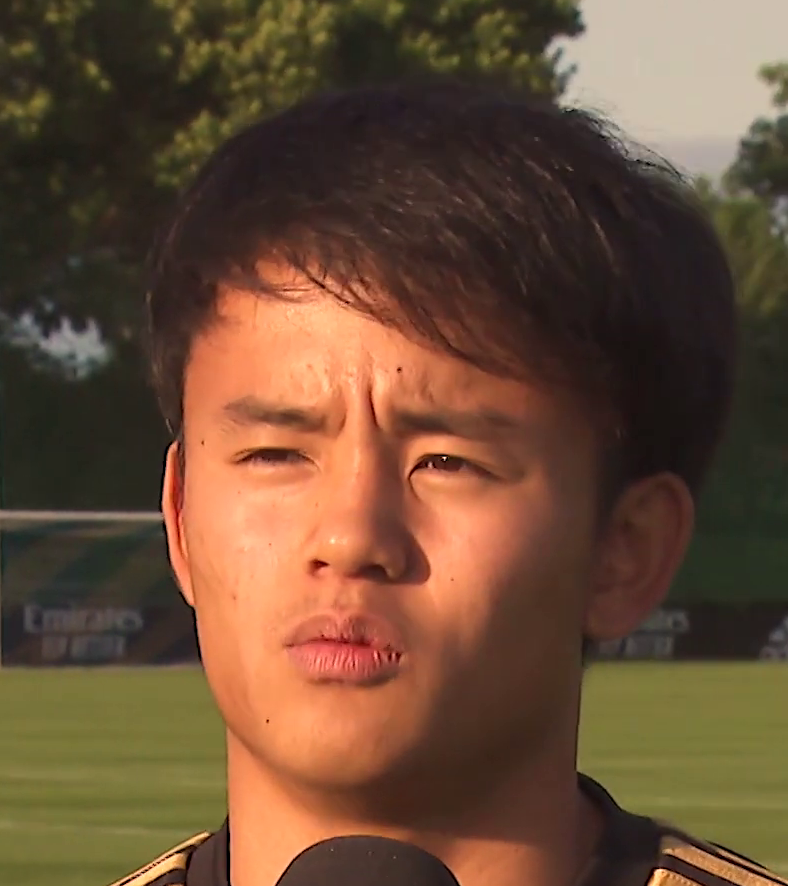
Photo: Real Madrid / Wikimedia Commons / CC BY 3.0

Calling Kubo a right winger is like calling a Swiss Army knife a blade. It’s true but incomplete. His game is built on a left foot that can both dribble past defenders and thread a final pass. The data shows why he’s so disruptive.
Scouting reports from FBref place him in high percentiles for progressive carries, successful take-ons, and shot-creating actions. He doesn’t just hold width. He drifts inside, pulls defenders, and creates space. His creative playmakers instincts are as sharp as his dribbling.
| Attribute | Strength | How It Translates |
|---|---|---|
| Dribbling | High success rate in 1v1 situations | Beats his marker to create numerical advantages or draw fouls in dangerous areas. |
| Final Third Passing | Excellent vision for through balls and cut-backs | Generates high-quality chances for teammates, not just for himself. |
| Off-Ball Movement | Intelligent positioning between lines | Finds pockets of space to receive the ball under pressure, a key skill in a modern soccer tactics guide. |
| Weak Foot | Reliant on his dominant left foot | Defenders can show him inside, though his agility often negates this. |
Common mistake: Evaluating Kubo only on goals and assists — his value is in ball progression and chance creation. He might have 4 goals in a season, but his team’s attack flows through his side of the pitch because he consistently breaks the first line of pressure.
His physical development is often overlooked. Early in his career, he could be muscled off the ball. Now, dedicated soccer-specific training and professional athlete diet tips have added core strength. He can receive a pass with a defender on his back, spin, and drive forward. That turns a safe possession into an attack.
Kubo’s Role for Japan and the 2026 World Cup Vision
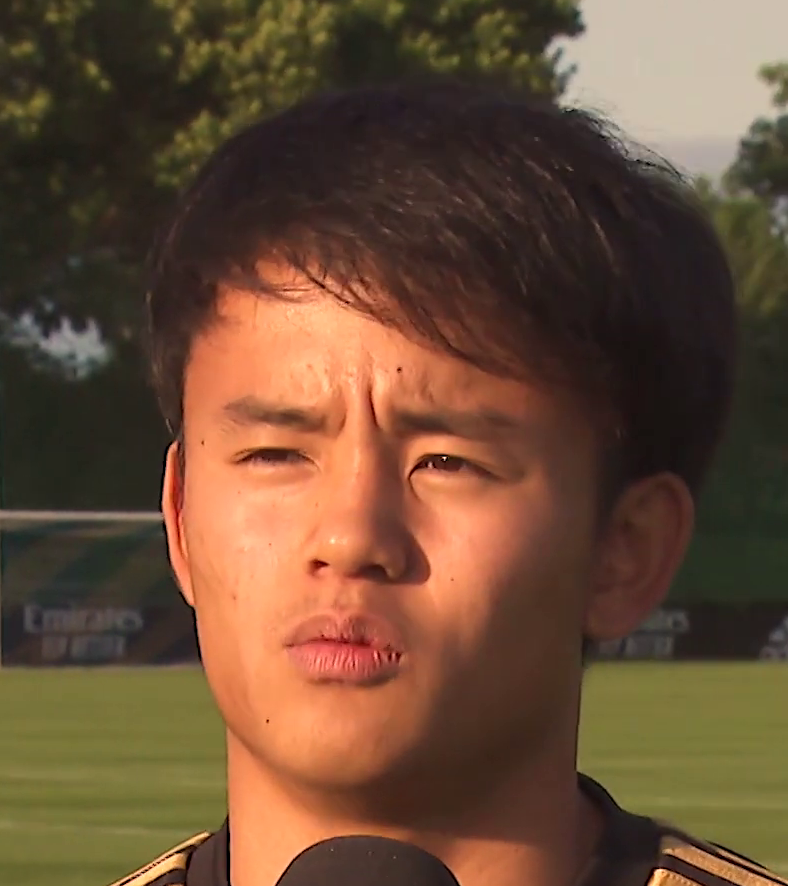
Photo: Real Madrid / Wikimedia Commons / CC BY 3.0
For Japan, Kubo has shifted from a talented option to the tactical centerpiece. At the 2022 World Cup, he was a starter in their stunning wins against Germany and Spain. His job was largely to provide width and 1v1 threat. The system worked around him.
The vision for 2026 is different. He is now the system. Coaches use him as a right-sided attacker who floats inside, a number 10, or even a false nine. He is the connector between Japan’s buildup and their final action. This was evident in 2026 qualifiers, where he scored and dictated play.
I watched Japan’s qualifier against Syria last year. Kubo got the ball deep, turned, and played a 40-yard pass that switched the entire point of attack. The move led to a goal. That’s the progression. He’s not just beating his man anymore; he’s seeing the game two steps ahead.
His public comments reveal a matured mindset. With Kaoru Mitoma injured, Kubo stated plainly he would “carry” the team. That’s leadership by action, not just by talent. He understands he’s no longer one of the promising youngest debutants; he’s the reference point.
| Tournament | Role | Key Contribution |
|---|---|---|
| 2022 World Cup | Starting right winger | Provided width and directness in historic group-stage wins over Germany and Spain. |
| 2026 Qualifiers | Central creative hub / floating attacker | Scores goals, creates chances, and links midfield to attack as the primary focus. |
| 2026 Projection | Tactical linchpin & leader | Expected to play every minute as Japan’s main source of chance creation and game control. |
This evolution makes Japan more versatile. They can play through him centrally or use him to unbalance defenses wide. It’s a luxury most national teams don’t have. His development mirrors the rise of other technical, versatile attackers who redefine their national team’s identity.
The 2022 World Cup: Baptism Under the Brightest Lights
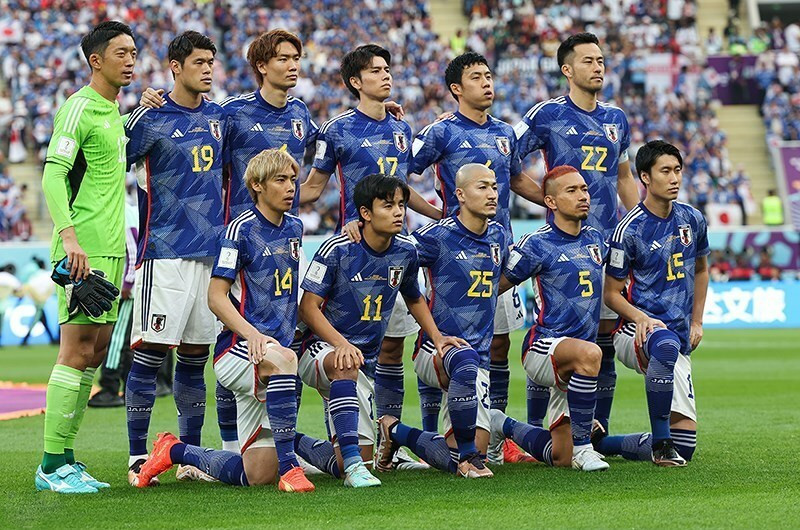
Photo: حسین ظهروند / Wikimedia Commons / CC BY 4.0
.jpg)
Kubo arrived in Qatar with 12 senior caps. He left having started two of the biggest upsets in the tournament. The pressure was absolute. Germany and Spain are possession monsters. For a young player whose game is based on having the ball, the challenge was psychological as much as technical.
He played 71 minutes against Germany. His role was disciplined: hold the right flank, press aggressively, and exploit spaces behind their advancing wing-backs. He didn’t score or assist, but his presence stretched the play. The famous winning goal came from his side of the pitch, after sustained pressure he helped create.
Against Spain, the task was different. He faced a tiki-taka machine. Japan’s game plan was to absorb and strike with minimal touches. Kubo’s technical security was vital. He had to control rare passes under intense pressure and make the right decision instantly. He played 68 minutes before being substituted as Japan protected their lead.
Common mistake: Thinking Kubo’s 2022 World Cup was quiet because he lacked a direct goal contribution — his work off the ball and tactical discipline were essential for Japan’s counter-attacking scheme to function against elite opponents.
That tournament was his graduate course. There’s no bigger classroom. The experience of those specific high-stakes minutes is irreplaceable. It removed any doubt about whether he belonged on that stage. For the 2026 cycle, he won’t be an exciting newcomer; he’ll be a seasoned leader expected to deliver from the first whistle.
How Kubo Compares to Other Japanese Talents in Europe
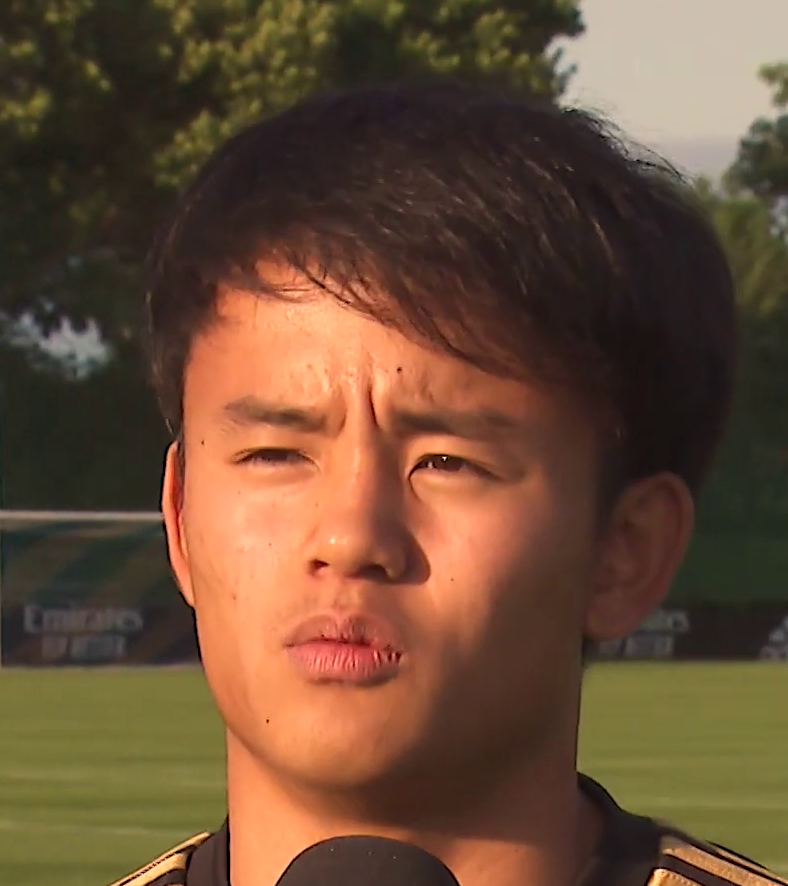
Photo: Real Madrid / Wikimedia Commons / CC BY 3.0
Japan’s export of talent is a production line. Kubo stands out not for being the first, but for his specific development path and current role. Unlike earlier pioneers like Hidetoshi Nakata or Shinji Kagawa, Kubo was groomed from childhood in a European academy system (La Masia).
Compared to his contemporary Kaoru Mitoma, another global star, the contrast is clear. Mitoma is a relentless, direct dribbler who operates almost exclusively on the left touchline. Kubo is more varied. He can dribble with similar effectiveness, but his passing range and tendency to roam centrally make him a different tactical tool.
He doesn’t possess the raw, explosive pacey wingers speed of a player like Alphonso Davies. His game is based on agility, close control, and football intelligence. In that sense, his style has more in common with certain South American soccer stars known for technical flair than with pure speed merchants.
His career stability at Real Sociedad also sets him apart. Many Japanese stars have moved frequently between clubs. Kubo, after his loan journey, has found a home at a club perfectly sized for his talent to be the main event, not a supporting actor. This consistency is crucial for his national team form.
What’s Next? Projecting the 2026 World Cup and Beyond

The roadmap is clear. Kubo will be 25 during the 2026 World Cup in North America. That’s prime age for a player of his profile. The expectation isn’t just participation; it’s dominance. Japan will need him to be their difference-maker in the tight, tense knockout stage drama that defines tournaments.
His club future is equally intriguing. Real Sociedad is a great platform, but his performances will attract interest from European giants. Another two seasons of growth and a strong World Cup could trigger a move to a club competing for the Champions League every year. The key will be finding a system that maximizes his versatility, not one that pigeonholes him.
The final step in his evolution is consistent end-product. Adding more goals to his creative game will elevate him from a top player to a world-class one. His professional player physique and conditioning suggest he has the durability for that workload.
For now, his story is one of patience meeting opportunity. He weathered the loan cycles, adapted his game, and seized a leading role for both club and country. The 2022 World Cup was his introduction. 2026 is set to be his showcase.
Frequently Asked Questions
How many World Cups has Takefusa Kubo played in?
Takefusa Kubo has played in one FIFA World Cup so far: the 2022 tournament in Qatar. He was named to Japan’s squad and started in two of their three group stage matches, the historic victories against Germany and Spain.
What is Takefusa Kubo’s current market value?
As a key starter for Real Sociedad in La Liga and a central player for the Japan national team, Kubo’s market value is consistently among the highest for Asian players. Precise figures fluctuate with the transfer market, but his consistent performance at a high level in Spain maintains a valuation reflecting his status as a proven European talent.
Why did Takefusa Kubo leave Real Madrid?
Kubo left Real Madrid permanently in 2022 because a clear path to the first team was blocked by established stars. After several developmental loans in La Liga, he needed a stable club where he could play regularly. Real Sociedad offered a permanent transfer, a starting role, and European football, which was the right step for his career progression at that time.
What number does Takefusa Kubo wear?
For his club, Real Sociedad, Takefusa Kubo wears the number 14 shirt. For the Japan national team, he has frequently worn the number 10 shirt, a number symbolic of a team’s primary creative player, reflecting his importance to the squad.
Is Takefusa Kubo injured?
Injury status changes constantly. As of late 2024/early 2025, Kubo has been active for both Real Sociedad and Japan. For the most current information on his fitness, always check the latest official news from his club or the Wikipedia biography of Takefusa Kubo for updated status.
The Bottom Line
Takefusa Kubo’s journey from child prodigy to national team pillar is a blueprint for modern player development. His career wasn’t derailed by early hype or challenging loans; it was refined by them. Today, he’s the technical heartbeat of a Real Sociedad side that competes in Europe and the declared leader of Japan’s attack.
Forget the “Japanese Messi” label. He’s carved out his own identity as a versatile, intelligent creator. The 2022 World Cup proved he could perform on the biggest stage. The next chapter, leading into 2026, is about defining it. His story is no longer about potential. It’s about impact.
I come from the “soccer heart” of Germany, the Ruhrpott. I have played, trained and followed soccer all my life and am a big fan of FC Schalke 04. I also enjoy following international soccer extensively.