The Full Story of the Manchester United Liverpool Rivalry
The Manchester United vs Liverpool rivalry is a bitter, century-old grudge match rooted in the industrial competition between the two cities and defined by a direct footballing power struggle for domestic supremacy. It transcends sport, embedding civic pride, historical resentment, and a global fanbase clash into every fixture.
Most explanations stop at “they’re both successful and close together.” That misses the point entirely. The hatred feels tribal because it is tribal, born from economic warfare long before a ball was kicked. Calling it just another derby is like calling a forest fire a campfire.
This guide breaks down the real layers. We’ll dig into the 19th-century economic fight, trace the footballing power shifts that poured gasoline on it, and compare it to Liverpool’s other major clashes. You’ll understand why a mid-table clash between these two in March still feels like a cup final.
Key Takeaways
- The core animosity stems from the 19th-century Industrial Revolution, where Manchester’s manufacturers built the Manchester Ship Canal to bypass Liverpool’s port taxes, creating lasting economic resentment.
- The football rivalry ignited when Sir Alex Ferguson explicitly targeted overtaking Liverpool’s then-record of 18 league titles, which United achieved in 2011, turning a civic clash into a direct sporting supersession.
- It is a “derby” only in a regional sense (North West England), but is distinctly different from a local derby like Liverpool-Everton, which shares familial ties; this is a hostile inter-city war.
- The fixture is statistically the most watched club football match in the world, regularly attracting a global TV audience exceeding 500 million, dwarfing El Clásico’s viewership.
- Direct player transfers between the clubs are virtually non-existent; the last direct move was Phil Chisnall from United to Liverpool in 1964, underscoring the deep institutional barrier.
What’s the Historical Root of the Hatred?
Forget football for a minute. In the 1800s, Manchester was the world’s workshop, pumping out cotton goods. Liverpool was the dominant port, the gateway to the world. Liverpool’s dock owners charged heavy tariffs on Manchester’s raw cotton imports and finished goods exports.
Manchester’s industrialists had enough. Their solution wasn’t a protest; it was an act of economic war. They dug the Manchester Ship Canal, a 36-mile industrial marvel completed in 1894, allowing ships to sail directly into Manchester’s heart, bypassing Liverpool entirely. Liverpool’s port trade and influence plummeted. The cities have been in a cold war ever since. This isn’t just background color. It wired a mindset of competition, resentment, and one-upmanship into the civic DNA. Football became the new battleground.
The construction of the Manchester Ship Canal (1894) is the non‑sporting genesis of the rivalry. It was a deliberate, costly infrastructure project designed to bankrupt Liverpool’s port, creating a lasting economic grievance that football later expressed.
When Newton Heath (later Manchester United) and Liverpool Football Club formed, they naturally channeled this existing civic tension. The rivalry was simmering long before Bill Shankly or Matt Busby. The Wikipedia article on the rivalry details how this economic context sets it apart from purely football-born feuds. This foundation explains why the passion feels different from a rivalry based solely on league position.
TL;DR: The hate started in the 1800s when Manchester built a massive canal to cripple Liverpool’s port economy. Football later gave that civic war a jersey and a ball.
How Did Football Turn Economic War into Sporting Hatred?
The football rivalry needed a spark. For decades, it was just another regional game. Then came the power shift. Liverpool, under Bill Shankly and Bob Paisley, dominated English and European football through the 1970s and 80s. Their identity was built on success and a sense of moral superiority—”the people’s club.”
Enter Sir Alex Ferguson. Upon arriving at Manchester United in 1986, he didn’t just aim to win titles. He made it personal. His famous, oft-repeated mission was to “knock Liverpool off their perch.” He wasn’t hiding his intent. This declared war transformed the dynamic. It was no longer just two big clubs playing; it was a deliberate, generational campaign for supremacy.
United’s dominance in the Premier League era, culminating in overtaking Liverpool’s record of 18 league titles in 2011, was experienced by Liverpool fans not as bad luck, but as a profound humiliation. It was Ferguson using football to win the old economic war all over again. Every United title in that era was a twist of the knife. The history of Manchester United football club is, in its modern epoch, a story of this deliberate dethroning.
The atmosphere reflects this. I’ve been to derbies in Germany where tension is high, but the Manchester-Liverpool bile is palpable in the stadium air 45 minutes before kickoff. It’s a quiet, simmering hostility. The chants are less about celebrating your own side and more about venomously attacking the history and tragedies of the other. This isn’t playful banter.
Common mistake: Thinking the rivalry is only about recent matches. The psychological weight comes from the 30‑year power transfer from Anfield to Old Trafford. A United fan born in 1990 has known only supremacy; a Liverpool fan born in 1990 has known only longing and resentment. That generational divide fuels the fire.
TL;DR: Alex Ferguson weaponized the existing civic rivalry by publicly vowing to destroy Liverpool’s footballing dominance—and then spent 20 years doing exactly that, layering sporting humiliation onto ancient economic grievance.
Manchester United vs Liverpool: By The Numbers
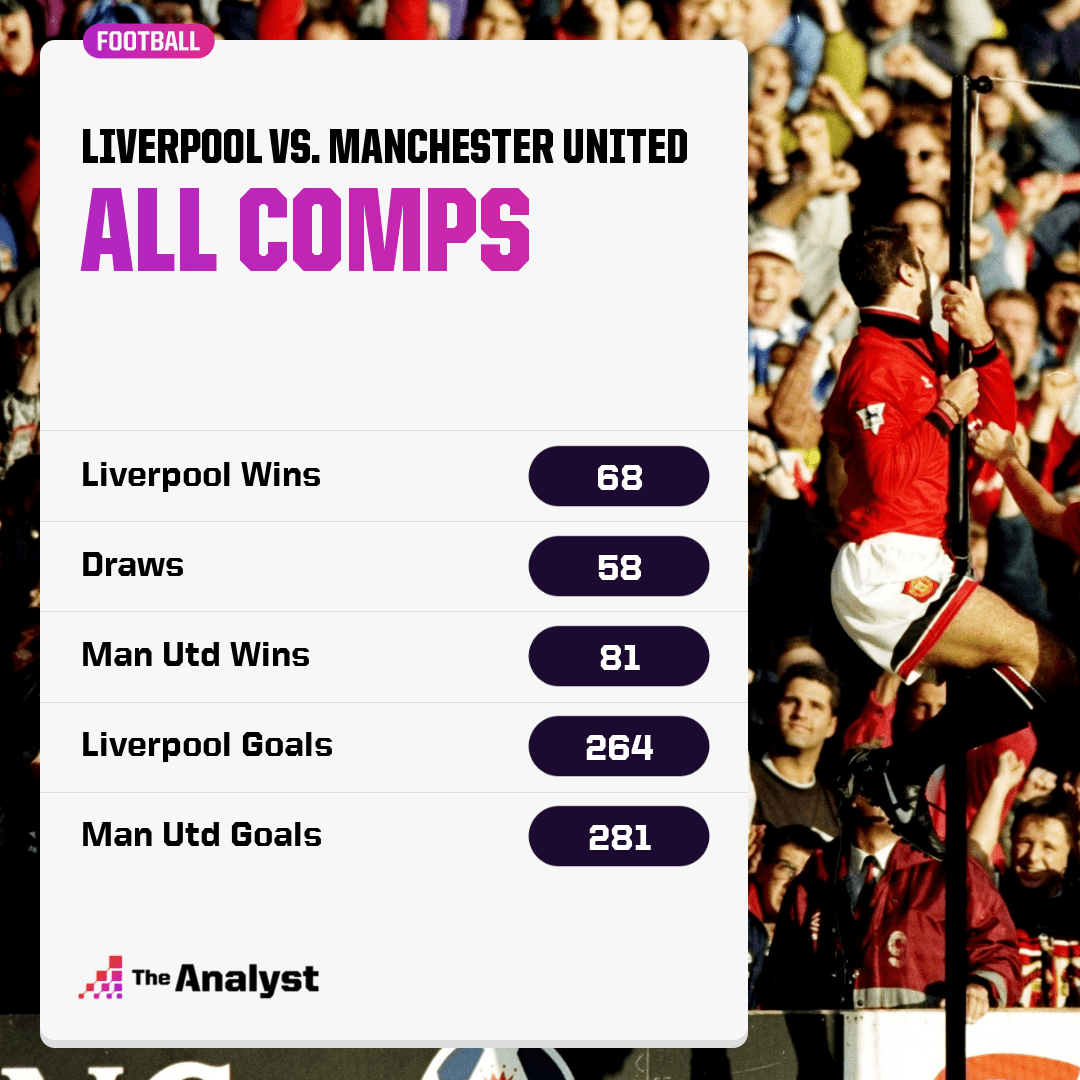
You can feel the rivalry in the stands, but the numbers tell their own story of a fiercely contested, high-stakes clash defined by its competitive balance and global pull.
| Metric | Manchester United | Liverpool | What It Tells Us |
|---|---|---|---|
| All‑Time Head‑to‑Head Wins | 85 | 72 | United leads, but not dominantly. The 218 total meetings show a long, close history. |
| Total Major Trophies | 68 | 69 | Near parity. The single‑trophy gap is a constant talking point and motivator. |
| Global TV Audience (Est. Average) | – | – | Over 500 million viewers. It’s the world’s most watched club fixture, a global event. |
| Last Direct Player Transfer | 1964 (Phil Chisnall) | – | A 60‑year transfer embargo proves the rivalry is institutional, not just fan‑based. |
| Highest Premier League Points | 91 (1999‑00) | 99 (2019‑20) | Both have set blistering title‑winning standards, pushing each other. |
The trophy count is a live wire. Liverpool’s 2020 Premier League title and 2022 Champions League final appearance briefly swung the “who’s bigger” debate. United’s recent FA Cup wins and periods of resurgence keep the argument raging. This isn’t a historical relic. It’s a perpetual, current competition for status. This competitive tension is a hallmark of the most intense soccer derbies.
The financial muscle is also part of the fight. United’s commercial revenue has long been a weapon, but Liverpool’s modern success under FSG has closed the gap, making their clashes a battle of philosophies as much as players. The global fan cultures of these two clubs are monolithic, turning every match into a worldwide event.
How Does It Compare to Liverpool’s Other Rivalries?
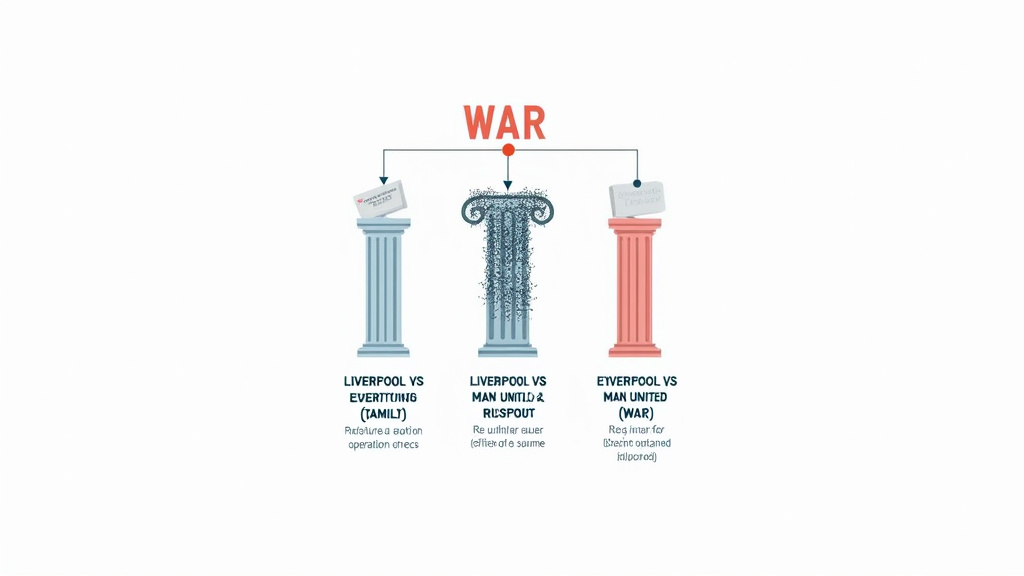
Calling it the “North West Derby” is technically correct but emotionally insufficient. To truly grasp its unique venom, you have to see it side-by-side with Liverpool’s other major fixtures.
| Rivalry | Liverpool vs Everton (Merseyside Derby) | Liverpool vs Manchester United | Liverpool vs Manchester City |
|---|---|---|---|
| Root Cause | Local Division. Split from the same club (Everton left Anfield). | Inter‑City War. Industrial/economic history & football power struggle. | Sporting Competition. Pure footballing rivalry for modern supremacy. |
| Fan Dynamic | “Friendly Derby.” Families split, shared city identity, historical solidarity in crises. | Pure Hostility. Deep-seated animosity, few mixed families, antagonistic. | Sporting Respect. Intense competition but without deep historical hatred. |
| Typical Match Tone | Chaotic, emotional, frantic. Known for red cards and passion. | Tense, brutal, psychological. A grudge match where form often goes out the window. | Technical, tactical, high‑quality. A chess match between elite teams. |
| Defining Era | 1980s FA Cup finals, the 1990s Premier League battles. | 1990s‑2010s (Ferguson’s war), the 2000s UCL clashes. | 2010s‑Present (Klopp vs Guardiola title races). |
The Merseyside Derby is a family argument. You might support different teams, but you’re from the same place, you ride the same bus, and you stood together after Hillsborough. The origin of the term derby often ties to local contests, and this is the purest form. The Manchester City rivalry is what happens when the two best teams in the country play breathtaking football for the biggest prizes. It’s about the sport itself.
The Manchester United rivalry is neither. It’s an inherited blood feud. You don’t have cousins who support United. The chants are darker. The 1990s saw the rise of particularly vicious terrace songs targeting the Munich and Hillsborough disasters, a crossing of a line that forever poisoned the well. This is where the passion of ultras subculture meets a historical grudge, though it’s critical to distinguish this intense rivalry from the violent confrontation of hooliganism.
TL;DR: Everton is family, City is a respected opponent. Manchester United is the historic enemy. The rules, the feelings, and the stakes are completely different.
What Defines a Modern United-Liverpool Clash Today?
The Ferguson era is over. Klopp has come and gone. Both clubs now experience cycles of success and rebuilding. Yet, the fixture loses none of its weight. Why?
First, the global audience ensures it’s always an event. For millions of fans from Singapore to Seattle, this is their first and biggest introduction to English football’s passion. The clubs are global brands, and this match is their Super Bowl. The media buildup is immense, dissecting every comment from managers and players for bulletin-board material.
Second, the match consistently defies current form. A Liverpool team chasing the title can trip up at a struggling Old Trafford. A mid-table United side can find a performance against a superior Liverpool team they can’t muster against anyone else. The psychological burden affects players. You can see the tension in their first touches. It’s not just another game, and everyone knows it.
The banter is less about current players and more about archeology. It’s a constant re-litigation of history. “20 times.” “You nearly won the league.” “Ole’s at the wheel.” The songs are weapons. The collective singing in these fixtures is less about encouragement and more about establishing psychological dominance and drowning out the enemy.
I remember watching a dull 0-0 draw at Anfield in the late 2010s. The football was terrible. But the stands were electric with noise for 90 minutes—a constant, aggressive hum of chants and counter-chants. The match was irrelevant. The tribal ritual was everything.
Modern elements add new layers. Social media acts as a global terrace, amplifying the hatred. The Greenwood and Antony sagas at United, or the Suarez-Evra incident from the past, become new chapters in the story. The rivalry absorbs everything.
TL;DR: Even without Ferguson or Klopp, the match is a massive global event where form is irrelevant, history is weaponized, and the 90-minute tribal ritual matters more than the result.
Frequently Asked Questions
Is Manchester United vs Liverpool a derby?
Yes, but not in the traditional local sense. It’s a regional “North West Derby.” True local derbies, like Liverpool-Everton, involve clubs from the same city. This clash is better understood as a inter-city rivalry, a North West Derby clash fueled by deeper historical tensions beyond geography.
Who has the better head-to-head record?
As of 2026, Manchester United holds the advantage with 85 wins to Liverpool’s 72, with 61 draws in 218 total meetings. However, Liverpool leads the all-time major trophy count 69 to 68, making the overall competition incredibly tight.
Why are there almost no transfers between United and Liverpool?
The rivalry is institutional. The last direct transfer was Phil Chisnall from United to Liverpool in 1964. The clubs, and the fan bases, consider it unthinkable. A player moving directly would face immense hostility, making it a career risk few are willing to take.
What is the most famous match in this rivalry?
The 1999 FA Cup fourth-round tie where United’s last-minute winner (from a Liverpool-born player, Ole Gunnar Solskjær) is iconic. More recently, Liverpool’s 5-0 win at Old Trafford in 2021 and United’s dramatic 4-3 FA Cup quarter-final win in 2023 are modern classics that capture the fixture’s unpredictable drama.
How does the rivalry affect players?
Immensely. Players often speak about the unique pressure and intensity of the fixture. The weight of history is palpable. Mistakes are magnified, and heroes are made. Performing well in this match instantly earns legendary status with the fanbase, while a poor performance can define a player’s tenure.
The Bottom Line
The Manchester United vs Liverpool rivalry isn’t something you just watch. You have to feel the history in the air—the 19th-century economic spite, the 30-year footballing war of attrition, the global tribal lines drawn in living rooms from Berlin to Bangkok. It’s more visceral than El Clásico and more hate-filled than any local derby.
Understanding it requires looking past the league table. It’s about a canal dug out of spite, a Scottish manager’s vendetta, and two sets of fans for whom the other’s existence is a perpetual affront. That’s why a 0-0 draw in March can feel more significant than a cup final. It’s not about the points. It’s about the perpetual, unwinnable argument over who truly rules the northwest of England. The fight in the boardrooms and on the pitch is just the latest battle in a war that was already centuries old.
I come from the “soccer heart” of Germany, the Ruhrpott. I have played, trained and followed soccer all my life and am a big fan of FC Schalke 04. I also enjoy following international soccer extensively.