Corner Kick to Goal: Can You Score Directly? Olimpico Rule
Yes, you can score a goal directly from a corner kick. This specific, rare feat is called an Olimpico goal. The ball must be stationary within the corner arc, and the kicker cannot be offside. The rule allowing this was formalized by the International Football Association Board on June 14, 1924.
Most people think a corner is just for crossing. They watch the taker swing the ball into a crowded box, hoping for a header. The idea of curling it straight in from the flag seems like a trick shot, maybe even against the rules. It isn’t.
Let’s break down exactly how an Olimpico goal works, why it’s one of football’s rarest events, and the specific players who have pulled it off when it mattered most.
Key Takeaways
- An Olimpico goal is a direct score from a corner kick, legal since IFAB’s 1924 rule change.
- It is physically extremely difficult due to the acute angle, requiring severe swerve to beat both defenders and the goalkeeper.
- You cannot score an own goal directly from your own corner; if the ball goes directly into your net, the opposition gets a corner.
- Offside does not apply to the attacking team directly from a corner kick, a key exception to offside.
- Famous executors include Megan Rapinoe, Toni Kroos, and Cesáreo Onzari, who scored the first recorded one in 1924.
The Olimpico Goal: A Legal Rarity
The laws are clear. Law 17 of the IFAB Laws of the Game governs the corner kick. It states a goal may be scored directly from a corner kick, but only against the opposing team. This formalized a change that had been debated for years.
A goal may be scored directly from a corner kick, but only against the opposing team. If the ball enters the kicker’s own goal directly from the corner kick, the opposing team is awarded a corner kick. The ball is in play when it is kicked and clearly moves.
The “Olimpico” nickname has a specific origin. Argentina’s Cesáreo Onzari scored the first recognized direct corner goal on October 2, 1924, against Uruguay. Uruguay had just won the football gold medal at the 1924 Paris Olympics. Argentine journalists dubbed the goal “el gol olímpico” as a dig at the newly crowned Olympic champions. The name stuck.
TL;DR: Scoring directly from a corner is legal and called an Olimpico goal, a rule set in 1924 after the first famous instance.
Why It’s Nearly Impossible: The Physics Behind the Impossibility
Forget the rulebook for a second. Executing it is the hard part. The geometry is brutal. You are shooting from a point almost parallel to the goal line. The target is a rectangle 7.32 meters wide and 2.44 meters high, but your direct line of sight is blocked by the near post and a crowd of bodies.
To score, the ball must follow a trajectory with extreme lateral movement. You need either a violent inswinger (curving toward the goal) or a deceptive outswinger that bends back late. The ball must clear the first defender at the near post, who is stationed there precisely to stop this, then dip and swerve inside the far post before the goalkeeper reacts.
The margin for error is millimeters. Hit it too flat, it goes out for a throw-in on the far side. Hit it with too much loft, it floats harmlessly over the bar or into the goalkeeper’s hands. Add wind, a moving ball on the arc, and the pressure of a match, and the difficulty multiplies.
Common mistake: Assuming any good cross equals a good direct shot — the required ball spin and point of contact are completely different. A cross aims for a teammate’s head; a direct shot must beat everyone.
Olimpico vs. Own Goal: The Critical Rule Distinction
This is where people get confused. The symmetry you expect isn’t there. You can score for your team directly from a corner. You cannot score an own goal directly from your own corner.
The rule is explicit. If you take a corner and the ball swings directly into your own net without touching another player, the restart is not a goal. The opposition is awarded a corner kick from the same side. This prevents a bizarre and unfair method of conceding. This clause was added to the laws in 1997, closing a strange loophole.
Contrast this with a direct free kick, where you can score an own goal directly. The distinction exists because a free kick can be taken from anywhere, often centrally, making an own goal a genuine defensive error. A corner’s position makes a direct own goal more of a fluke than a skill.
| Scenario | Direct from Attacking Corner | Direct from Defending Corner |
|---|---|---|
| Ball enters opponent’s goal | Goal awarded. Olimpico goal. | Corner kick to opposition. |
| Ball enters your own goal | Corner kick to opposition. | Not applicable (you don’t take corners on your own goal). |
| Offside applies? | No. | No. |
Famous Olimpico Goals and the Players Who Made History
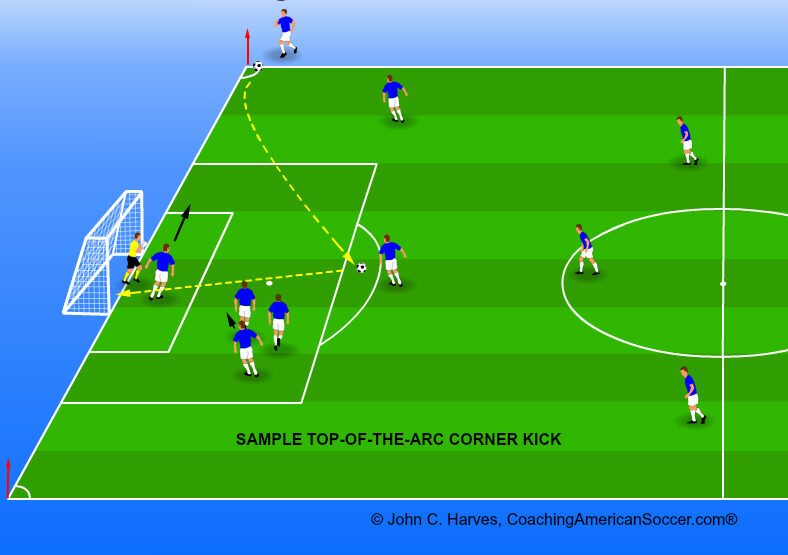
While rare, the Olimpico has a storied list of perpetrators. It’s a mix of deliberate practice and glorious accident. The first, as noted, was Onzari in 1924. The most historically significant might be João Morais’s for Sporting CP against MTK Budapest in the 1964 European Cup Winners’ Cup final. It was the only goal of the match.
In the modern era, the technique hasn’t been lost. Megan Rapinoe is the only player to score two at the Olympic Games (2012 and 2020). Toni Kroos did it for Real Madrid against Schalke in the Champions League—a moment of sheer technical audacity on a huge stage. Douglas Luiz managed it for Aston Villa in a 2023 Premier League match.
I remember watching Kroos’s goal live. The commentators were stunned. It wasn’t a fluke; you could see him eye the near post and deliberately shape his body for the inswing. The keeper was rooted. That’s the difference between luck and a practiced, high-risk skill.
Here’s a look at some of the most notable Olimpico scorers:
| Player | Team | Opponent | Year | Note |
|---|---|---|---|---|
| Cesáreo Onzari | Argentina | Uruguay | 1924 | First recorded Olimpico. |
| João Morais | Sporting CP | MTK Budapest | 1964 | Decided a European final. |
| Megan Rapinoe | USA (USWNT) | Multiple | 2012, 2020 | Only player with two Olympic Olimpicos. |
| Toni Kroos | Real Madrid | Schalke 04 | 2015 | Champions League knockout stage. |
| Douglas Luiz | Aston Villa | Various | 2023 | Recent Premier League example. |
The Tactical Reality: Why Managers Don’t Plan For It
If it’s legal and can win games, why don’t teams design set plays for it? The numbers tell the story. Only about 3.2% of all corners result in any kind of goal. The subset of those that are direct Olimpico goals is a fraction of that fraction. The expected value is too low.
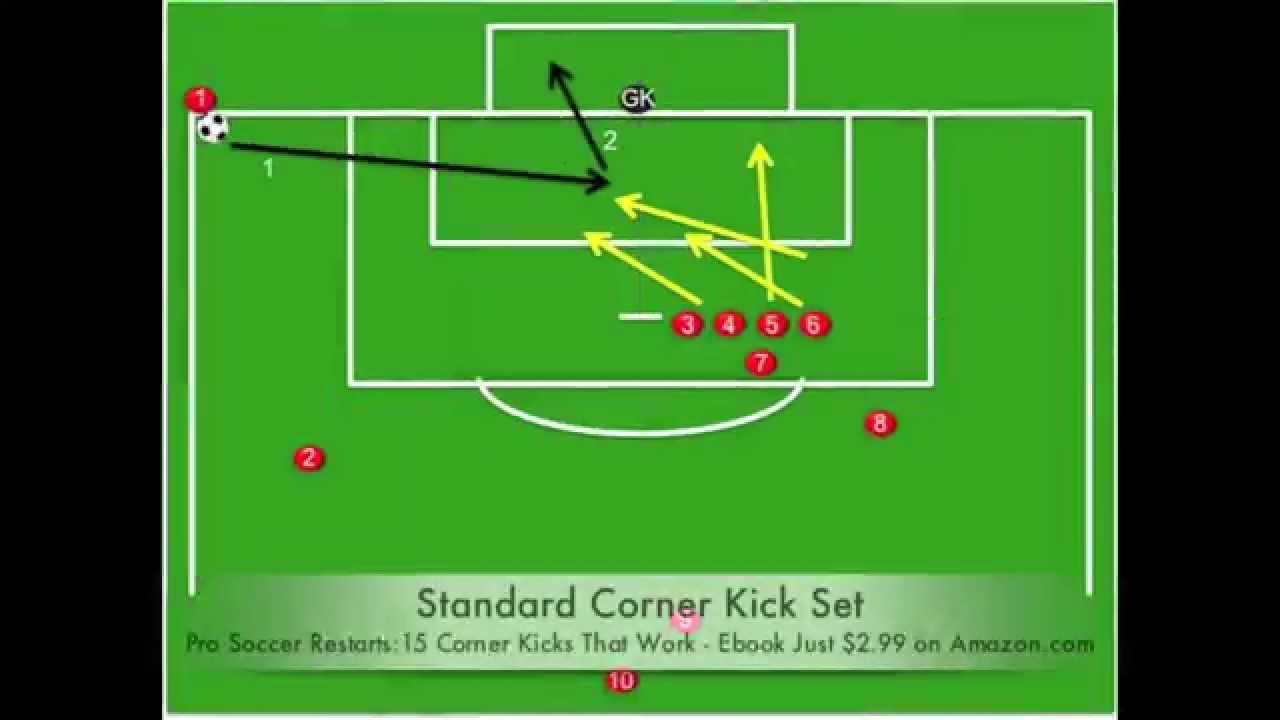
A manager’s priority on a corner kick is creating a high-percentage chance. That means delivering the ball to an area where your tallest or best headers of the ball can attack it. You organize blockers, runners, and a specific delivery zone. Attempting a direct shot surrenders all of that coordinated threat for a lottery ticket.
Furthermore, a failed direct shot is a terrible turnover. It usually results in a goal kick for the opponent, granting them possession and a chance to break. It’s a high-risk, low-reward strategy. The only tactical time to try it is if you spot the goalkeeper catastrophically out of position, cheating toward his far post to anticipate a cross.
Common mistake: A goalkeeper staying on his line for a cross. For an Olimpico, the keeper must be alert to the direct threat and position himself a step toward the near post, cutting off the angle. Many Olimpico goals are as much a keeper error as a taker’s genius.
How It Compares to Other Direct Restarts
The Olimpico sits in a special category. Other restarts allow direct shots, but with different conditions and frequencies.
A direct free kick is the classic comparison. Taken from a central or wide position, with a defensive wall blocking part of the goal, it still offers a more direct angle than a corner. Goals from direct free kicks are uncommon but planned for; players like Beckham dedicated their careers to them.
A penalty kick is the ultimate direct restart, with an 80%+ conversion rate. The angle is straight on, the distance is fixed, and only the goalkeeper can defend it. There is no comparison in difficulty.
Then there’s the goal kick. A goalkeeper can score directly from one, but it’s even rarer than an Olimpico due to the enormous distance. It requires a huge wind assist or a monumental error by the opposing keeper.
| Restart Type | Can Score Directly? | Relative Difficulty | Common Strategy |
|---|---|---|---|
| Corner Kick | Yes (Olimpico) | Extremely High | Cross into penalty area. |
| Direct Free Kick | Yes | High | Shoot over/around wall. |
| Penalty Kick | Yes | Low | Place shot past keeper. |
| Goal Kick | Yes | Nearly Impossible | Launch long to midfield. |
| Throw-in | No | Not Allowed | Throw to teammate’s feet. |
The Olimpico is unique because its extreme difficulty arises from its fixed, awful angle, not from defensive pressure like a free kick wall.
Practicing the Impossible: Could You Ever Do It?

Realistically, no. Not in a competitive match. The coordination required is at the outer limit of professional skill. Players like Alvaro Recoba famously practiced for hours, trying to master the bend. Most who have scored one admit it was at least partly intentional, but also relied on a gust of wind or a keeper’s blunder.
For the amateur, the practice is purely for fun. The steps are simple in theory:
1. Place the ball firmly in the corner arc.
2. Aim for the far post intersection of the crossbar and goalpost.
3. Strike the ball with the inside of your foot for inswing, or the outside for outswing, applying massive side spin.
4. Put enough loft to clear the near-post defender but enough pace to beat the keeper’s dive.
You’ll fail hundreds of times for every one that ripples the net. The satisfaction, however, is unmatched. It represents a pure triumph of technique over geometry.
TL;DR: Practicing an Olimpico is a fun technical drill, but its success rate is so low that no serious game plan should rely on it.
Frequently Asked Questions
Has Lionel Messi ever scored an Olimpico goal?
No. Despite taking hundreds of corners throughout his career, there is no recorded instance of Lionel Messi scoring directly from one. This underscores the rarity of the feat; even the most technically gifted player of his generation never achieved it in official competition.
What’s the difference between a direct and indirect free kick in this context?
direct free kick allows you to score directly against the opposing team. An indirect free kick requires the ball to touch another player before a goal can be scored. A corner kick is treated like a direct free kick in this sense—you can shoot directly for goal.
Can the goalkeeper score from a goal kick like an Olimpico?
Yes, a goalkeeper can score directly from a goal kick. It is even rarer than an Olimpico due to the greater distance. The ball must travel the entire length of the field and enter the opponent’s goal without touching another player.
Why is a player not offside from a corner kick?
The offside rule has specific exceptions. A player cannot be offside when receiving the ball directly from a corner kick, a throw-in, or a goal kick. This is detailed in the exceptions to offside and encourages attacking play from these restarts.
Who has scored the most Olimpico goals?
No single player holds a record for multiple Olimpico goals in top-flight football due to its extreme rarity. Megan Rapinoe’s two in Olympic competition is likely the highest recorded tally in major international tournaments.
The Bottom Line
Scoring directly from a corner kick is a legal, celebrated, and brutally difficult art. The Olimpico goal stands as a testament to perfect technique meeting rare opportunity. While you’ll almost never see it as a planned tactic, its occasional eruption—from Onzari in 1924 to Kroos in the Champions League—reminds us why we watch. It’s the sport’s capacity for sudden, breathtaking skill that defies the odds. Remember the rule, appreciate the physics, and if you ever see one live, you’ve witnessed a genuine piece of footballing rarity.

I come from the “soccer heart” of Germany, the Ruhrpott. I have played, trained and followed soccer all my life and am a big fan of FC Schalke 04. I also enjoy following international soccer extensively.