What Is a Throw-In in Soccer? Rules, Mistakes & Strategy
A throw-in in soccer is the method used to restart play after the entire ball has crossed the touchline. It is awarded to the opponents of the player who last touched the ball before it went out. The player taking the throw must deliver the ball with both hands from behind and over the head, with both feet on or behind the line.
Most players get this wrong before they ever touch the ball. They sprint to grab it, desperate for a quick restart, and forget the three things that get whistled every weekend: foot placement, hand motion, and release point. A foul throw gives the ball right back to the other team. It kills momentum.
This guide breaks down Law 15 of the game. We will cover the exact procedure, the most common violations referees call, and the tactical choices that separate a simple restart from a real attacking weapon.
Key Takeaways
- The throw must be taken from the precise spot the ball left the field. Guessing costs you yards and annoys the assistant referee.
- Both feet must stay on the ground, on or behind the line, until the ball is released. Lifting a heel is the most common foul throw at youth level.
- You cannot score directly from a throw-in. If the ball flies into the net, the restart is a goal kick for the opponent.
- The thrower cannot touch the ball again until another player has made contact. Touch it first and you concede an indirect free kick.
- Use a long throw into the penalty area as a set-piece weapon, but only if you have a player who can deliver it with legal technique and consistent aim.
The Official Definition and Purpose
A throw-in is a restart, not a punishment. It returns the ball to active play after it has fully crossed the boundary line on either side of the pitch, known as the touchline or sideline. The award is straightforward: the team that did not touch the ball last gets to throw it back in.
The core principle is fairness. If your team kicks it out, you lose possession. The opposing team gets a chance to resume play from that exact spot. This rule prevents teams from casually booting the ball into the stands to waste time or relieve pressure. The modern game’s emphasis on continuous play makes a quick, accurate throw a valuable skill. A slow, sloppy throw kills your team’s rhythm and lets the defense organize.
The throw-in is taken from the point where the ball passed over the touchline. The thrower must face the field of play, have part of each foot on the touchline or on the ground outside it, and use both hands to deliver the ball from behind and over the head. The ball is in play immediately upon entering the field.
TL;DR: It’s a fair-play restart from the sideline, governed by strict technical rules to keep the game moving.
The 4-Step Procedure for a Legal Throw-In
Get these four elements right every single time. Missing one turns your restart into their restart.
1. Find the Exact Spot
The throw must be taken from the point where the ball completely crossed the touchline. This is the assistant referee’s primary job—they point their flag along the line to indicate the location. Take it from there. Taking it five yards further upfield is stealing, and a savvy referee will make you move back. Taking it from the wrong spot is an easy way to annoy the official and get called for a foul throw on a technicality.
2. Set Your Feet
This is where eyes go first. Part of each foot must be on the touchline or on the ground outside the touchline. The soles of your boots must be in contact with the turf. You cannot have a foot entirely in the field of play. More importantly, both feet must remain on the ground until the ball is released. That back foot likes to sneak up onto the toes. Keep it flat.
3. Grip and Throw
Use both hands. Place them on opposite sides of the ball or behind it. The throw must start from behind your head and travel directly over it. The motion must be continuous—you cannot stop and start. The power comes from a coordinated arch of the back and snap of the shoulders, not just the arms. A proper throw has backspin, which makes it easier for a teammate to control.
4. Release into the Field
The ball must enter the field of play directly from your hands. It cannot touch the ground outside the touchline first. If you drop it at your feet or it bounces before crossing the line, the throw is retaken by your team—provided everything else was legal. This is not a foul throw, just an incorrect restart. The moment the ball breaks the plane of the line, it is live.
What Can and Cannot Happen Next?
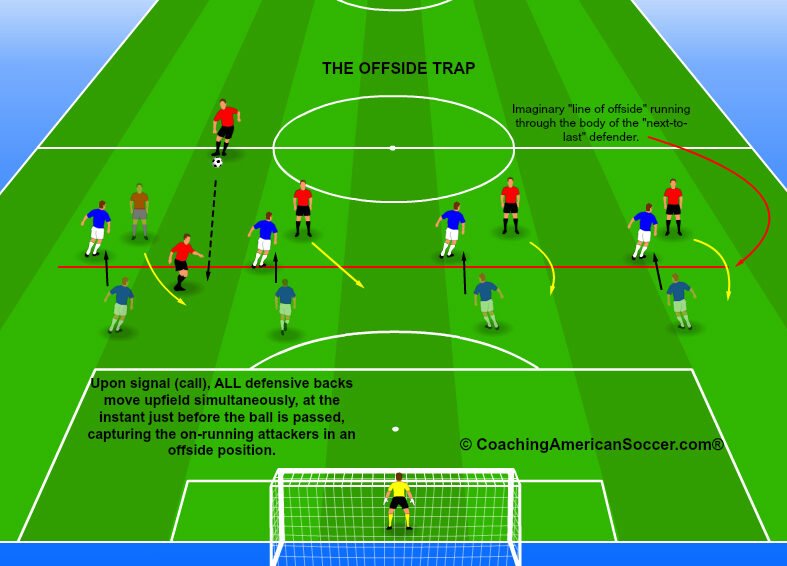
The ball is in play. Now what? The laws put specific constraints on what follows a throw-in.
| Action | Is It Allowed? | Result if Not Allowed |
|---|---|---|
| Score directly | No | Goal kick (if thrown into opponent’s goal). Corner kick (if thrown into your own goal). |
| Thrower touches ball first | No | Indirect free kick to the opposing team from where the second touch occurred. |
| Opponents stand too close | No | Referee can caution for unsporting behavior if they unfairly distract. The throw is retaken. |
| Be offside from a throw | Yes | The offside rule is suspended. A player cannot be offside directly from a throw-in. |
| Throw-in from inside penalty area | Yes, if ball exited there | You can take a throw-in from inside your own penalty area. Defenders must still respect the 2-meter distance. |
Common mistake: The thrower receiving a quick return pass — the thrower cannot be the next player to touch the ball. Wait for a teammate or opponent to touch it first, or you give away an indirect free kick in a dangerous position.
The most famous quirk is the offside exemption. A player can be in an offside position when the throw is taken and still legally receive the ball. This allows for immediate long throws into the box towards attackers who have made clever runs. It is a unique tactical loophole.
Conversely, you can never score directly. I have seen a youth goalkeeper, under no pressure, attempt a long throw that sailed over his opposite number’s head and into the net. The celebration lasted three seconds before the referee correctly signaled for a goal kick. The entire bench knew the rule five seconds too late.
Common Throw-In Mistakes & How to Avoid Them
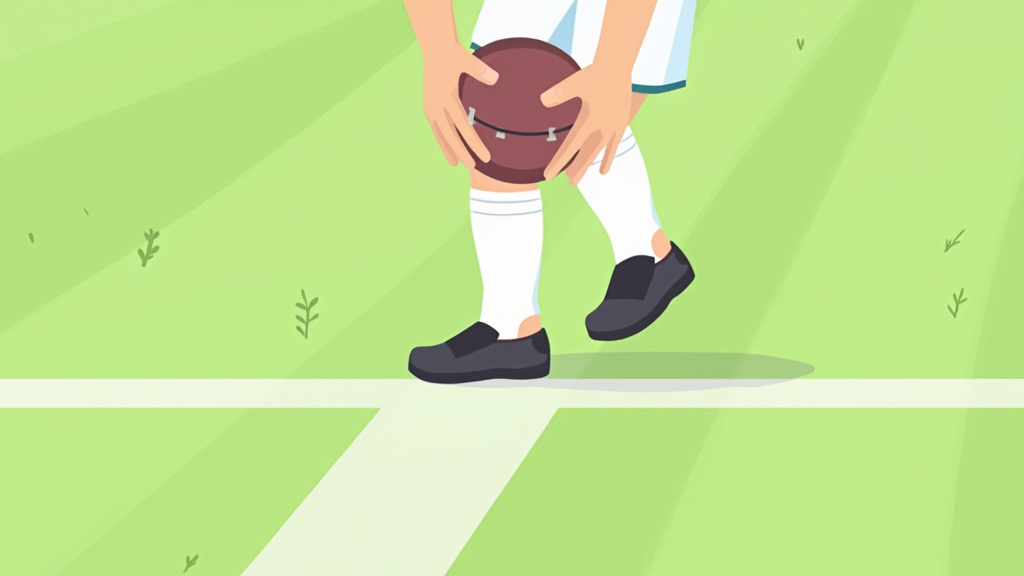
Referees see the same errors every match. Knowing them is the first step to elimination.
The Foot Fault
Lifting a foot, or dragging a toe across the line into the field before release. This is a foul throw. The fix is deliberate practice: rehearse your motion slowly, focusing on keeping both feet planted like they are glued down. The power comes from your core, not a running start.
The One-Handed Heave
Using mostly one hand to propel the ball, often with a sidearm motion. This is illegal. The ball must come from behind and over the head with both hands applying equal force. A one-handed throw might go farther, but it will always be called back. For true distance, work on shoulder flexibility and core strength while maintaining the two-handed, overhead form.
The Incorrect Location
Taking the throw from a spot more advantageous than where the ball went out. Assistant referees are specifically trained to monitor this. Their flag is your guide. Arguing over two yards is pointless and marks you as someone trying to cheat the system.
The 5-Second Delay
Deliberately wasting time by not retrieving the ball or refusing to take the throw. The referee will start a mental five-second count. Exceed it, and they can award the throw to the other team. This is a pure gamesmanship penalty. Have a designated player ready to take quick throws on your side of the pitch.
Strategic Uses: More Than Just a Restart
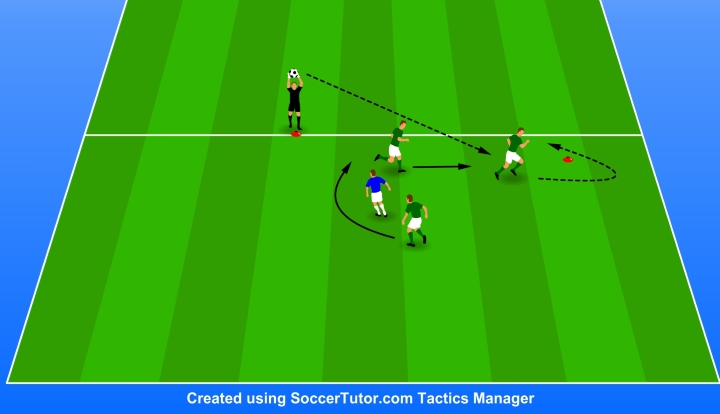
A throw-in is a set piece. Treating it as a mere restart wastes an opportunity. The best teams have a plan.
The Quick Throw
The most underused weapon. If the ball goes out and the opposing team is disorganized, take the throw immediately to the feet of an unmarked teammate. The opposing defenders are often still turning, organizing, or arguing. The official IFAB soccer rulebook PDF mandates that opponents must respect the 2-meter distance, but if you are fast, they will not have time to set up. This can launch a counter-attack before a defensive defensive wall can form.
The Long Throw
A specialized tactic. A player with a powerful, legal long throw can launch the ball directly into the penalty area, turning it into the equivalent of a corner kick. The offside exemption makes this especially dangerous. Teams like Stoke City under Tony Pulis famously used this as a primary attacking tool. It requires a thrower who can consistently hit a target and tall, physical players attacking the ball.
The Retained-Possession Throw
The safest option. Throw the ball backward to a defender or midfielder who has checked away from pressure. This maintains control and allows your team to rebuild its shape from the back. It is the default choice when no attacking option is on.
Choosing the right option depends on the game state, score, and your team’s strengths. Coaches should drill these scenarios. A team that only ever takes short, safe throws is leaving strategic points on the table.
The Referee’s Role and Common Interpretations
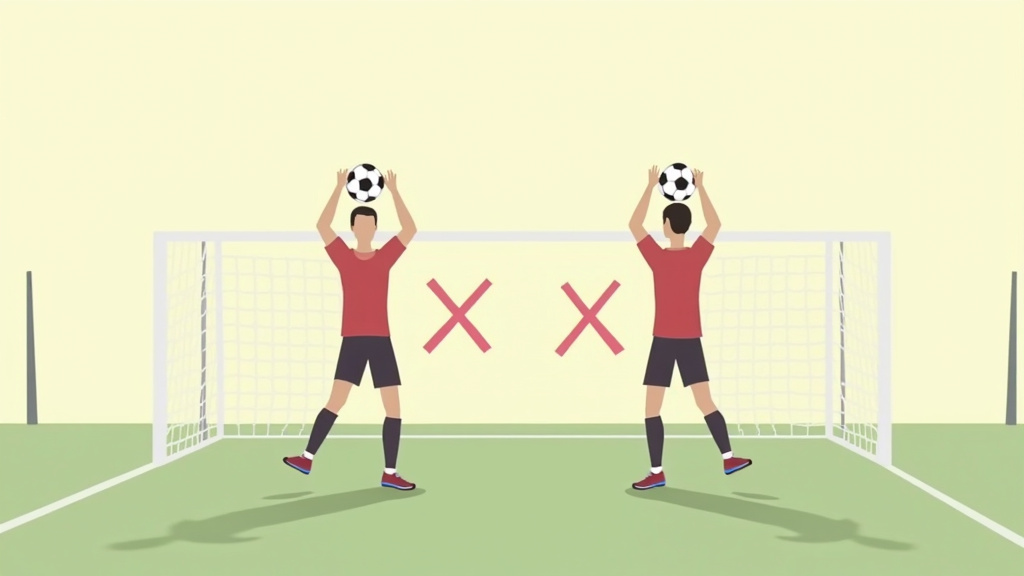
The referee and assistant referee work together to enforce Law 15. Their interpretation focuses on two things: technical compliance and game management.
The assistant referee’s flag signals which team gets the throw and indicates the approximate location along the touchline. The referee watches for technical fouls like foot faults or illegal delivery. For minor location inaccuracies, especially in youth or recreational games, referees often apply “trifling offense” doctrine—they will not nitpick a one-step difference if it does not impact play. But they will always call a lifted foot or a one-handed throw.
Common mistake: An opponent jumping and waving arms directly in front of the thrower — this is “unfairly distracting or impeding” the thrower. The referee can issue a yellow card for unsporting behavior and have the throw retaken. Standing passively within two meters is one thing; active distraction is another.
The 2-meter rule for opponents is about giving the thrower a fair chance to play the ball. Referees rarely pace this out. They look for opponents who are so close they affect the thrower’s space or vision. A player who refuses to back up after being asked is inviting a caution.
The referee’s count for delay is almost always a mental five seconds. They will not always hold up a hand and count aloud, but they will if a player is being blatant. The moment is meant to keep the game flowing, not to punish a player who is legitimately looking for a option.
Frequently Asked Questions
Can a goalkeeper take a throw-in?
Yes. Any player on the field can take a throw-in, including the goalkeeper. If the goalkeeper takes it from within their own penalty area, they cannot then pick the ball up with their hands if it is thrown directly back to them. The normal rules for a goalkeeper handling a back-pass apply.
What is the punishment for a foul throw?
foul throw results in the opposing team being awarded a throw-in from the same location. The referee will not award a free kick for a standard foul throw. However, if the thrower commits a handball offense during the throw, a direct free kick (or penalty kick if inside their own area) can be awarded.
Can you be offside from a throw-in?
No. A player cannot be penalized for being in an offside position directly from a throw-in. This is explicitly stated in Law 11. This makes long throws into the box a potent attacking strategy.
Where must opponents stand during a throw-in?
All opponents must stand at least 2 meters (approximately 2.2 yards) from the point on the touchline where the throw is being taken until the ball is in play. This distance is meant to give the thrower space to execute the throw fairly.
What happens if the ball doesn’t enter the field of play?
If the throw is legally taken but the ball fails to enter the field (e.g., it lands outside the line or is blown back by wind), the same team retakes the throw. If the ball is legally thrown but touches the ground outside the field before bouncing in, it is also retaken. This is different from a foul throw.
Can a goal be scored directly from a throw-in?
No. If the ball is thrown directly into the opponent’s goal, a goal kick is awarded. If it is thrown directly into your own goal, a corner kick is awarded to the opposing team. This rule is absolute.
Before You Go
Mastering the throw-in is about respecting the details. Get your feet set, use two hands over your head, and release the ball cleanly into the field. That is the baseline. The Wikipedia entry on the throw-in documents its evolution from a one-handed push to the current two-handed rule, a change made for fairness and consistency.
Move beyond just being legal. Use the quick throw to catch a napping defense. Develop a long throw as a secret weapon for the final minutes. Understand that you cannot score directly, but you also cannot be called offside. This knowledge turns a simple restart into a calculated part of your team’s strategy. Do not be the player who gives the ball away on a technicality. Be the player who uses the rules to win it back.

I come from the “soccer heart” of Germany, the Ruhrpott. I have played, trained and followed soccer all my life and am a big fan of FC Schalke 04. I also enjoy following international soccer extensively.