First Touch in Soccer: Skills & Drills Guide
Imagine sprinting to meet a teammate’s long diagonal pass while a defender closes in from behind. In that critical split second, your first touch determines whether you maintain possession and create space or lose the ball under pressure. What is first touch in soccer? It’s the initial contact you make with the ball when receiving a pass, and mastering this skill separates casual players from those who control the game’s flow.
Every touch matters in soccer, but none more than the first. This fundamental skill transforms how you interact with the ball under pressure and directly impacts your team’s ability to maintain possession and create scoring opportunities. When executed properly, your first touch buys you precious time and creates space that didn’t previously exist.
Understanding what is first touch in soccer gives you immediate advantages on the field. Suddenly, difficult passes become manageable, defenders appear slower, and your decision-making improves dramatically. This article breaks down the technical components, strategic importance, and training methods to elevate your first touch from basic to exceptional.
First Touch Definition and Core Concept
First touch in soccer refers to the initial contact a player makes with the ball when receiving a pass or controlling it during play. This moment encompasses everything from trapping a simple ground pass to cushioning a 60-yard aerial ball while sprinting at full speed.
The quality of this single touch directly determines your available options for the next 2-3 seconds of play. A perfect first touch places the ball exactly where you need it—close enough for immediate control, yet positioned to facilitate your next movement. Poor execution forces rushed decisions, limits passing angles, and often results in immediate loss of possession.
Unlike other soccer skills that develop gradually, first touch improvement yields instant, noticeable results. Players who dedicate focused training to this area often report dramatic improvements in their overall game within weeks. What is first touch in soccer if not the foundation of all successful ball control?
Technical Components of Ball Control
Surface Selection Strategy
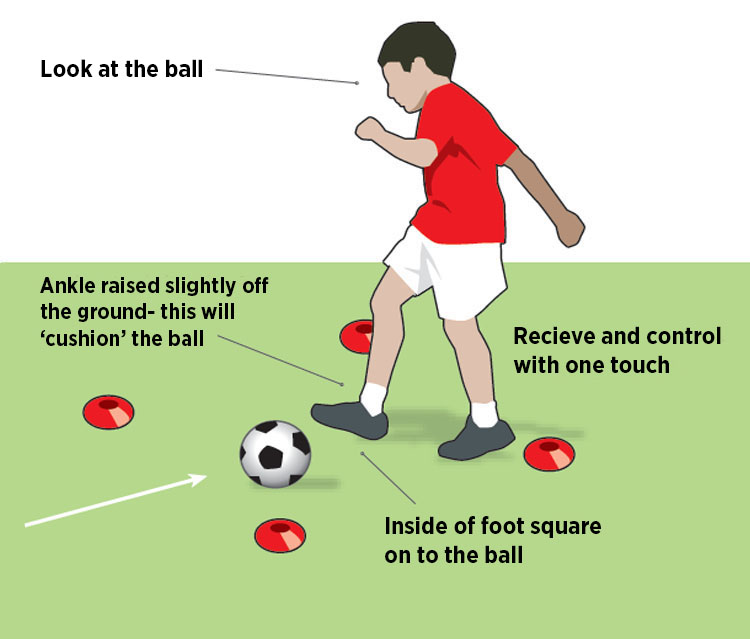
Your choice of ball contact surface fundamentally shapes the reception outcome. The inside foot provides maximum control for ground passes, using the large surface area to cushion and redirect simultaneously. The outside foot excels for quick directional changes, allowing you to spin away from pressure while receiving.
The sole of your foot offers unique stopping power, perfect for bringing aerial balls down or freezing defenders with sudden stops. Laces reception works best for chest-height aerial balls, providing a firm yet controlled surface. Each option serves specific scenarios, and elite players seamlessly switch between them based on game context.
Weight Management Mastery
Ball control weight determines how far the ball travels after initial contact. A soft touch keeps the ball within two feet, ideal for tight spaces or when immediate pressure exists. This technique requires excellent cushioning ability, absorbing the ball’s momentum through subtle joint movements.
Heavy touches serve different purposes entirely. Used strategically, they push the ball into open space, allowing you to accelerate past defenders. The key lies in controlling the distance—too heavy invites interceptions, too light traps you in traffic. Weighted pass reception combines both concepts, controlling the ball while simultaneously preparing it for your next action.
Body Positioning Fundamentals
Your body alignment during reception dictates available options for your next move. Proper positioning involves rotating hips and shoulders to face your intended target area, creating natural passing or dribbling angles. This preparation happens before the ball arrives, requiring constant scanning and anticipation.
Balance represents the unsung hero of excellent first touch. Players who maintain low centers of gravity and stay on the balls of their feet can adjust to imperfect passes or unexpected bounces. Those who lean backward or plant their feet flat struggle with anything less than perfect service.
Strategic Game Impact
Tempo Control Through Reception
Your first touch directly influences your team’s ability to dictate match rhythm. Quick, one-touch receptions accelerate play, catching defenses before they organize. Deliberate, controlled touches slow the game, allowing teammates to find positioning or recover defensive shape.
This tempo control becomes especially crucial during transition moments. When winning possession, a positive first touch immediately launches counterattacks. When protecting leads, secure first touches waste precious seconds while maintaining ball possession.
Creating Space Under Pressure
Elite players use their first touch as a weapon against pressing defenses. By directing the ball away from pressure while simultaneously rotating their body, they create separation that didn’t previously exist. This skill proves particularly valuable in modern soccer, where high pressing dominates tactical approaches.
The ability to receive while facing forward transforms defensive clearances into attacking opportunities. Instead of playing back to goal and inviting pressure, proper first touch technique allows immediate forward progression, turning defense into offense within a single movement.
Essential First Touch Techniques

Inside Foot Control Method
The inside foot cushion remains soccer’s most reliable reception technique. Contact the ball with the foot’s arch area, just above the big toe joint. This surface provides excellent cushioning while maintaining directional control. The key involves slightly withdrawing your foot as the ball arrives, creating a “give” that absorbs momentum.
Practice this technique by standing five yards from a wall, passing firmly against it, and focusing on bringing the ball to a complete stop with one touch. Progress to controlling the ball while moving, then add directional elements by aiming your touch to specific cone targets.
Chest Trap Fundamentals
Chest control transforms aerial balls into immediate ground possession. As the ball descends, arch your back slightly and puff out your chest to create a larger contact surface. The moment the ball touches, lean backward while simultaneously lowering your chest, creating a natural cushioning effect.
This technique proves especially valuable for midfielders receiving diagonal long balls. The chest touch brings the ball directly to your feet, allowing immediate ground play. Advanced practitioners can redirect chest traps to either side, maintaining forward momentum while avoiding pressure.
Thigh Control Mastery
Medium-height aerial balls respond perfectly to thigh control. Lift your leg so your thigh becomes parallel to the ground, creating a flat surface for ball contact. The key involves subtle knee bending as the ball arrives, similar to the foot cushioning technique.
Practice progression starts with simple up-and-down control, then advances to directional touches using different thigh areas. Elite players use thigh control to set up volleys or half-volleys, combining reception with immediate attacking actions.
Common First Touch Errors

Heavy Touch Consequences
Over-weighted first touches immediately invite defensive pressure and often result in possession loss. This error typically stems from poor timing or excessive force application. The ball bounces too far from your body, creating reachable distance for defenders while leaving you off-balance.
Correction requires practicing softer reception techniques and developing better feel for ball weight. Start with slower passes and gradually increase speed as control improves. Focus on absorbing the ball’s energy rather than adding your own force.
Poor Body Shape Problems
Receiving while facing the wrong direction limits your options and makes you vulnerable to immediate pressure. This positioning error forces additional touches to turn, allowing defenders to close down space and eliminate passing angles.
Fix body shape issues through scanning exercises. Before receiving, quickly check both shoulders to understand defender positions. Position your body at angles that facilitate forward play while maintaining ability to play safe passes when necessary.
Training Progressions for All Levels
Beginner Foundation Drills
Start with stationary ball control exercises using both feet. Place the ball on the ground and practice gentle touches with different foot surfaces, focusing on keeping the ball within a three-foot radius. Progress to wall passing, aiming for 50 consecutive one-touch controls with each foot.
Build comfort through repetition. Set daily goals: 100 inside foot controls, 50 chest traps, 25 thigh controls. These numbers create muscle memory that translates directly to game situations. Track your success rate and gradually increase speed as consistency improves.
Intermediate Pressure Training
Introduce passive defensive pressure by having partners walk toward you while you receive passes. This simulation teaches body positioning and space awareness without overwhelming challenge. Gradually increase defender speed and reduce available space.
Moving ball reception adds complexity through unpredictable bounces and speeds. Work with partners who deliver varying passes: ground, aerial, bouncing, and driven balls. Your goal remains consistent control regardless of service quality.
Advanced Game Scenarios
High-intensity pressure drills replicate match conditions exactly. Set up 10×10 yard grids with full-speed defenders closing down immediately upon reception. Your objective: maintain possession while completing a pass or dribble within two touches.
Tight space scenarios develop creativity under extreme constraints. Practice receiving in phone-booth-sized areas with multiple defenders, forcing quick decisions and creative solutions. These situations build confidence for match-day pressure.
Professional First Touch Examples
Elite Player Characteristics
Top professionals demonstrate first touch mastery through seemingly effortless control. They exhibit minimal backlift, meaning their leg movements remain subtle and efficient. This efficiency comes from perfect timing and exceptional feel for ball weight.
Fluid transitions separate good players from great ones. Watch how elite midfielders like Kevin De Bruyne receive passes while already knowing their next action. Their first touch sets up the subsequent pass, shot, or dribble before the ball even arrives.
Vision Integration Techniques
Professional players scan their surroundings constantly, processing information that informs their first touch decisions. This scanning occurs every 2-3 seconds, creating mental maps of available space and passing options.
The best players make first touch decisions before the ball leaves their teammate’s foot. This anticipation allows them to position their body optimally and choose the perfect contact surface. Their first touch becomes proactive rather than reactive.
Tactical Team Integration
Positional First Touch Requirements
Center-backs require secure control under maximum pressing, often receiving passes while facing their own goal. Their first touch technique emphasizes safety and immediate clearance options when pressure proves overwhelming.
Midfielders need 360-degree awareness and quick transition ability. Their first touch techniques vary dramatically based on game context—from shielding under pressure to one-touch layoffs that maintain attacking tempo. Each scenario demands different technical approaches.
Wingers control balls while sprinting at full speed, often facing the touchline with limited support options. Their first touch must account for both ball control and immediate attacking progression, requiring exceptional speed and precision.
Master Your First Touch Today
Your journey to understanding what is first touch in soccer continues with deliberate practice. Start with basic cushioning techniques, progress through pressure scenarios, and eventually master game-realistic situations. Remember that every professional once struggled with these same concepts—dedication and deliberate practice created their exceptional abilities.
Set specific weekly goals: 500 controlled receptions, 100 pressure scenarios, 50 directional touches. Track your progress and celebrate small victories. Within months, you’ll experience soccer differently—suddenly, passes that once felt impossible become routine, and your overall game elevates naturally. The difference between good players and great players often comes down to that critical first touch.
I come from the “soccer heart” of Germany, the Ruhrpott. I have played, trained and followed soccer all my life and am a big fan of FC Schalke 04. I also enjoy following international soccer extensively.