When Is a Corner Kick Awarded? Rules, Signals & Conditions
A corner kick is awarded when the entire ball crosses the goal line, on the ground or in the air, and the last player to touch it was a defender, provided no goal is scored. The attacking team then takes the kick from the corner arc nearest to where the ball went out.
A corner kick is awarded when the entire ball passes over the goal line, either on the ground or in the air, and the last player to touch it was from the defending team, provided a goal was not scored. This is Law 17 of the game, and the restart gives the attacking team a valuable set-piece opportunity from the corner of the pitch.
Most confusion happens at speed. A ball skims off a defender’s shin, loops over the crossbar, and everyone hesitates. Was it a goal kick or a corner? The assistant referee’s flag goes up, pointing at the corner flag. The defenders groan. That moment of uncertainty is where people get the rule wrong.
This guide breaks down the three non-negotiable conditions, walks through the referee’s procedure, and clarifies the common mistakes that change the restart. You will know exactly what the officials are looking for.
Key Takeaways
- The last touch decides everything. A defender’s touch, even a slight deflection, means a corner. An attacker’s final touch means a goal kick.
- The ball must be fully over the goal line. The entire sphere has to cross the plane of the line, which is why assistant referees are positioned to watch this exact line.
- A goal can be scored directly from a corner kick against the opposing team. An Olympic goal is rare but legal.
- Offside does not apply directly from a corner kick. Attackers can position themselves anywhere in the penalty area when the ball is kicked.
- Infringements like the kicker touching the ball twice or opponents encroaching within 9.15 meters change the restart to an indirect free kick.
The Three Conditions for Awarding a Corner Kick
Forget complicated interpretations. The award hinges on three physical facts observed by the referee and assistant referee. Get one wrong, and you give away a cheap opportunity or deny your team a legitimate one.
First, the ball must leave the field of play by completely crossing the goal line. This includes the space above the crossbar. A powerful clearance that sails over the bar without curving back into play has crossed the line. The assistant referee’s primary job here is to watch that line and signal with the flag.
Second, and most critical, the last touch must come from a defending player. This “last touch” rule is absolute. It does not matter if the defender was attempting a clearance, making a save, or if the ball deflected off their back. If it touches them last, the restart is a corner. This is the core distinction from a goal kick award, which requires the attacking team’s last touch.
Third, a goal cannot have been scored. If the ball crosses the goal line between the posts and under the crossbar, the restart is a kick-off. The corner kick is only for when the ball goes out of play.
The assistant referee determines the last touch by watching the point of contact. Their angled position on the touchline provides a better view of deflections near the goal line than the referee’s central position. They signal by raising the flag and pointing it toward the nearest corner arc.
TL;DR: Ball fully over goal line + defender’s last touch + no goal = corner kick. The assistant referee’s flag angle is your visual cue.
Corner Kick vs. Goal Kick: The Critical Difference
New fans mix these up constantly. The difference is simple but decisive. Both restarts happen when the ball leaves the field over the goal line. The team that last touched the ball determines which one is awarded.
| Restart | Last Touch By | Taken By | Location |
|---|---|---|---|
| Corner Kick | Defending Team | Attacking Team | Nearest Corner Arc |
| Goal Kick | Attacking Team | Defending Team | Anywhere inside the 6-yard Goal Area |
Think of it as a punishment for the team that put the ball out. If the defenders force it out, they are punished with a defensive set-piece against them. If the attackers send it over, the defenders get a calm goal kick restart to build from the back.
A goalkeeper’s save that pushes the ball over the bar is a corner. Their touch is a defender’s touch. A striker skies a shot over the bar from 25 yards out. That’s an attacking touch, so it’s a goal kick. This logic applies to every scenario along the goal line rules.
Common mistake: Assuming a high ball over the bar is always a goal kick. If a defender headed it on its way over, it’s a corner. Watch the defender’s head, not just the ball’s flight path.
The Corner Kick Procedure & Key Infringements
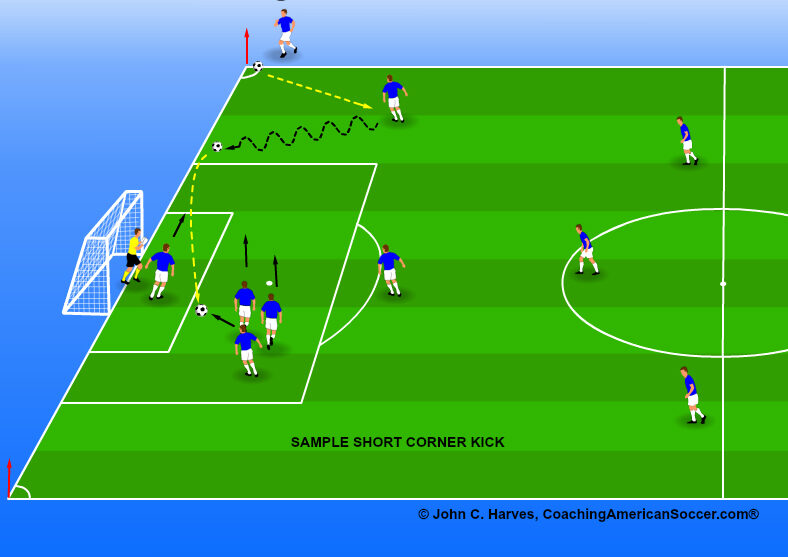
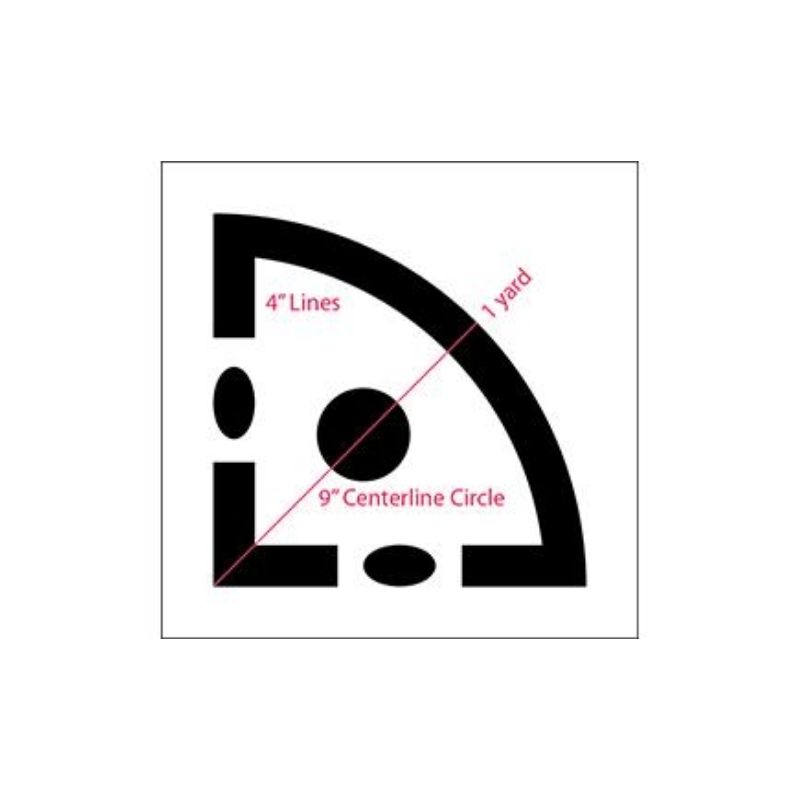
Once awarded, the procedure is tightly defined by Law 17. The ball is placed inside the quarter circle at the nearest corner flagpost. That arc has a one-yard radius. The flagpost must not be moved.
Opponents must stay at least 9.15 meters (10 yards) from the ball until it is in play. This distance is usually marked by a small line on the pitch. The ball is in play the moment it is kicked and clearly moves. The kicker can stand off the field to take the kick.
Infringements change the restart. The most frequent one is the kicker touching the ball a second time before it touches another player. This results in an indirect free kick for the opposing team from where the second touch occurred. Another is opponents encroaching within the 9.15-meter distance. If they gain an advantage from this, the kick is retaken.
A less common but serious infringement is a handball by the kicker. This is a direct free kick offense. If it happens inside the kicker’s own penalty area, it’s a penalty kick—unless the kicker is the goalkeeper, in which case it’s an indirect free kick.
The official rules for these sanctions are detailed in resources like the Ken Aston Referee Society Law 17 guide, which breaks down each possible offense.
Can You Be Offside from a Corner Kick?
No. This is a permanent and specific exception in the offside law. A player cannot be offside directly from a corner kick. This exception exists to encourage attacking play from restarts and prevent defenders from simply stepping up to trap all attackers in an offside position.
Attackers can crowd the goalkeeper on the goal line if they wish. This exemption applies the moment the ball is kicked from the corner arc. Once the ball is played and then touched or played by a teammate, the normal offside rules reactivate. This rule is a cornerstone of effective corner kick tactics, allowing for intricate near-post and far-post runs.
Can You Score Directly from a Corner Kick?

Yes. A goal scored directly from a corner kick is valid against the opposing team. This is called an Olympic goal. It is rare because it requires the ball to curve directly from the corner arc into the goal without touching another player. If it happens, the goal counts.
There is a crucial caveat. If the ball goes directly into the kicker’s own goal from a corner, a goal is not awarded. Instead, a corner kick is given to the opponents. The logic is that you cannot score an own goal directly from this restart. For more on the mechanics of scoring from this set-piece, see our guide on the Olympic goal.
Referee Signals and Positioning
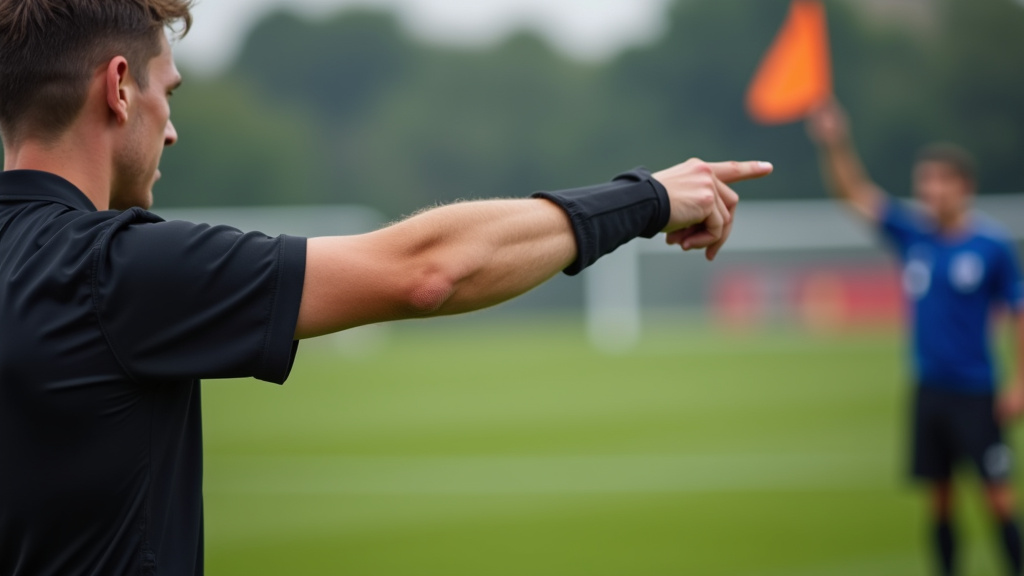
The referee’s signal is unambiguous. They point with one arm, hand extended, toward the corner arc from which the kick will be taken. This clear gesture communicates the decision to players, coaches, and spectators instantly.
The assistant referee’s role is pivotal. They raise the flag, use it to point toward the corner flag, and make eye contact with the referee to confirm the decision. Their positioning is key—they are level with the goal line rules to judge exactly when the whole ball crosses the line and to see who touched it last. This teamwork is what makes the call accurate.
I’ve seen a linesman’s flag stay down because his view was blocked by a crowd of players. The referee, from 40 yards away, gave a goal kick. Replay showed a clear deflection. That’s why officials are instructed to find the angle; a blocked view leads to wrong calls every time.
Common Mistakes and Misconceptions
Beyond the goal kick confusion, several other errors pop up regularly at all levels of the game.
Players often waste time retrieving the ball or placing it meticulously. While not an infringement, it slows the game. As noted in discussions like Manuel Neuer’s recent comments, time-wasting on set-pieces is a growing frustration. There is no official time limit, but referees can caution players for delaying the restart.
Another mistake is improper ball placement. The ball must be inside the quarter circle, not just touching the line of the arc. Placing it outside is an infringement, and the kick must be retaken.
The most costly player error is the double touch. A player takes a corner, the ball rolls a foot, and they tap it again to adjust it before anyone else touches it. That’s an indirect free kick offense for the other team. It kills the attacking momentum instantly.
Finally, some believe you can’t pass the ball short from a corner. You can. The ball simply has to move to be in play. Short corners are a valid tactical tool to break a tight defensive setup.
Strategic Importance of the Corner Kick
While this article is about when it’s awarded, understanding its value completes the picture. A corner kick is a prime scoring opportunity. Teams dedicate training time to set-piece tactics, designing routines for near-post flicks, far-post headers, and rehearsed pulls into the penalty area.
For the defending team, conceding a corner is a moment of high defensive stress. It requires organized marking, zonal coverage, and a clear plan for clearing the ball. The award itself is often the result of sustained attacking pressure, forcing a defender into a last-ditch clearance.
The official dimensions and rules governing this restart are universally documented, such as in the Turkish Football Federation Laws PDF, ensuring consistency from local pitches to World Cup finals.
Frequently Asked Questions
What if the ball hits the referee and goes over the goal line?
If the ball touches the referee and then goes over the goal line, the restart depends on the last touch before it hit the official. If a defender touched it last, it’s a corner. If an attacker touched it last, it’s a goal kick. The referee is considered part of the field.
Can the corner flag be removed to take a kick?
No. The corner flagpost must not be moved. The ball is placed inside the quarter circle around it. If the flag is illegally removed, the referee will stop play and have it replaced before the kick is taken.
What happens if the ball is defective during a corner kick?
If the ball bursts or becomes defective as it is kicked from the corner arc, the kick is retaken with a new ball. The same applies if it becomes defective before entering play.
Is there a time limit for taking a corner kick?
The Laws of the Game do not specify a numerical time limit. However, the referee can caution a player for delaying the restart of play if they are taking an excessively long time. This is at the referee’s discretion.
What is the signal for a corner kick?
The referee signals by extending one arm horizontally and pointing toward the corner arc from which the kick will be taken. The assistant referee signals by raising the flag and then pointing it downward toward the corner flag.
The Bottom Line
Knowing when a corner kick is awarded boils down to three verifiable facts: the ball’s position relative to the line, the identity of the last player to touch it, and the absence of a goal. This rule, Law 17, creates a direct consequence for defensive play and a structured opportunity for attack.
Watch the assistant referee’s flag. It tells the whole story. A pointed flag toward the corner means a defender got the last touch. No flag, or a signal toward the goal area, means the attack broke down. This knowledge turns a moment of confusion into a clear understanding of the game’s flow. Use it to watch soccer smarter.

I come from the “soccer heart” of Germany, the Ruhrpott. I have played, trained and followed soccer all my life and am a big fan of FC Schalke 04. I also enjoy following international soccer extensively.