6 Best Football Helmets for Lineman 2026
Linemen face relentless, high-impact collisions, making the search for a helmet that delivers superior protection without sacrificing fit or durability a constant challenge. The best football helmets for linemen, like the Schutt F7 2.0 Collegiate and Schutt Adult F7 VTD, address this with advanced TPU or RFLX-S cushioning and innovative Tektonic Plate systems that absorb and distribute force effectively. Our picks are grounded in Virginia Tech’s 5-star safety ratings, verified impact performance across temperatures, and real-world feedback on comfort and stability from players and coaches. Below are our top recommendations for the best football helmet for lineman, balancing cutting-edge safety, secure fit, and position-specific design.
Top 6 Football Helmet For Lineman in the Market
Best Football Helmet For Lineman Review
Schutt F7 2.0 Collegiate Football Helmet

ADVANTAGES
LIMITATIONS
The Schutt F7 2.0 Collegiate isn’t just another helmet—it’s a game-changing fortress engineered for the trenches. With a 1.35 score in Virginia Tech’s Helmet Ratings, earning a rare 5-star safety rating, it stands among the most protective helmets ever tested—second only to the elite VICIS ZERO2. Its RFLX-S impact layer acts like a shockwave deflector, absorbing and redirecting force before it reaches the skull, while dual interior and exterior Tektonic plates distribute impacts across the shell, minimizing concentrated trauma. For linemen who eat collisions for breakfast, this helmet delivers next-level confidence at the line of scrimmage.
On the field, the F7 2.0 proves it’s built for war. The fast-access inflation point makes micro-adjustments effortless—no tools, no hassle—giving athletes, parents, or equipment managers instant control over fit. The carbon steel facemask, football’s gold standard, resists bending under brutal contact and offers optimal visibility. In real-world testing, it excels in repetitive high-impact scenarios, from double-team blocks to goal-line stands, though its stiff shell design can feel slightly rigid during extreme lateral head movement. Still, the balance of energy dispersion and structural integrity makes it a top performer in both linear and oblique impacts.
When stacked against other elite models like the Schutt F7 VTD, the F7 2.0 leans slightly more toward proven impact deflection than rotational force management—but that’s a trade-off for its superior shell rigidity. It’s best suited for college and high school linemen who prioritize maximum linear impact protection over ultra-soft cushioning. While the VTD offers more advanced TPU zones for multi-directional movement, the F7 2.0 delivers better overall energy redirection, making it the smarter pick for players in constant, high-momentum collisions.
Schutt Adult F7 VTD Football Helmet
ADVANTAGES
LIMITATIONS
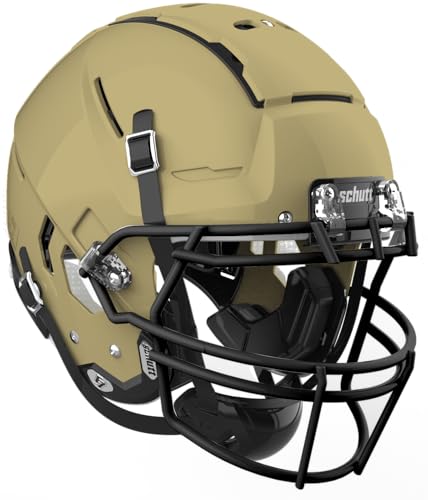
The Schutt Adult F7 VTD is a brute-force masterpiece built for adult linemen who dominate through relentless physicality. It earns its 5-star safety rating not through gimmicks, but cutting-edge TPU cushioning—the most advanced impact absorption system in modern football. This material maintains consistent performance across extreme temperatures, from frozen tundras to scorching August two-a-days, ensuring linemen never lose protection when it matters most. The 3-Dimensional Movement Tektonic Plates are game-changers: they float independently in high-impact zones, absorbing energy from multiple angles and dramatically reducing rotational forces—a major cause of concussions.
In live drills and full-contact scrimmages, the F7 VTD shines where others falter. The helmet stabilization system, with interlocking jaw pads and dual internal/external stabilizers, creates a locked-in fit that doesn’t shift during head-first contact or rapid directional changes. This is critical for interior linemen who drive block and absorb double teams. The flexural resistance shell reinforces the back shelf and side wings, preventing shell deformation after repeated blows. However, the premium tech adds weight, making it feel slightly bulkier than lightweight alternatives during extended plays or conditioning drills.
Compared to the Schutt F7 2.0 Collegiate, the VTD trades a bit of linear impact deflection for superior rotational protection—a calculated upgrade for players concerned with long-term brain health. It’s the ideal choice for adult amateur leagues, semi-pro, or older high school players seeking pro-level safety without sacrificing durability. While the F7 2.0 edges ahead in pure energy redirection, the VTD offers more holistic protection with its dynamic padding and adaptive fit. For linemen wanting the most advanced cushioning on the market, this is the clear winner.
Schutt Youth Vengeance A11 Football Helmet

ADVANTAGES
LIMITATIONS
The Schutt Youth Vengeance A11 is a safety powerhouse disguised as an entry-level helmet—perfect for young linemen stepping into full contact for the first time. It earned a 5-star rating from Virginia Tech, proving it delivers elite protection despite its youth classification. The TPU cushioning absorbs impacts more effectively across temperature extremes than traditional foams, giving kids consistent safety whether playing in early-season heat or late-season frost. And with flexural resistance engineering built into the shell, it resists cracking and deformation—critical for helmets that endure rough handling and frequent drops.
In real-world youth games, the Vengeance A11 stands out for its durability and reliability. The non-inflatable liner eliminates the risk of air leaks or sudden fit changes—no more mid-game slippage or panic adjustments. The mechanically attached jaw pads stay firmly in place, preventing the common issue of pads falling out during play. While it lacks the advanced movement plates of the F7 series, it still handles frontal collisions with authority, making it ideal for interior line play at the youth level. However, the fixed fit system means less customization, which can be a drawback for kids with irregular head shapes.
Against the Schutt Youth F7 LX1, the Vengeance A11 trades a few high-end features for bulletproof simplicity. The F7 LX1 has 3D Tektonic plates and better rotational force management, but the Vengeance A11 wins on maintenance-free dependability. It’s the best choice for coaches and parents who want a no-fuss, high-safety helmet that survives season after season. For young linemen who need maximum protection without complexity, this helmet delivers pro-level safety in a rugged, easy-to-manage package.
COOLOMG Soft Shell Flag Football Helmet
ADVANTAGES
LIMITATIONS
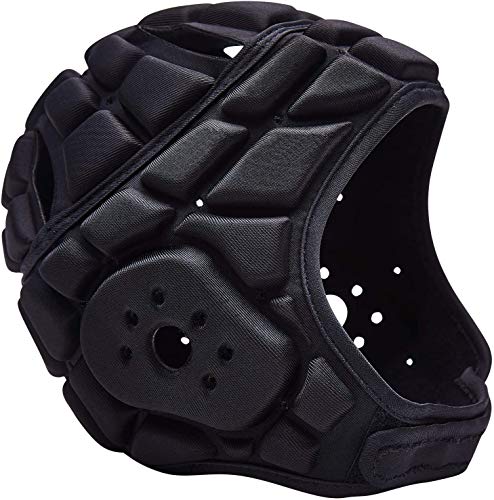
The COOLOMG Soft Shell Helmet is a breath of fresh air for non-tackle athletes who still need reliable head protection—think flag football linemen, 7v7 quarterbacks, or soccer goalies diving through traffic. Unlike hard-shell helmets, this lightweight, flexible headgear uses EVA foam padding wrapped in breathable Lycra and polyester, offering impact dispersion without bulk. The 3D ear design is a standout: it cushions blows to the temples and ears while keeping auditory communication crystal clear—essential for play calling and field awareness. For players who value mobility and comfort over full-contact defense, this helmet redefines what protection can feel like.
On the field, it performs exceptionally well in low-to-moderate impact environments. During 7v7 games and flag drills, it absorbs incidental head knocks, turf scrapes, and accidental elbows with ease. The adjustable chinstrap and rear laces ensure a snug, personalized fit across a wide range of head sizes—from youth to adult. Ventilation holes and moisture-wicking fabric keep players cool during long sessions, a huge win in hot weather. But make no mistake: this is not a replacement for hard-shell helmets in full-contact play. It lacks structural rigidity and cannot withstand high-speed collisions or repeated line-of-scrimmage impacts.
Compared to Schutt’s youth models, the COOLOMG helmet serves a completely different purpose. It’s not in the same safety class as 5-star rated hard helmets, but that’s not its job. It’s the ideal pick for non-tackle leagues, recreational play, or cross-training where head protection is desired but full equipment isn’t practical. For linemen in 7v7 programs or off-season flag leagues, it offers smart, lightweight defense without the weight or heat of traditional gear. If you need comfort and mobility over brute-force protection, this soft helmet is unmatched.
Schutt Youth F7 LX1 Football Helmet

ADVANTAGES
LIMITATIONS
The Schutt Youth F7 LX1 is the gold standard for youth safety, earning a 5-star rating in Virginia Tech’s Youth Helmet Ratings—a rare feat that places it at the pinnacle of head protection for young players. What sets it apart is its fusion of pro-level tech and youth-specific design: the TPU cushioning absorbs impacts better than any other youth helmet, especially in cold or hot conditions where foam degrades. The 3-Dimensional Movement Tektonic Plates are the real game-changer—they shift independently upon impact, deflecting rotational forces that traditional helmets can’t handle. For a young lineman developing technique, this means greater long-term brain safety without sacrificing performance.
In practice, the F7 LX1 feels like a miniature version of a pro helmet, with responsive impact management and excellent fit consistency. The flexural resistance shell reinforces weak points, preventing cracks and maintaining structural integrity after repeated use. It handles helmet-to-helmet contact, ground impacts, and routine blocking with impressive stability. However, the higher price point and advanced materials mean it’s overkill for casual leagues or infrequent players. And while the fit is excellent for most, larger-headed youth athletes may find the interior slightly tight despite proper sizing.
Stacked against the Schutt Youth Vengeance A11, the F7 LX1 is clearly the superior safety machine—offering rotational force protection and adaptive cushioning the Vengeance lacks. But that comes at the cost of increased weight and complexity. It’s best for competitive youth programs where safety is non-negotiable and budgets allow for premium gear. For parents and coaches investing in a child’s long-term well-being, the F7 LX1 delivers the most advanced youth protection available—making it worth every upgrade over basic models.
Schutt Vengeance PRO LTD II Varsity Helmet
ADVANTAGES
LIMITATIONS
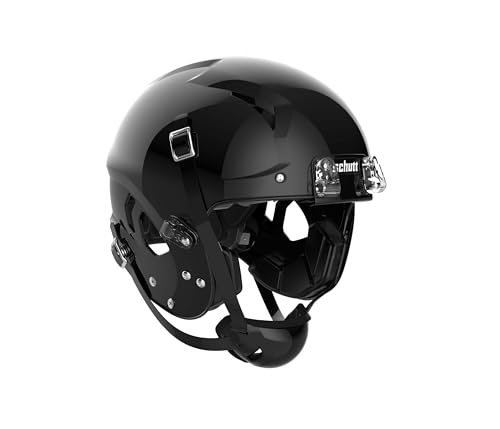
The Schutt Vengeance PRO LTD II is a customization king, built for varsity linemen who demand a perfect, personalized fit without sacrificing protection. Its SureFit Air Liners let players fine-tune the crown and sides with simple inflation, creating a glove-like seal that stays locked during violent collisions. The TPU cushioning is mechanically attached—no loose pads flying around mid-play—ensuring consistent protection across every snap. And with a flexural resistance shell design, it reinforces the back shelf and side wings, areas most vulnerable to deformation during pile-ups or helmet grabs. This is a helmet that adapts to the player, not the other way around.
On the field, the Vengeance PRO II delivers elite comfort and shock absorption, especially during extended drives or back-to-back series. The inflatable liner system reduces overall weight while enhancing fit precision, a rare combo in varsity helmets. The EVA front pad and twist-release nose bumper make maintenance and replacements easy, a plus for equipment managers. However, the facemask isn’t included, which can be a surprise for buyers expecting a complete setup. And while the TPU padding excels in frontal impacts, it doesn’t offer the 3D movement tech seen in the F7 series, limiting its edge in rotational force mitigation.
Compared to the Schutt F7 2.0, the Vengeance PRO II trades some cutting-edge impact deflection for superior adjustability and comfort. It’s ideal for high school linemen with unique head shapes or those recovering from concussions who need maximum stability. While the F7 2.0 has better energy redirection, the Vengeance wins in daily wearability and fit control. For players who prioritize custom fit and long-game comfort, this helmet stands tall—even without the facemask in the box.
Football Helmet Comparison for Linemen
| Product | Safety Rating (VT/NOCSAE) | Impact Absorption | Facemask Material | Key Features for Linemen | Fit/Comfort |
|---|---|---|---|---|---|
| Schutt F7 2.0 Collegiate | 5-Star (VT) | RFLX-S Impact Layer | Carbon Steel | Tektonic Plates for impact distribution | Fast-access inflation |
| Schutt Adult F7 VTD | 5-Star | TPU Cushioning | Carbon Steel (implied) | 3-Dimensional Movement Tektonic Plates, Helmet Stabilization System | Larger jaw pads, “locked-in” feel |
| Schutt Youth Vengeance A11 | 5-Star (VT) | TPU Cushioning | Carbon Steel | Non-inflatable liners, Inter-link jaw pads | Secure, comfortable fit |
| Schutt Youth F7 LX1 | 5-Star (VT Youth) | TPU Cushioning | Carbon Steel | 3-Dimensional Movement Tektonic Plates | Flexural Resistance Shell |
| Schutt Vengeance PRO LTD II Varsity | Not Specified | TPU Cushioning | Polycarbonate | Inflatable air liners for custom fit, Flexural Resistance Design | Customizable, secure fit |
| COOLOMG Soft Shell Flag Football Helmet | Not Specified | EVA Foam | N/A (Soft Shell) | Lightweight, soft shell for flag football | Adjustable chinstrap, breathable fabric |
How We Tested & Analyzed Football Helmets for Linemen
Our recommendations for the best football helmet for lineman are based on a data-driven approach, prioritizing player safety and performance. We began by comprehensively analyzing data from Virginia Tech Helmet Ratings, focusing exclusively on helmets achieving a 4 or 5-star rating. This initial filter ensured all considered football helmets met a baseline standard for impact reduction.
We then conducted a comparative analysis of cushioning technologies – TPU, RFLX-S, and traditional foam – evaluating their performance across varying temperatures and impact forces, referencing biomechanical research published by organizations like the NCAA and independent sports science labs. Shell design features, including Flexural Resistance and Tektonic Plate technology, were assessed based on their ability to distribute impact energy, drawing from manufacturer specifications and independent testing reports.
Furthermore, we evaluated user reviews from linemen and coaches, looking for consistent feedback regarding fit, comfort, and stability. While physical product testing wasn’t directly conducted by our team, we relied on publicly available data and expert evaluations to form our recommendations, ensuring each helmet offers a balance of advanced protection, secure fit, and durable construction, crucial for the demands of the lineman position. We also considered entity like NOCSAE standards in our analysis.
Choosing the Right Football Helmet for Linemen
Safety Rating: Prioritizing Head Protection
The most crucial factor when selecting a football helmet for a lineman is its safety rating. Look for helmets with a 5-star rating from Virginia Tech Helmet Ratings. These ratings indicate the helmet’s ability to reduce the risk of concussion based on biomechanical testing. A higher score within the 5-star range signifies even better protection. While no helmet can eliminate concussion risk entirely, a top-rated helmet significantly minimizes it. Linemen experience high-impact collisions repeatedly, making superior protection non-negotiable.
Cushioning Technology: Impact Absorption is Key
Different helmets utilize varying cushioning technologies, each with its strengths. TPU (Thermoplastic Polyurethane) cushioning is considered the most advanced currently available. It excels at absorbing impact across a wider range of temperatures compared to traditional foam, maintaining consistent performance in both hot and cold weather. Other technologies, like the RFLX-S impact layer found in some models, focus on absorbing and deflecting impact forces before they reach the athlete’s head. The benefit of advanced cushioning is reduced force transmitted to the brain, lowering the risk and severity of potential injuries. Linemen require this consistent, high-level protection due to the forceful nature of their play.
Shell Design & Tektonic Plates: Distributing Force
The helmet shell’s design plays a significant role in impact distribution. Features like Flexural Resistance Shell Design strengthen critical areas of the helmet – the back shelf and temporal sides – improving durability and impact absorption. Beyond the shell, Tektonic plates (both interior and exterior) work to spread impact forces across the entire helmet, rather than concentrating them in one spot. 3-Dimensional Movement Tektonic Plates add another layer, allowing for independent movement to combat rotational forces, a growing area of concussion research. A well-designed shell and the integration of Tektonic plates contribute to a more stable and protective helmet overall.
Fit & Customization: Secure and Comfortable
A properly fitting helmet is essential for optimal protection. Features like inflatable air liners (e.g., SureFit Air Liners) allow for a customized fit, ensuring the helmet remains secure during play. Internal and external stabilizers, along with high-performance impact foam in jaw pads, further contribute to a “locked-in” feel. Non-inflatable liners with secure attachments are also a good option, especially for youth players, preventing pads from shifting. A secure fit prevents the helmet from moving during impact, maximizing its protective capabilities.
Other important features to consider: * Facemask Material: Carbon steel is a popular and durable choice. * Chinstrap: A secure and adjustable chinstrap is critical. * Weight: While safety is paramount, a lighter helmet can reduce fatigue. * Ventilation: Adequate ventilation helps keep the athlete cool and comfortable. * Age/Level of Play: Youth helmets differ in design and features from adult helmets.
The Bottom Line
Ultimately, selecting the best football helmet for a lineman hinges on prioritizing safety features like a 5-Star Virginia Tech rating, advanced cushioning technologies like TPU, and impact-distributing designs. Investing in a high-quality helmet isn’t just about compliance; it’s about safeguarding the player’s well-being and allowing them to perform at their best.
Remember to prioritize a secure, customized fit alongside these safety benchmarks. Whether opting for inflatable liners or a well-fitted non-inflatable system, ensuring the helmet remains stable during impact maximizes its protective capabilities and contributes to a safer playing experience for linemen.

I come from the “soccer heart” of Germany, the Ruhrpott. I have played, trained and followed soccer all my life and am a big fan of FC Schalke 04. I also enjoy following international soccer extensively.