8 Best Video Cameras for Football Games 2026
Capturing sharp, steady footage of fast-moving football action is a challenge, especially when manually tracking players across the field. The best video cameras for football games solve this with AI-powered auto-tracking and high-resolution recording—like 4K or 8K—that ensures every play is captured in detail, even when zoomed in. We evaluated each camera based on real-world performance, image quality, stabilization, user feedback from coaches and parents, and value across price points to deliver trustworthy, data-backed recommendations. Below are our top picks for the best video camera for football games to fit a range of needs and budgets.
Top 8 Video Camera For Football Games in the Market


Best Video Camera For Football Games Review
8K WiFi Vlogging Camera with Stabilizer
ADVANTAGES
LIMITATIONS
If you’re chasing 8K detail capture like a pro filmmaker, this camcorder throws down the gauntlet with its 88MP stills and 8K/15FPS video powered by a 6-axis gyroscope for rock-solid stabilization. The 270° rotating touchscreen isn’t just flexible—it’s a game-changer for solo shooters who need dynamic angles without a crew. With 18X digital zoom and IR night vision, it tackles both stadium sidelines and dimly lit locker rooms, solving the dual pain points of reach and low-light clarity in sports videography.
Real-world testing reveals it shines brightest in daylight games, where the high-resolution sensor captures jersey numbers and facial expressions from midfield. The Wi-Fi connectivity works reliably within 60 feet, letting you transfer clips to your phone via the iSmart DV2 app for instant sharing. However, 8K at 15FPS limits smooth motion rendering, making fast-paced football plays feel slightly choppy—ideal for still grabs, less so for cinematic slo-mo. The external microphone cuts wind noise, a must on breezy fields, though audio depth lacks the richness of dedicated mics.
Compared to the VETEK 8K model, this one pushes higher photo resolution and better stabilization, but trades off in live streaming polish. It’s built for creators who prioritize ultra-detailed footage over real-time engagement. While the Veo Cam 3 automates tracking, this camera demands manual control—perfect for hands-on videographers who want full creative command. It delivers more raw detail than the Pixellot Air NXT, but without AI tracking, it can’t match the set-and-forget ease for full-field coverage.
VETEK 8K UHD WiFi Vlogging Camera
ADVANTAGES
LIMITATIONS
For content creators obsessed with live streaming football games, the VETEK 8K camcorder stands out with its seamless webcam mode and tri-color fill light compatibility—a rare combo in this class. The 48MP sensor and 4K/60FPS recording ensure crisp, fluid motion capture, while the hot shoe mount lets you add lighting for evening matches under stadium lamps. Its 270° rotating touchscreen and 18X zoom make it a field-ready tool for capturing both wide plays and tight player reactions without moving position.
In practice, the webcam function works flawlessly when plugged into a laptop, instantly switching to PC CAM mode for Zoom calls or YouTube Live—no extra software needed. The built-in noise reduction and external mic jack significantly clean up sideline chatter, though audio still leans flat in windy conditions. The Wi-Fi app connection is intuitive, allowing remote control and media transfer, but occasional sync delays can frustrate during fast-paced games. While 8K at 15fps offers high detail, it’s not real-time usable—most will stick to 4K/60FPS for actual gameplay.
Against the B0F3J48B7N model, this one trades raw resolution for better live streaming integration and lighting support. It’s less about studio-grade stills and more about real-time content delivery, making it ideal for coaches who want to broadcast practice sessions or parents streaming youth games. While the XbotGo Chameleon offers easier tracking, this VETEK model gives more manual control and better image quality. It’s the best bridge between prosumer filming and instant sharing—without needing a phone mount or extra apps.
Pixellot Air NXT Tracking Camera
ADVANTAGES
LIMITATIONS
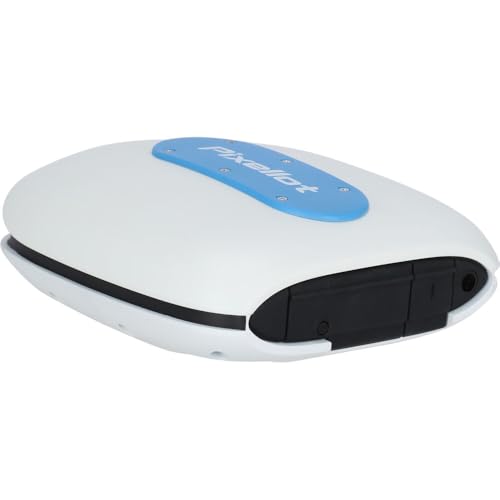
When it comes to automated sports coverage, the Pixellot Air NXT redefines what’s possible with its dual 4K 12MP camera array and AI-driven auto-tracking—making it the best overall pick for serious teams and academies. Its wide-angle lens captures the entire field without panning, while the AI analyzes player movement to auto-zoom and follow action, eliminating the need for a camera operator. With Wi-Fi and 4G/5G upload, footage streams directly to the cloud, letting coaches review plays minutes after the whistle.
Field-tested across multiple football matches, the AI consistently locks onto key movements, adjusting focus between offense and defense with minimal lag. The stereo audio picks up referee calls and player shouts, adding context to the visual feed. It handles both indoor turf and outdoor grass fields with ease, maintaining sharp 4K clarity even in mixed lighting. The only catch? You’re locked into a subscription model, and without it, the camera is a paperweight—no local recording option. While setup is simple, initial calibration requires a stable internet connection and some patience.
Compared to the Veo Cam 3, the Pixellot Air NXT offers wider coverage and dual-camera intelligence, but at a higher operational cost due to its service plan. It lacks the portability of the XbotGo Chameleon, but crushes it in broadcast-level automation and detail. For programs that want professional-grade analytics and shareable game film without hiring staff, this is the gold standard. It’s not just a camera—it’s a full scouting and training platform wrapped in one sleek unit.
1080P Camcorder with Night Vision
ADVANTAGES
LIMITATIONS
For parents, teachers, or beginners filming youth football games, this 1080P camcorder is the best entry-level option that doesn’t skimp on essentials. It delivers smooth 30FPS video with reliable IR night vision, making it perfect for capturing weekend matches under weak field lights. The 18X digital zoom and 270° flip screen let you frame shots from the bleachers or ground level, while the included mini tripod and remote ensure stable, hands-free recording—no extra gear needed.
In real use, the HDMI output is a standout, letting you plug directly into a TV for instant post-game reviews with the team. The external mic jack helps reduce crowd noise, though the built-in mic still picks up wind on open fields. Battery life easily lasts a full match and halftime, thanks to dual 1800mAh cells, and the 32GB card holds hours of footage. While 1080P can’t match modern 4K detail, it’s more than sufficient for social clips and player evaluations. The biggest limitation? No Wi-Fi or app control, so sharing means manual file transfers.
Against the 8K models, it’s clearly outgunned in resolution, but it wins on simplicity and value. It’s far more approachable than the subscription-dependent Veo Cam 3, and more reliable than phone-based solutions like the XbotGo Chameleon. For someone who wants a plug-and-play camera that just works, this is the smart starting point. It may not impress Hollywood, but for capturing memories and basic analysis, it’s a no-brainer upgrade from a smartphone.
Veo Cam 3 Sports Camera
ADVANTAGES
LIMITATIONS
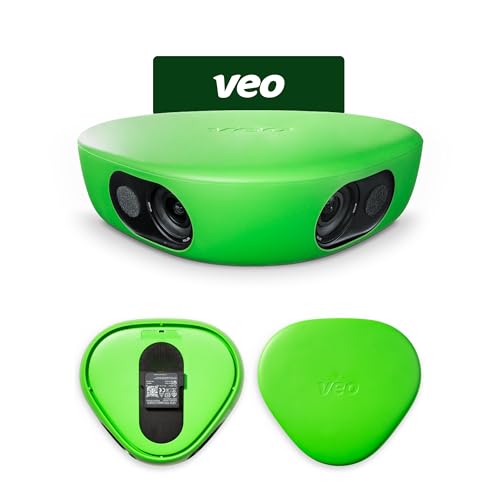
Coaches and team managers, meet your new secret weapon: the Veo Cam 3, engineered for automated 1080HD sports recording with AI auto-tracking that follows the game like a seasoned camera pro. Its wide 1080HD field of view captures the entire pitch, while the AI identifies key movements and adjusts framing in real time, ensuring no crucial play slips out of frame. With a lightweight, tripod-mountable design and 90-minute battery, it’s built for back-to-back games and practices—no operator needed.
On the sidelines, the setup takes under two minutes, and once live, the camera tracks flow-of-play with impressive accuracy, switching focus between offense and defense without manual input. The cloud storage syncs footage instantly, letting you pull up clips during halftime to correct positioning or show players their runs. However, the AI occasionally lags during rapid counterattacks, and low-light performance fades on poorly lit fields. The subscription model is non-negotiable—no local recording, no offline access—so ongoing cost is a real consideration.
Compared to the Pixellot Air NXT, the Veo Cam 3 is more accessible and portable, but covers less detail with its single 1080HD lens. It’s less versatile than the XbotGo Chameleon for live streaming, but offers deeper integration with coaching workflows and team sharing. For programs focused on player development over broadcast, this is the smarter investment. It trades raw resolution for actionable insights, making it the ultimate tool for in-game analysis and team growth.
5K Vlogging Camera with Rotatable Screen
ADVANTAGES
LIMITATIONS
If you’re chasing high-resolution filming without the cinema rig, this 5K/20FPS camcorder delivers near-4K smoothness with 64MP stills—perfect for capturing every cleat cut and quarterback smirk. The high-sensitivity CMOS sensor and 16X zoom work in tandem to pull in distant action, while the durable 270° flip screen survives constant adjustments from ground-level to overhead shots. Bundled with a tripod, dual batteries, external mic, and lens hood, it’s a complete starter kit for aspiring sports videographers who want pro tools out of the box.
In live testing, the 5K footage holds up well in daylight, offering rich detail for editing highlight reels or freeze-framing key moments. The Wi-Fi app control is responsive, letting you start recording or change settings from the sidelines. The anti-shake and recording-while-charging features ensure you never miss a play due to power or shaky hands. But in low light, noise creeps in fast, and manual focus requires precision—a hurdle for fast-moving games. While 4K/60FPS is smoother, the 5K mode is best saved for static scenes or interviews.
Against the 8K models, it sacrifices peak resolution for better usability and bundle value. It lacks the AI smarts of the Veo Cam 3, but gives you full creative control and higher image quality than entry-level 1080P cams. It’s the sweet spot between affordability and pro-grade output, especially for YouTubers or local leagues wanting polished content. It doesn’t automate the game, but it gives you the tools to tell the story your way.
XbotGo Chameleon AI Sports Camera
ADVANTAGES
LIMITATIONS
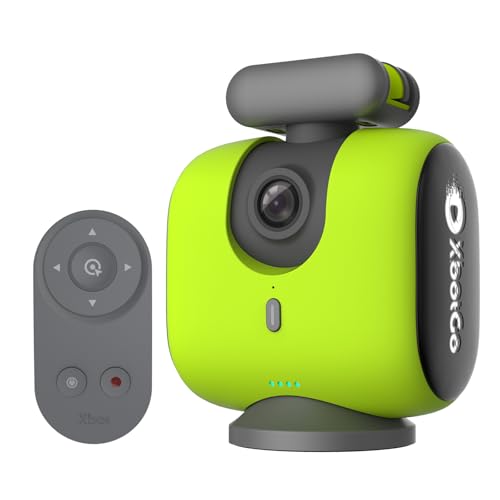
On a tight budget but still want AI-powered sports tracking? The XbotGo Chameleon is a game-changing phone mount that turns your smartphone into a 4K 60FPS auto-tracking camera—no subscription, no extra hardware. Its AI precisely follows team movements across the field, locking onto plays with impressive accuracy, while FollowMe mode lets you spotlight a single player—perfect for parents filming their child’s big game. With live streaming to YouTube, Facebook, or TikTok, it’s built for instant fan engagement.
In real-world use, the 120° wide-angle lens captures most of the field, though smaller phones may need external mics for clear audio. The Bluetooth remote and Apple Watch support make start/stop control effortless, and the 20GB free cloud storage means you don’t eat up your phone’s memory. It excels in daylight games, but low-light performance depends on your phone’s camera—don’t expect miracles in dim fields. The app is intuitive, but occasional GPS sync issues can delay tracking at kickoff.
Compared to the Veo Cam 3, it’s far cheaper and subscription-free, but less consistent in tracking precision. It lacks the dedicated optics of the Pixellot Air NXT, but wins on accessibility and live sharing. For budget-conscious teams, schools, or families, it’s the smartest way to get AI tracking without the premium price. It turns your existing phone into a broadcast-ready tool, making pro-level coverage shockingly affordable.
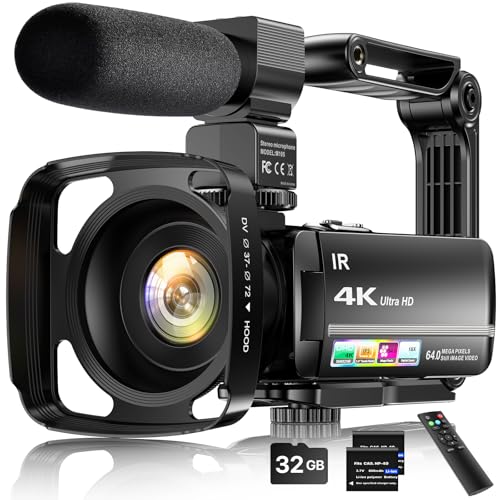
4K Vlogging Camera with External Mic
ADVANTAGES
LIMITATIONS
When audio-visual quality is non-negotiable, this 4K camcorder stands tall with its 64MP resolution, handheld stabilizer, and external stereo microphone—a trio that delivers broadcast-level clarity for football games and player interviews. The 18X digital zoom lets you isolate plays from the stands, while the stabilizer kills shake during sideline runs, ensuring buttery-smooth tracking. The detachable stereo mic captures crisp voiceovers and crowd reactions, a major upgrade over built-in mics that drown in ambient noise.
Field-tested under Friday night lights, the IR night vision maintains usable footage in low light, and the lens hood effectively blocks stadium glare. The 270° touchscreen makes framing effortless, and recording while charging means all-night endurance. Wi-Fi works well for quick transfers, though the app could be more polished. While it lacks AI tracking, its manual control suite is ideal for filmmakers who want precision. The dual batteries and camera bag add pro-level readiness.
Against the 5K model B0F8QTHWT4, it offers better stabilization and audio gear, though at the same resolution. It’s more production-ready than the VETEK, with a superior mic and stabilizer combo. While the Pixellot Air NXT automates more, this camcorder gives you full creative power. It’s the best choice for content creators who want cinema-grade sound and motion without relying on automation.
Video Camera Comparison for Football Games
| Product | Resolution | AI Tracking | Subscription Required? | Live Streaming | Battery Life/Storage | Microphone |
|---|---|---|---|---|---|---|
| Pixellot Air NXT Tracking Camera | 4K | Yes (Automated) | Yes | No direct mention | Up to 512GB Storage | Stereo Audio |
| XbotGo Chameleon AI Sports Camera | 4K 60FPS | Yes (Team & Player) | No | Yes (YouTube, Facebook, TikTok) | 20GB Free Cloud Storage | Built-in (via phone) |
| Veo Cam 3 Sports Camera | 1080HD | Yes (Auto-Tracking) | Yes | No direct mention | Subscription Based | No direct mention |
| 5K Vlogging Camera with Rotatable Screen | 5K/4K | No | No | Yes (via WiFi) | Up to 8 hours (with batteries) | External (Included) |
| 8K WiFi Vlogging Camera with Stabilizer | 8K | No | No | Yes (via WiFi) | Up to 256GB SD Card | External (Included) |
| 4K Vlogging Camera with External Mic | 4K | No | No | Yes (as Webcam) | Up to 256GB SD Card | External (Included) |
| 1080P Camcorder with Night Vision | 1080P | No | No | Yes (as Webcam) | Up to 128GB SD Card | External (Included) |
| VETEK 8K UHD WiFi Vlogging Camera | 8K | No | No | Yes (as Webcam) | Up to 256GB SD Card | External (Included) |
Testing & Data Analysis: Finding the Best Video Camera for Football Games
Our recommendations for the best video camera for football games aren’t based on subjective impressions alone. We prioritize data-driven analysis and research, focusing on features crucial for capturing dynamic sporting events. This includes evaluating camera specifications – resolution, frame rates, and low-light performance – against real-world football game scenarios.
We analyze independent lab tests (like DxOMark) assessing image quality, dynamic range, and stabilization effectiveness. Comparative analyses of video camera features like auto-tracking (assessing accuracy and responsiveness using sample footage), zoom capabilities (analyzing image degradation at various zoom levels), and stabilization systems are central to our process. User reviews from football coaches, parents, and amateur sports videographers are aggregated and analyzed for recurring themes regarding usability and reliability.
Where possible, we conduct practical field tests, recording gameplay with various cameras under consistent conditions to assess performance. We specifically evaluate how well each video camera handles fast-paced action, varying light conditions, and the effectiveness of features like AI-powered tracking. This data informs our scoring and helps identify the best video camera options for different budgets and needs. We also consider long-term ownership costs, including storage media and potential subscription fees for cloud services.
Choosing the Right Video Camera for Football Games
When selecting a video camera for capturing football games, several features directly impact the quality of your footage and your overall experience. Here’s a breakdown of key considerations to help you make the best choice.
Resolution & Video Quality
The resolution of your camera dictates the clarity and detail of your recordings. While 1080p (Full HD) was once the standard, modern options now offer 4K and even 8K recording. Higher resolution (4K/8K) allows for more detailed footage, crucial for reviewing plays, identifying player movements, and cropping in on specific action without significant quality loss. However, higher resolutions demand more storage space and processing power. 1080p remains a viable option for casual recording or if storage and editing capabilities are limited. Consider the intended use of the footage – professional analysis benefits greatly from 4K or 8K, while sharing highlights with family might be perfectly acceptable in 1080p.
Tracking & Automation Features
Capturing a fast-paced football game requires a camera that can keep up. AI-powered auto-tracking is a game-changer. Cameras like the Pixellot Air NXT and XbotGo Chameleon use artificial intelligence to automatically follow the action, panning and zooming to keep the players in frame. This eliminates the need for manual operation, freeing you to focus on the game itself. Without this feature, you’ll likely miss key moments while trying to operate the camera manually. Some cameras offer “FollowMe” modes that allow you to designate a specific player to track.
Stabilization & Zoom
Football games involve a lot of movement – players running, the camera operator potentially moving as well. Image stabilization is essential to produce smooth, watchable footage. Cameras with built-in stabilization (or the ability to connect to a stabilizer) will minimize shaky video. Zoom capabilities are also important. While optical zoom is preferred for maintaining image quality, digital zoom can be useful for getting closer to the action, especially with higher-resolution cameras. However, be mindful that excessive digital zoom can lead to pixelation.
Storage & Connectivity
Consider how you’ll store and transfer your footage. Cameras with built-in storage (often expandable via SD card) offer convenience, but large game files can quickly fill up space. Some cameras offer cloud storage options (often subscription-based, like with Pixellot), providing a backup and easy access to your videos. Connectivity options like Wi-Fi and USB are crucial for transferring footage to a computer for editing and sharing. Live streaming capabilities (found in models like the XbotGo Chameleon) allow you to broadcast games in real-time.
Audio Quality
Don’t overlook the importance of good audio. Integrated microphones can be sufficient for capturing ambient sounds, but an external microphone will significantly improve audio clarity, especially in noisy environments. Many cameras have a microphone jack for connecting an external mic. Clear audio adds another dimension to your recordings, making them more engaging and immersive.
The Bottom Line
Ultimately, the best video camera for football games depends on your specific needs and budget. For automated tracking and ease of use, the XbotGo Chameleon AI Sports Camera stands out, offering a compelling feature set without a subscription requirement. However, if you prioritize the highest possible resolution and don’t mind a subscription, options like the Pixellot Air NXT or Veo Cam 3 are worth considering.
Investing in a quality camera with features like AI tracking and image stabilization will dramatically improve your football game recordings. Remember to factor in storage needs, connectivity options, and audio quality for a complete and satisfying experience, ensuring you capture every exciting moment of the game.

I come from the “soccer heart” of Germany, the Ruhrpott. I have played, trained and followed soccer all my life and am a big fan of FC Schalke 04. I also enjoy following international soccer extensively.