BMO Field History: Toronto’s Soccer & CFL Stadium Story
The history of BMO Field is the story of a stadium built for $62.9 million in 2007 as Canada’s first soccer-specific venue, evolving through a $115 million renovation into a multi-sport home for Toronto FC and the Toronto Argonauts, and preparing to host the 2026 FIFA World Cup.
Most people think of it as just Toronto FC’s home. They miss the layered financial deals, the political fights over public funding, and the exact engineering challenge of stretching a soccer pitch to fit a Canadian football field. That evolution from a single-sport dream to an international multi-event anchor is what defines its place in Canadian sport.
This guide walks through the stadium’s funding, its major transformations, and the key matches that built its reputation. You will see how a patch of lakeshore land became a fortress for Canadian soccer.
Key Takeaways
- BMO Field’s initial $62.9 million cost was split between three levels of government and Maple Leaf Sports & Entertainment, a model that sparked debate but delivered Canada’s first major-league soccer stadium.
- The stadium opened with artificial FieldTurf in 2007; a permanent natural grass pitch was installed for the 2010 season after a successful trial during a high-profile friendly match.
- A $115 million renovation from 2014 to 2016 added a roof and upper deck, physically lengthened the field for CFL play, and marked the pivotal shift from a soccer-only venue to a true multi-sport facility.
- Its event history is a unique blend of soccer, Canadian football, and hockey, including the 2007 FIFA U-20 World Cup, consecutive MLS Cups in 2016 and 2017, the 2016 Grey Cup, and the 2017 NHL Centennial Classic.
- For the 2026 FIFA World Cup, the stadium will undergo another expansion to reach 45,736 seats and will be temporarily renamed “Toronto Stadium,” continuing its tradition of adapting for global tournaments.
Foundations: The Stadium That Replaced Exhibition Stadium
The story starts with a demolition. The old Exhibition Stadium, a multi-purpose bowl known for harsh Lake Ontario winds, was torn down in 1999. The site at Exhibition Place sat empty for years, a symbolic blank canvas for Toronto’s sporting future. The push for a soccer-specific stadium gained serious momentum with the awarding of an MLS franchise to Maple Leaf Sports & Entertainment in 2006. The league required a proper home, not a shared football stadium.
The financial blueprint was a public-private partnership. The total initial construction cost was $62.9 million. Funding came from the federal government ($27 million), the provincial government ($8 million), the City of Toronto ($9.8 million), and MLSE ($18.1 million). This split was contentious. Critics questioned public investment for a private sports team. Proponents argued it was an investment in national soccer infrastructure and downtown revitalization.
The Bank of Montreal secured the naming rights in a 10-year, $27 million deal announced in September 2006. The vision, as stated in their initial news release, was to create a “centrepiece for the sport in Canada.” The stadium was designed by Gensler and G.D. Jewell, with a targeted capacity of 20,000 and an intimate, steep-sided bowl focused on soccer sightlines.
Common mistake: Believing BMO Field was always a natural grass pitch — it opened with a FieldTurf surface in 2007. The permanent grass installation came three seasons later, a direct response to player preference and the demands of international soccer.
Construction moved fast. The stadium opened on April 28, 2007, for a Toronto FC friendly, and hosted its official grand opening on May 12, 2007. Its first major test was the 2007 FIFA U-20 World Cup. For that tournament, FIFA’s strict sponsorship rules forced a temporary name change to “National Soccer Stadium.” This pattern of temporary rebranding for FIFA events would repeat nearly two decades later.
TL;DR: Built on the site of the demolished Exhibition Stadium, BMO Field’s $62.9 million cost was a controversial public-private split, and it opened in 2007 with artificial turf for Toronto FC and the FIFA U-20 World Cup.
The Pitch and Early Years: From Turf to Grass
The playing surface is a chapter in itself. The original FieldTurf was a practical choice for a stadium opening in April in Toronto. It promised durability and year-round use. Early plans even included a “winter bubble” inflatable dome for off-season training, underscoring its initial identity as a dedicated soccer facility. But for purists, it was a compromise.
The turning point was an international friendly. When Real Madrid came to town in August 2009, a temporary natural grass pitch was laid over the turf for the event. The positive reaction from players and the visual spectacle it created made the case undeniable. MLSE committed to a permanent change.
Before the 2010 MLS season, the stadium underwent a pitch conversion. The FieldTurf was removed and replaced with a reinforced natural grass system designed for the Canadian climate. This wasn’t just cosmetic. It signaled the club’s ambition to meet international standards and improve the quality of play. The difference in ball roll and player movement was immediate. This move also aligned the stadium with the preferences of Canada’s national teams, who would use it as a home base.
| Surface Type | Years in Use | Primary Reason for Change |
|---|---|---|
| FieldTurf (Artificial) | 2007 – 2009 | Initial construction standard; durability for multi-use and early-season weather. |
| Temporary Natural Grass | August 2009 (One-off) | Laid for Real Madrid friendly; demonstrated clear player and fan preference. |
| Permanent Natural Grass | 2010 – Present | Installed to meet MLS and international soccer standards, improving game quality and attracting top events. |
These early years established the stadium’s core identity. It was the loud, intimate home of Toronto FC’s burgeoning supporters’ culture, particularly in the south stand. It also began hosting the Canadian national teams, fulfilling part of its original mandate. The grass pitch directly enabled it to host the 2010 MLS Cup, the first held outside the United States.
TL;DR: A temporary grass pitch for a 2009 Real Madrid friendly proved the value, leading to a permanent natural grass installation before the 2010 season—a crucial upgrade for game quality and international credibility.
The 2014–2016 Renovation: From Soccer-Only to Multi-Sport

Photo: Ken Lund from Reno, Nevada, USA / Wikimedia Commons / CC BY-SA 2.0
.jpg)
By 2014, the stadium’s success created a new problem: it was too small. Demand for tickets regularly exceeded the 20,000-seat capacity. Furthermore, MLSE had purchased the Toronto Argonauts CFL team in 2015 and needed a suitable downtown home. The solution was a massive renovation, a $115 million project that fundamentally altered the stadium’s DNA.
The most visible change was the new east stand. Engineers added a second tier and a distinctive canopy roof over the expanded seating. This increased capacity for soccer matches to approximately 30,000. The roof changed the fan experience dramatically, providing shelter and amplifying crowd noise. It also gave the stadium a more complete, modern silhouette.
The most complex engineering challenge was hidden. To accommodate the longer Canadian football field, the entire north end of the stadium had to be made movable. A large, permanent stand was impossible because it would sit on the soccer pitch. The solution was a system of temporary stands on rails that could be rolled in for CFL games and concerts, and retracted for soccer. This flexibility was expensive but essential.
The north-end stands are on wheels. Literally. For a CFL game, they’re rolled in over the soccer pitch’s endline, shortening the field for football. For a Toronto FC match, they’re rolled back to expose the full soccer field dimensions. That mechanical ballet happens every time the tenants switch.
This renovation officially ended the stadium’s “soccer-specific” purity. It became a true multi-sport venue overnight. The Argonauts moved in for the 2016 CFL season, and the stadium hosted the 104th Grey Cup that same year. The project was a statement of intent from MLSE, transforming a successful soccer ground into a year-round, multi-tenant entertainment hub.
TL;DR: A $115 million renovation added an upper deck and roof, increased capacity, and installed movable north-end stands to fit a CFL field, transforming BMO Field into a full-time home for both Toronto FC and the Toronto Argonauts.
Key Events and Attendance Records
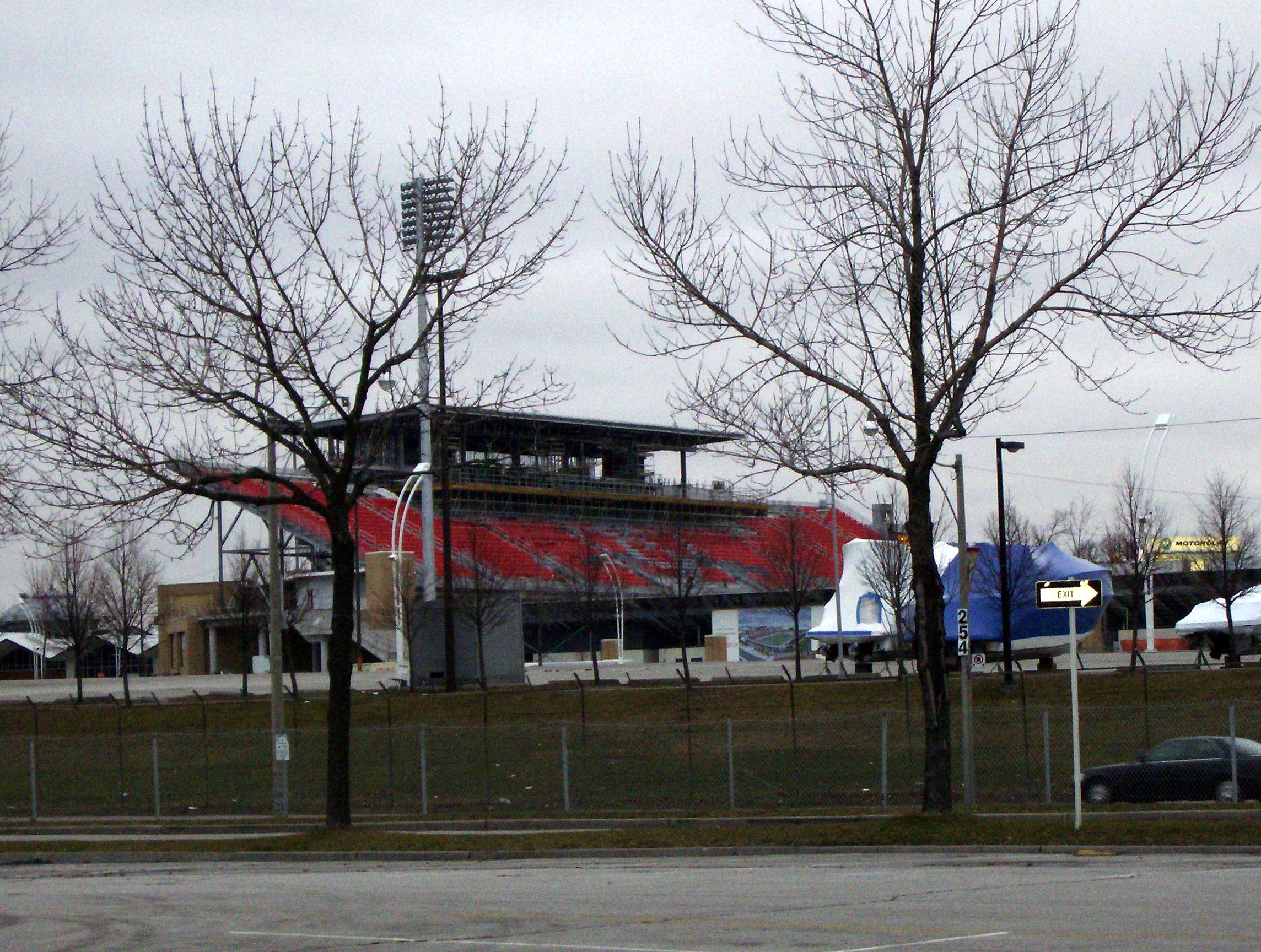
Photo: Mikerussell at en.wikipedia / Wikimedia Commons / CC BY-SA 3.0

BMO Field’s history is written in the events it has hosted. Its resume is a unique mix that few North American stadiums can match, spanning world soccer, North American club finals, and even professional hockey outdoors.
The tournament that christened the stadium was the 2007 FIFA U-20 World Cup. It hosted the opening match and several group games, introducing the global stage to the new venue. In MLS, it became a fortress for Toronto FC’s playoff runs, culminating in hosting the MLS Cup in 2010, 2016, and 2017. The 2017 final, where Toronto FC completed the first-ever MLS domestic treble, is arguably the stadium’s most significant club soccer moment.
Its multi-sport capability was proven dramatically in 2017. On January 1, it hosted the NHL Centennial Classic between the Toronto Maple Leafs and Detroit Red Wings. The game required a temporary ice rink to be built over the grass pitch. It set the stadium’s all-time attendance record of 40,148 fans, a number that stands today.
| Event Type | Specific Event | Year | Significance / Record |
|---|---|---|---|
| FIFA Tournament | FIFA U-20 World Cup | 2007 | Hosted opening match; operated as “National Soccer Stadium.” |
| MLS Final | MLS Cup | 2010 | First MLS Cup held outside the United States. |
| MLS Final | MLS Cup | 2016, 2017 | Hosted consecutive finals; Toronto FC won in 2017 to secure historic treble. |
| CFL Final | Grey Cup | 2016 | Hosted the 104th Grey Cup following the Argonauts’ move. |
| NHL Outdoor Game | NHL Centennial Classic | 2017 | Set all-time stadium attendance record: 40,148 spectators. |
| World Cup Qualifier | Canada vs. Jamaica | 2022 | Hosted the match that ended Canada’s 36-year World Cup qualification drought. |
The stadium also became a emotional home for the Canadian men’s national team. In March 2022, it hosted the qualifying match where Canada defeated Jamaica to secure its berth in the 2022 FIFA World Cup, ending a 36-year drought. The eruption in the stands that night cemented BMO Field’s place in Canadian soccer folklore.
TL;DR: BMO Field’s event history spans the 2007 FIFA U-20 World Cup, three MLS Cups, a Grey Cup, an NHL outdoor classic (attendance record: 40,148), and the 2022 World Cup clincher for Canada.
The Future: 2026 FIFA World Cup and Beyond
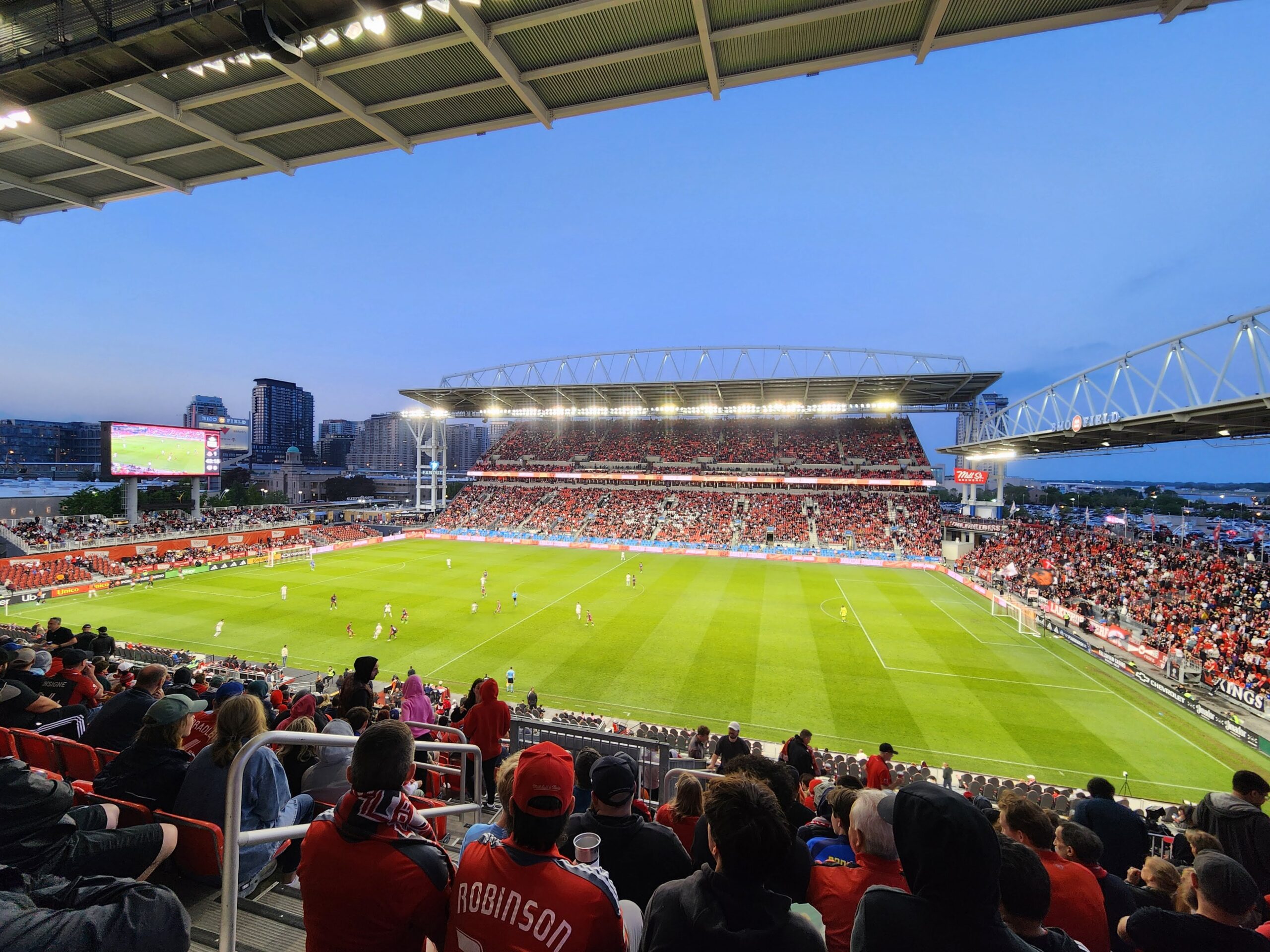
Photo: H4stings / Wikimedia Commons / CC BY-SA 4.0

The next major chapter is already under construction. As a host venue for the 2026 FIFA World Cup, BMO Field is preparing for its biggest global spotlight. The tournament demands specific standards, triggering another round of modifications.
Capacity will be temporarily expanded to 45,736 seats for the World Cup. This involves adding removable seating sections in the north and south ends, similar to the concept used for the CFL but on a larger scale. The expansion is purely for the tournament; capacity will revert afterwards to protect the intimate sightlines that define the experience for Toronto FC and Argonauts fans.
In keeping with FIFA’s non-commercial stadium naming rules for its tournaments, BMO Field will again undergo a temporary name change. For the duration of the 2026 World Cup, it will be known as “Toronto Stadium.” This follows the same protocol used in 2007 when it was the “National Soccer Stadium.”
Beyond the World Cup, the stadium’s future is tied to its tenants and community. MLSE continues to invest in incremental fan experience upgrades. The stadium also serves as the focal point for community programs like “Play Soccer,” a BMO and MLSE-supported grassroots initiative that uses the stadium’s aura to inspire young players. This dual identity—world-class event venue and community anchor—is the model it will likely follow for decades.
Common mistake: Assuming the 2026 expansion is permanent. The added seats for the World Cup are temporary installations. The post-tournament capacity will be lower to maintain the steep, close-to-the-pitch design that makes BMO Field distinct from larger, more distant NFL stadiums.
The evolution from a $62.9 million soccer project to a $115 million multi-sport hub, and now to a World Cup venue, shows a stadium constantly adapting. It has managed to grow in scale and importance without losing the intense atmosphere that made it successful in the first place. For students of soccer tactics and stadium design, its journey is a masterclass in flexible planning.
TL;DR: For the 2026 FIFA World Cup, BMO Field will get temporary seating to reach 45,736 seats and be renamed “Toronto Stadium,” with plans to return to its smaller, more intimate configuration after the tournament.
Frequently Asked Questions
When did BMO Field open?
BMO Field officially opened on April 28, 2007, with a Toronto FC friendly match. Its grand opening ceremony was held on May 12, 2007.
Why was BMO Field built?
It was built primarily to serve as the home stadium for the new MLS franchise, Toronto FC, and to host the 2007 FIFA U-20 World Cup. It was conceived as Canada’s first major soccer-specific stadium to elevate the sport’s profile, a vision detailed in its official BMO Field Wikipedia article.
What is the capacity of BMO Field?
The capacity changes based on the event. For Toronto FC MLS matches, it’s approximately 30,000. For Toronto Argonauts CFL games, it’s about 25,000. It will be temporarily expanded to 45,736 seats for the 2026 FIFA World Cup.
Has BMO Field always had natural grass?
No. The stadium opened with an artificial FieldTurf surface. A permanent natural grass pitch was installed before the start of the 2010 MLS season.
What are the biggest events ever held at BMO Field?
Major events include the 2007 FIFA U-20 World Cup, the 2010, 2016, and 2017 MLS Cups, the 2016 Grey Cup, the 2017 NHL Centennial Classic (which set the attendance record of 40,148), and the 2022 World Cup qualifying match where Canada ended its 36-year drought.
The Bottom Line
BMO Field’s history is not a static record. It’s a live document of adaptation. It began as a calculated gamble on professional soccer in Canada, funded by a controversial public-private deal. It listened to its players and switched from turf to grass. It recognized its own limitations and underwent a radical, $115 million physical transformation to welcome a second major sports tenant. It has hosted everything from global youth tournaments to historic NHL games, all while maintaining a reputation for intimidating intimacy.
The upcoming 2026 World Cup expansion is the next logical step in this story of pragmatic growth. The stadium has never been afraid to change its shape or even its name to meet a larger goal. Yet, through all of it, the core mission from its 2006 founding remains: to be a centrepiece for soccer in Canada. By that measure, as it prepares to welcome the world in 2026, its history is already a success.
I come from the “soccer heart” of Germany, the Ruhrpott. I have played, trained and followed soccer all my life and am a big fan of FC Schalke 04. I also enjoy following international soccer extensively.