The Ultimate Guide to Soccer Tactics for Coaches and Players
A soccer tactics guide for coaches and players starts with three things: a formation that fits your personnel, a pressing system with a shared trigger, and an age-appropriate teaching progression. The best tactic is the one your players can execute under pressure, not the most complex one on paper.
Most guides talk about what Pep Guardiola does. They forget he works with world-class athletes who train daily. The universal mistake is trying to install a professional system with players who meet twice a week. You get disorganized chasing, not coordinated pressing. Players look confused, gaps appear, and the whole structure collapses by halftime.
This guide strips tactics back to the core principles you can actually teach. We’ll cover how to pick a formation based on who you have, not who you wish you had. You’ll learn the one pressing trigger that works for youth teams, how to build a lineup that makes sense, and why video is your most powerful coaching tool. This is practical, from-the-ground-up football.
Key Takeaways
- Formations are a starting reference, not a prison. The popular 4-4-2 formation provides balance, but a modern 4-3-3 setup demands specific player profiles.
- Pressing requires a shared trigger, like a backward pass, and a shared direction. Without it, you have exhausting, ineffective chasing.
- Tactical complexity must match age. Introduce basic support angles at U10, real formations like the 3-5-2 formation at U13+, and complex systems like Positional Play only with advanced, committed players.
- Video analysis is non-negotiable for teaching tactics. Players understand spatial concepts 80% faster when they see themselves on screen versus a chalkboard talk.
- The most critical moment is the 3-5 second transition after losing the ball. Drilling this “reaction window” prevents more goals than any static defensive shape.
How to Choose a Formation Based on Your Players
Forget the “best” formation. It doesn’t exist. The optimal shape is the one that amplifies your players’ strengths and hides their weaknesses. A 3-4-3 formation is thrilling if you have tireless wing-backs and a creative number ten. It’s a disaster if your fullbacks can’t cross and your center-backs are slow.
Start with an honest assessment. List your squad and tag each player: technical, physical, tactical intelligence, mental toughness. The player with great vision but low stamina might be your regista in a compact midfield trio, not your box-to-box runner. The fast, direct winger is wasted in a narrow two-striker partnership; he needs the space a 4-3-3 setup provides.
The formation is a communication tool. It gives players a shared mental map of where they should be when the ball is in Zone A, B, or C. Its primary job is to reduce uncertainty, not to invent genius.
This assessment directly informs your soccer lineup. Your formation is the skeleton; the players are the muscle. Forcing a square peg into a round hole is how you lose the dressing room before the season starts.
| Player Profile | Ideal Formation Role | Formation Match | Risk if Mismatched |
|---|---|---|---|
| Technical playmaker | Central attacking midfielder | 4-2-3-1, 3-5-2 diamond | Isolated, marked out of game |
| Physical, speedy winger | Wide forward | 4-3-3, 3-4-3 | Forced inside, loses 1v1 threat |
| Disciplined, strong defender | Central defender in a three | 5-3-2, 3-5-2 | Exposed in 1v1 situations in a back four |
| Engine-room midfielder | Box-to-box #8 | 4-3-3, 4-4-2 | Wasted as a holding #6, lacks positional discipline |
TL;DR: Build your formation around your two or three best players. Everyone else fills roles that support them.
The Age-Appropriate Progression
Introducing a high defensive line and an offside trap to eight-year-olds is coaching malpractice. Their brains are wired for exploration and basic coordination, not zonal marking. Tactical development has a sequence, just like technical skill.
For U6-U8, the only “tactic” is spatial awareness. Use games that force them to look up. At U8-U10, introduce the concept of support, “be at a 45-degree angle to your teammate.” You can layer in a simple pressing trigger: “When the opponent passes backwards, everyone takes two steps forward.” That’s it. No talk of lines of engagement.
By U11-U12, you can introduce the idea of a formation. Use a simple 2-3-1 indoor formation as a teaching tool for small-sided tactics. The real work begins at U13+. This is where you implement standard 4-4-2 formation or a modern 3-5-2 tactics as your base. The focus shifts from “stay in position” to “understand your role within the position.” This is also the perfect time to use a player position guide to help athletes understand their natural strengths.
Common mistake: Introducing complex positional rotations to a U14 team, they’ll overthink every movement, play slowly, and become easy to defend. Solidify their understanding of one role first.
The progression is not about withholding information. It’s about cognitive load. A young player learning to dribble, pass, and execute a gegenpress will master none of them. Pick one tactical concept per season and drill it until it’s instinct.
Defensive Organization: From Chaos to a System
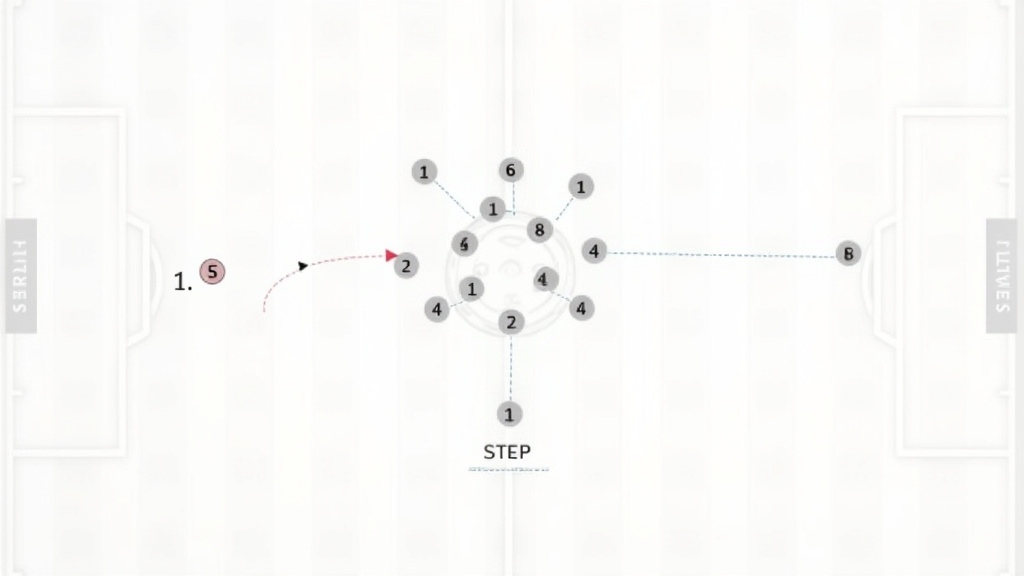
Defense is not about having ten players behind the ball. It’s about controlling space and dictating where the opponent can play. Disorganized chasing is the most physically draining and least effective form of defense. Your team will be exhausted by the 60th minute, and smart opponents will pick you apart.
You need to pick one system and teach it thoroughly. The four primary modern systems are:
1. High Press: The entire team squeezes up, engaging the opponent in their own defensive third. It requires extreme fitness and coordination.
2. Gegenpressing: The immediate counter-press within 5-8 seconds of losing possession. It’s a ball-oriented swarm, not man-marking.
3. Mid-Block: The team defends compactly between the halfway line and the penalty area. It’s the most common balanced approach.
4. Low Block: All ten outfield players behind the ball, often in a defensive 5-3-2 setup. It prioritizes compactness and forces the opponent to cross.
For most youth and amateur teams, the mid-block is the most sustainable starting point. It conserves energy and teaches defensive shape. The key is the trigger. Your trigger is the signal for the team to step up together. The most effective trigger for developing teams is a backward pass by the opponent. It’s visual, clear, and often indicates a moment of hesitation.
- Establish the Block: In a controlled drill, have your team hold a mid-block shape without an opponent. Use cones to mark the boundaries.
- Introduce the Trigger: Add a passive opponent. The moment they play a backward pass, the entire team shouts “STEP!” and moves forward five yards in unison.
- Add Pressure: Make the drill active. The player nearest the ball applies pressure, while the others shift to cover passing lanes.
- Practice the Breakdown: What happens if the press is beaten? Drill the drop-and-recover run. This is non-negotiable.
Skipping step four is why teams get sliced open on the counter. They press, get played through, and are left watching the breakaway.
The Engine Room: Controlling the Midfield
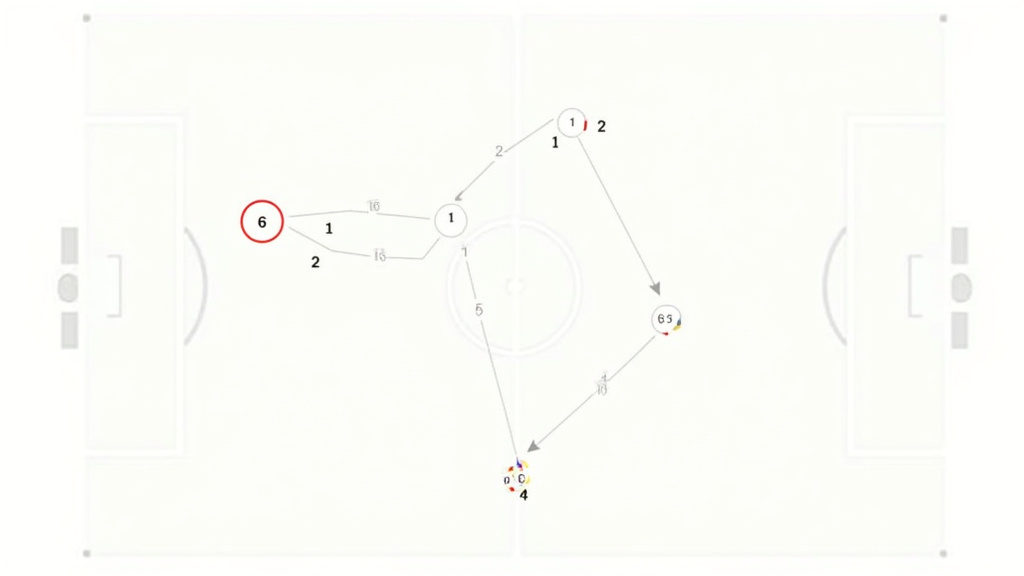
Who wins the midfield often wins the game. Midfield control is about winning the ball, keeping it, and using it to hurt the opponent. It’s not about having the most players there; it’s about having the right players in the right relationships.
A midfield diamond in a 3-5-2 creates passing triangles everywhere, but it demands intelligent players who understand spacing. A flat midfield four in a traditional 4-4-2 is simpler to teach but can be overrun by a three-man midfield. Your choice comes back to personnel. Do you have a natural holder who reads the game? A runner who can arrive late in the box? A passer who can switch play?
I tried to implement a single pivot (#6) with a U16 team that had two brilliant attacking midfielders but no natural defender. We were spectacular going forward and a disaster in transition. The solution wasn’t more drills. It was changing the shape to a double pivot (4-2-3-1), sacrificing a bit of attack for stability. We started winning 2-1 instead of losing 4-3.
The principles of Positional Play, like the “Rule of Three,” are excellent for midfield training. No player should ever be more than three passing options away from a teammate. This creates automatic connectivity. You can train this with “shadow play” – running through patterns without opposition. It looks silly until you see how it coordinates movement under fatigue.
The 5-Second Rule of Transition
This is the single most important tactical moment in the modern game. The transition phase, the 3-5 seconds after you lose possession, is when defensive shape is most vulnerable. Most goals are conceded in this window.
The rule is simple: the player who loses the ball must react immediately. They either press the ball-carrier or block the most obvious passing lane. Their job is to delay and disrupt. Meanwhile, the other nine outfield players have one job: sprint to get goal-side of the ball and into a compact defensive shape. This isn’t jogging. It’s a full-speed recovery run.
Common mistake: The player who loses the ball stands and complains, this 3-second pause is all the opponent needs to launch a counter-attack. By the time they recover, the ball is in their penalty area.
Drill this with a simple 4v4+2 exercise in a small grid. The moment the attacking team loses the ball, the coach blows a whistle. The losing team has 5 seconds to win it back (a gegenpressing drill) or get into a compact block. Use video afterwards. Show them the gap between the whistle and their first reactive movement. That gap is where games are lost.
Attacking Structure and Positional Play
Good attacking tactics create numerical advantages in key areas. Positional Play (Juego de Posición) is the dominant philosophy for this. It views the pitch in vertical and horizontal zones. The goal is to occupy specific zones to create overloads, a 2v1 on the wing, a 3v2 in the half-space.
You don’t need to teach the whole system. Extract two principles for your team. First, width and depth. At least two players must be wide, stretching the opponent’s block. At least one player must be deep, between the lines, connecting play. Second, occupation of the half-spaces. These are the corridors between the center and the wing. Penetration from here is deadly.
For youth coaches, this translates to simple rules:
– “If the winger has the ball, the fullback stays deep. If the fullback pushes up, the winger comes inside.”
– “Never have more than three players in the same horizontal line.”
– “When we build from the back, the #6 must always show for a pass between the center-backs.”
These rules prevent the “bunching” that plagues youth football. They are the foundation upon which more complex attacking skill drills can be built. A player who understands spacing will get more from finishing practice than one who doesn’t.
The Coach’s Toolkit: Drills and Video Analysis
Tactics are difficult to coach with words alone. The brain processes visual information 60,000 times faster than text. This is why your most powerful tools are constrained drills and video analysis.
Start with shadow play. Have your team walk through a movement pattern, like switching play from one flank to the other, without any opposition. Then add passive defenders. Finally, make it live. This progression builds the neural pathways before adding pressure.
Agility ladder drills aren’t just for fitness. Use them to coach specific movement patterns for pressing: the quick side-step to cut a passing lane, the explosive forward burst to close down. The ladder ingrains the footwork.
But video is the game-changer. Record your training sessions. In the next session, show 3-minute clips. Point out the moment the pressing trigger was missed. Show the gap that appeared in transition. According to a study by Veo, teams that use video analysis for tactical instruction see a 40% faster comprehension rate of spatial concepts compared to whiteboard sessions. It makes the abstract concrete.
This analytical skill is also a core part of any coaching career path. Modern coaching badges emphasize the ability to break down film and communicate lessons effectively.
In-Game Adaptation and Strategy
A tactic is not a set-it-and-forget-it command. It’s a hypothesis you test against the opponent. The ability to adapt is what separates a good coach from a great one. This requires active observation, not just passion.
Your first 15 minutes should be a diagnostic period. Is their left-back slow? Tell your right winger to take him on 1v1. Is their defensive midfielder their only passer? Man-mark him out of the game. Are they playing a high line with slow center-backs? Instruct your forwards to make runs in behind.
Have two or three pre-planned adjustments. If your high-pressing 3-4-3 isn’t working because they’re bypassing it with long balls, can you switch to a mid-block 4-4-2? If you’re losing the midfield battle in a 4-3-3, could you match them by shifting to a 3-5-2 formation? These are decisions you prepare for, not invent in panic.
Substitutions are tactical tools, not just rewards or punishments. Bringing on a fresh, pacy winger in the 70th minute against a tired fullback is a strategy. Introducing a tall striker to target crosses is a strategy. Your bench is your toolbox; use it to change the game.
Frequently Asked Questions
What is the best soccer formation for a beginner coach?
The 4-4-2 formation. It’s balanced, simple to explain, and gives players clear zones of responsibility. The two banks of four are easy for players to visualize, making it easier to teach basic defensive shape and provide natural width in attack. Avoid overly complex systems like a 4-2-3-1 or a 3-4-3 diamond until your players have mastered the fundamentals of spacing and roles within a simpler structure.
How do I teach tactics to players who just want to play?
Use the game as the teacher. Instead of a lecture, set up a conditioned small-sided game. For example, to teach pressing, play 5v5 in a tight grid where a goal counts double if won within 5 seconds of stealing the ball. The rule creates the behavior. Then, freeze the play and point out what they did. They learn by doing, not by listening.
What’s the difference between a high press and gegenpressing?
high press is a starting defensive position, your team is already set high up the pitch, engaging the opponent early. Gegenpressing is a reaction, it’s the immediate, aggressive swarm to win the ball back the moment you lose it, regardless of where you are on the field. Gegenpressing is about the moment of transition; a high press is about territorial control.
How often should we work on tactics in practice?
For youth teams (U13-U15), dedicate 20-25 minutes of a 90-minute session to a specific tactical theme, always through a game-based drill. For older, more advanced teams, you can increase this to 30-40 minutes. The key is that tactical work must be integrated with technical execution, passing under pressure, receiving in tight spaces, or it becomes theoretical and won’t transfer to match day.
Can a slow team still press effectively?
Yes, but not with a high press or gegenpress that requires explosive speed over large distances. A slower team should employ a mid-block or low block system. The pressing trigger becomes more selective, like a poor touch or a square pass in midfield, allowing the team to step up compactly over a shorter distance. Intelligence and coordination can compensate for a lack of pure speed.
How do I use a tactics board effectively?
Use it for two minutes maximum. Draw the initial setup or one key movement. Then get up and demonstrate it with players on the field. The board is for the static picture; the field is for the dynamic reality. Over-reliance on the board leads to passive learners. Better yet, use a digital app after practice to send players clips and diagrams of what you worked on.
The Bottom Line
Tactics are not magic. They are applied common sense based on the players you have, the opponents you face, and the moments within a match. The best soccer tactics guide for coaches and players is the one that lives on the training ground, not in a book. Start with a simple formation that fits, like a balanced 4-4-2 or a modern 4-3-3 setup. Teach one defensive trigger until it’s automatic. Use video to show, not just tell.
Your job as a coach is to build a framework that makes your players’ decisions easier. Their job as players is to execute with intensity and intelligence within that framework. When a tactic clicks, when the press triggers a turnover that leads to a goal, you’ll feel the entire team’s understanding elevate. That’s the reward. That’s football.

I come from the “soccer heart” of Germany, the Ruhrpott. I have played, trained and followed soccer all my life and am a big fan of FC Schalke 04. I also enjoy following international soccer extensively.