Canada World Cup History: National Team’s Best Results
Canada’s best World Cup result is reaching the group stage in all three of its appearances (1986, 2022, 2026). The national team has yet to win a match, scoring only two goals while conceding twelve. Their historic first goal was netted by Alphonso Davies during the 2022 tournament in Qatar.
Canada’s World Cup history spans three appearances: 1986 in Mexico, 2022 in Qatar, and 2026 as a co-host with the United States and Mexico. Their best result is the group stage, with a record of zero wins, two goals scored, and twelve conceded across six matches. The first goal was scored by Alphonso Davies in 2022, marking a symbolic breakthrough for the program.
Most articles treat Canada’s story as a simple timeline of failure. They miss the tectonic shift happening right now. The certainty of hosting the 2026 tournament has rewritten the entire development pipeline for Canadian soccer, from youth investment to league scheduling.
This guide walks through the raw numbers, the painful gaps, and the tangible changes a host nation undergoes. It’s not about past losses. It’s about how a 36-year drought reshaped a federation and what automatic qualification does to a team’s mentality.
Key Takeaways
- Canada’s six World Cup matches have yielded zero wins, two goals scored, and twelve conceded. Alphonso Davies scored the first in 2022.
- The 36-year gap between 1986 and 2022 qualifications forced a complete rebuild of the national program, culminating in the current “Golden Generation.”
- As a 2026 co-host, Canada receives automatic qualification, which has already altered youth development timelines and domestic league priorities.
- Outside FIFA tournaments, Canada has won the CONCACAF Championship (1985) and Gold Cup (2000), proving regional competitiveness.
- The shift from John Herdman’s emotional leadership to Jesse Marsch’s tactical pragmatism defines the current approach for the 2026 campaign.
Canada’s World Cup Record: The Numbers
The statistics are blunt. Six matches played across two tournaments. Zero wins. Zero draws. Six losses. Two goals scored, twelve conceded. That’s the entire World Cup resume for the Canadian men’s national team.
Canada’s World Cup record stands at 0-0-6 (W-D-L) with a -10 goal difference. The team conceded an average of two goals per match while scoring 0.33 goals per match across its appearances in 1986 and 2022.
The 1986 tournament in Mexico was a harsh introduction. Drawn into a group with France, Hungary, and the Soviet Union, Canada lost all three matches without scoring a single goal. The Soviet Union beat them 2-0, France won 1-0, and Hungary secured a 2-0 victory. That set a tone of defensive struggle.
The 2022 cycle in Qatar looked different on paper but ended the same. Canada topped their CONCACAF qualifying group, a genuine achievement. Then the tournament itself delivered another three losses: 1-0 to Belgium, 4-1 to Croatia, and 2-1 to Morocco. The two goals were historic, but the results were familiar.
TL;DR: Canada’s World Cup record is six losses, two goals scored, and a -10 goal differential. The 2022 tournament added their first goals but not their first points.
The 1986 Debut: What Actually Happened?
Canada qualified for the 1986 World Cup by winning the 1985 CONCACAF Championship. That regional success created expectation. The reality was a group stage exit with zero goals.
The squad was built around a defensive core, expecting to absorb pressure and counter. Against France, they held a 0-0 line until the 79th minute when Jean-Pierre Papin broke through. Against Hungary, they conceded early and never recovered. The Soviet Union match was a 2-0 loss that felt inevitable after the first two results.
Common mistake: Assuming Canada’s 1986 team was unprepared, they were tactically organized but lacked the individual quality to convert defensive discipline into attacking threat. That gap explains the zero goals.
The experience left a mark. For the next 36 years, Canadian soccer was defined by that absence. The program stalled. Youth development lagged. Professional pathways narrowed. Every discussion about the national team started with “since 1986.” That’s the weight a single tournament can carry.
The 2022 Return and the First Goal
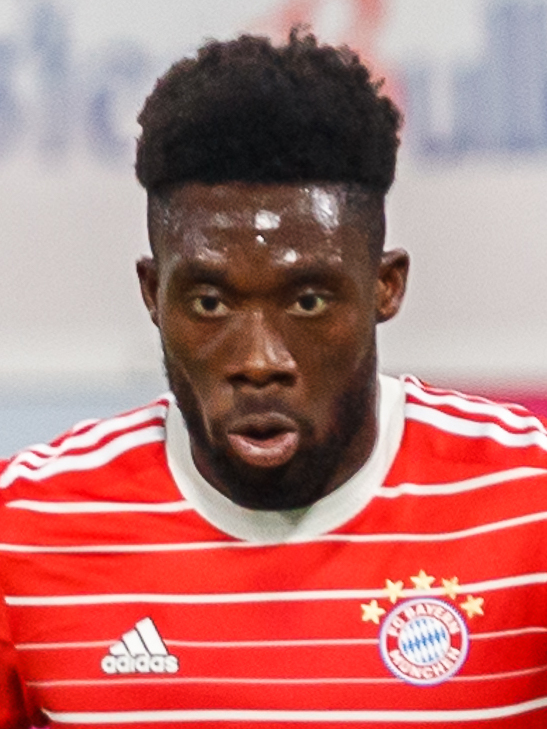
Photo: Derivative work: Indopug / Wikimedia Commons / CC BY-SA 4.0

Qualifying for Qatar 2022 wasn’t a gentle process. Canada finished first in the final CONCACAF qualifying round, ahead of Mexico and the United States. That alone shifted the narrative from “perennial outsider” to “regional contender.”
The tournament opened with a 1-0 loss to Belgium. Canada played well, creating chances, but couldn’t finish. Then came the match against Croatia.
Alphonso Davies scored in the second minute. A left-footed finish from a low cross. It was Canada’s first World Cup goal ever, ending a 36-year wait. The stadium erupted. The bench erupted. You could feel the relief from Toronto to Vancouver. They still lost 4-1, but that goal changed everything.
The final group match against Morocco brought another 2-1 loss. Canada’s second goal in the tournament wasn’t scored by a Canadian player, it was an own goal by Morocco’s Nayef Aguerd. So the tally stands: one goal from a Canadian, one from an opponent.
TL;DR: Canada’s 2022 return produced their first World Cup goal via Alphonso Davies, but the team still lost all three group matches and exited without a point.
What’s a “Golden Generation” and Does Canada Have One?
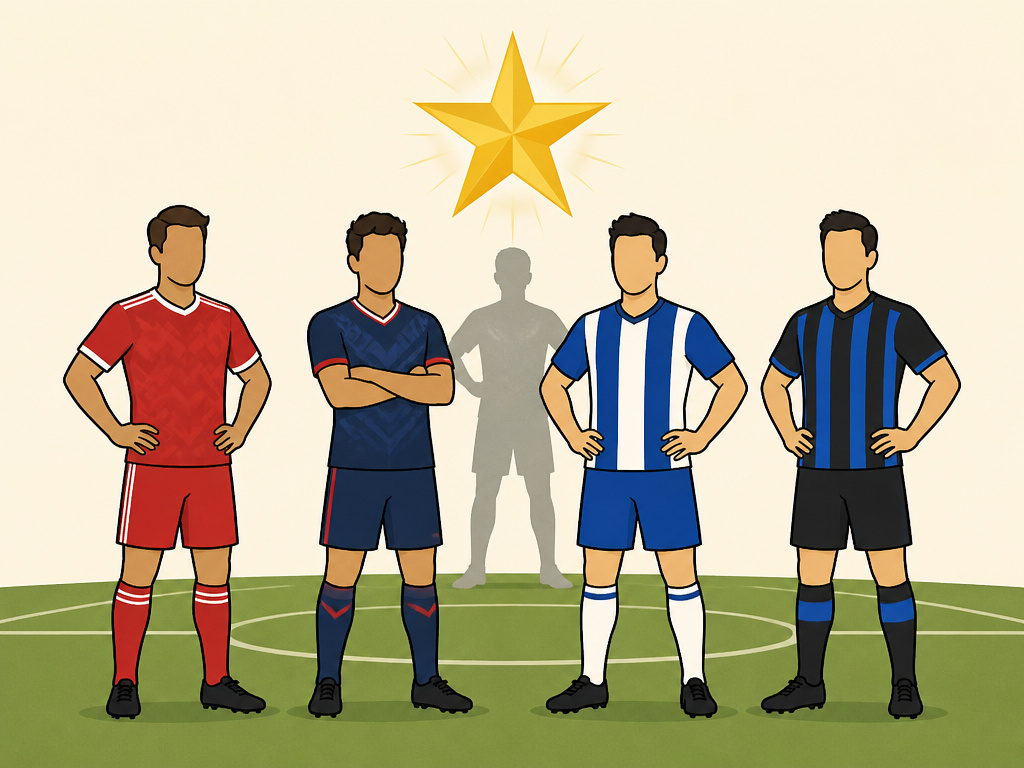
The term “Golden Generation” refers to a cohort of players who reach the national team simultaneously, elevating its ceiling. Canada’s current group fits the definition.
Alphonso Davies is the headline, but the core includes Jonathan David, Stephen Eustáquio, and Tajon Buchanan. These are players operating at the highest European levels. Bayern Munich, Lille, Porto, Inter Milan. That concentration of talent in one national team cycle is unprecedented for Canada.
Previous cycles relied on MLS veterans and occasional European journeymen. The current squad has seven or eight starters who are regulars in top-five European leagues. That changes training intensity, tactical comprehension, and match-day confidence.
The shift in soccer tactics under coaches like John Herdman and now Jesse Marsch reflects this player quality. Herdman built an emotional, belief-driven system that qualified the team. Marsch is implementing a more pragmatic, pressing-based structure suited to the athletes he now has.
| Player | Club (2024) | Role in Golden Generation |
|---|---|---|
| Alphonso Davies | Bayern Munich | World-class left-back/winger; symbolic leader |
| Jonathan David | Lille | Primary goal threat; holds up play |
| Stephen Eustáquio | Porto | Midfield controller; sets tempo |
| Tajon Buchanan | Inter Milan | Dynamic wide attacker; creates chaos |
This generation isn’t just about skill. It’s about timeline. Most of these players will peak between 2024 and 2028, aligning perfectly with the 2026 World Cup. That’s the difference between a golden generation and a good team, the stars align on the calendar.
Canada’s Path to 2026: Hosting Changes Everything

Photo: Newell Reinvention / Wikimedia Commons / CC BY-SA 2.0

Canada, the United States, and Mexico will co-host the 2026 FIFA World Cup. The final is scheduled for July 19, 2026, at MetLife Stadium in New Jersey. For Canada, hosting means automatic qualification, no stressful qualifying campaign, no last-minute injuries derailing the dream.
That certainty rewrites the federation’s entire approach.
Youth development programs now have a fixed target year. League schedules, like the MLS calendar, can be adjusted to prepare players for a summer tournament. Commercial partnerships and stadium investments are locked into a 2026 completion date. The Wikipedia page on Canada’s World Cup appearances documents the past, but the hosting agreement dictates the future.
The financial impact is already visible. Soccer Canada has secured funding for new training centers and expanded youth tournaments. The infrastructural legacy includes stadium upgrades in Vancouver and Toronto, plus temporary venues for the tournament itself. This isn’t just about 2026 matches; it’s about what remains after the tournament leaves.
Fan engagement is growing faster than the wins. Match attendance for national team games has doubled since the 2022 qualification. Merchandise sales are up. Media coverage has shifted from niche to mainstream. Hosting a World Cup does that, it forces a country to pay attention.
How Does CONCACAF Success Compare to World Cup Results?
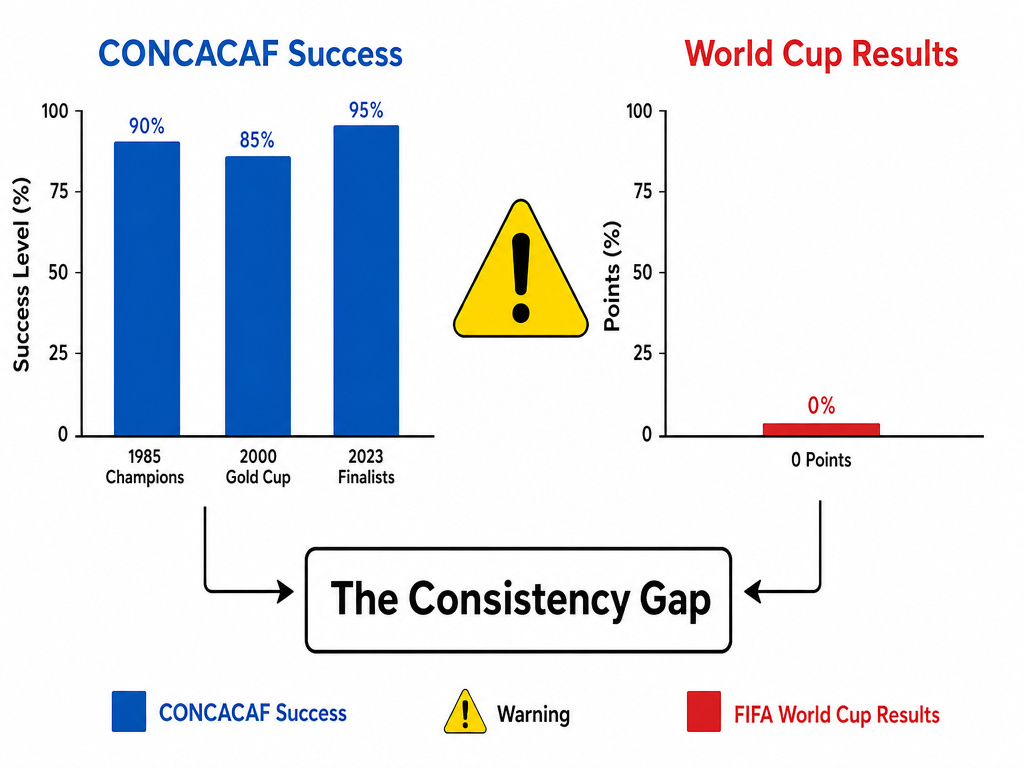
Canada’s World Cup record is bleak, but their CONCACAF history is strong. They won the CONCACAF Championship in 1985, which secured their 1986 World Cup berth. They won the CONCACAF Gold Cup in 2000. They were runners-up in the 2023 CONCACAF Nations League.
That regional success creates a confusing picture. A team that can beat Mexico and the United States on a given day, yet can’t secure a World Cup point. The gap isn’t about talent on those days, it’s about consistency across a tournament.
World Cup groups pack three matches into ten days. CONCACAF tournaments are often single-elimination or two-match series. Canada’s national team has excelled in short bursts, not in sustained campaigns. The 2026 hosting status might finally bridge that gap, because preparation will be a four-year project, not a six-week camp.
The Wikipedia entry on Canada’s men’s soccer team lists these regional honors alongside the World Cup droughts. It’s a record of a program that peaks intermittently, not continuously.
What’s Next for Canada? The Marsch Era and 2026 Expectations
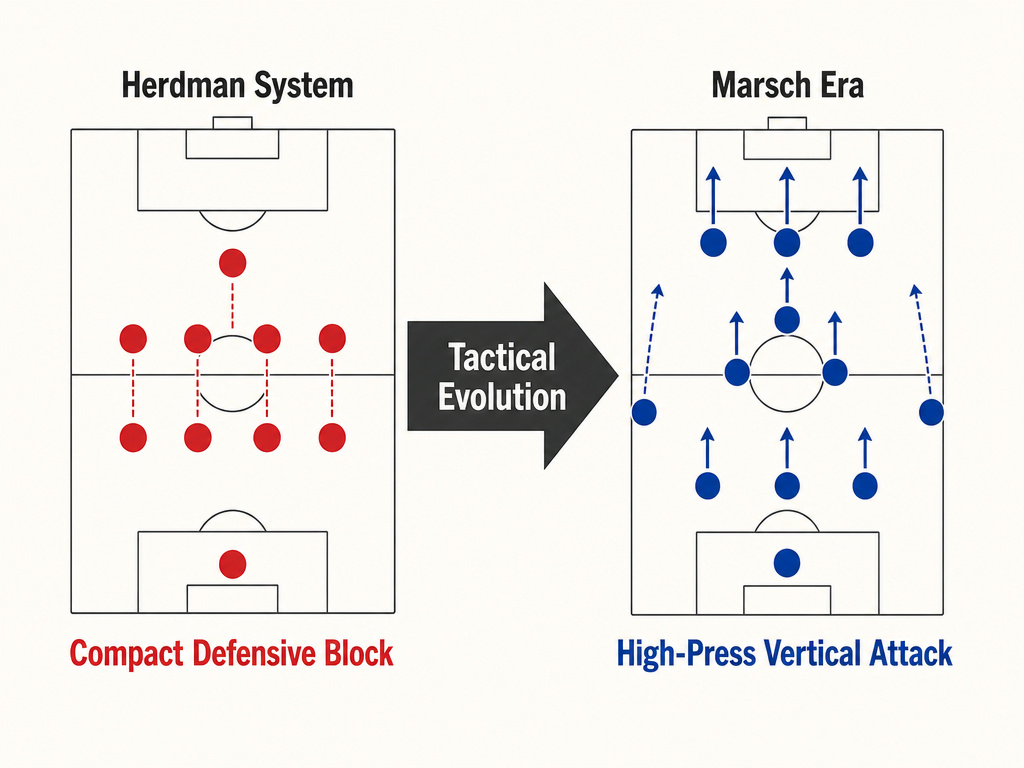
Jesse Marsch took over as head coach in 2024. His mandate is clear: prepare the Golden Generation for a home World Cup. His tactical shift from Herdman’s system is already visible.
Herdman relied on emotional intensity and a compact defensive block. Marsch prefers a high-pressing, vertical attacking model that uses the speed of Davies and Buchanan. This mirrors the modern soccer tactics employed by top European clubs, which fits the player profile he now has.
The expectations for 2026 are layered. The public wants a first World Cup win. The federation wants a knockout stage appearance. The players want to prove they belong in the global conversation. All three goals are connected.
Achieving them requires solving two historical problems: scoring goals and defending across a full tournament. Canada conceded twelve goals in six World Cup matches. They scored two. That ratio can’t continue.
Marsch’s pressing system aims to create more scoring chances while protecting the defense through possession. It’s a risk, pressing fatigues players over a three-match group stage, but it’s the logical evolution for a team with this athletic profile.
TL;DR: Jesse Marsch’s high-pressing, vertical tactics are designed to leverage Canada’s athletic Golden Generation for the 2026 World Cup, targeting their first win and a knockout stage berth.
How Hosting a World Cup Alters a Soccer Nation’s DNA
Automatic qualification removes the stress of a qualifying campaign, but it adds a different pressure: the host must perform. A host nation that exits in the group stage faces a public and commercial backlash that can stall development for another decade.
For Canada, the 2026 tournament is a catalyst for systemic change. Youth academies are now funded with a 2026 output goal. The MLS has adjusted its calendar to reduce player fatigue before the tournament. Stadium upgrades in Vancouver and Toronto will leave a legacy of improved facilities for future national team matches.
The fan base expansion is measurable. National team matches now sell out BMO Field in Toronto and BC Place in Vancouver. Media coverage has shifted from occasional highlights to regular analysis. This isn’t temporary; it’s the new normal for a country that has placed soccer at the center of its sports culture for four years.
The financial injection from FIFA hosting fees and commercial partnerships is already reshaping Soccer Canada’s budget. More money flows into coaching education, referee development, and grassroots programs. That’s the hidden legacy of hosting, the money that stays after the tournament leaves.
I watched Canada’s 2022 match against Croatia in a Toronto bar. When Davies scored, the place shook. Two minutes later, the reality settled back in, they were still losing, and would lose 4-1. That moment captures the entire Canadian soccer experience: a breakthrough instantly followed by the old reality. 2026 needs to break that cycle.
Frequently Asked Questions
Has Canada ever won a World Cup match?
No. Canada has played six World Cup matches across two tournaments (1986 and 2022) and lost all six. Their record is 0-0-6.
Who scored Canada’s first World Cup goal?
Alphonso Davies scored Canada’s first-ever World Cup goal in the second minute of their 2022 match against Croatia. The only other goal credited to Canada in a World Cup was an own goal by Morocco’s Nayef Aguerd in the same tournament.
Will Canada automatically qualify for the 2026 World Cup?
Yes. As a co-host of the 2026 FIFA World Cup alongside the United States and Mexico, Canada receives automatic qualification to the tournament. This is their first consecutive World Cup appearance.
What is Canada’s best result in a major tournament outside the World Cup?
Canada won the CONCACAF Championship in 1985 and the CONCACAF Gold Cup in 2000. They also reached the semifinals of the 2024 Copa América and were runners-up in the 2023 CONCACAF Nations League.
Who is Canada’s current head coach?
Jesse Marsch was appointed head coach of the Canadian men’s national soccer team in 2024. He succeeded John Herdman, who led the team to qualification for the 2022 World Cup.
What are realistic expectations for Canada at the 2026 World Cup?
The minimum public expectation is Canada’s first World Cup win. The federation and team aim to progress beyond the group stage for the first time. Achieving either would mark a historic breakthrough for the program.
The Bottom Line
Canada’s World Cup history is a story of long absence and narrow breakthroughs. The 36-year gap between 1986 and 2022 shaped a generation of players who grew up without a tournament to aspire to. The 2022 return brought the first goal but not the first point.
Hosting the 2026 World Cup changes the equation completely. Automatic qualification allows four years of focused preparation. The Golden Generation’s player quality aligns with that timeline. Jesse Marsch’s tactical shift aims to convert athleticism into results.
The record says six losses, two goals, twelve conceded. The future says a host nation with a stadium legacy, a funded youth system, and a team expecting to win. That contrast is what makes Canada’s story worth watching now, not for what happened, but for what happens next.
I come from the “soccer heart” of Germany, the Ruhrpott. I have played, trained and followed soccer all my life and am a big fan of FC Schalke 04. I also enjoy following international soccer extensively.