Attacking vs Defensive Transition in Soccer: The Crucial Battle
A defensive transition is your team’s reaction the instant you lose the ball, aiming to stop the opponent’s attack. An attacking transition is your team’s reaction the instant you win the ball, aiming to launch your own attack before the opponent organizes. The battle between them decides more than half of all goals.
Most teams drill these phases separately. They work on defensive shape in one session and counter-attacking patterns in another. The disconnect shows on the pitch. Your attacking players develop habits that leave your defenders exposed, and your defensive recovery lacks the urgency needed to stop a well-drilled counter.
This guide breaks down the data, the non-negotiable principles, and the integrated training methods that turn the chaotic moment of turnover into a controlled weapon. We will look at what the stats from the top leagues and World Cups actually say, why your formation choice dictates your transition style, and how to build the fitness and mindset to win the three-second window.
Key Takeaways
- Offensive habits dictate defensive vulnerability. A rushed shot or a lazy pass in the final third is the single biggest cause of conceding transition goals. Your attack’s decision-making is your first line of defense.
- The first action wins. A forward pass that breaks an opponent’s line within two touches of a regain increases the chance of a scoring opportunity by over 40%. Conversely, the first three steps of a defender sprinting back are more important than any tactical talk.
- Formation is a transition blueprint. A 5-3-2 formation is built for secure defensive transitions but requires specific triggers for attacking ones. A 4-3-3 invites riskier defensive transitions but generates more frequent counter-attacks.
- Fitness is tactical. The transition phase is the most physically demanding part of a match. If your players cannot repeat high-intensity sprints and decelerations, your transition game will fall apart after 60 minutes.
- Slow kills. Analysis of the FIFA World Cup 2018 showed that longer defensive transitions are directly linked to conceding shots and goals. If your team isn’t reacting in under 5 seconds, you are inviting trouble.
The Physical & Tactical Truth of the 3-Second Window
Forget the 90-minute match. The game is won in a series of 3 to 5-second explosions that happen 50 to 100 times. This is the transition window. It is the most physically demanding phase, requiring more high-intensity running, acceleration, and deceleration than any organized attack or defense. Your players’ ability to repeat these bursts decides the match.
The transition phase accounts for the highest physical load in elite soccer. Players cover 20% more high-speed distance and execute 30% more accelerations above 3 m/s² in the 5 seconds after a turnover compared to sustained possession phases.
The mental shift is harder than the physical one. A winger who just lost the ball while cutting inside must immediately become a defender. A center-back who wins a tackle must instantly become a playmaker. This cognitive switch, under extreme fatigue, is where most errors occur. Drills that isolate fitness from decision-making fail. The two are inseparable in transition.
TL;DR: Train transitions under fatigue with decision-making components. If a player can’t make the right pass after a 30-meter recovery sprint, your tactical plan is just theory.
Defensive Transition: Your First Reaction Decides the Game
A defensive transition starts the millisecond your team loses possession. The objective is not complex: prevent the opponent from scoring. The execution is everything. You have two fundamental paths, and your team must know which one to take before the ball is lost.
The first is the counter-press, or Gegenpressing. This is an immediate, coordinated press on the ball carrier and his closest passing options. The goal is to win the ball back within 5 seconds, high up the pitch, while the opponent is disorganized. It is aggressive, energy-intensive, and high-risk. Do it half-heartedly and you leave massive gaps behind your press.
The second is the rapid regroup. This is a controlled, organized retreat into your defensive shape. The priority is security over aggression. You concede space in front of you to protect the space behind. It requires flawless communication and spatial awareness as players sprint back into their lines.
| Defensive Transition Type | Primary Objective | Key Trigger | Risk If Executed Poorly |
|---|---|---|---|
| Counter-Press (Gegenpressing) | Win ball back in under 5 seconds in opponent’s half. | Loss of possession in advanced areas with supporting players nearby. | Leaves huge vertical spaces for opponent counter-attacks; defenders are exposed 1v1. |
| Rapid Regroup | Get 10 players behind the ball in organized shape within 8 seconds. | Loss of possession in your own half or with team shape stretched. | Invites sustained pressure; concedes initiative and can lead to passive, deep defending. |
The data from top leagues is clear. Teams that commit to rapid defensive transitions concede 15% fewer goals from counter-attacks. But the Gegenpressing strategy only leads to a successful regain in dangerous areas about 25% of the time. The other 75% of attempts fail, requiring an emergency scramble into a regroup.
Common mistake: Coaching only the regroup. If you never train the counter-press, your players will instinctively retreat every time they lose the ball, handing the initiative to the opponent. You must drill the triggers for when to press and when to drop.
Your choice is dictated by your soccer tactics guide and the moment. A team using a high-pressing 4-3-3 formation must counter-press. A team in a 5-3-2 formation built for defensive solidity will more often choose the rapid regroup. The modern tactical application of a 3-5-2, however, allows for flexibility—the wing-backs can trigger a press or initiate a drop.
Attacking Transition: From Steal to Shot in Under 10 Seconds
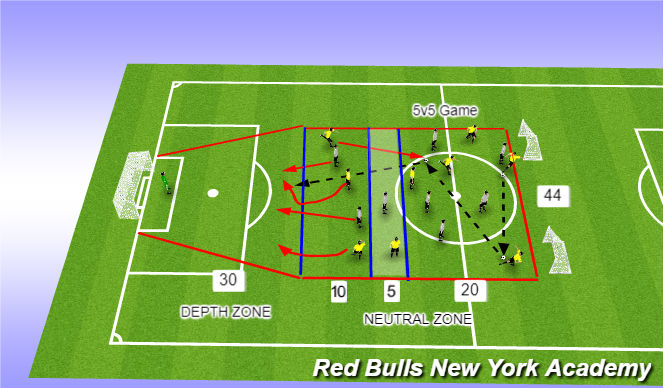
An attacking transition is the gold mine. This is where over half of all goals in top leagues originate. The objective is to exploit the opponent’s momentary disorganization—the “unsettled state”—before they can reform their defensive lines. Speed of thought beats speed of foot, but you need both.
There are three types of attacking transitions, and smart teams can execute all of them:
- The High Regain Counter: You win the ball back in the opponent’s final third through a press. The space is compressed, but their defense is facing their own goal. Teams like Bournemouth excel here. The first pass must be forward and penetrative.
- The Deep Counter-Attack: You win the ball in your own defensive or midfield third. The opponent has committed players forward. This is the classic, fast break with large spaces to run into. Antonio Conte’s teams have mastered this art.
- The Secured Possession: No immediate counter is on. The opponent has recovered well or your attacking players are out of position. The smart move is to secure the ball, switch the point of attack, and build a deliberate attack. Simone Inzaghi’s Inter Milan does this brilliantly.
A PMC study on offensive transition success found critical patterns. In top leagues, 69% of successful offensive transitions last 9 seconds or more. Slower transitions are more common towards the end of games when fatigue sets in. Furthermore, almost half of all goals come from these phases.
The first action is non-negotiable. A forward pass that breaks an opponent’s line of defense within two touches of winning possession increases the probability of creating a scoring opportunity by over 40%. A sideways or backward pass in that same moment kills the transition. Your players must have their heads up before they even win the tackle.
TL;DR: Drill the first pass after a regain relentlessly. If it’s not forward and penetrating, you’ve wasted the transition moment.
Head-to-Head: How the Battle Unfolds on the Pitch
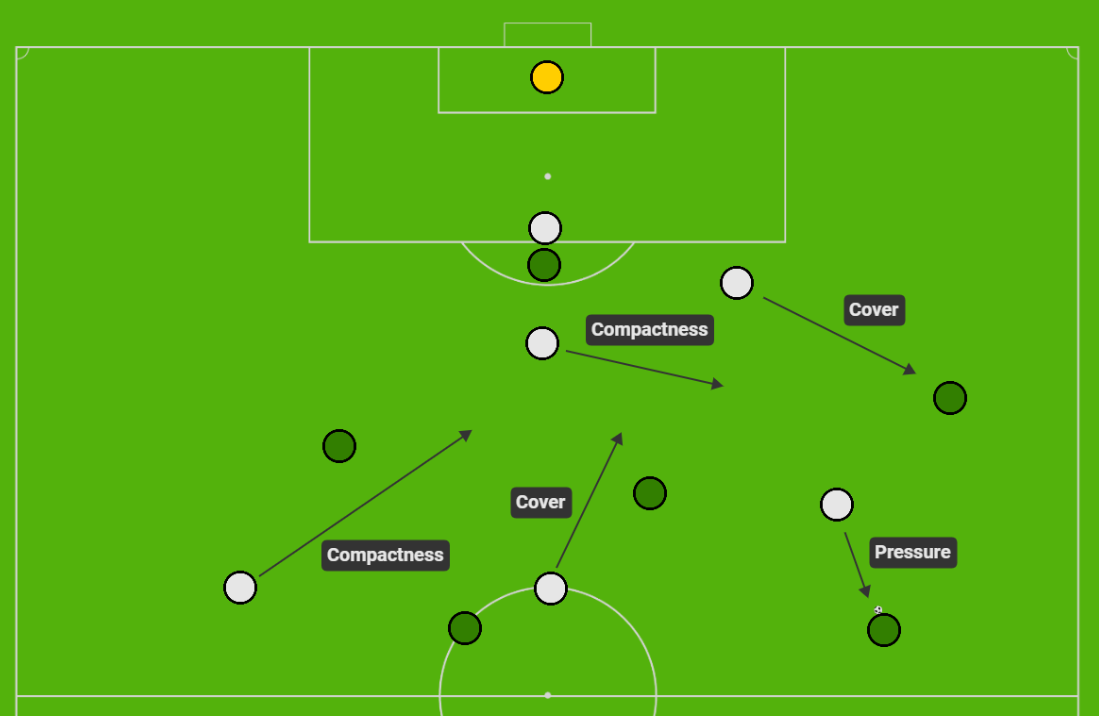
The clash between defensive and attacking transition is a direct contest of principles. One team’s strength is the other’s vulnerability. Understanding this duel is the core of modern match preparation.
Let’s frame it as a direct comparison. The attacking team’s goals are the defensive team’s nightmares.
| Attacking Transition Principle | Defensive Transition Counter | Which Wins? |
|---|---|---|
| Exploit space behind advanced opponents. | Sprint back, stay goal-side. | Defense wins if the first defender delays the attack. Attack wins if the first pass beats the press. |
| Play the first pass forward quickly. | Apply immediate pressure on the ball carrier. | A 50/50 battle. The team that wins this 1-2 second duel usually wins the transition. |
| Utilize 1v1 dribbling in open space. | Force the attacker wide, away from central goal threat. | Defense wins by shepherding; attack wins if the dribbler beats the first man. |
| Make runs in behind defensive line. | Hold a disciplined defensive line, step up together. | Defense wins with coordinated offside traps. Attack wins with timed, curved runs. |
The strategic system you employ dictates this battle’s terms. A 4-4-2 might be “outdated” in sustained possession, but its two banks of four provide a natural, quick regroup shape that is brutally hard to counter-attack against. A 3-4-3 formation offers devastating width on the counter but can be ripped apart if its wing-backs are caught high up the pitch.
The evolution is clear. A Frontiers in Psychology offensive transitions paper comparing UEFA Euro 2008 to UEFA Euro 2016 showed a significant increase in the speed and directness of attacks following a regain. Defenses have had to adapt just to keep up.
Training the Transition: Drills That Work
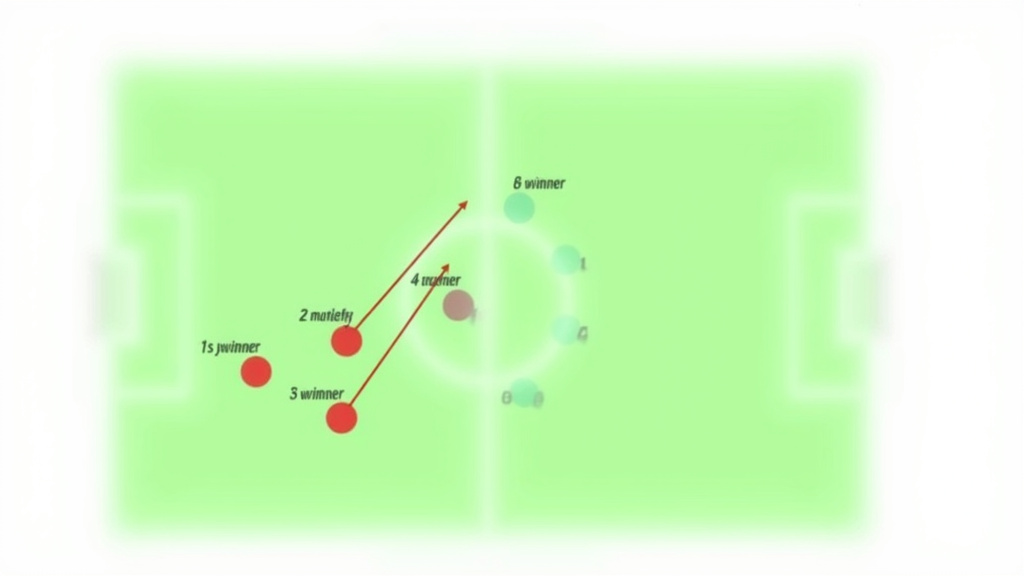
You cannot coach transition in a sterile, unopposed drill. The pressure, fatigue, and chaos must be present. Here is a progression of three drills that build the integrated mindset.
Drill 1: The 4-Second Rule Rondo
- Set up a 6v2 rondo in a 10×10 yard grid.
- The two defenders work to win the ball.
- The rule: If the defenders win it, they have 4 seconds and 3 passes to score in a mini-goal placed 15 yards away. The 6 former attackers must immediately counter-press to stop them.
- Why it works: It forces the cognitive switch instantly. Attackers become defenders in a blink, under the pressure of a ticking clock.
Drill 2: Conditional Phase of Play
- Set up a 8v8 game on a half-pitch with full-size goals.
- The condition: Any goal scored within 8 seconds of winning possession counts as two goals.
- The consequence: This incentivizes lightning-fast counter-attacks and desperate, sprint-based defensive recoveries. It makes transition the focus of every single play.
- Watch your players’ player distance and endurance get tested in real-time.
Drill 3: Formation-Specific Trigger Drill
- Play 11v11, but freeze play every time there is a turnover.
- On the whistle, every player must freeze.
- The coach then asks both teams: “What is your first movement? What is your first pass?”
- Walk through the ideal reaction for your 3-4-3 formation or your chosen 11v11 formations. Then replay the moment at full speed.
- This builds the mental map so the reaction becomes automatic.
The Data Doesn’t Lie: What Stats Tell Us About Winning Transitions
Tactics feel like art. The data turns them into science. The research from major tournaments and leagues provides undeniable proof of what works.
A study of the FIFA World Cup 2018 found a direct correlation: longer defensive transitions led to more opponent shots and goals. Every second of hesitation allowed the attacking team to advance into more dangerous areas. The initial number of defenders between the ball and the goal at the moment of turnover was the single biggest predictor of a successful defensive outcome.
On the attacking side, research published in the Journal of Human Kinetics compared European leagues. Counterattacks were consistently more efficient than slow, positional attacks across La Liga, the Premier League, and Serie A. Serie A showed the highest efficiency for both types, but the gap favoring transitions was universal. Top-tier teams were significantly more effective at executing both fast breaks and stopping them.
This isn’t about playground soccer. It’s about calculated explosiveness. The FIFA tournament frequency means styles evolve every four years, and the team that masters the transition phase gains a decisive edge. The tournament expansion to more teams only increases the variety of transition styles you must be prepared to face.
TL;DR: If your match analysis doesn’t track the duration and success rate of your transitions, you’re missing the story of the game. The numbers show that speed and the first action are the ultimate deciders.
Frequently Asked Questions
What’s the most common mistake teams make in defensive transition?
The mistake is a lack of collective commitment. One or two players press while the others watch or retreat slowly. This creates easily exploitable gaps. The entire unit must either press together with intensity or drop together with organization. Mixed signals are a guaranteed way to concede.
How does a player’s position affect their role in a transition?
It dictates everything. A central midfielder losing the ball must be the first to counter-press. A winger losing it must recover to protect the full-back behind them. A striker winning the ball deep must immediately look for a runner in behind, while a center-back winning it must choose the safest, most progressive outlet pass. Understanding this is part of finding your ideal soccer position.
Can a team be good at both defensive and attacking transitions?
Absolutely, but it requires supreme fitness and intelligence. Liverpool under Jurgen Klopp were the modern blueprint. Their gegenpressing was a defensive weapon that instantly became an attacking one, winning the ball back in areas where 3 passes could lead to a shot. The trade-off is the physical toll; maintaining that intensity for a full season is the ultimate challenge.
Do certain formations favor one type of transition over the other?
Yes. Formations with a back three or five, like the 5-3-2, naturally favor secure defensive transitions and structured attacking builds. Formations with a back four and attacking wingers, like the 4-3-3, are built for riskier defensive presses and rapid, vertical attacking transitions. Your formation choice is a statement of your transition philosophy.
How long does a typical “transition window” last?
At the elite level, the critical window is 3 to 8 seconds. If the attacking team hasn’t created a chance or the defending team hasn’t regained shape within that time, the play typically settles into an organized attack vs. an organized defense. The clock starts the moment possession changes.
The Bottom Line
Stop thinking of defense and attack as separate phases. The moment the ball turns over is the most important moment in soccer. Your team’s ability to win that 3-second battle—to either explode forward with purpose or snuff out danger with collective grit—determines the scoreline more than any set-piece or possession pattern.
Train it together. Condition your players to make decisions at maximum heart rate. Choose a formation structure that aligns with the transition style you want to play. Then drill the first pass and the first sprint until they are instincts, not instructions. The team that masters the chaos of the in-between moments is the team that lifts the trophy.
I come from the “soccer heart” of Germany, the Ruhrpott. I have played, trained and followed soccer all my life and am a big fan of FC Schalke 04. I also enjoy following international soccer extensively.