What Is Build-Up Play in Soccer? The Tactical Blueprint
Build-up play in soccer is the organized, tactical phase where a team moves the ball from its defensive third, often near its own goal, into the opponent’s half. The objective is not just to advance, but to arrive in a position of control, with a numerical or spatial advantage that makes the subsequent attack more effective.
Most people think it’s just passing around at the back. They see a center-back with the ball and groan, demanding a long ball forward. That impatience misses the entire point. Good build-up is a calculated provocation.
This guide breaks down why teams from Bayern Munich to your local club dedicate training time to this phase. We’ll cover the two core philosophies, the non-negotiable principles, the evolving role of the goalkeeper, and the common mistakes that break the chain before it even starts.
Key Takeaways
- Build-up play is a strategic phase, not passive possession. Its goal is to progress the ball while creating a superior attacking situation.
- The modern goalkeeper is a first attacker, required to play precise passes with both feet under pressure.
- Teams choose between short (associative) build-up for control and long (direct) build-up for speed; the best teams master both.
- Third-man runs and line-breaking passes are the essential mechanisms for beating an organized press.
- Static players kill build-up. Constant movement to create passing lanes is the base requirement every player must understand.
What Build-Up Play Actually Means (And What It Isn’t)
Forget the idea that it’s just keeping the ball. That’s a side effect, not the purpose. Real build-up play is the systematic progression from point A (your penalty area) to point B (the opponent’s half) with a clear idea.
The phase typically starts from a goal kick or when the goalkeeper collects the ball. It ends once the team has broken the opponent’s initial pressure lines and established possession in the middle third. From there, the “creation” phase begins. Build-up is the bridge.
Build-up play refers to the initial attacking phase where a team progresses the ball from their defensive third into the opponent’s half. This systematic progression uses organized passing and movement to create advantageous situations while maintaining possession. It is fundamentally linked to concepts of positional play, ball progression, and beating the press.
TL;DR: Build-up is the purposeful bridge from defense to attack, designed to arrive in control, not just to get the ball away.
Why Teams Bother: Control, Progression, and Superiority
Why not just boot it long? You can. Many teams do. But you surrender three things: control, connectedness, and the chance to create a mismatch.
A team that builds up short from a goal kick gains, on average, 10 more meters of progression up the pitch than a team that goes long immediately. That’s a tangible advantage. More importantly, it forces the opposing team to make a decision. Do they press high and risk leaving space behind? Or do they sit back and cede territory?
When they press, you aim to break that press. Successfully playing through a high press often leaves your forwards one-on-one against their last defender. That’s the superiority you’re engineering. When they sit, you methodically advance until you’re in their final third, forcing them to defend in a compressed space. Both outcomes are better than launching a 50-50 ball.
This control dictates the game’s tempo. It also keeps your team connected. Players maintain shorter, supportable distances, which is crucial if you lose the ball and need to counter-press immediately. A long ball turnover usually leaves your team stretched and vulnerable.
The Two Philosophies: Short vs. Long Build-Up
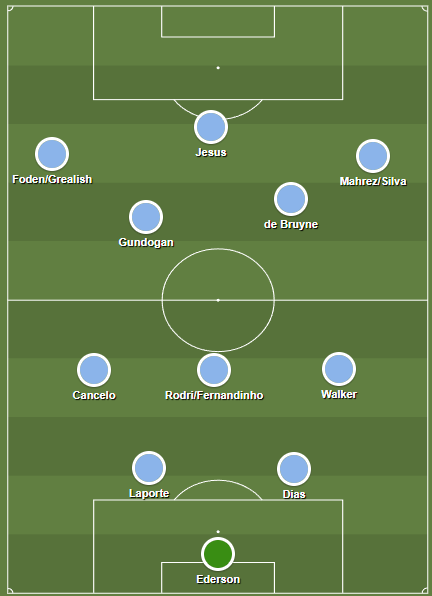
Every team’s build-up strategy falls somewhere on a spectrum between two poles. Your choice dictates training, player recruitment, and match strategy.
| Approach | Primary Objective | Key Mechanism | Ideal Player Profile | Major Risk |
|---|---|---|---|---|
| Short (Associative) | Control & Create Advantage | Third-man runs, line-breaking passes | Technically secure, spatially aware | Turnover in dangerous area |
| Long (Direct) | Speed & Bypass Pressure | First-ball win, second-ball control | Physically strong, aerially dominant | Loss of possession & structure |
The Short Build-Up: Chess at Full Speed
This is the approach that defines modern elite clubs like Manchester City and Liverpool. It prioritizes ball possession as the means to pull opponents out of position. The idea is to attract pressure to create space elsewhere.
It requires a specific structure. The goalkeeper and center-backs must be comfortable receiving the ball with an opponent closing them down. Full-backs provide width, stretching the opponent’s block. The single most important player is often the defensive midfielder who drops between the center-backs to create a numerical overload, a tactic with a specific history.
The movement is everything. Static players make pressing easy. Instead, midfielders and attackers must make constant, coordinated runs to offer passing options between the lines. The gold standard is the third-man run: Player A passes to Player B, who immediately lays it off to Player C, who has already sprinted into the space behind the pressing line. It’s the fastest way to break a structured defense.
Common mistake: Coaching short build-up as a passing pattern without the “why”, players execute the pattern but freeze when the opponent deviates, leading to a panicked back-pass or loss of possession in the first 3 passes.
The Long Build-Up: The Calculated Bypass
Direct play isn’t mindless. It’s a calculated decision to skip the midfield battle and attack the space behind a high defensive line or to target a physical mismatch. The 2022/23 Arsenal side used this expertly, often going long to Gabriel Jesus or Bukayo Saka to initiate quick attacks.
The key players here are the passer (goalkeeper or center-back with a long diagonal) and the target (a forward who can hold the ball). The most critical phase isn’t the first ball, but the second ball. Where do the midfielders and other forwards position themselves to pick up the knockdowns? Winning the second ball consistently turns a hopeful punt into a sustained attack.
This approach accepts a lower possession percentage for a higher tempo and more transitions. It’s devastating against teams that commit numbers to their own press, leaving minimal cover at the back.
The Lavalpiana: How a Goalkeeper Changed Build-Up Forever
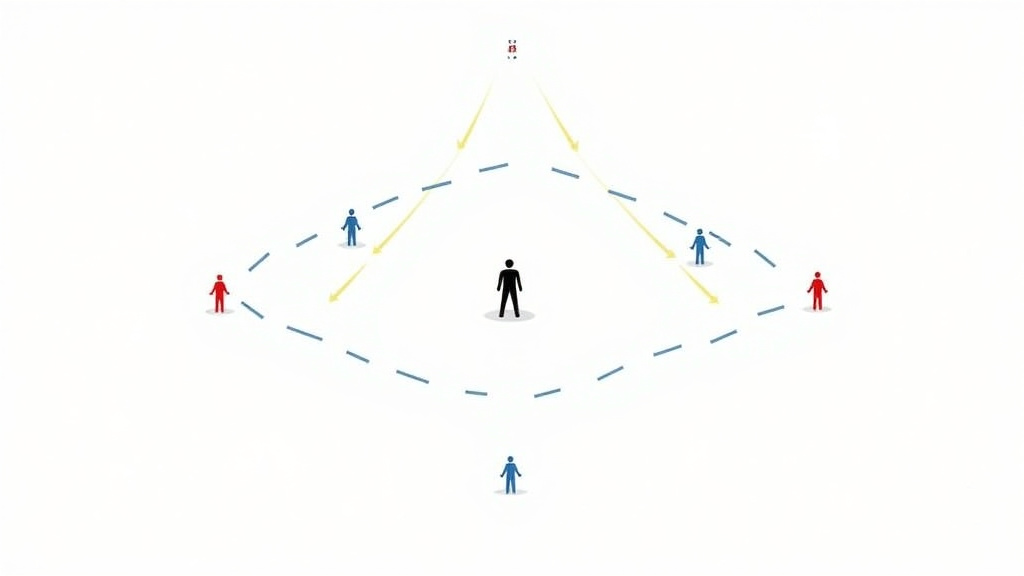
The modern obsession with building from the back has a clear origin point, and it’s not Pep Guardiola. It’s Ricardo Lavalpe, a Mexican goalkeeper-turned-manager.
I first noticed this structure watching Guardiola’s Barcelona, but the blueprint came from Lavalpe. His innovation was simple: drop an extra midfielder into the back line to create a 3v2 or 4v3 overload against the opponent’s first line of press. This created more “exits” or passing lanes from the back.
Guardiola played under Lavalpe at Dorados de Sinaloa in 2005 and adopted the system at Barcelona B. Today, we see it every week. John Stones steps into Manchester City’s back line. Trent Alexander-Arnold inverts for Liverpool. It’s all a variation of the Lavalpiana principle, manufacturing a numerical advantage at the start of the build-up to beat the initial press.
This evolution made the goalkeeper’s foot skills non-negotiable. The keeper is no longer a last resort; he’s the first attacker, an 11th outfield player who must break lines with his passing.
How Your Formation Dictates Build-Up Patterns
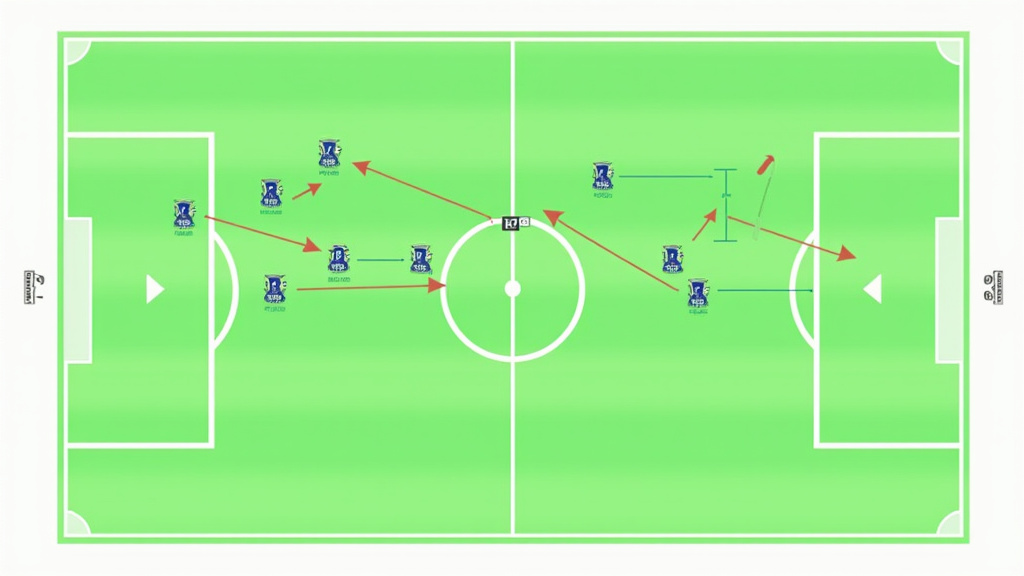
Your chosen 11v11 formations script the opening moves of your build-up. The personnel and their starting positions create natural strengths and vulnerabilities.
A team using a 3-5-2 formation has a built-in back-three, providing natural width and a central outlet. The wing-backs are the primary wide options, but the two strikers must work to offer central passing lanes. The modern tactical application of this shape often involves one of the central midfielders dropping deep to assist.
The classic 4-3-3 relies heavily on its full-backs pushing high and wide. This stretches the opposition, creating channels for the central midfielders to receive the ball. The single striker must be adept at linking play with his back to goal.
In a 4-4-2 formation, the two central midfielders are critical. They must split, one dropping deep to receive from the center-backs while the other finds space between the lines. The strategic system of a flat 4-4-2 can struggle against a midfield three, making the build-up phase a constant battle for numerical superiority.
Coaches must design build-up patterns that leverage their formation’s inherent structure. Trying to force a 4-2-3-1’s intricate passing networks onto a team set up in a direct 4-4-2 is a recipe for confusion.
The Non-Negotiable Principles of Effective Build-Up
Beyond formations and philosophies, four core principles underpin all successful build-up play. Miss one, and the chain breaks.
- Create and Use Space. This happens in two ways: creating space between the opponent’s defensive lines for your midfielders to receive, and creating space behind their last line for runners to attack. The build-up must manipulate defenders to open these zones.
- Break Lines with Passes or Dribbles. A horizontal pass between two center-backs does not progress play. The objective is to break the opponent’s lines of pressure. A driven pass from a center-back to a midfielder’s feet breaks one line. A pass from that midfielder to a forward breaking the offside line breaks another. Dribbling past one pressing opponent also breaks a line.
- Provide Multiple Options. The player on the ball must always have at least two, ideally three, passing options. This requires off-the-ball movement from teammates. If only one option exists, the press can easily cut it off.
- Know When to Recycle or Go Long. Stubbornly trying to play short against a perfectly executed press leads to turnovers on the edge of your own box. The principle of risk evaluation is key. If the short option is too risky, the player must have the awareness and technical ability to switch play to the weak side or play a safe, long ball to reset the phase.
Coaching Build-Up Play: From Theory to Grass
You can understand every concept, but if you can’t coach it, it’s useless. The transition from whiteboard to wet Wednesday training pitch is where most soccer coaching career hopefuls stumble.
Start small. Use conditioned games in a 20×30 yard grid. Play 4v2 or 5v3 keep-away, but add a rule: the team in possession must make a certain number of passes before they can play a long “breakout” pass to a target player outside the grid. This teaches patience, support angles, and the trigger to progress.
Then, move to a phased build-up exercise. Set up a full pitch with zones. The objective is to move from the defensive zone to the attacking zone through the middle zone. Restrict the number of touches in the middle zone to encourage quick combination play. This mimics the game’s phase transition.
Common mistake: Running passing pattern drills without defensive pressure. Players learn the pattern, not the decision-making. The first time a real opponent steps into the passing lane, the system collapses. Always add passive, then active, pressure.
The most important thing you can coach is body orientation. A player receiving the ball with his back to the pitch can only play backwards. A player who checks his shoulder and opens his body on the half-turn has seen the next two passes. That split-second decision is the difference between progression and stagnation.
What Breaks Down: Common Build-Up Failures
Even the best plans fail. Here’s what to look for when your team’s build-up stutters.
- Static Receivers. Players stand still, marked easily. The passer has no options.
- Poor Body Shape. The receiver is closed off, killing forward momentum.
- Forcing the Pattern. Insisting on playing to the full-back when the opposing winger is perfectly positioned to intercept.
- Goalkeeper Panic. The keeper, under minimal pressure, boots the ball out of play instead of hitting the simple 15-yard pass to a free center-back.
- Missing the Trigger. The central midfielder doesn’t spot the forward’s run behind the line and plays a safe square pass instead. The moment is lost.
These aren’t just tactical errors; they’re often technical or psychological. A player who lacks confidence in his weak foot will avoid using it, limiting his passing angles. This is why a comprehensive soccer workout plan includes technical repetition under fatigue, not just strength and conditioning.
Frequently Asked Questions
Is build-up play only for professional teams?
No. The principles apply at any level. However, the execution depends on player ability. Youth coaches should focus on the basic principles, creating passing lanes, supporting the ball, rather than complex patterns. A team with less technical skill might use a more direct style, but that style still requires coaching on target positions and second-ball reactions.
What’s the most important position in build-up play?
The defensive midfielder who drops between center-backs is the tactical lynchpin in modern short build-up. However, the goalkeeper is now the most important individual skill position. If your keeper cannot play accurate passes with both feet, the entire system is built on shaky foundations.
How do you beat a high press?
You beat it with movement and third-man combinations. The classic solution is the “goalkeeper switch”: attract the press to one side, then have the goalkeeper quickly switch play to the free full-back on the opposite flank. The key is speed of thought and execution before the press can shift across.
Can a team be successful without a build-up phase?
Yes, but it limits their control. Many successful counter-attacking teams willingly concede possession and build-up, opting to defend deep and attack quickly into space. This is a valid soccer tactics guide choice, but it is still a strategic decision about how to handle the build-up phase, by bypassing it deliberately.
The Bottom Line
Build-up play is the game’s opening argument. It sets the terms of the battle. Whether you choose the controlled, probing approach of short passing or the explosive, vertical threat of direct play, the objective remains the same: move from defense to attack on your terms.
The best teams, and the best coaches, aren’t dogmatic. They train both philosophies. They teach players to read the opponent’s pressure and choose the right tool. They understand that a player’s ideal soccer position is defined not just by where they stand, but by how they think and move during these critical early seconds of possession.
Master this phase, and you control the rhythm, the space, and ultimately, the game. Neglect it, and you’re always reacting.

I come from the “soccer heart” of Germany, the Ruhrpott. I have played, trained and followed soccer all my life and am a big fan of FC Schalke 04. I also enjoy following international soccer extensively.