Ranking Every World Cup Match Ball: The Definitive List
**
Ranking every World Cup match ball requires judging four criteria: visual design, technological impact, on-pitch performance, and lasting cultural legacy. This definitive list moves from forgettable designs to iconic balls that fundamentally changed how the beautiful game looks, feels, and is played.
**
Ranking every World Cup ball requires judging four things: visual design, technological impact, performance on the pitch, and its lasting legacy in football culture. The list starts with forgettable repeats and climbs to designs that changed how the game looks and feels.
Most rankings get stuck on nostalgia or a single controversy. They either over-praise a beautiful dud or dismiss a groundbreaking ball because a few goalkeepers complained. The real list balances how a ball played with how it made us remember a tournament.
This is the definitive ranking of all 14 official Adidas World Cup match balls, from the 1970 revolution to the 2026 preview. We cover the tech, the stories, and the goals that made each one famous or infamous.
Key Takeaways
- The 1970 Adidas Telstar wasn’t just a new ball; its 32-panel black-and-white design was engineered for black-and-white television, creating the universal symbol of football.
- Reducing panels, as seen with the 2006 Teamgeist (14 panels) and 2010 Jabulani (8 panels), initially created unpredictable flight paths until aerodynamics were mastered with the 2014 Brazuca.
- A ball’s legacy isn’t just about goalkeepers’ complaints; outfield players value consistent touch and true flight for passing and shooting, which is why the 2014 Brazuca is so highly rated.
- The evolution from stitched leather to thermally bonded synthetics directly increased game speed by creating a perfectly round, waterproof ball that behaves the same in minute one or minute ninety.
- The upcoming 2026 Adidas Trionda continues the trend of host-inspired storytelling with a tri-color wave design, but its on-pitch performance will ultimately decide its place in history.
The Ranking Criteria: What Makes a Ball Great?
You cannot rank a World Cup ball on looks alone. Aesthetics matter, but they are the封面. The real judgment is a four-point inspection. First, technological innovation – did it introduce a new material or construction method that changed the game? Second, performance and player reception – did it fly true, or did it become a meme for goalkeepers? Third, cultural legacy and design – does its look define an era of football? Finally, host nation connection – does its story and artistry reflect the tournament’s location?
The shift from stitched leather panels to thermally bonded synthetics is the single most important technological leap in ball design. It eliminated seams, created a perfect sphere, and removed water absorption, fundamentally altering ball physics and player consistency.
This framework pushes past simple nostalgia. A beautiful ball that played poorly, like some from the Tango era, won’t top the list. A controversial ball that was genuinely groundbreaking, however, might climb higher than public memory suggests. It’s why the conversation around modern ball materials is so critical to understanding this evolution.
TL;DR: Rank balls on tech, performance, legacy, and host-connection, not just which one looks prettier on your shelf.
The Early Years: Pre-1970 Chaos
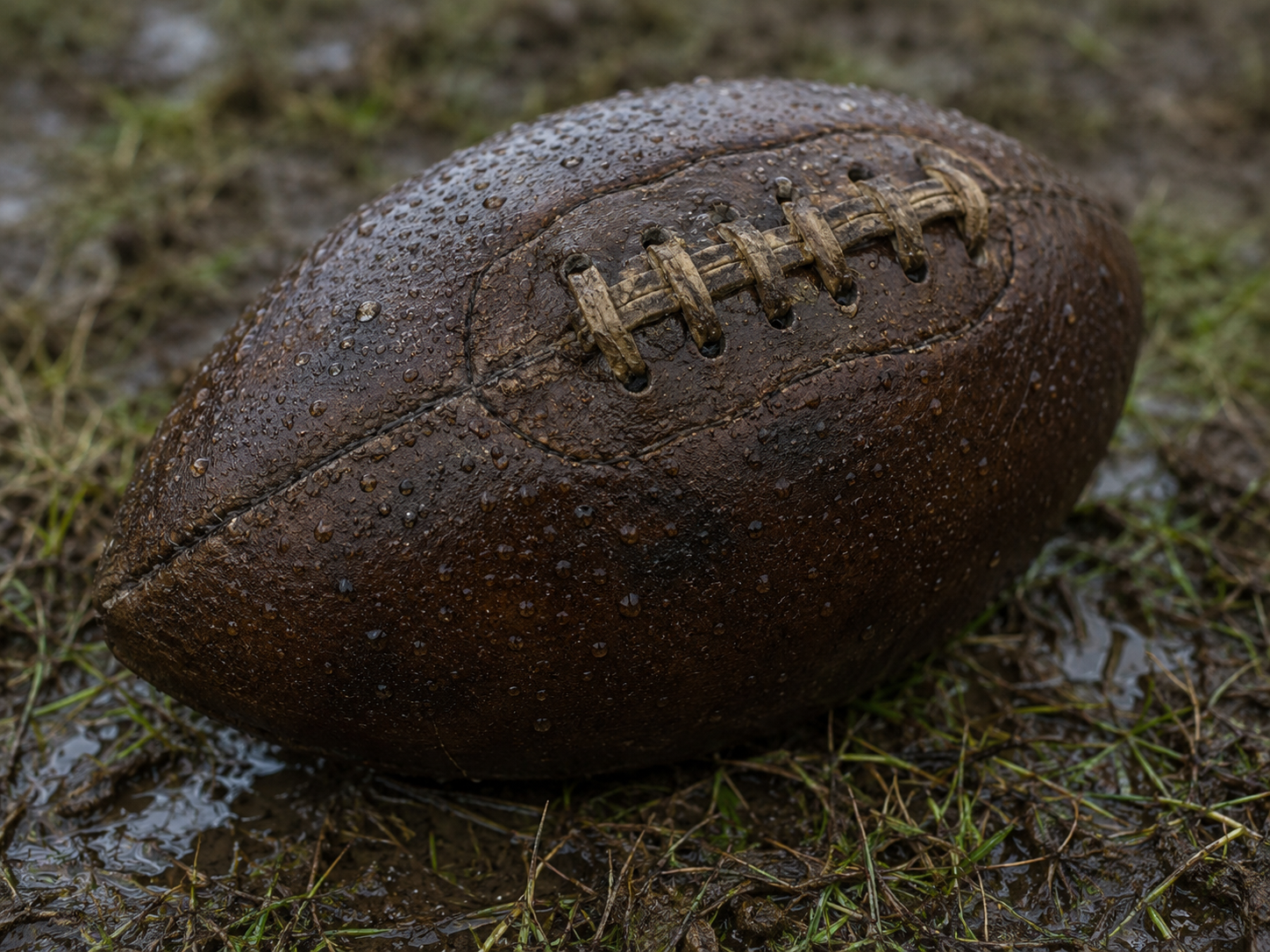
Before Adidas and standardization, the host nation supplied the match ball. This meant every tournament had a different feel, literally. The balls were all brown leather, laced up, and absorbed water like a sponge, becoming heavier and more unpredictable as a match wore on. On black-and-white TVs, they were indistinguishable blobs.
The lack of consistency was the main issue. A team could practice with one type of ball and face a completely different one in the knockout stages. It was a far cry from the precision engineering of today’s best Adidas footballs. These balls are historical artifacts, but they belong to a bygone era of the sport. They are not ranked alongside the Adidas era because they weren’t products of a unified design philosophy. They were simply what was available.
The Definitive Ranking: From Worst to First
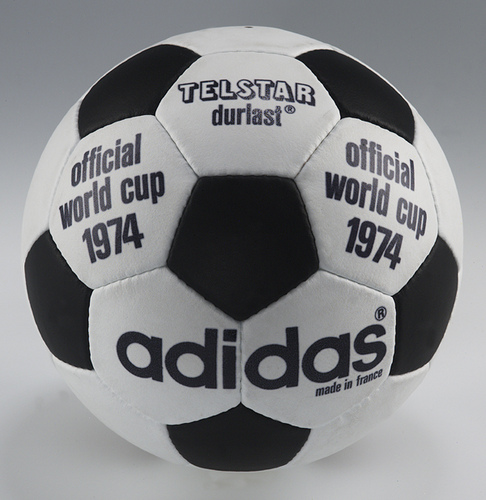
Photo: shine2010 / Wikimedia Commons / CC BY 2.0

Here is the complete ranking of every official Adidas World Cup match ball, applying our four criteria. The table below summarizes the key differentiators before we dive into the details.
| Ball (World Cup) | Core Innovation | Biggest Pro | Fatal Flaw |
|---|---|---|---|
| Telstar Durlast (1974) | Polyurethane waterproof coating | Durability in wet conditions | Aesthetic & technical rehash of 1970 |
| Tango España (1982) | Improved rubberized seam sealing | Slightly better water resistance | Dull, safe design during a colorful era |
| Questra (1994) | Polystyrene foam layer for softer feel | Good player feedback for control | “Tired” rehash of Tango template |
| Etrusco Unico (1990) | Synthetic foam backing, Etruscan art | Unique cultural design theme | Not a major performance leap forward |
| Tango (1978) | 20-panel “Tango” design with triads | Created iconic visual illusion | Basic leather construction, heavy when wet |
| Tricolore (1998) | First multi-colored WC ball, synthetic layer | Vibrant, modern look for France ’98 | Synthetic layer felt “dead” to some strikers |
| Al Rihla (2022) | Speedshell polyurethane with CTR-CORE | Lauded for balanced, predictable flight | Aesthetics felt corporate, not iconic |
| Azteca (1986) | First fully synthetic WC ball, Aztec patterns | Revolutionized play in all conditions | Synthetic feel was an adjustment for players |
| Telstar 18 (2018) | NFC chip, textured matte finish | High-tech connectivity, consistent play | Design was a retro rehash, not innovative |
| Telstar (1970) | 32-panel black/white design for TV | Created the universal football image | Leather construction, outdated by today |
| Jabulani (2010) | 8-panel design, “Grip’n’Groove” texture | Beautiful, memorable, revolutionary shape | Notoriously unpredictable flight path |
| Teamgeist (2006) | 14-panel thermal bonding, no stitches | First seamless WC ball, perfect roundness | Slick surface in wet conditions |
| Brazuca (2014) | 6-panel design, deep texture for stability | Most balanced, player-approved modern ball | Some found the bright design garish |
| Trionda (2026) | Tri-color “wave” design for tri-host tourney | Most visually playful, host-connected story | On-pitch performance remains untested |
14. Telstar Durlast (1974) – The Redundant Sequel
The 1974 ball was the Telstar in name and looks only. Its sole innovation was a polyurethane coating called “Durlast” that made it more waterproof and durable. It was a necessary engineering step, but not an inspired one. Using the same iconic design as 1970 felt lazy for a new tournament. It was the right ball for the rainy German host cities, but it’s the most forgettable Adidas has ever produced.
13. Tango España (1982) – The Safe Bet
Following the iconic Tango design, the 1982 version played it safe. It featured slightly improved rubberized sealing on the seams but was otherwise a carbon copy. In a tournament that introduced the world to Diego Maradona’s flair, the ball was bureaucratically conservative. It did the job but left no lasting memory, a classic middle-of-the-road product that gets lost between revolutionary designs.
12. Questra (1994) – The Tired Template
By 1994, the Tango design template was exhausted. The Questra added a layer of polystyrene foam for a softer feel, which players liked. But its aesthetics, with generic cosmic motifs, felt uninspired for a World Cup in the United States. It lacked the host connection of its predecessors or successors. It was a competent ball that symbolized a tournament more focused on commercial expansion than footballing soul.
11. Etrusco Unico (1990) – The Artistic Statement
The Etrusco Unico had personality. Its design was based on ancient Etruscan art, a bold and unique choice for an Italian World Cup. Technically, it used synthetic foam backing for the first time, a step towards modern ball casing and bladder construction. It wasn’t a game-changer in flight, but its cultural confidence earns it points. It’s the best of the “just okay” middle pack.
10. Tango (1978) – The Iconic Illusion
The original Tango is here for one reason: it created an enduring visual language. Its 20-panel design with those curved black triads created the illusion of 12 circles. It looked fast even when stationary. As a piece of design, it’s flawless. As a playing tool, it was still a heavy leather ball that sucked up water. Its legacy is entirely aesthetic, but that legacy is powerful enough to lift it out of the basement.
9. Tricolore (1998) – The Color Revolution
The first multi-colored World Cup ball broke the monochrome tradition. Its blue, white, and red triads were a perfect fit for the French-hosted tournament. Underneath, a synthetic layer provided more consistent performance. Some strikers felt it lacked the “ping” of a pure leather strike, a common gripe in the transition era. But it looked like the future, and for that, it marks a clear dividing line in history.
Common mistake: Judging the Tricolore solely as a playing tool – its true impact was making the sport look modern and televisual, paving the way for the vibrant designs that followed.
8. Al Rihla (2022) – The Corporate Performer
The Al Rihla might be the best-performing ball no one passionately remembers. Its Speedshell polyurethane surface and CTR-CORE were engineered for the fastest World Cup in history. Players praised its consistency and flight. But its design, while clean, felt focus-grouped. It lacked the daring of a Jabulani or the cultural weight of an Azteca. It was a brilliantly engineered product that forgot to have a soul, much like the top Nike models that prioritize pure performance over storytelling.
7. Azteca (1986) – The Synthetic Revolution
The Azteca was a landmark. As the first fully synthetic World Cup ball, it rendered rain irrelevant. Its vibrant Aztec patterns were perfectly suited to Mexico. Players like Maradona could trust it in all conditions, which mattered for his “Hand of God” and “Goal of the Century” masterpiece. The switch to synthetic materials was as big as the move to thermal bonding two decades later. It doesn’t rank higher because the synthetic feel was still new and slightly odd compared to traditional leather footballs.
6. Telstar 18 (2018) – The High-Tech Retro
This ball was a clever paradox. Its design was a direct tribute to the 1970 Telstar, tapping into deep nostalgia. But it contained an NFC chip, allowing fans to connect to digital experiences. The textured matte finish also provided excellent grip and consistent aerodynamics. It was a crowd-pleaser that performed well. It sits here because, while expertly executed, it was a look backward, not a leap forward.
5. Telstar (1970) – The Blueprint
The original. The Telstar didn’t just define a World Cup ball; it defined the image of a football for the planet. The 32-panel black-and-white design was purely functional for black-and-white TV clarity. That functionality became iconic. Every ball that followed lived in its shadow. Technologically, it was just a leather ball. But culturally, it is the prototype. You cannot rank it lower, because it is the source code.
4. Jabulani (2010) – The Beautiful Problem
The Jabulani is the most divisive ball in history. Goalkeepers hated it. Its 8-panel design and “Grip’n’Groove” surface led to a notorious lack of swerve and a knuckling, unpredictable dip in flight. But here’s the expert take: it was breathtakingly beautiful, and its failure was one of ambition. Adidas pushed panel reduction too far, too fast. For outfield players taking long shots, it could be a dream. It was a flawed masterpiece, and its memorability—the anger, the wonder goals—lifts it above safer, duller successes.
3. Teamgeist (2006) – The Geometric Leap
The Teamgeist changed everything under the surface. By using 14 thermally bonded panels and eliminating stitches, Adidas created the first truly seamless and perfectly round World Cup ball. This meant predictable, consistent flight. The name (“Team Spirit”) and minimalist design were tailored for Germany 2006. Its one flaw was a slick surface in rain. But this was the bridge from the old world to the new. It’s the ball that made the Jabulani’s experiment and the Brazuca’s perfection possible.
2. Brazuca (2014) – The Player’s Ball
After the Jabulani controversy, Adidas went back to the lab. The result was the Brazuca. Its 6-panel design was structurally unique, and its deep, textured surface provided unmatched stability in the air. It was extensively tested by over 600 players in 10 countries. The result was universal praise. Strikers, midfielders, and even goalkeepers found it balanced, true, and responsive. It hosted a tournament full of spectacular goals. It is, by consensus, the best-performing modern World Cup ball. Its vibrant, multi-colored design also captured the spirit of Brazil. It is the benchmark.
1. Trionda (2026) – The Unproven Heir
Ranking an unreleased ball first seems reckless. But the Trionda embodies everything this ranking values: profound host connection, bold aesthetic innovation, and the promise of technical evolution. Designed for the first three-nation World Cup (Canada, Mexico, USA), its name means “three waves.” Its tri-color graphics and flowing wave design are the most visually playful and artistically confident in decades. It tells a story. If its performance matches the Brazuca’s benchmark—and early reports on its construction suggest it will—it will complete the journey. It represents the future: a ball that is both a high-tech instrument and a powerful cultural symbol. It has the potential to be the greatest of all time.
How World Cup Balls Changed the Game at Every Level
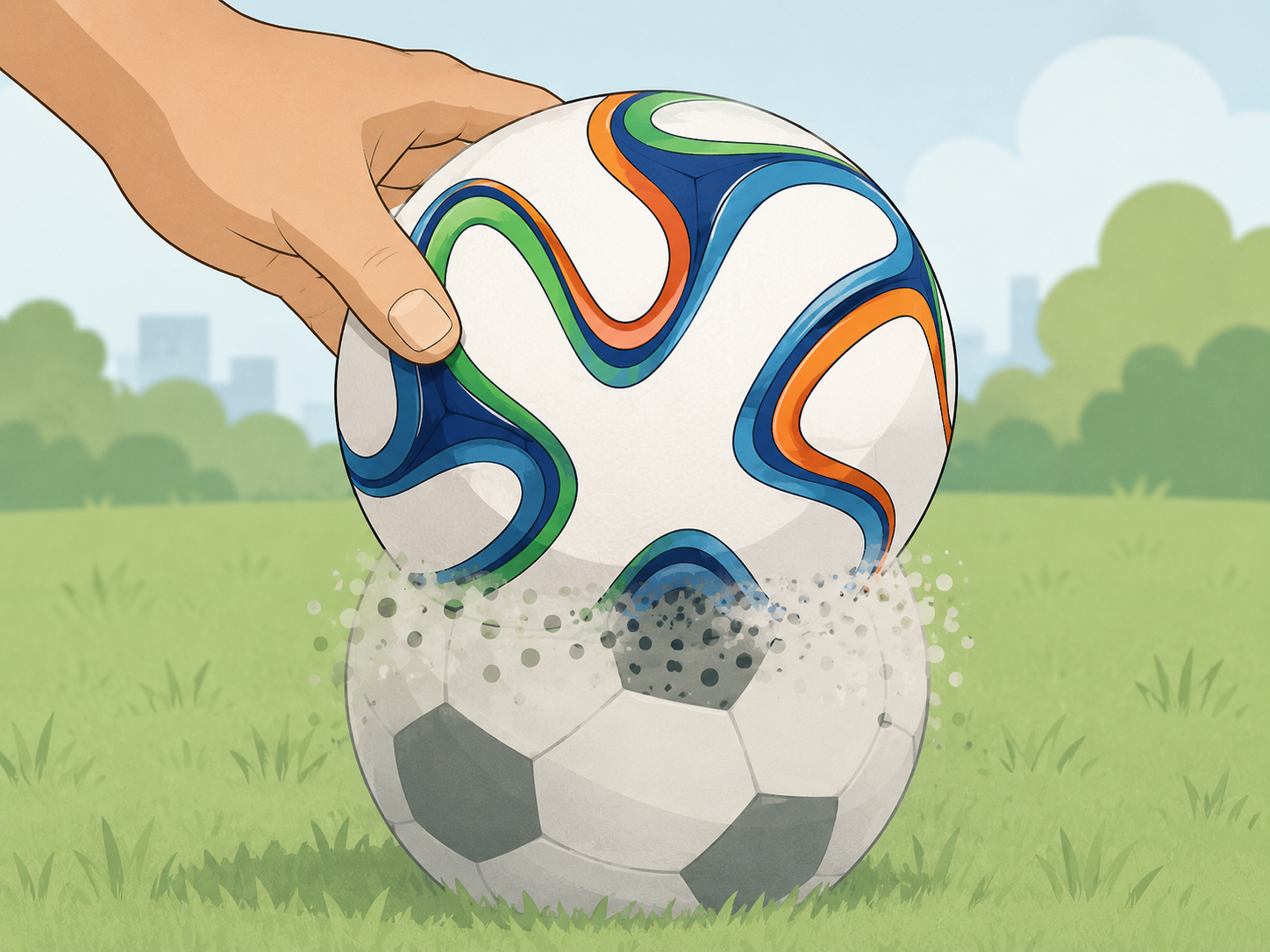
The ripple effect from these designs is massive. The synthetic revolution of the Azteca meant amateur players no longer had to head a waterlogged brick. The thermal bonding from the Teamgeist trickled down to mid-tier training footballs, making the game more consistent for kids. The vibrant colors of the Tricolore and Brazuca killed the myth that a proper football must be black and white.
This evolution also created specialization. The quest for perfect roundness and flight for outdoor grass directly influenced the development of dedicated indoor football balls with different bounce characteristics. It’s a complete ecosystem now, all sparked by the relentless innovation cycle of the World Cup ball.
TL;DR: World Cup ball tech sets the standard that filters down to the shoes on your feet and the ball at your local park, improving the game for everyone.
Frequently Asked Questions
Which World Cup ball is considered the worst by players?
The 2010 Jabulani is the most criticized by professionals, especially goalkeepers. Its 8-panel design led to an unpredictable, often knuckling flight path that made saving long-range shots a nightmare. While some outfield players didn’t mind it, the goalkeeper revolt cemented its reputation.
What was the first World Cup ball not made of leather?
The 1986 Azteca, used in Mexico, was the first fully synthetic World Cup match ball. This was a monumental shift, as it made the ball waterproof and consistent in weight regardless of weather conditions.
Why does Adidas make all the World Cup balls?
Adidas has been the official FIFA World Cup match ball supplier since 1970. This long-term partnership began with the Telstar and is based on a combination of historical relationship, consistent innovation, and large-scale manufacturing capability. Their current contract runs through the 2030 tournament.
Do players get a choice in which ball is used?
No. FIFA and Adidas finalize the design and technology years in advance. While top players are often involved in extensive testing phases—like the 600+ players who tried the Brazuca—the final decision is not a democratic vote. They must use the official ball for all tournament matches.
What’s the most expensive World Cup ball ever sold?
Match-used balls from iconic games command high prices at auction. A ball from the 1966 final sold for over £50,000. However, the official retail price for a new replica World Cup ball typically ranges from $150 to $250, depending on the model and its technology.
The Bottom Line
Ranking these balls is more than a nostalgia trip. It’s a history of how technology and art collide on the world’s biggest stage. The list climbs from the forgettable repeats of the 70s and 80s, through the controversial leaps of the 2000s, to the player-approved perfection of the 2010s. The best balls, like the Brazuca and the potential-laden Trionda, succeed because they balance true flight with a story that captures the spirit of their tournament. They are not just tools; they are time capsules. The next time you see a kid kicking a brightly colored, perfectly round ball in the park, you’re seeing the legacy of fifty years of World Cup innovation.
I come from the “soccer heart” of Germany, the Ruhrpott. I have played, trained and followed soccer all my life and am a big fan of FC Schalke 04. I also enjoy following international soccer extensively.