Understanding the World Cup Format: 48 Teams & New Stages
The 2026 FIFA World Cup format places 48 teams into 12 groups of four. The top two teams from each group, plus the eight best third-placed teams, advance to a new 32-team knockout stage that starts with a Round of 32. The tournament runs for 39 days from June 11 to July 19, 2026, across 16 cities in the United States, Canada, and Mexico.
Most people think the expansion just adds more teams and games. They miss the strategic earthquake it creates in the group stage. A team can finish third in its group and still qualify for the knockouts, which changes every single match from day one.
This guide breaks down the new structure, from the initial draw to the final in New Jersey. You’ll see how the path to the trophy gets longer, why player welfare is a genuine concern, and what it means for smaller nations dreaming of a miracle run.
Key Takeaways
- Finishing third in your group might be enough to advance, but only the eight best third-placed teams make it. Goal difference becomes more critical than ever.
- The new Round of 32 means the eventual champion must win eight matches, not seven. Squad depth and rotation will decide the tournament.
- Match scheduling across three North American time zones will test team recovery and disrupt global viewing patterns. A 9 PM kick-off in Los Angeles is 5 AM in London.
- The expansion to 48 teams guarantees at least four debutant nations, with Curacao, Cape Verde, Jordan, and Uzbekistan currently leading their respective qualification paths.
- FIFA’s tie-breaking criteria now include Fair Play points, yellow and red cards can eliminate a team before a ball is kicked in the knockouts.
How Does the 2026 World Cup Group Stage Work?
The old eight-group format is gone. Instead, 48 teams are drawn into 12 groups of four. Each team plays the other three in its group once. That’s three matches per team, 72 matches total in the group stage.
The 2026 FIFA World Cup group stage consists of 12 groups labeled A through L, each containing four national teams. Every team plays one match against each of the other three teams in its group, totaling 72 group-stage matches. Progression to the knockout stage is determined first by total points, then head-to-head results, then overall goal difference, then total goals scored.
The math is simple but the stakes are different. In a 32-team World Cup with eight groups, only the top two progressed. Now, with 12 groups, the two best-performers from each group still go through, that’s 24 teams. The twist is the eight extra slots filled by the best third-placed teams.
TL;DR: Win your group or finish second for a guaranteed knockout spot. Third place might also be enough, but you’ll be sweating on other results and your goal difference.
The Third-Place Lifeline and Its Strategy
Finishing third no longer means automatic elimination. The eight best third-placed teams from across all 12 groups also advance. This creates a secondary tournament within the tournament.
Teams will be ranked across all groups using a standard points system. A team with four points (one win, one draw, one loss) has a strong chance. A team with three draws and three points might also sneak in, depending on goal difference across the other groups.
| Third-Place Scenario | Points | Likelihood of Advancing | Primary Risk |
|---|---|---|---|
| 1 Win, 1 Draw, 1 Loss | 4 | High | Negative goal difference |
| 3 Draws | 3 | Medium | Low goals scored |
| 1 Win, 2 Losses | 3 | Low | Poor goal difference |
| 2 Draws, 1 Loss | 2 | Very Low | Early elimination |
This system rewards attacking play. Parking the bus for a 0-0 draw might secure a point, but it kills your goal difference. When eight third-place spots are decided by goals scored after points, a 2-2 draw is objectively better than a 0-0. Coaches know this. The last group matchday will be chaos, with teams needing to score rather than just defend.
Common mistake: Assuming three points from three draws guarantees advancement. It doesn’t. In the 2016 UEFA Euros, which used a similar 24-team format, Albania advanced with three points and a negative goal difference, while Turkey with the same points total did not. The final ranking often comes down to a single goal.
I watched the 2016 Euros closely, where this format was first used. The tension on the final matchday was unreal. Teams were chasing goals in games that were already decided, because that one extra goal could be the difference between going home or reaching the knockouts. The 2026 World Cup will magnify that drama twelvefold.
Navigating the New 2026 World Cup Knockout Bracket
The group stage feeds into a completely new knockout structure. Thirty-two teams qualify. That means the first knockout round is a Round of 32, a stage that hasn’t existed in the World Cup since 1934.
The bracket is predetermined. Group winners will face third-placed teams from other groups, while runners-up will face each other. This is a deliberate reward for winning your group. According to Al Jazeera’s 48-team format explainer, this structure is designed to maintain competitive integrity and avoid early clashes between top seeds.
The path to the final is now eight matches long for the champion. Consider the physical toll. A team that goes all the way will play three group matches, then five knockout matches. That’s eight high-intensity games in 39 days. Squads with 26 players, not 23, will need every member.
TL;DR: Winning your group matters more than ever, it likely earns an easier draw against a third-placed team in the new Round of 32.
The Marathon to MetLife Stadium
After the Round of 32 comes the familiar Round of 16, quarter-finals, and semi-finals. The final is scheduled for July 19, 2026, at MetLife Stadium in East Rutherford, New Jersey.
The expanded knockout stage increases the total number of matches to 104. More games mean more revenue for FIFA and the host nations, but also a brutal schedule. Teams that reach the final will have less than a month before many European domestic leagues begin their pre-season. The BBC Sport World Cup 2026 preview highlights this as a primary concern among player unions and top clubs.
What Are the 2026 World Cup Qualification Rules?
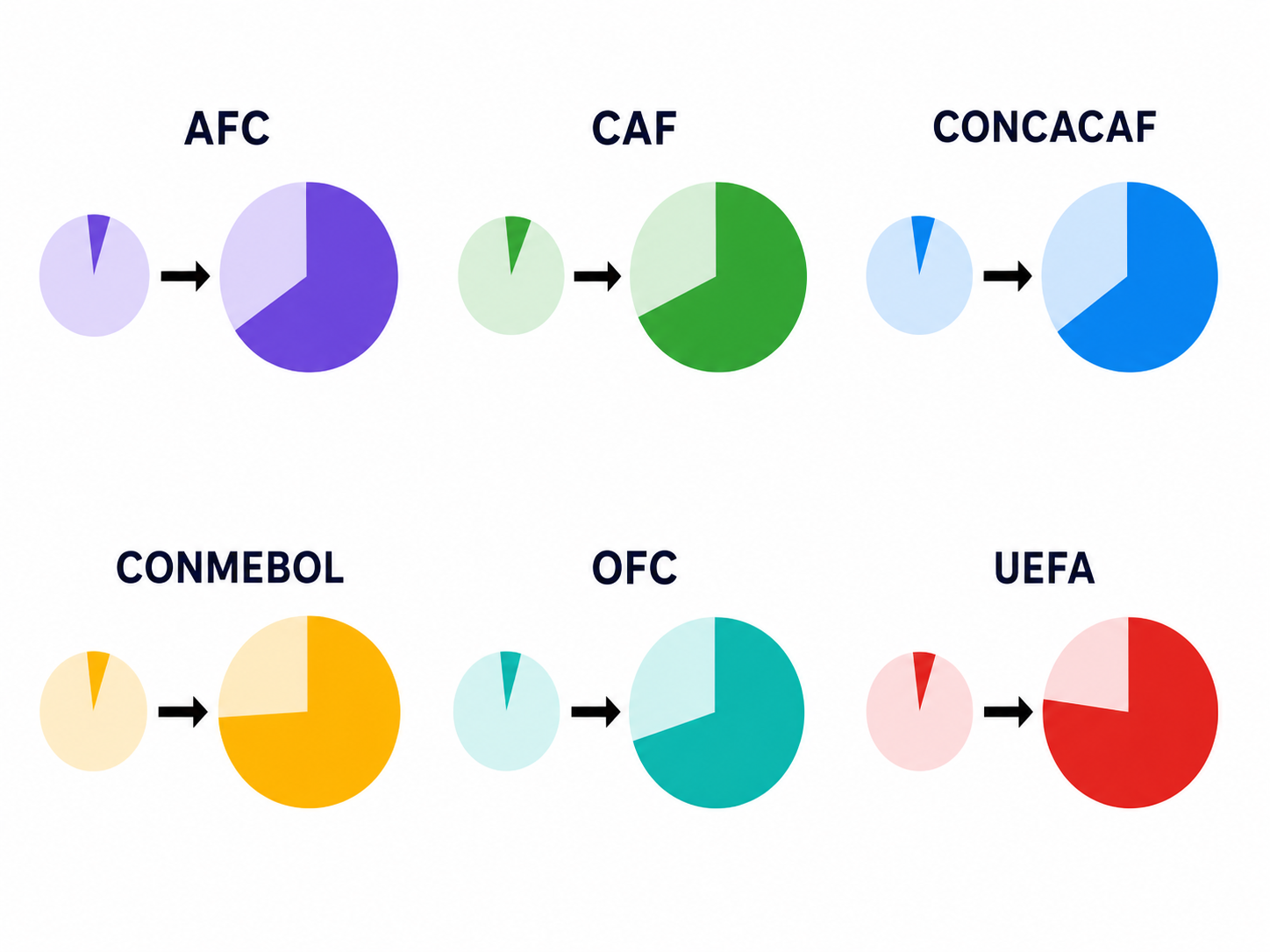
The global qualification process is the first hurdle altered by the expansion. More slots are available across every confederation. The precise allocation is still being finalized, but the proposed breakdown signals a major shift.
- AFC (Asia): Increases from 4.5 slots to 8.5. This almost guarantees more Asian nations like Uzbekistan or Jordan will debut.
- CAF (Africa): Jumps from 5 to 9.5 slots. African football’s depth means powerhouse nations won’t have to eliminate each other early.
- CONCACAF (North/Central America): As hosts, the USA, Canada, and Mexico qualify automatically. The region gets an additional 3 slots, up from 3.5.
- CONMEBOL (South America): Rises from 4.5 to 6.5 slots. The top six in the marathon South American qualifiers will likely go through.
- OFC (Oceania): Gets a full slot, up from 0.5. New Zealand’s dominance is challenged.
- UEFA (Europe): Sees a modest increase from 13 to 16 slots. The competition remains fierce.
The half-slots represent inter-confederation playoffs, a last-chance saloon for a few teams. This revised qualification process is the most democratic in World Cup history. It directly enables the debut of nations that have never qualified before.
How Will the Tournament Schedule and Host Cities Work?
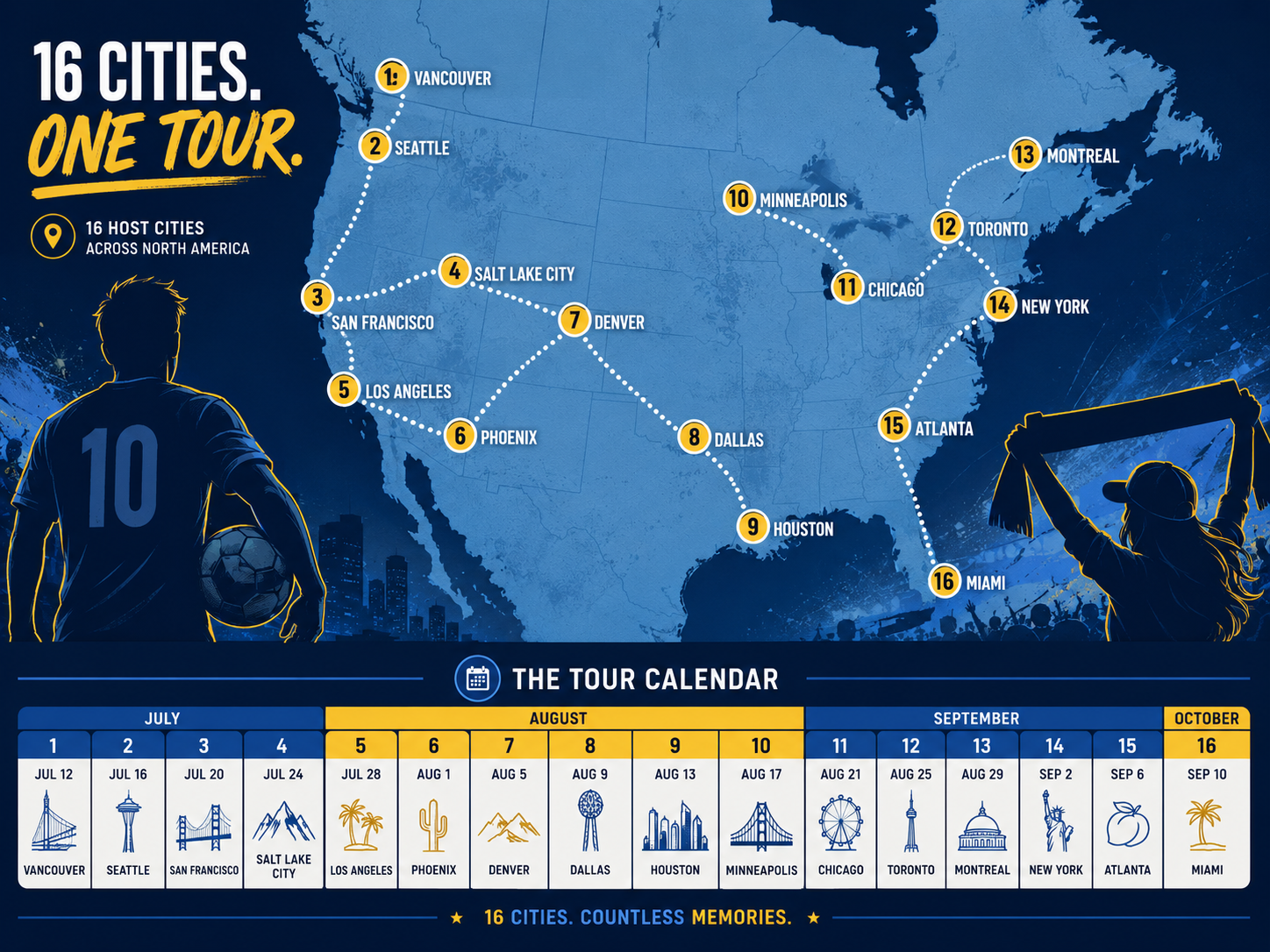
The 2026 World Cup will be a logistical feat. Matches will be spread across 16 cities in three countries. The Al Jazeera World Cup news report provides the most detailed public schedule, with the opener in Mexico City on June 11 and the final in New Jersey on July 19.
The host cities and stadiums range from the altitude of Mexico City (7,200 feet) to the humid heat of Miami. Teams and fans will crisscross time zones. A team could play an evening match in Los Angeles (Pacific Time), then have to play a midday match in Dallas (Central Time) four days later. Jet lag becomes a tactical factor.
This three-host-nation model spreads the economic benefits and the operational burden. It also creates a unique fan experience, and a unique challenge. Following a team deep into the tournament could require flights between countries.
What Are the Biggest Changes from the 2022 World Cup?
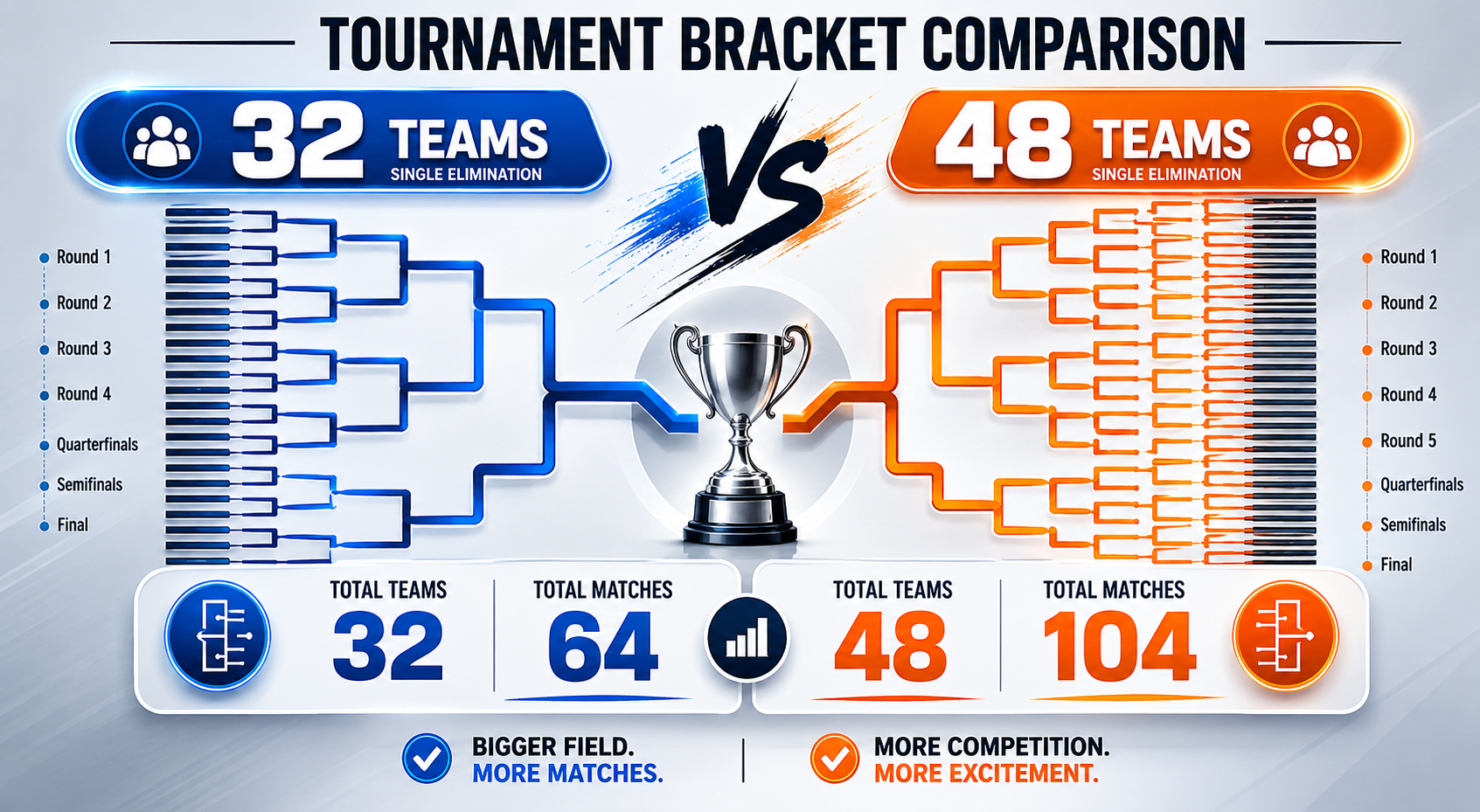
The jump from 32 to 48 teams is the most obvious change, but the ripple effects are what matter. The expanded 48-team format alters everything from the group stage format to the number of matches.
The 2022 tournament in Qatar had 64 matches. 2026 will have 104. That’s 40 more games, a 62.5% increase. The calendar expands from 29 to 39 days. The champion plays eight matches instead of seven. The physical and mental load on players is unprecedented.
FIFA has introduced corresponding new regulations to manage this. Squad sizes will likely expand to 26 players again. The concussion substitute rules introduced in 2022 will remain, allowing for an extra substitution in case of a head injury. Technology will also play a bigger role, with the semi-automated offside system used in Qatar becoming standard.
I prefer the 32-team World Cup. The group stage felt like a ruthless qualifier where every match mattered. This new format, while more inclusive, guarantees more lopsided games early on. The magic of the World Cup was its concentration of quality. We’ll see if the trade-off for more stories is worth diluting the average match intensity.
Frequently Asked Questions
How many teams qualify from each group in 2026?
The top two teams from each of the 12 groups qualify automatically. Then, the eight best third-placed teams from across all groups also advance, making a total of 32 teams for the knockout stage.
What is the tie-breaking procedure for third-place ranking?
If two or more third-placed teams are tied on points, the tie-breakers are: 1) goal difference in all group matches, 2) goals scored in all group matches, 3) head-to-head result between the tied teams, 4) Fair Play points (fewer yellow/red cards), and finally 5) drawing of lots.
Will there be more penalty shootouts in the group stage?
No. Group stage matches ending in a draw after 90 minutes will still result in one point for each team. The new format does not introduce group-stage penalty shootouts.
How does the expansion affect the quality of the tournament?
It’s a trade-off. More nations get to participate, creating historic moments for smaller footballing countries. However, the first round will likely feature more predictable, one-sided matches as the gap between top-tier and debutant nations is significant. The overall number of competitive knockout-quality games might decrease in the group stage.
Where can I find the final list of qualified teams?
The qualified teams list will be updated continuously as continental qualifiers conclude. The final 48 should be known by early 2026.
Before You Go
The 2026 World Cup isn’t just a bigger tournament. It’s a different tournament. The new format rewards aggressive play in the groups, tests squad depth in the knockouts, and stretches logistics across a continent. For fans, it means more football but also more calculated matches. For smaller nations, it’s a once-in-a-lifetime chance.
The underlying standard World Cup format of groups followed by knockouts remains. But the path to lifting the trophy is now longer, more unpredictable, and demands more from everyone involved. Start planning your viewing schedule now, you’ll need the extra time.
I come from the “soccer heart” of Germany, the Ruhrpott. I have played, trained and followed soccer all my life and am a big fan of FC Schalke 04. I also enjoy following international soccer extensively.