32 teams in FIFA World Cup
This post contains affiliate links. As an Amazon Associate, we earn from qualifying purchases.
You’re scrolling through social media when a heated debate catches your eye: “How many teams in soccer World Cup this year?” One fan insists it’s always 32 teams, while another argues it’s expanding. This confusion is incredibly common—even seasoned fans get tripped up by FIFA’s changing formats. The truth is, the answer to “how many teams in soccer World Cup” tournaments has shifted dramatically since 1930, with the most significant change arriving in 2026. Whether you’re planning World Cup viewing parties or settling bets with friends, understanding these team counts prevents costly misunderstandings.
The current 32-team format dominating recent tournaments (Qatar 2022, Russia 2018, etc.) is actually the exception, not the rule, in World Cup history. What many don’t realize is that this structure ends with Qatar 2022—making it the final chapter of a 24-year era. Starting in 2026, the tournament explodes to 48 teams across North America, fundamentally altering qualification pathways and global participation. If you’ve ever felt confused about World Cup team counts, you’re not alone; this guide cuts through the misinformation with precise historical data and future projections straight from FIFA’s official framework.
Why the 2022 World Cup Was the Last 32-Team Tournament
How the 32-Team Format Actually Worked in Qatar
The Qatar 2022 tournament featured exactly 32 qualified nations, but this wasn’t just a random number—it was the culmination of a carefully balanced system established in 1998. This structure forced teams into eight groups of four, with only the top two from each group advancing to the knockout stage. Crucially, 31 teams earned spots through continental qualifying tournaments, while host nation Qatar received automatic entry.
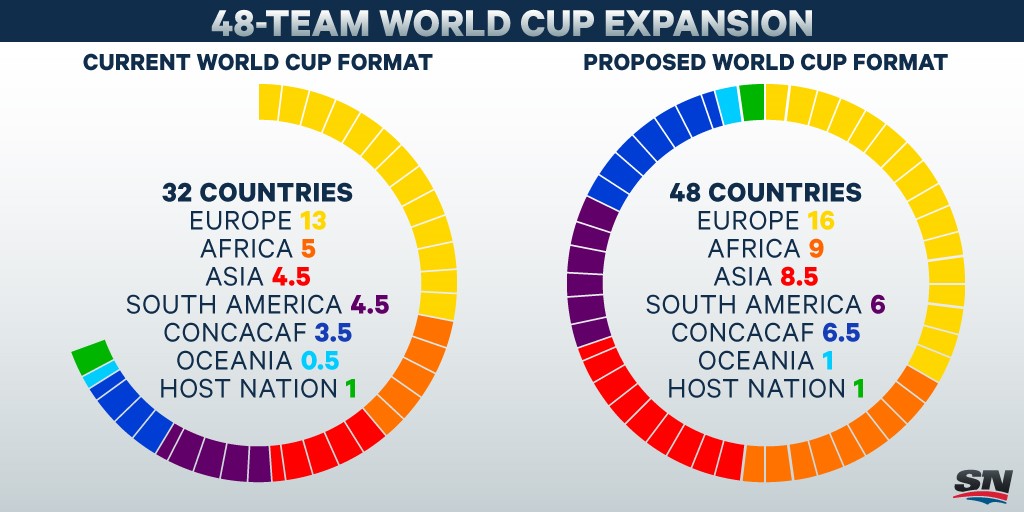
When fans ask “how many teams in soccer World Cup” for recent events, they’re almost always referring to this 32-team model. But here’s what most overlook: Europe consistently dominated slot allocation with 13 berths, while Africa received just 5 spots despite having more FIFA member nations. This imbalance became a primary driver for the 2026 expansion. The 64-match schedule also meant the tournament compressed into 28 days—a grueling pace that contributed to the decision to extend future events.
Critical Mistakes Fans Make About 32-Team History
Many assume the 32-team format has always existed, but this is dangerously inaccurate. The 1998 France World Cup introduced this structure, replacing the 24-team model used from 1982-1994. A common error is citing Brazil 2014 or South Africa 2010 as “firsts” for 32 teams—these were merely continuations of the format. Even more misleading is the myth that the host nation “replaces” a qualifying spot; in reality, Qatar’s automatic berth expanded the total to 32 (31 qualifiers + 1 host), whereas previous hosts like Russia 2018 still left 31 slots for qualifiers.
2026 World Cup: How Many Teams Will Actually Compete?
The 48-Team Breakdown You Won’t Find Elsewhere
Starting with the 2026 tournament across the USA, Canada, and Mexico, the answer to “how many teams in soccer World Cup” becomes 48 nations—a 50% expansion that reshapes global football. But here’s what most reports miss: three host nations (USA, Canada, Mexico) all receive automatic qualification, meaning only 45 slots are contested through continental qualifiers. This creates an unprecedented scenario where hosts collectively occupy nearly 6.5% of the field.
The new structure divides teams into 12 groups of four, with the top two from each group plus the eight best third-place finishers advancing to a 32-team knockout stage. This adds 40 extra matches (104 total) and extends the tournament to approximately 40 days. Crucially, the expanded format finally gives Oceania (OFC) a guaranteed direct slot—ending their decades-long reliance on intercontinental playoffs for a single chance at participation.
Continental Allocation Changes That Matter Most
The expansion isn’t just about bigger numbers—it’s a strategic redistribution of power. Africa (CAF) gains the most, jumping from 5 to 9 direct slots, while Asia (AFC) doubles its representation from 4.5 to 8 direct berths. South America (CONMEBOL) sees a modest increase from 4.5 to 6 direct spots, but the real game-changer is for smaller regions:
- Oceania (OFC): 1 guaranteed slot (vs. 0.5 previously)
- CONCACAF: 6 direct slots + 3 host berths (vs. 3.5 total before)
- Europe (UEFA): 16 slots (only 3 more than before, but 1 fewer than proportional)
This realignment directly addresses historical inequities—Africa now gets slots proportional to its membership size, while Asia finally receives meaningful representation matching its population and football growth.
World Cup Team Counts: Year-by-Year Reality Check
Why 1930 Had Only 13 Teams (And Why It Matters Today
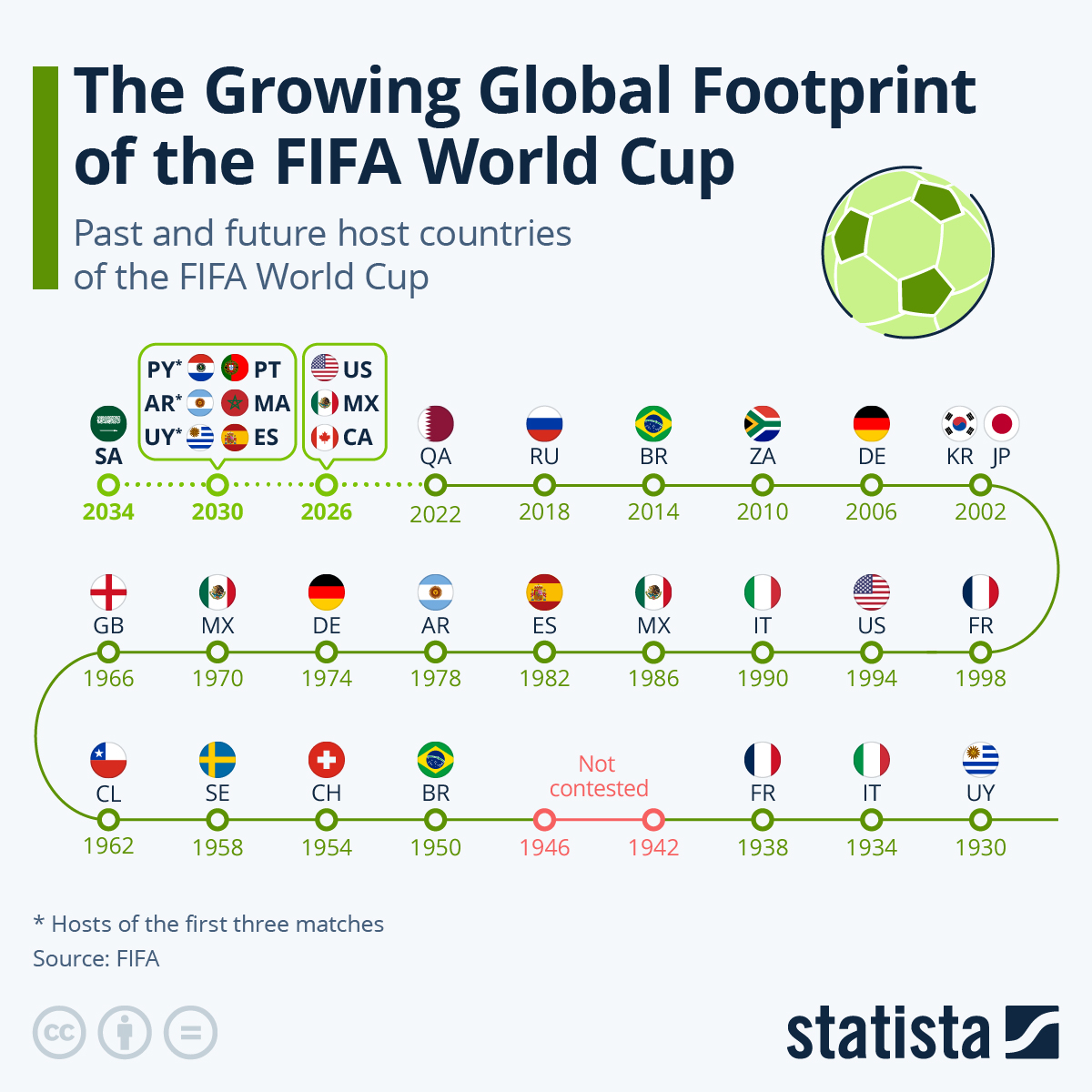
The inaugural 1930 Uruguay World Cup featured just 13 teams—a number that shocks modern fans. But this wasn’t arbitrary; travel costs and political tensions prevented European teams from crossing the Atlantic, with only four European nations making the journey. Crucially, Austria’s last-minute withdrawal before the 1938 France tournament created the anomalous 15-team field—a detail often omitted in simplified historical accounts.
The 16-team format that followed (1934-1978) seems stable until you examine the 1950 Brazil tournament: multiple withdrawals shrank the field back to 13 teams. This volatility proves early World Cups were far from standardized—context essential when comparing eras. If you’re arguing about historical team counts, remember: pre-1982 tournaments were prone to last-minute changes that distorted planned formats.
The 1982 Expansion That Changed Everything
Spain 1982 marked soccer’s first major globalization push, expanding to 24 teams—a 50% increase that finally included Caribbean and Gulf nations. This format remained stable through Mexico 1986 (Maradona’s “Hand of God” tournament), Italy 1990, and USA 1994. But here’s the critical nuance: the 1982 expansion added just eight slots, yet distributed them unevenly—Europe gained four spots while Africa and Asia each received only one additional berth.
This imbalance directly fueled the 1998 jump to 32 teams, which allocated new slots more equitably (Europe +3, Africa +2, Asia +1.5, etc.). Understanding these incremental changes explains why the 2026 expansion focuses so heavily on Africa and Asia—they’ve been historically underrepresented relative to their football populations.
How the 48-Team Format Affects Your World Cup Experience
Why More Teams Mean Fewer “Dead” Group Matches
Under the 32-team format, third-place group matches often became meaningless after the top two advanced. The new 48-team structure keeps 32 teams in contention after group play (top two from each group + eight best thirds), meaning nearly every group-stage match impacts knockout stage qualification. For fans, this eliminates the frustrating “garbage time” games that plagued recent tournaments.
However, there’s a trade-off: the expanded schedule requires 40 days instead of 28, potentially conflicting with domestic league calendars. UEFA has already pressured FIFA to avoid overlapping with European club seasons—a tension that could reshape future qualification timelines. If you’re planning viewing parties, expect the 2026 tournament to stretch deeper into July.
The Hidden Impact on Emerging Football Nations
For countries like Fiji or Jamaica, the 2026 expansion isn’t just about participation—it’s about realistic pathways to competitiveness. With Oceania gaining a direct slot and CONCACAF adding three extra berths, smaller nations now have clearer routes to qualification. Crucially, FIFA mandates that host stadiums in 2026 must accommodate smaller nations’ travel needs, meaning teams from Oceania won’t face 20-hour flights to remote venues as they did in Qatar.
This structural change addresses a painful reality: in the 32-team era, nations like New Zealand often qualified only to face powerhouse teams in brutal first-round matchups. The new format increases the likelihood of “winnable” group stages for developing programs—a subtle but vital shift for global growth.
Future World Cups: Why 48 Teams Is Here to Stay
The Economic Engine Behind Permanent Expansion
FIFA’s decision to lock in the 48-team format through 2030 isn’t altruistic—it’s driven by $6 billion in projected revenue increases from additional matches. Each extra game generates approximately $50 million in broadcast rights and sponsorship value, making the expansion financially irresistible. More critically, emerging markets in Africa and Asia represent untapped commercial potential; doubling their participation guarantees billions in new advertising revenue.
But there’s a safeguard: the format includes strict sporting criteria to prevent “filler” teams. Continental confederations must maintain minimum competitive standards, meaning no nation can qualify solely through political influence. This balance between growth and quality ensures the tournament’s credibility even as it expands.
What This Means for Your 2030 World Cup Predictions
When the 2030 tournament arrives (likely hosted across Morocco, Portugal, and Spain), expect the 48-team structure to be fully optimized. Early kinks like group-stage tiebreakers will be refined, and qualification pathways may shift further toward merit-based systems. Most significantly, Africa could gain additional slots if its confederation demonstrates improved competitive depth—a direct incentive for investment in youth development.
For fans, this means World Cup qualification will feel more accessible globally. When you next hear “how many teams in soccer World Cup,” you’ll know the answer reflects football’s evolving mission: not just crowning a champion, but uniting the world through sport. The era of exclusionary formats is over—welcome to football’s truly global stage.
Final Note: The answer to “how many teams in soccer World Cup” depends entirely on the tournament year. While 32 teams defined the modern era (1998-2022), the 2026 expansion to 48 teams marks football’s most significant democratization effort. Remember these key takeaways: Qatar 2022 was the last 32-team tournament; 2026 introduces three host nations (USA, Canada, Mexico) plus 45 qualifiers; and Africa/Asia gain the most from expanded slots. As you watch future World Cups, notice how third-place group matches now matter—that’s the tangible impact of getting the team count right. For real-time updates on qualification pathways, follow your continental confederation’s official channels as the 2026 tournament approaches.

I come from the “soccer heart” of Germany, the Ruhrpott. I have played, trained and followed soccer all my life and am a big fan of FC Schalke 04. I also enjoy following international soccer extensively.