How to Choose Soccer Shin Guards: A Complete Sizing Guide
To choose soccer shin guards, match three things: your playing position, the league’s certification rules, and a precise shin measurement. The guard must cover from two inches below your kneecap to just above your ankle bone, fit snugly without restricting movement, and carry the required safety stamp for your competition level.
Most players pick the wrong guard because they default to the style they used as a kid. An adult midfielder wearing bulky youth-style ankle guards will feel every stride by the 60th minute. The pressure points are real.
This guide breaks down the three guard designs, the materials that actually matter, and the one measurement you cannot skip. We’ll cover how a striker’s carbon fiber slip-in differs from a defender’s polypropylene shell, and why your league’s rulebook might override your personal preference.
Key Takeaways
- Position dictates design. Strikers and wingers need lightweight slip-ins for speed; defenders and youth players often need the ankle coverage of a full guard.
- Certification is non-negotiable. In the US, look for the ASTM F1677 stamp. For high school, the NOCSAE seal is mandatory, no stamp, no play.
- Sizing is a measurement, not a guess. Use a tape measure from 2 inches below your knee to your ankle bone. A guard that’s too long will dig into your knee; one that’s too short leaves your tibia exposed.
- Retention is half the battle. A slip-in guard is useless if it slides. Pair it with a dedicated compression sleeve or use a silicone strap over your sock.
- Materials degrade. Inspect hard shells for cracks and foam backing for compression annually. A flattened foam pad transfers impact straight to the bone.
The 3 Core Guard Designs (and Which One Fits Your Game)
Head design changes the entire process. You have three paths, each locking you into a trade-off between protection and freedom.
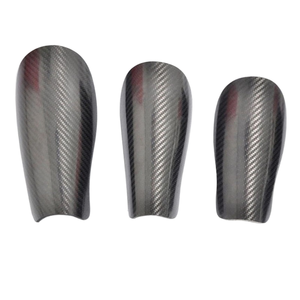
Slip-in shin guards are lightweight shells, typically 60–100 grams, constructed from polypropylene or carbon fiber. They lack straps and are designed to be inserted into a compression sleeve or held in place by the tension of the soccer sock itself. This design prioritizes unrestricted ankle mobility and is the standard for professional and advanced amateur outfield players.
The slip-in is the Formula 1 option. It’s a bare shell, often carbon fiber or a thin polypropylene, with a foam backing. You slide it into a separate compression sleeve or your sock. I wore these exclusively after my academy days. The first time you take a hard tackle with them, you’ll notice the difference. The impact is focused, a sharp thwack instead of a dull thud. That’s by design. The shell is stiff to disperse force, but the minimal mass means your leg accelerates and changes direction faster.
Common mistake: Using a slip-in with just a regular sock, the guard will rotate around your calf within ten minutes of play, exposing your shin bone. You need the compression sleeve.
The ankle guard wraps the joint. It has a hard plastic disc covering the malleolus (the ankle bone) and a stirrup strap that goes under your foot. This is the default for youth leagues for a reason. Kids’ coordination is still developing, and ankle kicks are common. The extra padding matters.
But here’s the trap for adults. That ankle wrap restricts your plantar flexion, the pointing of your toe that powers your sprint. For a full 90-minute match, that micro-restriction adds up. Your calf works harder. You feel it the next day. I made this switch back too late, stubbornly wearing my old ankle guards into a semi-pro trial. By the second half, my touches were heavy. I was thinking about my legs, not the game.
Shin guard socks build the shell right into the fabric. It’s the convenient choice, popular for youth soccer because there’s nothing to lose. The guard portion often snaps out for washing. The downside is fit. You’re buying a sock size and a guard size as one unit. If the guard is right but the sock is tight, your calf cramps. If the sock is right and the guard is small, protection fails.
TL;DR: Slip-ins for speed and skill play, ankle guards for max protection (especially for youth), shin socks for convenience when a perfect fit isn’t critical.
Slip-In vs. Ankle Guard: A Position-by-Position Breakdown
Your role on the pitch dictates your gear. This isn’t a fashion choice.
| Position | Recommended Guard Type | Why It Wins | Risk of the Wrong Choice |
|---|---|---|---|
| Striker / Winger | Carbon fiber slip-in | Unmatched lightness for explosive acceleration and shot power. | Ankle guards slow your step-over and reduce shooting power by restricting ankle snap. |
| Central Midfielder | Mid-weight slip-in | Balances protection during tackles with mobility for 360-degree turning. | Heavy ankle guards cause fatigue, leading to late-game passing errors. |
| Defender | Full-length ankle guard | Maximum shin and ankle coverage for blocking shots and slide tackles. | Light slip-ins leave ankle bones vulnerable to direct kicks — a bruise that lasts weeks. |
| Goalkeeper | Minimalist slip-in | Low profile avoids interference with knee pads and allows full diving extension. | Bulky guards get caught in pant material and can hinder quick ground recovery. |
Forwards live in the final third. Their job is to create separation. Every gram on their legs counts. A carbon fiber slip-in like those from Nike Mercurial or adidas X weighs about as much as a small smartphone. That’s the edge. Defenders, however, are the crash test dummies. They throw their legs into challenges. A full-length Guard from a brand like Storelli or G-Form uses denser foam and often wraps the ankle. The extra material is their armor.
Midfield is the hybrid. You need to tackle like a defender and dribble like a winger. I’ve seen more midfielders in my career try to get by with worn-out slip-ins than any other position. The foam backing compresses over a season. What felt protective in August is just a thin plastic shell by October. That’s when the bone bruises start.
I played central midfield for a lower-division side here in Germany. One season I tried to save money and kept my old adidas Predator slip-ins for a second year. The foam was pancaked. I took a routine tackle in training, nothing malicious. The next day, a purple hematoma the size of a saucerplate bloomed on my shin. It stayed for a month. The cost of a new guard was 40 Euros. The cost of playing in pain for weeks was far higher.
Goalkeepers have the simplest calculus. You rarely take direct shin kicks. Your guard is just for insurance. A minimal slip-in, or even a soft G-Form-style pad, is standard. Bulk is the enemy when you’re springing up from the ground.
Sizing is Not a Guess. It’s a Measurement.
Wind direction decides whether the head feeds or jams. Your shin length decides if the guard protects or pinches.
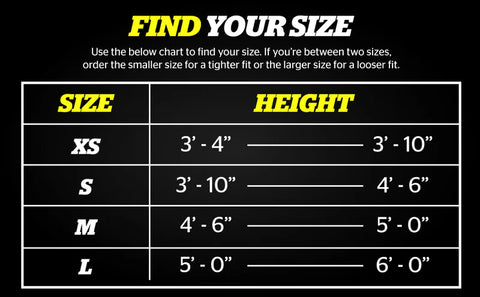
Forget height-based charts. They are a starting point at best. Your tibia length is unique. Here is the only method that works.
1. Sit in a chair with your knee bent at 90 degrees, foot flat on the floor.
2. Find the bump of your tibial tuberosity, that’s the bony point just below your kneecap.
3. Place the end of a flexible measuring tape two inches (about 5 cm) below that point. This is your start. Starting at the knee cap itself will result in a guard that digs into your patella tendon when you run.
4. Run the tape down the front of your shin to the prominent bone on the inside of your ankle (the medial malleolus). That’s your end point.
5. This measurement in inches or centimeters is your shin length. Match it to the manufacturer’s size chart, which will list a range (e.g., 10″-12″).
A proper guard will cover this entire distance when centered on your shin. You should be able to run, jump, and squat without the top edge pressing into the soft spot below your knee or the bottom edge riding up onto your ankle joint.
Common mistake: Choosing a guard that is too long so it “covers more”, the rigid top edge will hammer into the sensitive area below your kneecap with every stride, causing tendon irritation within 20 minutes.
If you are between sizes, round down. A slightly shorter guard that sits correctly is safer than a longer one that causes you to wear it too low. A guard worn too low is the most common fitting error I see in amateur games. It leaves the upper third of your tibia, a prime target for tackles, completely exposed.
The Materials That Matter: From Plastic to Carbon
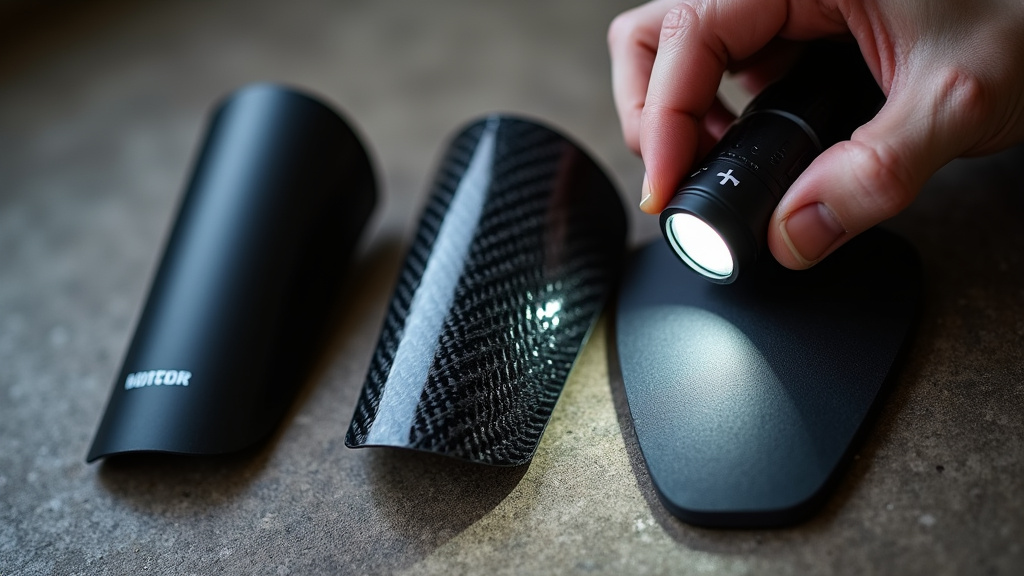
Not all hard shells are equal. The material dictates how impact energy is managed.
- Polypropylene (PP): This is the workhorse plastic. It’s durable, affordable, and offers good impact resistance. Most mid-price ankle guards and slip-ins use it. It flexes slightly on impact, spreading the force over a wider area of the foam backing. That’s the key. It’s not the hardest material, but its slight give makes it very effective for general play.
- Carbon Fiber: This is for the weight-obsessed. Carbon fiber shells are incredibly stiff and light. They don’t flex; they dissipate energy across their entire surface instantly. This means the force from a kick is spread so quickly you might not even feel a sting. The downside is cost and brittleness. A direct impact on a sharp edge can crack it. You don’t buy carbon fiber for durability; you buy it for performance.
- G-Form / Rate-Dependent Foam: This is a different approach. These guards are soft and flexible at rest, molding to your shin. Upon a sudden impact, the molecules lock together and harden almost instantly. They offer great protection without a hard plastic shell. The trade-off is bulk. They are often thicker than a carbon slip-in, which some players find intrusive.
The foam backing is just as critical. Open-cell foam is soft and comfortable but compresses permanently over time. Closed-cell foam is denser, rebounds better, and lasts longer but can feel harder against the skin. Once that foam backing loses its loft, the guard is finished. It’s just a plastic plate against your bone.
TL;DR: Polypropylene for most players, carbon fiber for elite speed, G-Form for maximum comfort and shell-free protection. Check the foam backing every season for compression.
Certifications and League Rules: The Non-Negotiables
Your league’s rulebook overrides everything. This is not a suggestion.
In the United States, the baseline standard is ASTM F1677. This is a test standard from the American Society for Testing and Materials that measures impact resistance. Any shin guard sold for soccer in the US should meet this. Look for the label.
For high school soccer, the mandate is NOCSAE. The National Operating Committee on Standards for Athletic Equipment certification is required. The seal will be stamped on the guard itself or on the packaging. No referee should let you on the field without it. I’ve seen players turned away at check-in for missing this stamp. It’s that strict.
European leagues often operate under different national standards, but the principle is the same. Look for a CE mark or a reference to EN 13061:2009, the European standard for shin guards. When in doubt, ask your coach or league administrator. “Are there specific certification requirements for shin guards?” Get the answer in writing.
Before you start: Always confirm your league’s specific shin guard rules with a coach or official. Using an uncertified guard can result in you being barred from play. Additionally, never modify a guard by cutting it to size, this voids all safety certifications and can create sharp edges.
This bureaucratic step matters. A guard that hasn’t passed standardized impact tests is a cosmetic item. It might look the part, but under a forceful kick, it could fail catastrophically. The standard exists because the tibia is a long, poorly vascularized bone. A fracture there is a serious, season-ending injury.
How to Secure Your Guards So They Never Slide
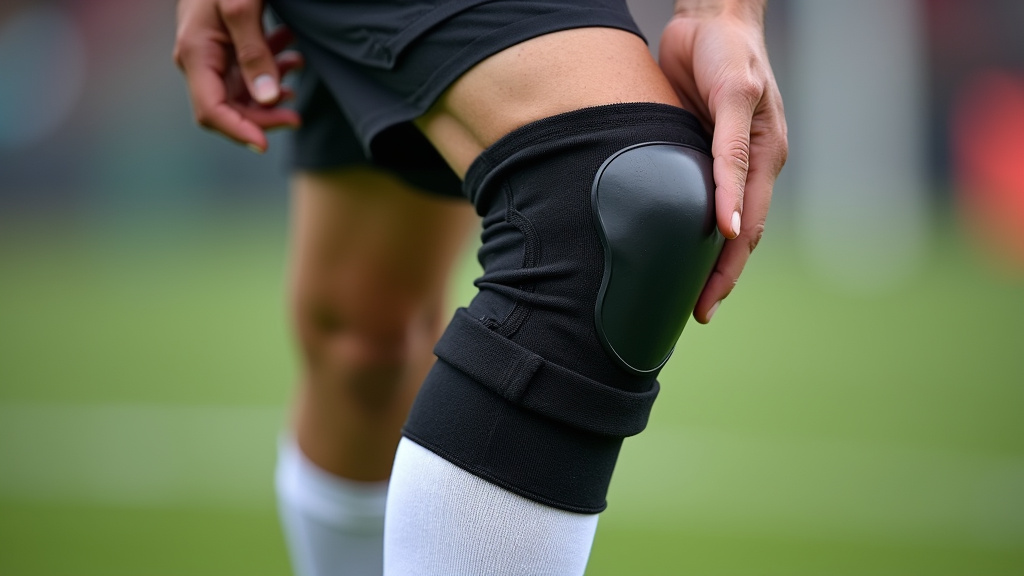
A guard that moves is a guard that fails. Retention is a solved problem with two reliable solutions.
The first is the compression sleeve. This is a tight, sleeve-like garment that you put on your leg first. You then insert the slip-in guard into a dedicated pocket on the front. The sleeve’s elasticity holds it firmly in place. This is the professional standard. The sleeve also provides a moisture-wicking layer between the guard and your skin.
The second is the silicone strap. This is a band of silicone material that you stretch over the guard once it’s placed on your leg, with your soccer sock over top. The silicone grips the sock fabric, preventing rotation. It’s a brilliant, low-tech solution. I switched to these after finding sleeves too hot in summer. They work perfectly.
Avoid relying on the old Velcro straps that come attached to some ankle guards. The adhesive on the hook-and-loop wears out after repeated washes. The strap becomes loose, and the guard starts to flop. If your guards have these, consider replacing them with a silicone strap as a backup.
For the absolute most secure fit, use both a compression sleeve and a silicone strap over your sock. This is overkill for most, but for players who absolutely cannot tolerate any movement, it’s the final answer. The process of securing shin guards properly is what turns a piece of equipment into reliable protection.
Maintenance, Cleaning, and When to Replace
Your guards live in a dark, damp, salty environment. Maintenance isn’t optional.
After every match or training, take them out. Let them air dry completely. Never leave them balled up in your wet kit bag. That’s how mildew sets into the foam, and how plastic begins to degrade.
Cleaning:
- Hard Shell Guards: Wipe the plastic shell with a damp cloth and mild soap. Do not submerge them, as water can get trapped in the foam backing and break down the adhesive.
- Foam-Backed Guards / G-Form: Spot clean only with a damp cloth. These materials should not be soaked or put in a washing machine.
- Shin Guard Socks: Follow the garment’s washing instructions, typically a cold, gentle cycle. Remove the hard guard insert first if possible.
The rule is simple: if the guard is cracked, replace it immediately. If the foam backing is compressed thin and no longer springs back when you press it, replace it. A good polypropylene guard should last a dedicated player 2-3 seasons. A carbon fiber guard might last the same, but a hard crack means instant retirement. For more details, our step-by-step cleaning process covers material-specific care.
The psychological piece is real. Putting on a clean, well-fitted guard that you trust is a mental cue. It signals readiness. A worn-out, smelly guard that slides around is a distraction. You’ll find yourself adjusting it, thinking about it. In a game of inches and milliseconds, that’s a disadvantage you can eliminate.
Frequently Asked Questions
What size soccer shin guards do I need?
You need your shin length. Measure from two inches below your kneecap to the top of your ankle bone while sitting with your knee bent. Match this measurement to the manufacturer’s size chart. Do not rely solely on age or height.
Are slip-in or ankle shin guards better?
It depends on your position and age. Slip-ins are better for forwards, wingers, and advanced players who prioritize lightweight mobility. Ankle guards are better for defenders, youth players, and anyone who needs maximum ankle and shin coverage from frequent contact.
How do I stop my shin guards from sliding down?
Use a retention system. For slip-in guards, wear them inside a dedicated compression sleeve. For any guard, a silicone strap worn over your sock provides excellent grip. Ensure your guards are the correct size, guards that are too large will always slide.
How often should I replace my soccer shin guards?
Inspect them before each season. Replace hard-shell guards immediately if you see any cracks. Replace any guard if the foam backing is permanently compressed and no longer cushiony. For most players actively training and playing, this means replacement every 2-3 seasons.
Do I need special shin guards for high school soccer?
Yes. In the United States, high school soccer requires shin guards certified by NOCSAE (National Operating Committee on Standards for Athletic Equipment). Look for the NOCSAE seal on the product tag or guard itself. Without it, you will not be allowed to play in sanctioned games.
Can I wear the same shin guards for football and soccer?
The designs are similar, but you must check the certification. Soccer shin guards are tested to ASTM F1677 or similar standards for soccer-specific impacts. Always use equipment certified for the sport you are playing to ensure it meets that governing body’s safety requirements.
The Bottom Line
Choosing shin guards is a functional decision, not an aesthetic one. Measure your shin, match the guard type to your position on the pitch, and verify the certification stamp required by your league. A proper fit feels snug and forgettable, it becomes part of your leg, not an object strapped to it. The right guard won’t make you faster or tougher, but it will protect the tools you already have. That’s how you stay on the field, week after week. For a deeper look at specific models, our detailed selection guide breaks down the top recommendations across all categories.

I come from the “soccer heart” of Germany, the Ruhrpott. I have played, trained and followed soccer all my life and am a big fan of FC Schalke 04. I also enjoy following international soccer extensively.