How to Maintain Soccer Practice Cones
Stepping on a warped cone during a crucial agility drill isn’t just annoying—it halts training momentum and frustrates players. Soccer practice cones endure relentless punishment: crushed under cleats, baked by summer sun, frozen in winter storms, and tossed carelessly into equipment bags. When your cones crack, warp, or scatter across the field, you waste precious practice time hunting replacements while drills stall. For coaches managing tight schedules and limited budgets, neglected cones become a hidden cost drain.
Most teams replace entire cone sets every 1-2 seasons due to preventable damage. But with a systematic how to maintain soccer practice cones approach, you can double their lifespan while ensuring reliable equipment for every session. This guide delivers battle-tested routines used by high school and club coaches to keep cones crisp, stable, and organized season after season. You’ll learn daily habits that take 90 seconds, storage solutions that prevent warping, and color-coding systems that cut field setup time by 75%.
Execute a 90-Second Daily Cone Maintenance Routine
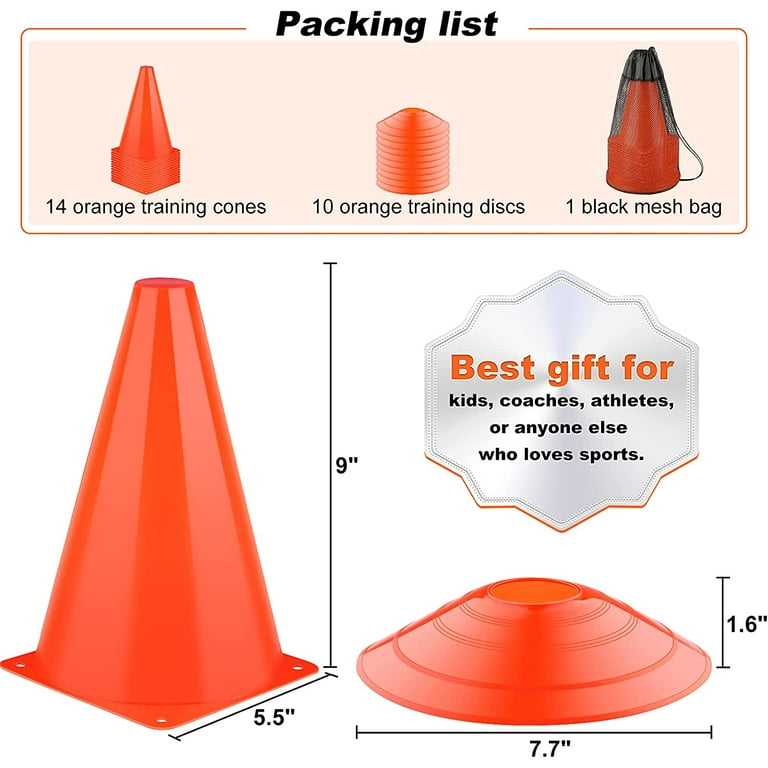
Skip this step, and dirt buildup creates wobbly setups that sabotage drill precision. After every practice, implement this lightning-fast system:
Shake Out Embedded Debris in 15 Seconds
Turn each cone upside down and firmly tap its base against your palm or bench edge. Grass clippings and pebbles trapped in the hollow base cause instability during cone drills. Look for stubborn mud clumps—if debris won’t dislodge, use a stick to gently poke the opening. Never leave cones overnight with debris inside; moisture accelerates mildew growth that weakens plastic.
Identify Hairline Cracks Before They Spread
Run your thumb along cone edges while shaking. Early cracks feel like tiny ridges near the base or rim—often invisible to the eye. If your nail catches on a rough spot, isolate that cone immediately. Warped cones (noticeable when stacked unevenly) should go into a “caution pile” for non-critical drills only. Replacing one cracked cone now prevents costly injuries from snapped plastic later.
Sort Cones by Drill Readiness
Create three stacks:
– Game-Day Ready: Perfect cones for precision markings (penalty boxes, shooting lanes)
– Practice-Only: Slightly warped cones usable for casual dribbling drills
– Retire Immediately: Any cone with cracks longer than 1 inch
This triage system ensures you never grab a damaged cone during critical setup. Store your “Game-Day Ready” stack separately using color-coded straps (more on this later).
Deep Clean Cones Without Damaging Bright Colors
Mud-caked cones lose visibility and develop odors that repel players. Deep clean monthly or after rainy practices using these plastic-safe methods:
Remove Grass Stains in 20 Minutes
Fill a plastic bin with warm water and 2 squirts of dish soap. Submerge cones for 10 minutes to soften organic stains. Use an old toothbrush (never wire brush!) to scrub stained areas in circular motions. Rinse thoroughly under running water—residual soap attracts more dirt. Air-dry cones upside down on a rack for 24 hours before storage to prevent mildew in the base cavity.
Eliminate Greasy Mud Films With Vinegar
After wet-field sessions, cones develop a slippery residue from grass oils. Mix 1 cup white vinegar with 3 cups water in a spray bottle. Saturate affected cones and wait 5 minutes—the acid cuts through oils without fading colors. Wipe with a microfiber cloth using light pressure. Test on one cone first if using neon-colored sets, though vinegar rarely affects modern UV-stable plastics.
Sanitize Shared Cones Between Teams
For multi-team facilities, wipe cones with a solution of 1 tbsp bleach per gallon of water. Let sit for 2 minutes, then rinse immediately with clean water. Never soak cones—prolonged bleach exposure causes brittleness. This kills bacteria from player contact while preserving cone integrity.
Store Cones Vertically With Purpose-Built Holders

Horizontal stacking warps cones within weeks. Implement these storage solutions from day one:
Secure Stacks With Cone Straps ($6)
The Soccer Innovations Cone Strap eliminates loose cones rolling in equipment bags. Load 20-30 cones vertically, thread the strap through the center holes, and click the quick-connect buckle. This creates a secure hold that prevents scattering during transport. For mini-cones (6″), use the specifically sized Mini Cone Strap—standard straps slip off smaller bases.
Prevent Warping With Dedicated Racks
The $3 Soccer Cone Rack holds 10 cones vertically in a compact footprint. Slide cones onto the rack’s prongs immediately after practice—never delay storage. Key visual cue: Cones should sit flush against the rack’s base without gaps. This distributes pressure evenly, avoiding the flat spots caused by haphazard stacking. For large sets, the 50-cone multi-color bundle includes a rack that organizes all colors in one unit.
Control Temperature Damage
Store cones in insulated garages or equipment sheds—not car trunks where summer heat exceeds 140°F (melting point of standard polypropylene). Critical warning: Never leave cones in direct sun for >4 hours; UV exposure fades colors and weakens plastic by 40% within one season. In freezing climates, bring cones indoors—cold makes plastic brittle enough to shatter when dropped.
Prevent Costly Cone Failures With Proactive Habits
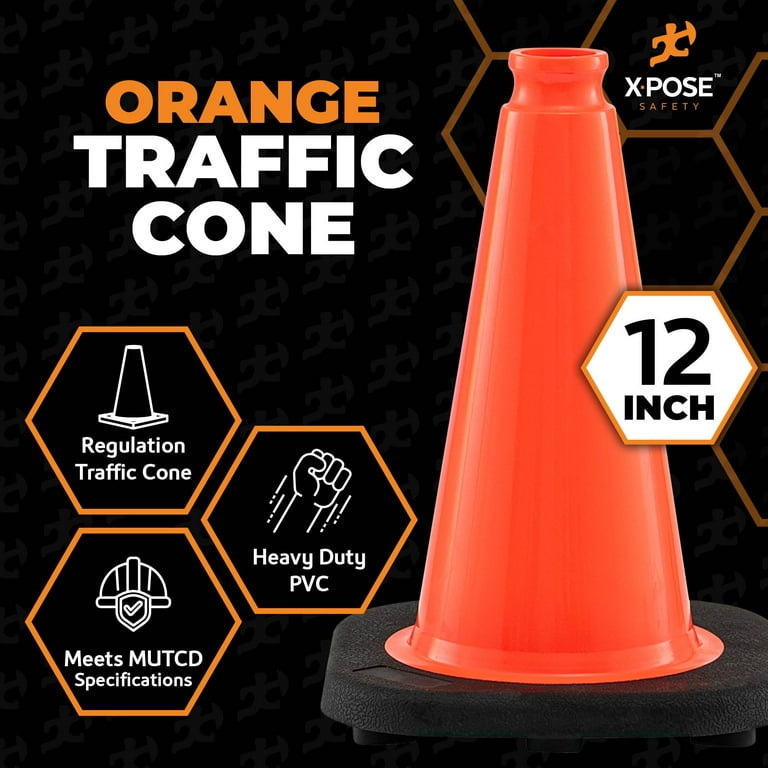
Most cone replacements stem from preventable scenarios. Implement these field-tested defenses:
Stop Parking Lot Crush Damage
Designate a “cone captain” to collect all cones before players leave the field. NEVER allow cones in parking areas—even one car driving over a stack ruins 5+ cones. The Cone King rack ($25-$150) solves this: Its telescoping handle lifts cones off the ground during collection, eliminating back strain while preventing accidental crushing.
Defeat Wind Scattering With Anchored Stacks
High winds turn loose cones into tripping hazards. During water breaks, leave cones strapped together with the Cone Strap—it doubles as a wind anchor. For tournament days, fill cone bases with 1/4 cup of sand (remove before storage to prevent moisture).
Block UV Degradation During Long Sessions
For all-day events, position cones in shaded areas using natural cover like stadium overhangs. Pro tip: Drape a UV-blocking canopy ($20 pop-up tents work) over your equipment cart. This simple move extends cone life by 18+ months compared to full-sun storage.
Organize Cones for Lightning-Fast Field Setup
Color confusion wastes 10+ minutes per practice. Streamline with these systems:
Implement Drill-Specific Color Coding
Assign fixed meanings: Red = goal boundaries, Blue = passing lanes, Yellow = defensive zones. Store each color on separate Cone Straps labeled with permanent marker. Critical efficiency hack: Bundle cones by drill type (e.g., “Warm-Up Bundle” = 10 blue cones on one strap). Coaches report cutting setup time from 12 minutes to under 3 minutes.
Track Inventory With Weekly Counts
Every Monday, count cones by color using a simple spreadsheet. Note missing cones immediately—teams lose 15-20% of cones yearly through poor tracking. Keep 2-3 spare cones per color in your “emergency kit” for sudden replacements.
Transport Cones Without Warping or Loss
Loose cones in vehicle trunks suffer the most damage. Use this transport protocol:
Secure Vertical Stacks in Vehicles
Place the Cone King rack vertically in your trunk and strap it down with bungee cords. Load cones onto the rack before driving—never transport loose cones. The rack’s height-adjustable design fits all vehicle sizes while preventing cone compression. For sedan trunks, the Mini Cone Strap holds smaller sets securely on floor mats.
Pre-Bundle For Practice Efficiency
Before leaving home, create “drill bundles” using color-coded straps. Grab the “Dribbling Bundle” (20 blue cones) and “Scrimmage Bundle” (10 red + 10 yellow) instead of counting cones onsite. This system prevents frantic mid-drill cone hunts when players inevitably kick them astray.
Maintaining soccer practice cones isn’t about obsessive cleaning—it’s about implementing smart, minimal-effort systems that protect your investment. By dedicating 90 seconds daily to debris removal, using $3 racks for vertical storage, and color-coding for instant drill setup, you’ll extend cone life by 2-3 seasons. The $25 spent on a Cone King rack pays for itself after replacing just one lost cone set. Start tonight: Shake out today’s cones, inspect for cracks, and store them vertically on a rack. Tomorrow’s practice will begin smoother, your players will train with reliable equipment, and your budget will thank you when you’re not ordering replacements in mid-season. Consistent cone care transforms a mundane chore into your team’s secret weapon for efficient, professional training.

I come from the “soccer heart” of Germany, the Ruhrpott. I have played, trained and followed soccer all my life and am a big fan of FC Schalke 04. I also enjoy following international soccer extensively.