How to Prevent Blisters from Soccer Socks: 5 Proven Steps
To prevent blisters from soccer socks, you must eliminate the three factors that cause them: friction, moisture, and heat. This requires a system, not just one product. Start with synthetic grip socks, ensure your cleats fit with a thumbnail’s width of space at the toe, break them in over two weeks, apply petroleum jelly to hotspots before play, and change socks at halftime if your feet sweat.
Most players blame the sock. The real enemy is the micro-movement inside a damp boot. Your foot slides a millimeter with every cut and sprint. That slide creates shear force, which heats the skin, and trapped sweat softens it. The result is a fluid-filled pocket under your skin that ruins your next three training sessions.
This guide walks through the five non-negotiable steps to lock your foot in place, manage sweat, and stop blisters before they start. We will cover the gear that works, the fit that matters, and what to do when you feel that first sting of a hot spot.
Key Takeaways
- Grip socks with silicone pads are the single most effective upgrade for blister prevention because they eliminate the primary cause: foot slippage inside the cleat.
- Cleat fit is non-negotiable. A boot that’s too loose creates shear; one that’s too tight creates pressure points. The “thumbnail test” for length and the “heel lock” test for width are mandatory.
- Cotton socks are blister factories. They hold three times more moisture than synthetics and dry ten times slower, creating a warm, wet environment perfect for friction burns.
- Break in new cleats over 1–2 weeks with progressively longer sessions. Wearing them for a full match straight out of the box guarantees blisters.
- Treat a hot spot the second you feel it. Covering it with a blister bandage or moleskin can prevent a full blister from forming.
The 5-Step Blister-Prevention System
Blisters don’t happen randomly. They are a mechanical failure with a clear cause. This system addresses each point of failure in order.
Step 1: Upgrade Your Sock Game (This Isn’t Optional)
Your sock is the interface between your skin and the cleat. A bad interface guarantees failure.
The standard club-issue cotton sock is the worst possible choice. Cotton absorbs and holds moisture like a sponge. A 2023 textile performance review from Sports Engineering noted that cotton can hold over 200% of its weight in water and dries slowly, while polyester wicks moisture away and dries rapidly. A damp sock sticks to your skin, increases friction, and raises local skin temperature.
Common mistake: Wearing cotton socks, your feet stay wet for the entire match, softening the skin and multiplying friction forces. A blister forms by the 60-minute mark almost every time.
You need a synthetic, moisture-wicking soccer sock. Look for blends of polyester, nylon, or elastane. Brands like Nike, Adidas, and Under Armour all make performance versions. But for true blister defense, you need grip.
Grip socks (like Trusox, GripGear, or the Adidas Gripknit line) have silicone or rubber prints on the sole and sometimes the ankle. These prints act like tiny brakes, gripping the insole of your cleat and your foot’s skin. This stops the millimeter-scale sliding that causes shear.
| Sock Type | Primary Mechanism | Best For | Risk If Skipped |
|---|---|---|---|
| Cotton Socks | None (blister promoter) | None. Avoid. | Guaranteed moisture retention, high blister risk. |
| Basic Synthetic Socks | Moisture wicking | Players with perfectly fitted, broken-in cleats and low sweat. | Still allows foot slippage on hard cuts. |
| Grip Socks | Friction reduction + moisture wicking | Any player seeking active blister prevention, especially in new cleats or on artificial turf. | Paying for premium socks but still getting blisters if cleat fit is wrong. |
I made the switch to grip socks after a preseason tournament where I taped my heels every day. The tape would peel, and the blisters would still form. The first time I wore a pair of Trusox, the difference was tactile. My foot felt planted. No more subtle sliding on a sweaty insole. It wasn’t just comfort; it was stability.
TL;DR: Ditch cotton. Use synthetic, moisture-wicking socks. For guaranteed results, invest in grip socks with silicone prints.
Step 2: Master Your Cleat Fit
The perfect sock is useless inside a poorly fitted cleat. Fit dictates everything.
A cleat that’s too loose lets your foot slide forward and side-to-side with every step. That sliding is pure, unadulterated friction. A cleat that’s too tight creates concentrated pressure points on your toes, the ball of your foot, or the sides. Both scenarios end with a blister.
Here is the fit checklist. Do this with the socks you intend to play in.
1. Length: Stand up with the cleat on. Press your thumb down on the toe box right in front of your longest toe. You should have about one thumbnail’s width (roughly 1/4 to 1/2 inch) of space. Any less and your toes jam on downhill runs. Any more and your foot slides.
2. Width: The cleat should feel snug around the midfoot, not tight. You should not feel any pinching on the sides of your foot, especially across the metatarsal (ball) area. If you have wider feet, seeking out cleats for wide feet is a necessary investment, not a luxury.
3. Heel Lock: This is critical. Your heel should not move up and down when you walk. Even a slight lift will grind the back of your heel raw. Some players with narrow heels benefit from cleats with ankle support or a more locked-in collar design.
4. Arch Match: The cleat’s arch should roughly align with your foot’s arch. A severe mismatch creates a pressure point. Players with flat feet must prioritize cleats for flat feet with built-in arch support or use orthotics.
Step 3: The Non-Negotiable Break-In Period
New cleats are stiff. The materials need to mold to the unique shape of your foot. Forcing that process in 90 minutes is asking for trouble.
Break them in over 1–2 weeks.
– Day 1–3: Wear them around the house for 30–60 minutes each day. Walk, squat, stand.
– Day 4–6: Do a light technical session, passing, dribbling, for 20–30 minutes.
– Day 7–9: A full training session, but maybe not the most intense one.
– Day 10+: They should be ready for match play.
If you feel a specific hot spot during break-in, address it immediately. Put a piece of moleskin or a blister bandage on that spot before you put the cleat on for your next session. This protects the skin while the material softens and stretches in the right place.
I once bought a new pair of leather copas right before a Sunday league final. I wore them for the match. By halftime, I had a quarter-sized blister on each Achilles tendon. I played the second half in agony and couldn’t train properly for ten days. Never again.
Step 4: Pre-Game Rituals and In-Game Management
Preparation the day of the match is where you win the battle.
Start with dry, clean feet. Trim your toenails straight across, rounded corners can dig into adjacent toes under pressure. Then, apply a friction barrier. Petroleum jelly (Vaseline) is the classic, effective choice. A small dab rubbed onto common blister zones, heels, the ball of the foot, the sides of the big and little toes, reduces the coefficient of friction. It feels weird for about thirty seconds, then you forget it’s there.
For high-sweat players or games in extreme heat, moisture management is a two-part job. First, wear the right moisture-wicking football socks. Second, pack a second pair of socks in your bag. If your feet are soaked at halftime, take 90 seconds to dry them off with a towel and change into the fresh pair. The difference in feel and risk is dramatic.
Before you start: Applying petroleum jelly to already wet or broken skin can trap bacteria and slow healing. Always apply to clean, dry skin. If you have existing blisters, cover them with a hydrocolloid blister bandage instead.
Step 5: Treat a Hot Spot Before It’s a Blister
You will feel it before you see it. A specific spot on your foot starts to feel warm, then tender, then like a sharp sting with each step. That’s a hot spot. This is your only warning.
Stop at the next break in play. If you’re on the sideline, deal with it immediately.
1. Clean the area with an alcohol wipe if you have one.
2. Apply a blister-specific bandage (like Compeed or Band-Aid Hydro Seal Blister Cushions) directly over the spot. These are gel-like pads that stay on for days, absorb shear, and protect the skin.
3. If you only have tape, use a “doughnut” method. Cut a piece of moleskin or foam into a doughnut shape and place it around the hot spot, then tape over it. This takes pressure off the epicenter.
Ignoring a hot spot because “it’s just a little rub” is how you miss the next match. A full blister takes days to heal and leaves you vulnerable to infection if it tears.
Why Grip Socks Work (The Physics)
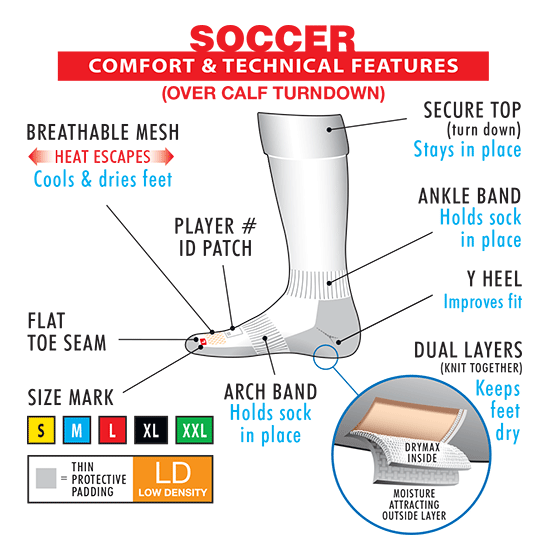
It’s not magic. It’s simple mechanics. When your foot slips inside the cleat, the sock moves relative to your skin. This creates shear force, which separates the layers of skin (the epidermis from the dermis). Fluid rushes in to fill the gap. That’s your blister.
Grip socks attack the problem at the source. The silicone grips create a high-friction interface with the cleat’s insole and a second high-friction interface with your skin. This effectively “glues” your foot to the sock and the sock to the boot. The foot and boot move as one unit, eliminating the shear force between skin and sock.
The best performance soccer socks combine this grip technology with strategic cushioning in high-impact areas (heel, forefoot) and superior moisture-wicking fabrics. They are a complete system.
What to Do When You Already Have a Blister
Sometimes you lose the battle. Here’s how to manage the aftermath without losing the war.
For a small, intact blister:
- Clean the area with mild soap and water.
- Do not pop it. The fluid inside is sterile and the skin roof is a natural bandage.
- Cover it with a blister bandage or a simple adhesive bandage if it’s not in a high-friction area.
- Let your body reabsorb the fluid.
For a large, painful, or torn blister:
- Wash your hands and the blister area.
- Sterilize a needle with rubbing alcohol.
- Puncture the blister at its edge to drain the fluid. Leave the skin roof in place.
- Apply a thin layer of antibiotic ointment.
- Cover with a sterile, non-stick bandage.
- Change the bandage daily.
The goal is to prevent infection and protect the new skin forming underneath. Avoid putting pressure on the blister until a new layer of skin has hardened. This might mean training in running shoes for a few days.
Frequently Asked Questions
Can I just wear two pairs of socks to prevent blisters?
Double-socking is a classic hack, but the evidence is mixed. The theory is that friction occurs between the two sock layers instead of between your skin and the sock. In practice, it often makes the cleat too tight, increases heat, and can create more bunching and friction. A single pair of well-fitted, high-quality grip socks is a more reliable solution.
Are there specific brands of grip socks you recommend?
Trusox are the industry standard for a reason, their multi-zone grip pattern is highly effective. Adidas Gripknit socks are excellent and often come integrated with their high-end cleats. Nike Grip socks are also very good. The key is to look for silicone or rubber prints, not just textured fabric. Try a few; foot shape and cleat fit vary.
How do I care for my grip socks to make them last?
Wash them inside out in cold or warm water. This protects the grip prints from abrasion. Avoid fabric softeners, as they can coat the fibers and reduce moisture-wicking and grip. Air dry them or use a low-heat tumble dry. High heat will degrade the elastic and can melt the silicone grips.
My cleats fit perfectly and I use grip socks, but I still get a blister on my big toe. Why?
This is often a toenail issue. If your toenail is too long or curved, it presses against the inside of the cleat with every step. Trim your nails straight across, keeping them short. If the problem persists, it could be a pressure point from the cleat’s toe box shape. Try a different cleat model or use a toe cap or protective gel sleeve.
Is it worth using foot powder or antiperspirant?
Studies are not convincing. Talcum powder can clump when wet, creating abrasives. Antiperspirants (especially spray kinds) can irritate the skin. Your effort is better spent on the core system: moisture-wicking socks, proper fit, and friction barriers like petroleum jelly. For severe sweat, an absorbent foot powder applied sparingly can help, but it’s a secondary measure.
Before You Go
Stopping blisters is about controlling a simple equation: friction + moisture + heat = failure. You control it with gear, fit, and habit. Start with grip socks, they are the highest-impact change you can make. Then enforce the thumbnail rule on cleat fit and break them in slowly. Prep your feet before the game with a friction barrier, and change your socks if they get soaked. Finally, listen to your feet. The moment you feel a hot spot, cover it. This isn’t just about comfort; an open blister is an infection risk that can sideline you longer than a muscle strain. Your feet are your foundation. Build your protection system there first.
I come from the “soccer heart” of Germany, the Ruhrpott. I have played, trained and followed soccer all my life and am a big fan of FC Schalke 04. I also enjoy following international soccer extensively.