Soccer Ball Sizes by Age Chart (The Official Guide)
The correct soccer ball size for different ages follows a standard progression: Size 1 for toddlers (2-4), Size 3 for U5-U8, Size 4 for U9-U12, and Size 5 for U13 through adult. This is based on FIFA and U.S. Youth Soccer guidelines, which match ball circumference and weight to a player’s foot size and physical strength.
Most people buy a Size 5 because it’s the “real” ball. They give it to an eight-year-old whose foot is half the size of the ball. The kid struggles to control it, can’t pass with any power, and ends up toe-punting everything. That kills technique before it even starts.
This guide breaks down the official soccer ball sizes from 1 to 5, explains why the weight and circumference specs matter more than you think, and shows you how to check your local league’s exact rules. We’ll cover when to stick with the chart, when to break it, and the one mistake with air pressure that ruins even the right-sized ball.
Key Takeaways
- Size 5 is not for kids. Giving a U10 player a full-size ball guarantees poor first touch and passing technique that takes years to unlearn.
- Check your federation first. While the FIFA age chart is the global baseline, your national or state association (like Football Australia’s MiniRoos) may have slight variations for local competition.
- Inflation matters as much as size. An overinflated Size 4 ball feels harder and heavier than a properly inflated Size 5, defeating the entire purpose of size grading.
- Size 1 and 2 are skill tools, not toys. These mini-balls are critical for developing close control, juggling, and passing accuracy in tight spaces for players of all ages.
- The transition point is physical, not just calendar-based. Move a player up a size when they can consistently strike the center of the ball with the instep, not just when they hit a birthday.
The Official Soccer Ball Size Chart by Age
Forget guessing. Every major football federation uses a version of this chart. It’s not arbitrary; the circumference and weight directly correlate to the average foot size and leg strength of the age group.
| Ball Size | Age Group | Circumference | Weight | Primary Use |
|---|---|---|---|---|
| Size 1 | 2–4 years | 18–20 in (45–51 cm) | 195–205 g | Skills, Juggling |
| Size 2 | 3–5 years | 20–22 in (51–56 cm) | 210–280 g | Introductory Play |
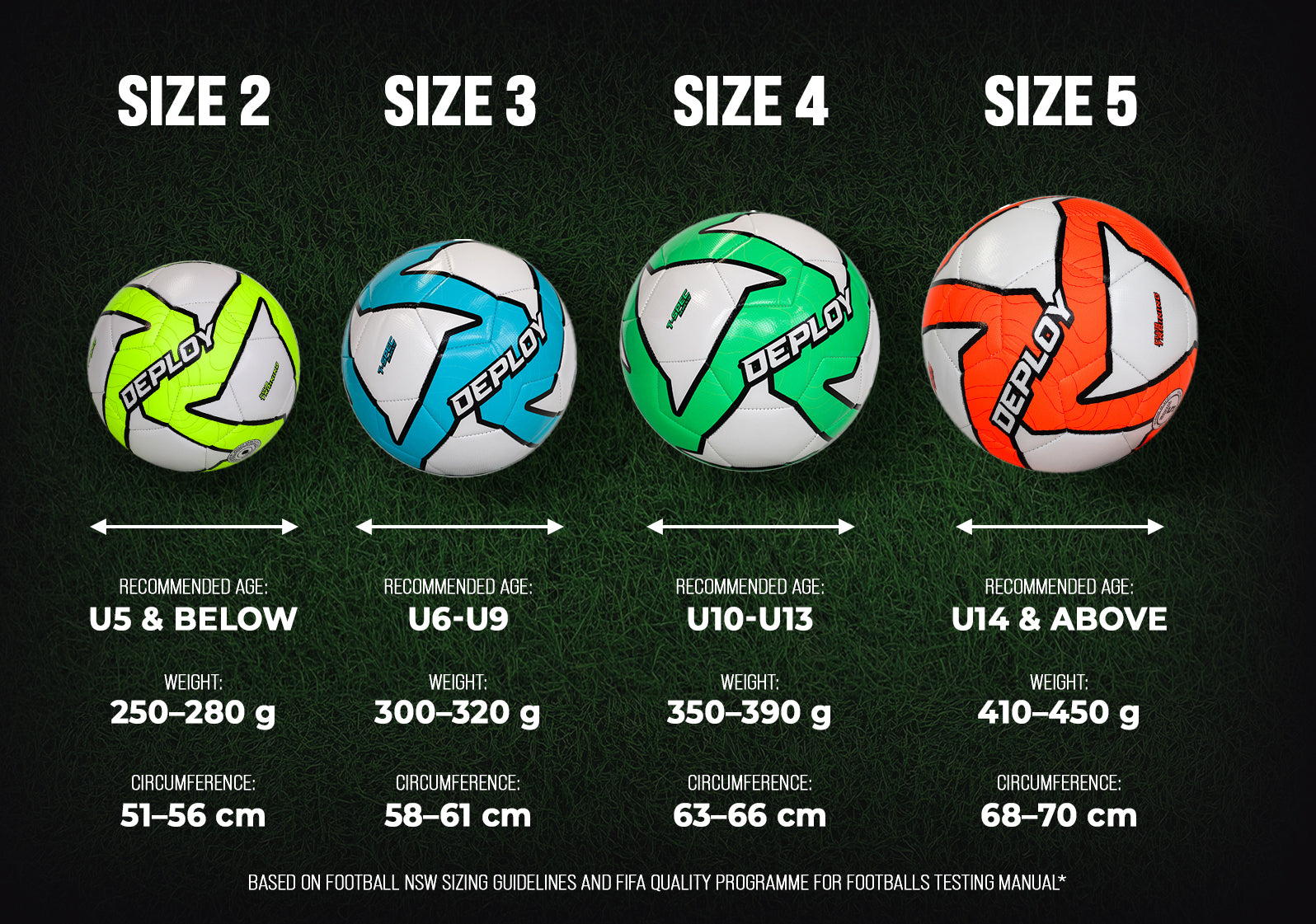
| Size 3 | U5–U8 (5–8) | 23–24 in (58–61 cm) | 300–320 g | Youth Match Play |
| Size 4 | U9–U12 (8–12) | 25–26 in (63.5–66 cm) | 350–390 g | Junior Match Play |
| Size 5 | U13–Adult (12+) | 27–28 in (68–70 cm) | 410–450 g | Official Match Play |
The FIFA Laws of the Game designate the Size 5 ball as the official match ball for all senior competitions. Sizes 3 and 4 are sanctioned for youth matches under FIFA and U.S. Youth Soccer regulations, with specific age brackets determined by national federations.
The jump from Size 4 to Size 5 is the biggest. You’re adding roughly 60 grams of weight and 2-3 inches in circumference. For a twelve-year-old, that’s a significant shift in feel and strike power required. Leagues that mandate the switch at U13 understand that players have typically developed the necessary physical foundation by then.
TL;DR: Use the chart. Size 3 for little kids, Size 4 for big kids, Size 5 for teens and adults. It exists for a biomechanical reason.
Why Ball Size Actually Matters for Development
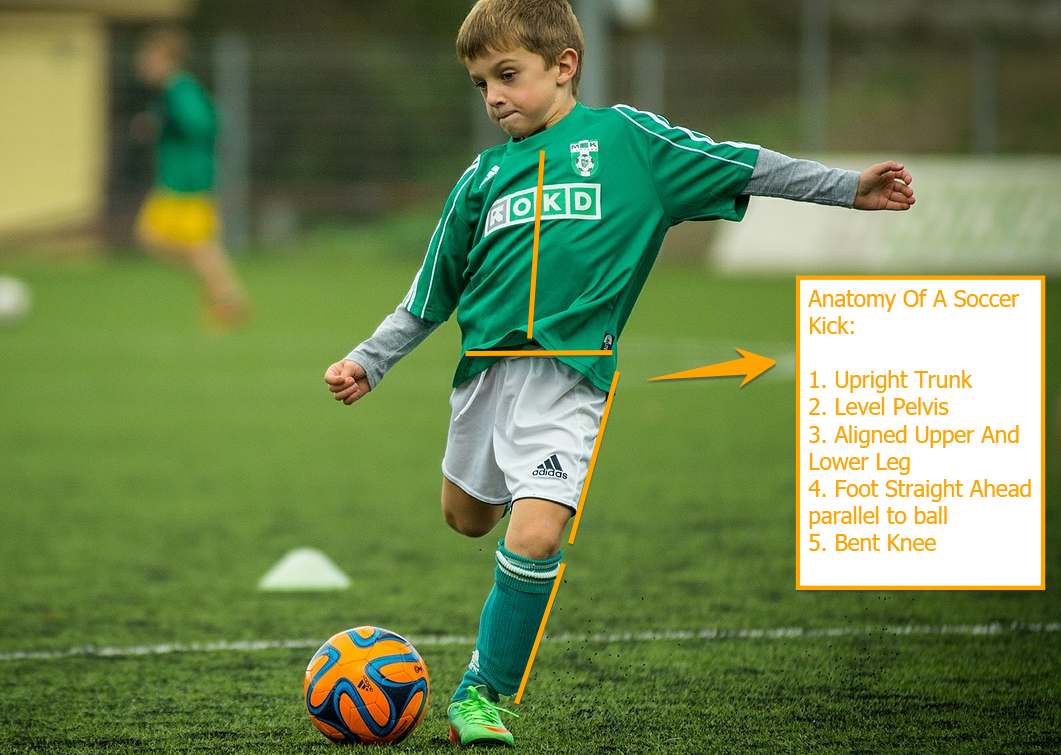
It’s not about making the game easier. It’s about making technique possible. A seven-year-old’s foot is about 6 inches long. A Size 5 ball is 28 inches around. The math doesn’t work for a proper instep pass.
A ball that’s too large forces a player to use their toe to generate enough force. Toe-punting is a dead-end skill. It’s inaccurate, impossible to control for receiving, and places stress on the smaller bones in the foot. Conversely, a correctly sized Size 3 ball allows that same player to wrap their foot around it, make contact with the laces, and learn the proper passing and shooting mechanics.
The weight is the other half of the equation. A Size 5 ball at 450 grams requires a certain leg swing velocity to travel a meaningful distance. A U9 player simply doesn’t have the muscle mass for that. They end up “scooping” the ball or using an unnatural, full-body heave. A Size 4 ball’s 350-390 gram weight lets them focus on clean foot-to-ball contact and follow-through.
Common mistake: Using a “heavy” Size 5 for U10 training to “build strength”, it builds bad habits. Strength comes from resistance training; ball skill comes from using a tool your body can actually manipulate.
I learned this coaching a U11 team. We trained with a mix of Size 4 and 5 balls one season. The kids were visibly more confident, creative, and accurate in drills with the Size 4s. Their first touch was softer. Their passes were crisper. The moment we scrimmaged with the league-mandated Size 5, the play got sloppier. They were fighting the equipment. We switched to exclusively Size 4s for all training after that, and their in-game comfort with the bigger ball improved within a month.
The Physical Difference Between Sizes 3, 4, and 5
Let’s get specific. The difference isn’t just “big, bigger, biggest.” Each step changes how the ball behaves in the air and on the ground.
A Size 3 ball has a low mass and a relatively high surface-area-to-weight ratio. This means it slows down faster on grass and is more susceptible to wind. For a young player, this is a feature, not a bug. It gives them a split-second longer to judge a bouncing ball and make a controlled play. Its smaller circumference also means it sits lower between the feet for dribbling, promoting closer control.
The Size 4 ball is the transition model. It’s large enough to be struck cleanly with a growing foot but light enough to not feel like a medicine ball. Its flight is more predictable than a Size 3. This is where players start to learn how to bend a ball with purpose, as the seams and panel design become more pronounced and consistent.
Then there’s the Size 5. This is the standard. Its weight and size demand proper technique. A mistimed volley with a Size 5 stings. A poorly struck pass dies. It provides honest feedback. Its flight characteristics are what the modern game is built on, the driven pass, the dipping shot, the swerving free-kick. You can’t learn those nuances on an undersized ball.
| Characteristic | Size 3 | Size 4 | Size 5 |
|---|---|---|---|
| Flight Stability | Low | Moderate | High |
| Dribbling Feel | Very responsive, sits tight | Stable, predictable bounce | Demands precise touches |
| Passing Feedback | Forgiving on contact | Good technique required | Unforgiving of errors |
| Shooting Impact | Less power needed | Develops power technique | Full power potential |
How to Know When to Move Up a Size
The age chart is your starting line, not your finish line. Some big-for-their-age U8 players can handle a Size 4 in practice. Some small U12 players might benefit from extra time with a Size 4 before the mandatory jump to 5.
Here are the physical cues that a player is ready for the next size up:
1. Consistent Central Contact: They strike the ball’s center with the instep 8 out of 10 times on a ground pass. No more toe-pokes or shanks.
2. Controlled Aerial Reception: They can cushion and control a gently thrown air ball to their feet with one touch, without it bouncing away.
3. Functional Strength: They can kick a stationary ball from the edge of the penalty area to the goal line (approx. 20 yards) with a controlled, running pass, not a full-power blast.
The transition should be gradual. Introduce the larger ball in non-pressure technical drills first. Let them get a feel for the weight and bounce. Don’t throw them into a small-sided game with it immediately. This is where having a few different durable practice balls in various sizes pays off.
I won’t move a skilled but small player up just because the calendar says so. I had a technically brilliant U12 midfielder who was tiny. We kept him on a Size 4 for all skill work until he hit his growth spurt at 13. His touch and passing remained his best asset because he wasn’t constantly overmatched by the ball.
TL;DR: Move up when their technique looks clean and strong with their current ball, not just when they turn a certain age. Size is a tool for development, not a badge of honor.
Special Cases: Futsal, Skills Balls, and the “In-Between” Sizes
The standard 1-5 progression covers outdoor football. Other versions of the game have their own rules.
Futsal uses a smaller, heavier, low-bounce ball. Its sizes are different:
* Size 3 (Junior): Circumference ~60 cm, weight ~430 g. For players under 10.
* Size 4 (Senior): Circumference ~63 cm, weight ~440 g. For players 10 and over.
Notice the weight? A Size 4 futsal ball is heavier than a Size 5 outdoor ball. This is deliberate to promote control on a hard court and prevent excessive bouncing.
Then you have skill balls like the old Mitre MultiBall. It was marketed as a Size 4.5, a true in-between size. Some freestylers loved it for the grip and slightly smaller profile for tricks. It was eventually banned from major freestyle competitions because that slight size advantage was deemed unfair. It’s a lesson: for pure skill development, a slightly smaller ball can be useful. For standardized competition, stick to the regulated sizes.
Don’t forget Size 1 and 2 balls. These aren’t just for toddlers. I use a Size 1 ball for warm-up juggling and wall-pass drills with my senior team. The small surface forces extreme precision. Miss your foot placement by a centimeter and you lose control. It’s the best training ball recommendation for improving first touch I’ve ever used.
The One Thing Everyone Forgets: Air Pressure
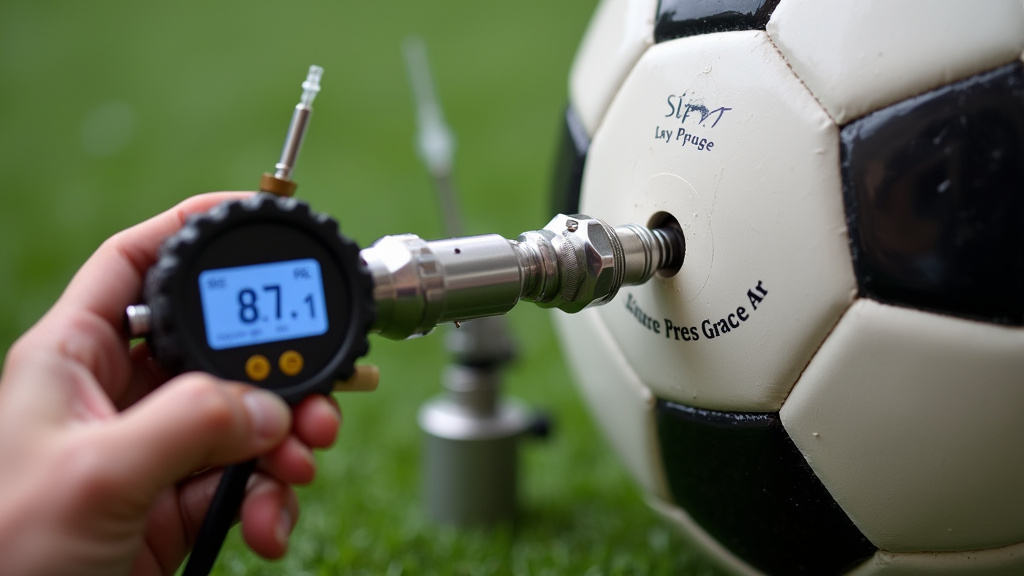
You can buy the perfect Size 4 ball, but if you pump it up to 13 PSI because it “feels right,” you’ve turned it into a rock. You’ve negated all the careful weight and size engineering.
The recommended PSI is usually printed near the valve. For Size 4 and 5 balls, it’s typically 8.5–9.5 PSI. For Size 3 and below, aim for 7–8 PSI. An overinflated ball is harder to control, painful to head, and more prone to seam failure. An underinflated ball behaves sluggishly and won’t bounce or roll true.
Invest in a simple pressure gauge use. The thumb-press test is unreliable. Check pressure weekly, as balls naturally lose air. This is non-negotiable for maintaining consistent ball inflation standards and ensuring fair play. The proper inflation steps are simple: use a pump with a needle, lubricate the needle with a drop of water, insert, pump to the printed spec, and check with the gauge.
Frequently Asked Questions
Can my 10-year-old use a Size 5 ball to train?
They can, but they shouldn’t as their primary ball. Limited exposure to a Size 5 is fine for familiarity, but their core technical training, passing, dribbling, shooting repetition, must be done with a Size 4. The Size 4 vs Size 5 difference in weight and feel is significant at that age. Using the wrong size for drills ingrains compensatory movements that hurt long-term development.
What if my child is very small or very large for their age?
Use the size chart as a guide, not a law. A very small 11-year-old should likely stay with a Size 4. A large, physically advanced 9-year-old might be ready for a Size 4 early. The key is their ability to execute proper technique. If they’re struggling, drop down a size. If the current ball seems like a toy, try the next size up in practice.
Are there different quality levels within each size?
Absolutely. A $20 Size 5 training ball and a $150 Size 5 official match balls are worlds apart in materials, construction, and flight consistency. For youth players, a mid-range training ball is perfect. The premium match ball technology (like textured panels for grip) is designed for professionals who can exploit those minute advantages. A practice ball construction prioritizes durability over perfect aerodynamics.
How do I check the ball’s size if the label is worn off?
Measure the circumference. Use a soft tape measure around the ball’s widest point. Size 3 will be 23-24 inches, Size 4 25-26 inches, Size 5 27-28 inches. This soccer ball circumference guide is the most reliable method.
What about ball care? Does size affect maintenance?
The maintenance principles are the same, but smaller balls are often used on rougher surfaces (concrete, asphalt) for street soccer, so they may scuff faster. Regular cleaning a soccer ball with mild soap and water, avoiding harsh chemicals, and proper ball storage methods, deflated slightly, in a cool, dry place, will extend the life of any ball, regardless of size.
The Bottom Line
Choosing the right soccer ball size isn’t a suggestion; it’s a fundamental part of player development. Sticking to the official soccer ball sizes for each age group builds proper technique from the ground up. Remember that the chart is a baseline, watch the player, not just their birth year. Pair the correct size with the correct ball pressure, and you’ve removed two major barriers to learning the game well. Finally, don’t overlook the smaller Size 1 and 2 balls as serious training tools. They teach touch and control that translates directly to success with the full-sized ball later on.

I come from the “soccer heart” of Germany, the Ruhrpott. I have played, trained and followed soccer all my life and am a big fan of FC Schalke 04. I also enjoy following international soccer extensively.