Iowa High School Cancels Football Season
This post contains affiliate links. As an Amazon Associate, we earn from qualifying purchases.
Iowa high school football is facing a crisis, with several programs canceling their seasons because of dwindling participation. Schools like New London and Siouxland Christian are struggling with roster sizes dropping to as few as 16 players. This leads to uncompetitive games and community disappointment. As rural demographics shift, these programs find it challenging to retain players. If you want to understand the broader implications and what can be done to support these teams, continue exploring this issue.
Essential Facts in 30 Seconds
- Several Iowa high school football programs, including New London, have canceled their seasons due to low participation and small roster sizes.
- Competitive imbalances are leading to forfeits and heavy losses, prompting schools to pause or cancel their seasons.
- Demographic changes in rural areas are causing declining enrollments, which limits the number of athletes at smaller schools.
- Forfeited games impact playoff standings and community pride, as programs struggle to maintain competitiveness.
- Stakeholders need to collaborate to promote inclusivity and support struggling programs to prevent further cancellations in Iowa high school football.
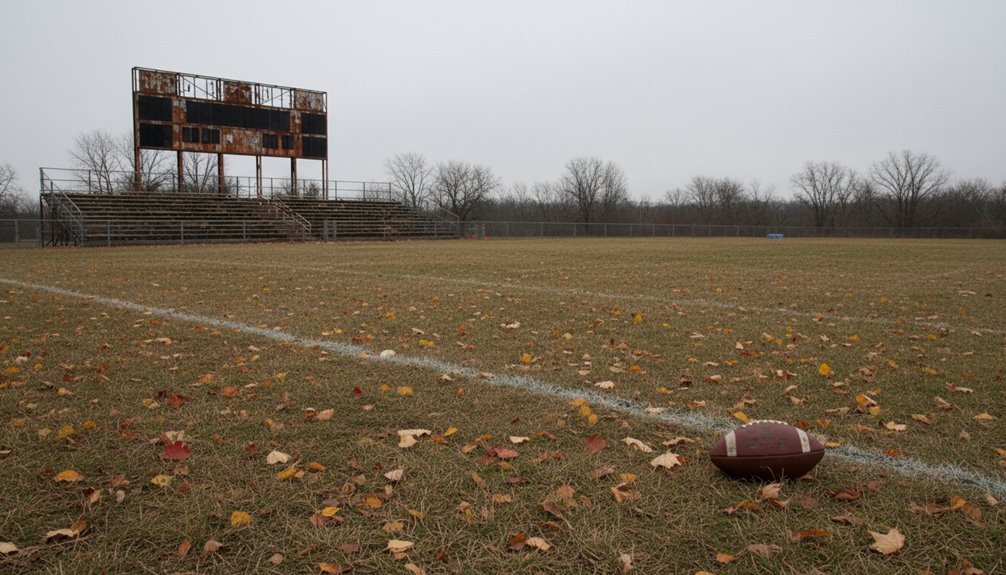
As Iowa high school football enters a troubling chapter, several programs are grappling with the harsh reality of participation declines that have led to an unprecedented wave of season cancellations. You’ve likely heard about schools like New London, Siouxland Christian, and Lone Tree, which have publicly forfeited their remaining games because of alarmingly low player counts. This isn’t just a minor bump in the road; it signals a significant shift in how rural demographics are affecting participation in high school sports.
At many of these affected schools, rosters have dwindled to as few as 16 players, making it nearly impossible to field a competitive team safely. You might wonder why this is happening, especially in areas that once thrived on strong football traditions. The reality is that player retention has become a formidable challenge, compounded by factors like senior-class attrition and a lack of underclassmen enrolling in these programs. It’s not just a single-season issue; it’s a worrying trend that threatens the very fabric of high school football in rural Iowa.
Rostering as few as 16 players, rural Iowa football faces a troubling decline that threatens its very essence.
This decline isn’t isolated to a few struggling programs. Even schools with recent competitive histories, including former state champions, are feeling the pinch. The competitive imbalance that arises from fielding undersized squads often leads to lopsided losses, pushing administrators to pause or cancel seasons altogether. New London‘s forfeiture announcement serves as a stark reminder of the challenges faced by these teams. In fact, New London is the fifth Iowa high school to forfeit this season, highlighting the widespread nature of this issue. You can see how this affects not only the teams but likewise the community’s spirit. When a once-proud program decides to hang up its cleats, it resonates throughout the entire town.
Moreover, these cancellations have broader implications for playoff standings and competitive dynamics. Forfeited games count as wins for scheduled opponents, directly impacting rankings and playoff qualifications. If you’re a fan of a local team, it’s hard not to feel the disappointment as your favorite players miss out on both the glory and the camaraderie that football brings. The integrity of state championship fields and brackets is also under strain, as multiple programs withdraw during the season, creating gaps where once there were competitive rivalries.
It’s clear that the demographic shifts in rural areas are contributing to these participation declines. As smaller schools face dwindling enrollments, the pool of potential athletes becomes limited. If you’re invested in the future of high school football, it’s vital to recognize that these aren’t just numbers on a page. They represent young athletes’ dreams and communities’ identities. Addressing these challenges will require innovative approaches to encourage player retention and engagement in football programs.
As we look ahead, it’s important for stakeholders—coaches, parents, and community leaders—to come together and address these concerns. Whether that means nurturing a culture of inclusivity or finding ways to support student-athletes, the future of high school football in Iowa depends on collective action. It’s time to rally around these programs before they fade away entirely.
Frequently Asked Questions
What Were the Specific Reasons for Canceling the Football Season?
With seven Iowa high schools canceling or pausing seasons, community response focused on safety protocols. You’ll find that prioritizing player health and addressing performance struggles led to the difficult decision of canceling the football season.
Will Other Sports Teams at the School Be Affected?
Other sports teams probably won’t be affected directly. Nevertheless, low morale from the football cancellation could impact student engagement across all activities, as enthusiasm often stems from successful athletic programs and community support.
How Will This Impact Player Eligibility for Next Season?
Next season, player assessments will reflect low participation, limiting recruitment opportunities for seniors. Underclassmen maintain eligibility, but the lack of game exposure could hinder their visibility and development, impacting future prospects considerably.
Are There Plans for Alternative Activities During the Fall?
No official plans for alternative activities are announced yet, but you might see virtual events and community engagement initiatives emerge to keep students involved and connected, nurturing school spirit in spite of the challenges facing the football program.
What Are the Financial Implications for the School’s Athletic Program?
The school’s athletic program faces severe financial implications, requiring immediate budget adjustments and innovative fundraising strategies. Without football, expect significant revenue declines, prompting tough decisions to guarantee sustainability and future viability of athletic activities.
Conclusion
As the final whistle blows on this season, you can see the empty bleachers echoing the hopes dashed. The football field, once a lively battleground, now stands quiet, a symbol of lost opportunities and community spirit. Yet, in this pause, you’ll find a chance for renewal. The resilience of players and fans alike can ignite a new season of passion and unity, reminding us that as the game may pause, the spirit of the team never fades.

I come from the “soccer heart” of Germany, the Ruhrpott. I have played, trained and followed soccer all my life and am a big fan of FC Schalke 04. I also enjoy following international soccer extensively.