Is the 4-4-2 Formation Outdated? The Comeback Explained
The 4-4-2 formation is not outdated. Its viability hinges on three modern adaptations: using a staggered midfield to counter three-man midfields, deploying a specific striker partnership, and employing versatile full-backs to provide attacking width. This classic setup offers unmatched defensive clarity and direct attacking threat, making it a meta choice for tournament football and disciplined underdog sides.
The biggest mistake is thinking the 4-4-2 is a relic. People see the simple numbers, four defenders, four midfielders, two strikers, and assume it’s too basic for the modern game. They’re wrong. That simplicity is its superpower, but only if you know how to tweak it.
This guide breaks down why the 4-4-2 never left, how top coaches like Diego Simeone and Sean Dyche use it to punch above their weight, and the exact player profiles you need to make it work against today’s dominant 4-3-3 systems.
Key Takeaways
- The 4-4-2’s primary strength is defensive organization, creating two compact banks of four that are extremely difficult to break down centrally.
- Its perceived weakness against a three-man midfield is solved by the 4-4-2 diamond variation, which sacrifices width for central control.
- Modern success requires a specific striker partnership: one physical target man and one pacey poacher.
- Full-backs are the system’s most important players in attack, providing the necessary width, especially in the diamond shape.
- The formation is experiencing a resurgence because it offers tactical clarity, ideal for tournament settings and teams that prioritize defensive solidity over possession.
The 4-4-2’s Core Structure and Philosophy
Look at a classic 4-4-2 diagram. You see three clean lines. This isn’t a lack of sophistication. It’s a deliberate design for defensive stability and quick transitions. The back four and midfield four operate as two horizontal units, often with only 10 to 15 yards between them. This compactness chokes the central channels, forcing opponents out wide into less dangerous crossing positions.
The 4-4-2 formation organizes ten outfield players into three distinct strata: a back line of four defenders, a midfield line of four players, and a forward line of two strikers. Its tactical philosophy prioritizes structural solidity, direct vertical passing, and attacking width provided by traditional wingers. The two-striker system creates constant pressure on opposing center-backs.
The system runs on clear, almost instinctive roles. Central midfielders are typically a duo, one more defensive, one more box-to-box. Wingers must be engines, responsible for the entire flank. The striker partnership is everything. One usually drops slightly to link play, while the other pins the last defender. This clarity is why the modern relevance of the 4-4-2 persists in high-pressure environments.
TL;DR: The 4-4-2 is built on defensive compactness and role clarity, not tactical complexity.
Why the 4-4-2 Was Declared “Dead” (And Why That Was Wrong)
Around 2010, the obituaries were being written. Pep Guardiola’s Barcelona, with their 4-3-3 and tiki-taka, made possession king. A flat 4-4-2 midfield, with just two central players, looked helpless against a three-man midfield triangle. The duo would get overloaded, pinned back, and starved of the ball. Possession stats would read 70-30 against the 4-4-2 team. Pundits called it a dinosaur.
They missed the adaptation. Coaches didn’t abandon the shape; they evolved it. The key was staggering the midfield line. Instead of a flat four, one central midfielder would sit deeper as a dedicated holder, and one forward would drop into the hole. This created a de facto 4-4-1-1 or 4-1-4-1 in defense, which morphed into a 4-4-2 in attack. The formation organization remained, but the roles became fluid.
Leicester City’s 2016 Premier League win was the wake-up call. Claudio Ranieri’s 4-4-2 was not a possession system. It was a devastating counter-attacking machine. They conceded the ball, stayed compact, and launched Jamie Vardy with direct passes. It was a masterclass in the 4-4-2’s tactical solidity. Atlético Madrid under Diego Simeone has done the same for over a decade, using a brutal, disciplined 4-4-2 to compete with giants.
The death notice was for a rigid, outdated interpretation. The flexible, modern 4-4-2 was just getting started.
The Modern 4-4-2 Toolbox: Variations for Every Game
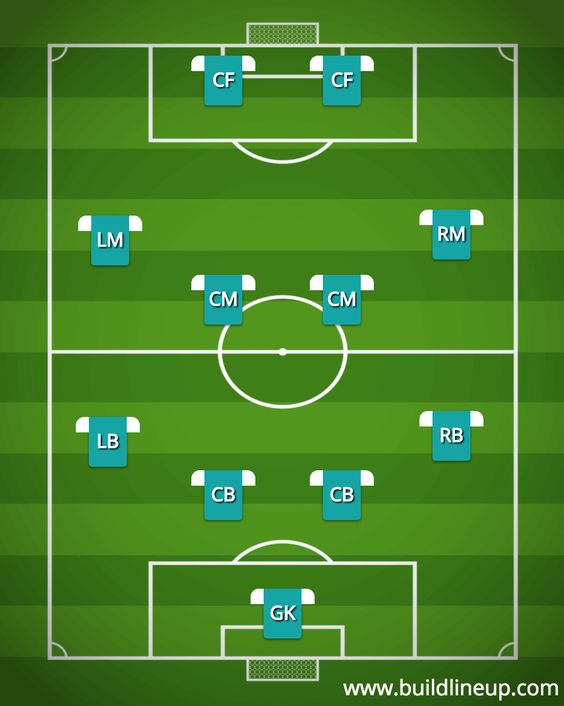
You don’t just “play a 4-4-2.” You pick the right tool from the box. The choice between a flat midfield, a diamond, or a staggered system decides the game.
| Variation | Best Used Against | Key Adjustment | Risk If Misapplied |
|---|---|---|---|
| Flat 4-4-2 | Similar formations, weaker sides | Maintain two compact lines, press as a unit. | Overrun in central midfield by a 4-3-3. |
| 4-4-1-1 | Possession-dominant teams | Second striker drops to harass the pivot. | Lone striker becomes isolated without support. |
| 4-4-2 Diamond | 4-3-3 systems, high-pressing teams | Win the midfield battle with a numerical 3v2. | Exposes flanks to overlapping full-backs. |
| 4-1-4-1 (Defensive) | To protect a lead, away games | Adds a dedicated shield in front of the back four. | Difficult to transition into attack quickly. |
The diamond is the most tactically interesting answer to the 4-4-2’s biggest critique. By tucking in the wingers and adding a number 10, you match up 3v3 in central midfield. This variation, a key part of the 4-4-2 vs 4-3-3 comparison, turns a weakness into a strength. But it asks everything of the full-backs. They must provide the team’s only width, requiring elite stamina and delivery.
Common mistake: Using a flat 4-4-2 against a technical 4-3-3 without a plan, your central duo will be bypassed within 20 minutes, and you’ll lose the midfield battle for the entire match.
TL;DR: Choose a flat 4-4-2 for defensive stability, a diamond for midfield control, and a 4-4-1-1 for a defensive press.
The 4-4-2 Diamond: A Modern Solution
This isn’t your grandfather’s 4-4-2. The diamond, sometimes called a 4-3-1-2, is a direct counter to the modern 4-3-3. You sacrifice wide wingers for a packed center. The three central midfielders (a holder, two shuttlers) and a number 10 can outnumber and out-pass a standard three-man midfield. It’s perfect for teams that want to control the game through the middle.
The trade-off is massive. Your attacking width comes solely from the full-backs. If they aren’t exceptional athletes who can sprint the flank for 90 minutes, your attack becomes narrow and predictable. Defensively, those same full-backs can be exposed 2v1 if the opponent’s winger and full-back combine. Managing this wide threat is the diamond’s eternal puzzle.
Building a Winning 4-4-2: The Non-Negotiable Player Profiles

You cannot plug any eleven players into this system. It demands specific, often old-school, attributes. Get the profiles wrong, and the structure collapses.
- The Central Midfield Pair. This is the engine room. You need a destroyer and a distributor. The destroyer must be positionally disciplined, a great tackler, and happy to sit. The distributor needs a good first touch, vision for a long pass, and the legs to cover ground. A pair of similar, attack-minded players here is a recipe for getting cut through.
- The Striker Partnership. This is the signature. One must be a physical target, strong back-to-goal, good in the air, a hold-up player. The other is the runner, pace to stretch defenses, clever movement, a clinical finisher. Think Didier Drogba and Fernando Torres at their peaks. Two small, technical strikers together in a 4-4-2 often fails against physical center-backs.
- The Wide Midfielders. These are the most demanding roles in modern football. They are expected to be orthodox wingers in attack and auxiliary full-backs in defense. Their defensive work rate is non-negotiable. If one doesn’t track back, the entire flank is exposed.
- The Full-Backs. In a flat 4-4-2, they provide support. In a diamond, they are the wingers. Their fitness and crossing ability directly determine the team’s attacking success. A slow or defensively frail full-back will be targeted relentlessly.
I tried implementing a 4-4-2 diamond with a youth team using two creative, lightweight central midfielders. We looked great in possession for 30 minutes. Then the opponent’s physical 4-3-3 overwhelmed them, bypassed our midfield entirely, and scored three times from transitions before halftime. I learned the hard way that the “holder” in the diamond must be a defensive specialist first.
TL;DR: Success requires a destroyer in midfield, a complementary striker duo, indefatigable wide players, and ultra-fit full-backs.
How Opponents Attack the 4-4-2 (And How to Stop Them)
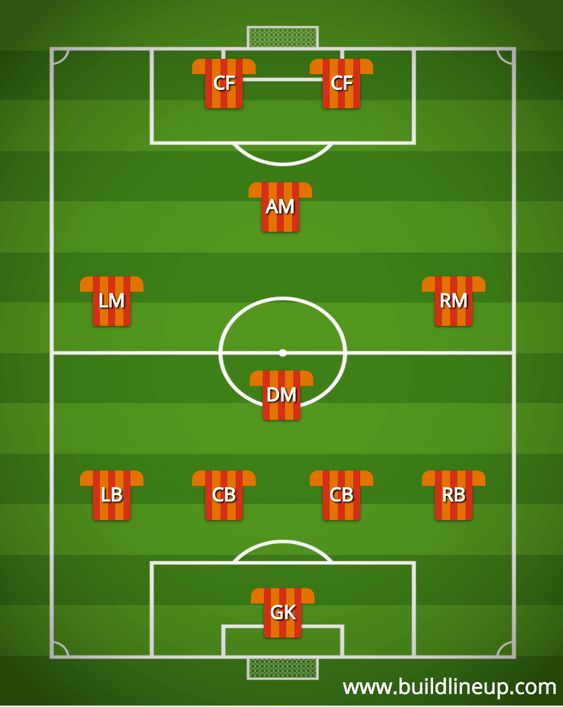
Smart opponents have a playbook for beating you. Knowing it lets you build traps.
The primary method is the midfield overload. A 4-3-3 will use its three midfielders against your two. Their solution is to have a central midfielder, often the number 6, drop deep to receive the ball, drawing one of your midfielders out. This creates a 2v1 advantage higher up the pitch. Your fix is discipline. Instruct your midfield duo to hold their line, ignore the deep-lying player, and force the ball wide. Let their center-back have it. The pass to the wing is less dangerous.
The second method is isolating the full-back. In a 4-4-2 diamond, opponents will push their winger and full-back high against your lone full-back. It’s a 2v1. Your counter is to have your nearest central midfielder (a shuttler) drift wide to help, effectively forming a temporary back five. This requires incredible communication and spatial awareness from your midfield three, a hallmark of the best midfield control in 3-5-2 systems as well.
Common mistake: Having your central midfielders chase the ball into deep areas, this breaks your defensive lines and creates the exact numerical disadvantage you’re trying to avoid.
The 4-4-2 in the 2026 Meta: Tournament Logic

Look ahead to the 2026 World Cup. The 4-4-2 will be everywhere, especially for underdog nations. Here’s why. Tournament football is about managing short-term scenarios: protecting a lead, navigating a tough group-stage match, executing a specific game plan against a superior opponent. The 4-4-2 offers unparalleled clarity for these moments.
Its defensive organization is easier to coach in limited preparation time than a complex possession-based soccer system. Every player knows his defensive zone. For a team like Costa Rica or South Korea facing Brazil or France, sitting in a compact 4-4-2 and hitting on the break is a legitimate path to a result. This isn’t anti-football. It’s pragmatic tournament football, a style distinct from the attacking width of 4-3-3 used by the favorites.
The formation also simplifies set-piece defending and attacking, a critical part of knockout games. With two big strikers and center-backs in the box, you always have targets. In a tournament where one goal changes everything, this direct threat matters.
Frequently Asked Questions
Is the 4-4-2 formation only for defensive teams?
No. While its foundation is defensive solidity, its attacking potential is vast. With athletic wingers and a potent striker pair, it can be a devastating counter-attacking system. The 4-4-2 diamond variation is specifically designed for midfield control and possession.
What’s the biggest weakness of the 4-4-2?
The flat 4-4-2’s vulnerability to a numerical disadvantage in central midfield against formations like the 4-3-3 or 4-2-3-1. If the central midfield duo is outplayed, the team can lose control of the game.
Can the 4-4-2 work against a 4-3-3?
Yes, but it usually requires an adaptation. Most coaches will switch to a 4-4-2 diamond to match the midfield numbers, or instruct one striker to drop deep and create a 4-4-1-1 shape that disrupts the 4-3-3’s single pivot.
What are the best player types for a 4-4-2?
You need a physical striker partnership, a balanced central midfield pair (one defensive, one box-to-box), wingers with high defensive work rate, and extremely fit full-backs who can provide width.
Why are managers like Diego Simeone still using the 4-4-2?
Simeone’s Atlético Madrid exemplifies the modern 4-4-2. It provides the disciplined, organized, and aggressive defensive base he demands. It allows his team to be compact without the ball and explosive on the counter, perfect for his underdog mentality against richer rivals.
The Bottom Line
The 4-4-2 formation is far from outdated. It’s a tactical chameleon. Its classic form provides the defensive clarity that wins tournaments and grinds out results. Its modern variations, like the diamond, solve its historical weaknesses and offer control against the sport’s dominant systems. The resurgence isn’t nostalgia. It’s a recognition that in an era of complex possession schemes, the brutal simplicity of two solid banks of four and a direct threat up front remains powerfully effective. The next time you see a team line up in a 4-4-2, don’t think dinosaur. Think meta.

I come from the “soccer heart” of Germany, the Ruhrpott. I have played, trained and followed soccer all my life and am a big fan of FC Schalke 04. I also enjoy following international soccer extensively.