Sweeper vs Libero: What’s the Real Difference in Soccer?
The difference between a libero and a sweeper in soccer is positional nuance and tactical era. A “libero” is the Italian term for the classic sweeper, a free defender positioned behind the main line. Modern soccer uses “sweeper” to also describe a center-back in a back-three system and an aggressive “sweeper-keeper”. All three roles share defensive reading skills but operate in distinct spaces and tactical contexts.
Most people hear “sweeper” and think of one thing. The confusion starts there. You have three completely different jobs wearing the same name tag, separated by fifty years of tactical evolution and a single rule change.
This guide cuts through the noise. We will map the journey from the classic libero to the modern sweeper center-back and the revolutionary sweeper-keeper. You will learn how to spot each role, understand why they work, and see where they fit in today’s game.
Key Takeaways
- The classic sweeper or libero is a historical role, a free defender playing behind the main defensive line, largely made obsolete by the 1990 offside rule change.
- The modern “sweeper center-back” operates within a back-three or back-five, providing defensive cover and initiating attacks, exemplified by players like Virgil van Dijk.
- The “sweeper-keeper” is a proactive goalkeeper who acts as an extra defender, enabling high defensive lines and possession-based play, pioneered by Manuel Neuer.
- All three roles demand elite game-reading and anticipation, but their physical positioning and offensive responsibilities are vastly different.
- Understanding these distinctions is key to analyzing defensive formations and a team’s overall defensive strategy.
The Sweeper vs. The Libero: A Tactical Distinction
Let’s settle the vocabulary first. “Libero” is just the Italian word for “free”. In soccer history, it specifically described the classic sweeper, the last man playing behind a line of markers. The terms are interchangeable for that historical role. Franz Beckenbauer, the German legend, was the archetype: a libero who also dictated play.
The modern confusion arises because we now use “sweeper” to describe two newer, different roles. This creates a language trap where a fan talking about a “sweeper” might mean a defender, while a coach means a goalkeeper. The core of the classic sweeper role was freedom in a constrained space.
The classic libero operated as a free defender behind a man-marking back line, responsible for intercepting through balls, covering for beaten markers, and initiating counter-attacks with long passes. Their positional depth was both their strength and their eventual tactical undoing.
TL;DR: “Libero” and “classic sweeper” are the same historical role. Modern soccer has split the “sweeper” concept into a center-back variant and a goalkeeper variant.
The Classic Sweeper (Libero): History’s Last Man
This role was born from necessity. After offside rule tweaks in the 1920s, coaches needed a safety net. The solution was a defender who didn’t mark a specific opponent. He floated. His only job was to clean up anything that got past the first line. The system was called catenaccio, “the chain”. It was brutally effective for decades.
The sweeper’s positioning kept him deeper than everyone else. This created a huge problem after 1990. That year, FIFA changed the offside rule. An attacker was now onside if level with the second-last defender. Before, they had to be behind two defenders. Overnight, a deep sweeper became a liability. He kept opposing forwards onside simply by standing there. Fast strikers could now time their runs against a static line, and the sweeper’s recovery speed was tested every minute.
Common mistake: Thinking a classic sweeper is just a deep center-back. The role required the football intelligence of a midfielder, the tackling of a defender, and the passing range of a playmaker. Miss one element and the system collapsed.
I saw this decline firsthand watching German football in the late 80s and early 90s. Teams still using a pure sweeper, like certain Serie A sides visiting for European matches, got torn apart by pacey forwards like Stuttgart’s Jurgen Klinsmann. The defender was always a step late because the rule no longer gave him that extra yard of mental cushion. The game had moved on.
The Modern Sweeper Center-Back: The Evolution
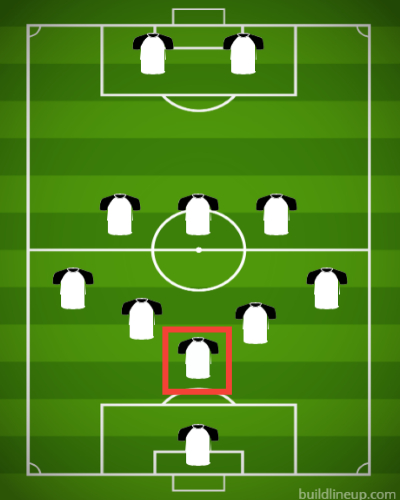
The classic sweeper died, but the need for defensive intelligence did not. The role evolved, moving from behind the line to within it. Enter the back-three formation. In systems like the 3-5-2 or 5-3-2, you have three central defenders. The middle one, the “sweeper center-back”, plays slightly deeper than the two outside center-backs.
He is not a free man in the old sense. He has zonal responsibilities. But his role is to read the game, step up to intercept passes, cover for advanced wing-backs, and be the first point of build-up. Virgil van Dijk at Liverpool, especially in phases where they used a back-three, is a prime example. He doesn’t wait behind; he anticipates in front.
| Attribute | Classic Sweeper (Libero) | Modern Sweeper Center-Back |
|---|---|---|
| Primary Position | Behind a back-four | Central in a back-three/back-five |
| Marking Duty | None (free man) | Zonal, within a defensive block |
| Build-Up Role | Long diagonal passes | Progressive passes & carries |
| Tactical System | Catenaccio, man-marking | Back-three systems (e.g., 3-5-2 formation) |
| Offside Impact | Often kept attackers onside | Holds a higher line, uses the offside trap |
The physical demands are different. The modern version needs superior recovery speed and aerial dominance because he defends in a higher line. His passing must be precise and progressive, not just hopeful. This role is central to the tactical flexibility of modern three-center-back systems, allowing wing-backs to attack without leaving a gaping hole.
The Sweeper-Keeper: The Game’s Most Extreme Evolution
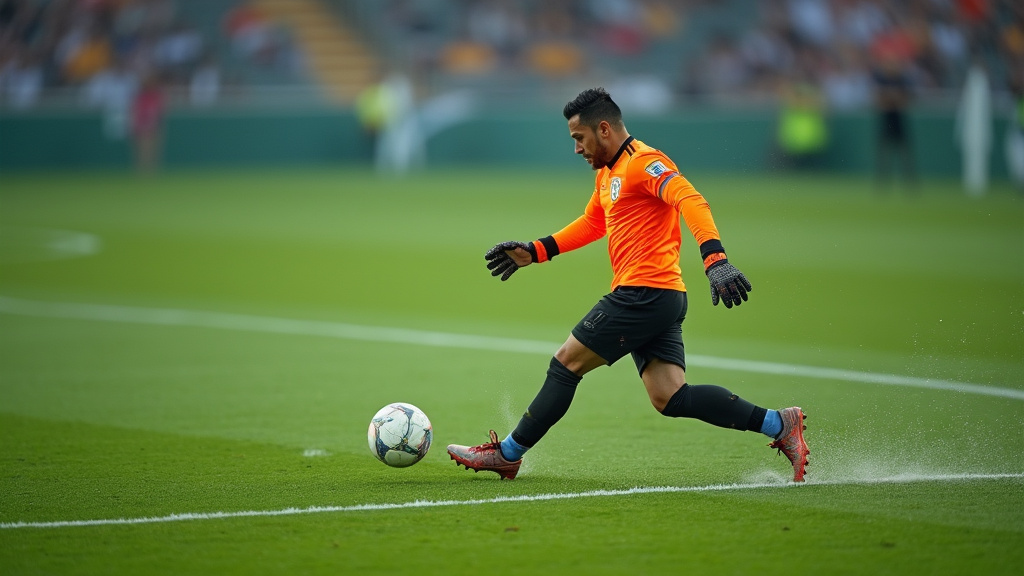
This is where the term “sweeper” got a second life. If the classic sweeper was the last defender, the sweeper-keeper is the first defender. Manuel Neuer redefined the position. His job is to aggressively patrol the space behind his defensive line, often 20-30 yards outside his penalty area.
The role exists for one reason: to allow the team to play with a ridiculously high defensive line. If the back line pushes up to the halfway line, the space behind them is enormous. A traditional goalkeeper glued to his line is a suicide note. A sweeper-keeper acts as a safety valve, sprinting out to clear through balls before an attacker can reach them.
The skillset is alien to traditional keeping. It requires the decision-making of a central defender, the passing accuracy of a midfielder, and the fearlessness of a lunatic. One misjudgment, one heavy touch, and you gift a goal. The reward is immense tactical control. Teams like Manchester City under Pep Guardiola use Ederson as an extra outfield player to break presses and maintain possession.
I remember Neuer’s performance against Algeria in the 2014 World Cup. He was essentially playing as a fifth defender for 90 minutes, making tackles near the touchline. It looked chaotic, but it was calculated. It completely nullified Algeria’s only attacking tactic, the long ball over the top. That game convinced a generation of coaches.
TL;DR: The sweeper-keeper is a proactive goalkeeper who defends space outside his box, enabling a high-pressing, possession-dominant style of play. It’s the highest-risk, highest-reward role on the pitch.
Why the Volleyball “Libero” Adds to the Confusion
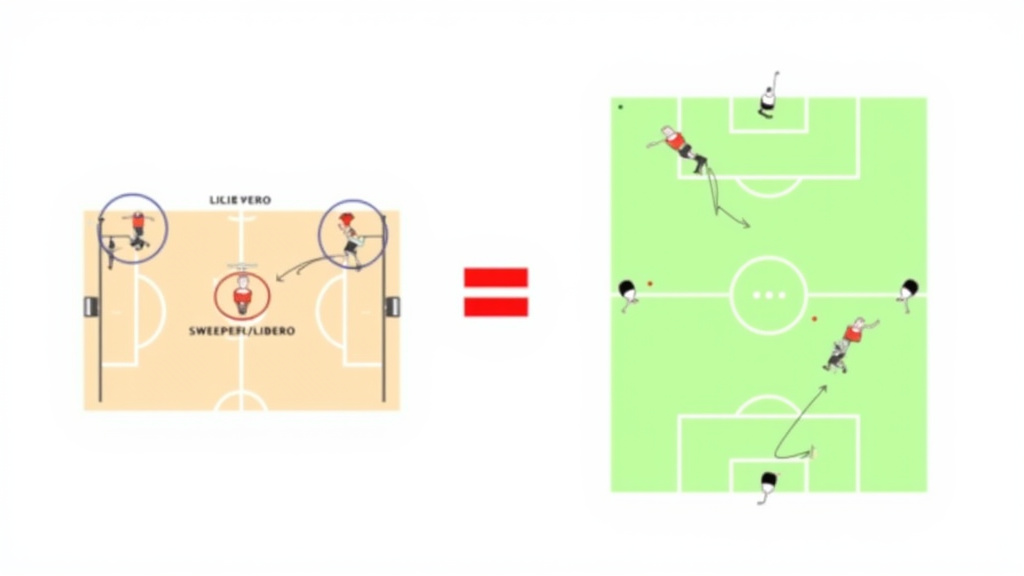
It’s a coincidence that causes endless mix-ups. Volleyball adopted the term “libero” in the late 1990s for a specialized defensive player. Like the soccer libero, they wear a different colored jersey and have restricted actions, they can’t attack above the net or block. Their role is also about reading the game and providing defensive coverage.
But that’s where similarities end. The volleyball libero is a substitution specialist with unlimited replacements, confined to the back row. The soccer libero was a tactical lynchpin, not a substitution. The shared name is a linguistic quirk, not a tactical parallel. When discussing tactical roles, it’s crucial to keep the sports separate. A PMC study on libero performance in volleyball analyzes reception efficiency, which has no direct translation to soccer’s spatial defending.
How to Spot Each Role in a Match
Watching a game, use this checklist to identify which “sweeper” you’re seeing.
- Look at the defensive line shape. Is there a defender consistently five yards deeper than his partners? That’s a classic sweeper (rare today). Are there three central defenders with the middle one slightly deeper? That’s a sweeper center-back.
- Watch the goalkeeper’s starting position. During sustained possession, is the goalkeeper standing on or outside the penalty arc, involved in passing triangles? That’s a sweeper-keeper.
- Analyze the offside line. If the defensive line is very high and the goalkeeper is constantly alert to through balls, you’re seeing a sweeper-keeper system at work.
- Note the build-up pattern. Does the first pass often go to a central defender who then carries or passes forward aggressively? That’s the modern sweeper center-back in action.
This skill transforms how you watch the game. You stop just following the ball and start understanding the tactical formations and the space managers are trying to control.
The Right Role for Your Team’s System
Choosing which concept to use isn’t about picking a cool name. It’s about matching a solution to a specific tactical problem.
- You need a classic sweeper (Libero): Almost never in modern professional soccer. It might appear in amateur football where organization is low and long balls are frequent, acting as a permanent safety net.
- You need a sweeper center-back: When playing a 5-3-2 defensive formation. You need a player with exceptional vision, passing, and calmness to be the pivot of your defense. This player is your defensive quarterback.
- You need a sweeper-keeper: When implementing a high-pressing, possession-based philosophy. Your entire tactical structure depends on a goalkeeper who can defend space and play with his feet. This is non-negotiable for teams like Bayern Munich or Barcelona.
The wrong choice breaks the system. A traditional goalkeeper in a high line is a catastrophe. A slow, immobile center-back as your sweeper in a back-three gets isolated and beaten for pace. These roles demand specific, elite attributes.
Frequently Asked Questions
Can a team have both a sweeper center-back and a sweeper-keeper?
Absolutely, and the best modern teams do. A back-three system with a sweeper center-back (like Alessandro Bastoni at Inter) often pairs with a sweeper-keeper (like Yann Sommer). The center-back handles defensive organization and build-up from a deep position, while the keeper handles the space behind the entire high line. They work in tandem.
Who is the best example of a classic sweeper?
Franz Beckenbauer is the undisputed archetype. He perfected the role for Bayern Munich and West Germany in the 1970s, combining imperious defending with elegant, game-controlling passes from deep. He wasn’t just a defender; he was the team’s primary playmaker, starting attacks from his own penalty area.
Is the sweeper role dead in soccer?
The classic sweeper is functionally dead at the top level due to the offside rule. However, the core principle, a player with extra defensive responsibility and the freedom to read the game, lives on in the sweeper center-back and sweeper-keeper. The idea evolved; it didn’t die.
What’s the main physical difference between the roles?
classic sweeper relied more on anticipation and positioning than outright speed. A modern sweeper center-back needs strength, aerial ability, and recovery pace. A sweeper-keeper requires explosive acceleration, agility, and technical passing skill. The athletic demands have escalated with each evolution.
Why is the sweeper-keeper considered so risky?
Because a single error is almost always a goal. A midfielder misplaces a pass in the opponent’s half, and the team can recover. A sweeper-keeper misjudges a through ball 30 yards from his goal, and he’s stranded. The striker has an open net. The risk is absolute, which is why only the most confident and technically gifted keepers succeed in the role.
Before You Go
Forget the idea that “sweeper” means one thing. Soccer’s tactical language is layered. The classic libero is a historical artifact, a brilliant solution to an old set of rules. The modern sweeper center-back is the evolved version, a crucial cog in three-center-back systems that dominate today’s game. The sweeper-keeper is a revolutionary hybrid, a position that has changed how entire teams defend and attack.
Understanding these differences does more than win a pub argument. It lets you see the chessboard beneath the players. You’ll watch a team like Atalanta deploy their 3-5-2 advantages and instantly recognize the sweeper center-back holding it all together. You’ll see Ederson receive a back-pass under pressure and understand he’s not just a keeper, he’s the first step in breaking the press. That’s the real beauty of the game. It’s not just what you see. It’s what you understand.

I come from the “soccer heart” of Germany, the Ruhrpott. I have played, trained and followed soccer all my life and am a big fan of FC Schalke 04. I also enjoy following international soccer extensively.