What is a Sweeper in Soccer? The Lost Art of the Libero
The sweeper position in soccer, also called the libero, is a central defender who plays behind the main defensive line. This player is not assigned to mark a specific opponent. Instead, they act as a free safety net, covering space, intercepting through balls, and often starting counter-attacks with precise passing.
Most people think the sweeper is just a last-ditch defender. They miss the brainpower. The role died not because it was weak, but because modern tactics demanded everyone press forward together. Leaving one man deep became a luxury few could afford.
This guide breaks down the sweeper’s history, the specific skills that defined legends like Beckenbauer, and the precise tactical shifts that made the role a museum piece. You will see where its spirit lives on today.
Key Takeaways
- The sweeper’s core job was spatial defense, not man-marking. They read the game three passes ahead to cut off attacks before they reached the goalkeeper.
- Franz Beckenbauer didn’t just play sweeper; he reinvented it. His “Der Kaiser” role added midfield playmaking, turning defense into instant attack.
- The offside rule change in 1990 was a nail in the coffin, but the real killer was high-pressing systems. A sweeper sitting deep created a fatal gap in midfield pressure.
- Modern equivalents are the defensive midfielder who drops between center-backs and the “sweeper-keeper” like Manuel Neuer. The duties split, but the concept of a free defender remains.
- Playing sweeper required a unique mental strain. One misread or slow reaction meant a clear goal chance. The blame landed squarely on them.
What Does a Sweeper Actually Do?
Head design changes the entire process. For a sweeper, the “design” was total freedom. Coaches gave them one directive: patrol the space behind everyone else. Their starting position was always deeper than the other center-backs.
This created a permanent numerical advantage at the back. If two strikers beat two markers, the sweeper was the spare man to clean up. Their primary tool was anticipation, not tackling. A great sweeper intervened before a tackle was needed, stepping onto a through pass or arriving to clear a loose ball. The official Wikipedia entry on the sweeper position details this free defensive role.
The libero operated as the defensive quarterback. Positioned behind a line of man-markers, they surveyed the entire field, shouted organizational commands, and decided when to step into midfield to break lines with a pass or a dribble. Their first touch was often a scanning look, not a clearance.
The role demanded constant communication. They directed the defensive line’s position, shouted warnings about overlapping runners, and organized marking assignments on set pieces. In a functional defensive 5-3-2, the sweeper was the anchor of the back five, with two stoppers in front and wing-backs outside.
TL;DR: The sweeper was a free defender, a communicator, and a play-starter whose value came from reading space, not chasing players.
The Sweeper’s Toolkit: Skills Over Brawn
You needed a specific blend. Physical strength helped, but it was secondary to brainpower. The first skill was panoramic vision. A sweeper saw the whole pitch, not just their immediate duel.
They tracked the striker’s hips, the winger’s overlap, and the midfielder’s passing lane simultaneously. This allowed for preemptive movement. You would see a pass coming and be there to intercept it. The second skill was impeccable distribution. Winning the ball was only half the job. The best sweepers, like Beckenbauer or Ronald Koeman, turned defense into attack with one pass.
Their passing range needed to hit a winger in stride 40 yards away or slide a disguised ball through the lines to a midfielder. This playmaking duty is why the role is deeply connected to modern build-up play. The sweeper was the original architect of playing out from the back.
- Game Intelligence: Reading the game two or three passes ahead.
- Communication: Loud, clear, constant organizing of the defensive line.
- Technical Security: First touch under pressure, passing with both feet.
- Decisiveness: Knowing when to clear it row Z and when to carry it forward.
- Calm Under Fire: Making the right choice when a mistake means a goal.
The mental load was immense. A center-back in a flat four shares blame. A sweeper owns the last line. That pressure forged a certain type of player.
Libero vs. Stopper: The Defensive Partnership
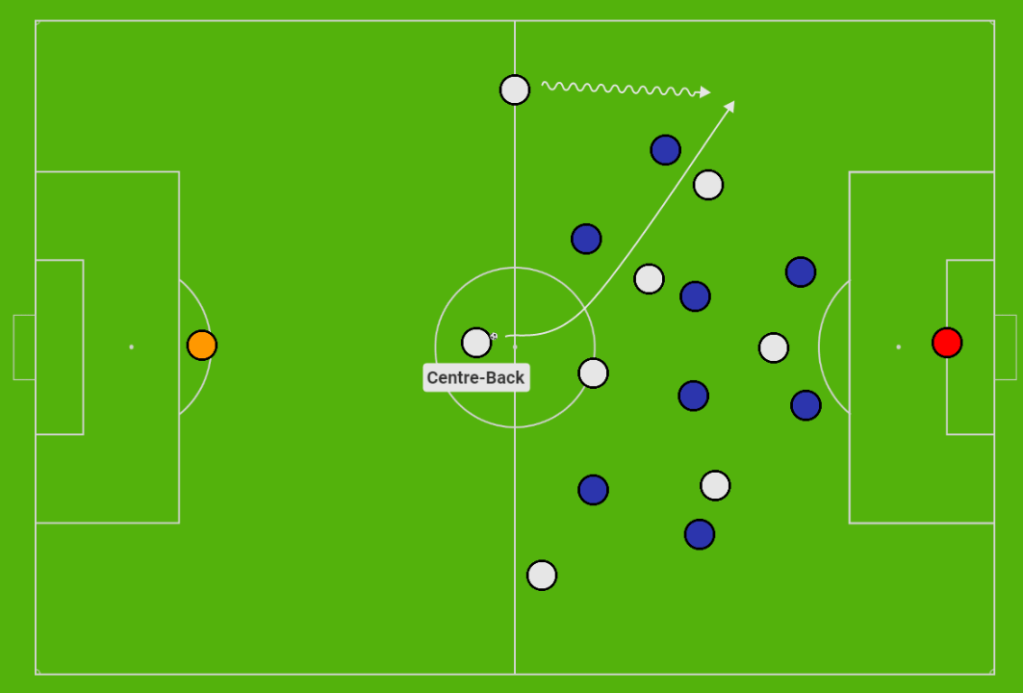
This is the most common point of confusion. The stopper and sweeper worked as a pair, but their jobs were opposites. The stopper was a destroyer. Their job was to mark the opponent’s most dangerous forward, usually physically, and win direct duels.
Think of a classic English center-half from the 70s. They engaged early, often in midfield, to disrupt the attack before it reached the box. The sweeper, in contrast, was a cover artist. They mopped up whatever the stopper and other markers missed. The stopper attacked the ball; the sweeper protected the space.
| Aspect | Stopper | Sweeper (Libero) |
|---|---|---|
| Primary Duty | Man-mark the main striker | Cover space behind the defensive line |
| Positioning | In front of the sweeper, engaging high | Behind all other defenders, reading the game |
| Mindset | Confrontational, physical | Anticipatory, cerebral |
| On the Ball | Often clear first, pass second | A playmaker, starts attacks with distribution |
| Modern Equivalent | Aggressive center-back (e.g., Sergio Ramos) | Deep-lying playmaker or ball-playing center-back |
The partnership only worked in specific defensive formations like the 5-3-2 or a 4-4-2 with a diamond midfield that provided cover. When tactics evolved towards zonal marking, the need for a dedicated man-marker (stopper) faded. And without a stopper, the pure sweeper lost its reason to exist. For a deeper dive into this key defensive partnership, our article on the libero vs sweeper breaks it down further.
A Brief History: From Catenaccio to Der Kaiser

The role has Austrian and Italian roots. Karl Rappan’s verrou (bolt) system in the 1930s used a retreating defender, but the Italians perfected it. In the 1960s, Helenio Herrera’s Inter Milan made catenaccio famous, a chain-like defense anchored by a libero.
Early Italian liberos like Armando Picchi were defensive purists. They swept, cleared, and organized. The revolution came from Germany. Franz Beckenbauer watched these Italians and added an entire new dimension. He played the role not from his own penalty area, but from the halfway line.
Beckenbauer’s interpretation is the one etched in history. He would receive the ball from his goalkeeper, stride past a pressing forward, and deliver a pass that cut through the midfield. He wasn’t just defending; he was dictating the game’s tempo from deep. This transformed the libero from a safety net into a strategic weapon. Other legends followed his blueprint: Gaetano Scirea at Juventus was elegance personified, while Franco Baresi at AC Milan combined ruthless defending with pinpoint passing.
Common mistake: Thinking the sweeper was a purely defensive, reactive role. Beckenbauer, Scirea, and Baresi all recorded significant assists and were central to their teams’ attacking patterns. A sweeper who only defended was a limited one.
The role peaked in the 70s and 80s. It was the star position in a three center-back system, offering both security and creativity. Then the game changed.
Why the Sweeper Faded From the Modern Game
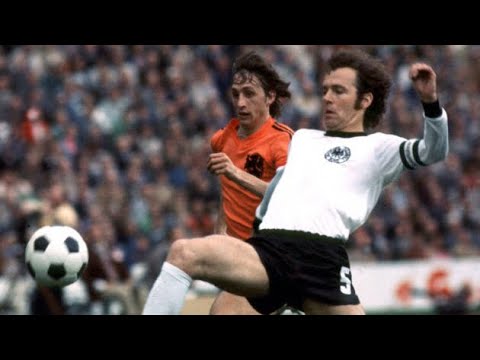
It wasn’t one rule. It was a perfect storm of tactical evolution. The 1990 offside rule change is the usual scapegoat. Before 1990, an attacker was onside if level with the second-last defender. With a sweeper, that was often the third-last defender, making offside traps easier. The new “level is offside” rule made trapping riskier and reduced the sweeper’s positional advantage.
But the bigger killers were pressing and possession. Coaches like Arrigo Sacchi and later Pep Guardiola demanded a high defensive line to compress space. A sweeper sitting 10 yards deeper than his line created a massive gap. That gap became a haven for opposing playmakers.
Modern defensive marking systems also evolved. The shift from strict man-marking to zonal defense meant every defender was responsible for a space, not a player. The “free” man was no longer needed because everyone was, in a way, free within their zone. The defensive duties of the sweeper were redistributed. The covering job was shared by the two center-backs. The organizing job fell to the goalkeeper and the defensive midfielder.
The playmaking duties were taken over by the deep-lying playmaker, the regista or single pivot system, who operated in midfield, not defense. Why have a defender who moves into midfield when you can have a midfielder who drops into defense? The latter is faster and doesn’t leave a hole at the back. The Cambridge English Dictionary entry for “sweeper” still defines it as a defensive position, a linguistic fossil of its tactical past.
TL;DR: High pressing, zonal defense, and the rise of the deep-lying midfielder made the specialist sweeper redundant. Its jobs were split among multiple players.
Where the Sweeper’s Spirit Lives On Today
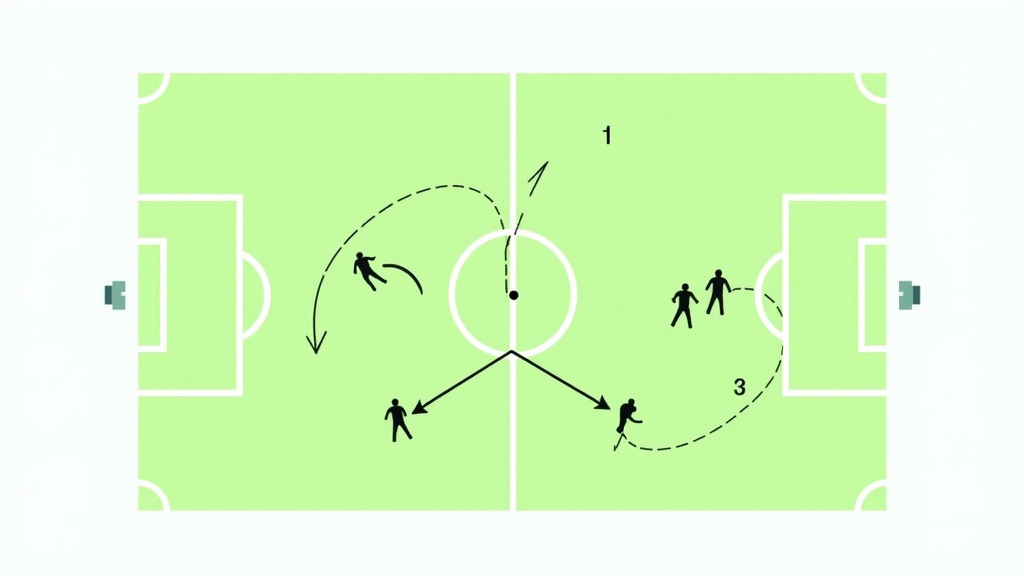
The position is extinct. The function is not. You see it in three modern adaptations. First, the ball-playing center-back in a back three. Players like David Alaba or John Stones often step into midfield with the ball, echoing Beckenbauer’s surges. They are the closest modern analogue, operating in a three center-back system that provides them cover.
Second, the defensive midfielder who drops between center-backs. Sergio Busquets and more recently Rodri do this. When their team has possession, they retreat into the backline, creating a temporary back three and acting as the free player to receive and distribute. This is the defensive pivot evolved.
Third, the sweeper-keeper. Manuel Neuer made this famous. He acts as an 11th outfield player, rushing 30 yards out of his box to clear through balls, the literal act of sweeping. This is the most direct translation of the libero’s covering duty, just performed by the goalkeeper. This aggressive style is a key part of modern goalkeeper distribution.
The core idea, a free player reading the game from deep to provide security and initiate play, remains a powerful tactical concept. It just wears different jerseys now.
Frequently Asked Questions
Is a sweeper the same as a libero?
Yes, the terms are functionally synonymous. “Libero” is Italian for “free,” which perfectly describes the role’s unmarked status. “Sweeper” is the English term describing their action, sweeping up danger behind the defensive line.
Who is the greatest sweeper of all time?
Franz Beckenbauer is almost universally credited. He didn’t just master the defensive side; he revolutionized the role by making it a primary attacking outlet. Gaetano Scirea and Franco Baresi are also in the conversation for their flawless execution and longevity at the highest level.
Do any teams use a sweeper today?
Very few use a traditional, dedicated sweeper. Some teams employing a deep back three, like Antonio Conte’s sides, use a central defender who has libero-like responsibilities. However, this player is usually part of a flat three, not stationed clearly behind two others. The classic, standalone sweeper is tactically obsolete.
What is the difference between a sweeper and a center-back?
center-back in a back four is part of a line, usually with zonal or man-marking duties alongside a partner. A sweeper plays behind the defensive line, has no fixed marking assignment, and has a unique license to roam and intercept. All sweepers are center-backs, but not all center-backs are sweepers.
Can a defensive midfielder be a sweeper?
In function, yes. The modern holding midfielder who drops between the center-backs to receive the ball and break lines is performing the sweeper’s playmaking role from a slightly more advanced starting point. They are the spiritual successor to the attacking libero.
The Bottom Line
The sweeper was the game’s most cerebral defender. It was a role for readers, not runners. Its decline wasn’t about the players getting worse; it was about the game getting faster and more systematic. Space became the ultimate currency, and dedicating a player to sit in it was a cost too high.
Yet, watch a midfielder drop between his center-backs to turn and play a killer pass. Watch a goalkeeper sprint off his line to clear a through ball. The ghost of the libero is right there. The position died so the idea could spread across the entire team. That’s how football evolves. It doesn’t forget its legends; it dissolves them into the modern game.
I come from the “soccer heart” of Germany, the Ruhrpott. I have played, trained and followed soccer all my life and am a big fan of FC Schalke 04. I also enjoy following international soccer extensively.