MLS Stadiums Guide: The 30 Venues, Capacities & Future
An MLS stadiums guide covers the 31 venues hosting 30 teams, with 22 being purpose-built soccer-specific stadiums. The total combined capacity is around 700,000, with individual venues ranging from 18,000 seats to over 42,000. The league’s identity is now defined by intimate, fan-focused grounds built for the sport.
Most people think every MLS team plays in a shiny new soccer castle. They don’t. Four teams still share cavernous NFL stadiums, and one club splits time between two baseball parks. That reality shapes everything from ticket prices to the noise on matchday.
This guide walks through every stadium, explains the soccer-specific revolution, and shows you what makes each venue unique. You’ll get capacities, construction dates, and the on-the-ground details that define the American soccer experience.
Key Takeaways
- The league uses 31 stadiums for 30 teams, with 22 being true soccer-specific stadiums (SSS) designed for the sport.
- Capacities are intentionally modest, averaging 23,333 seats, to guarantee sellouts and intense atmospheres.
- Shared NFL venues like Soldier Field and Lumen Field use reduced “MLS configurations” to make the space feel less empty.
- New developments are constant: Miami Freedom Park opened in 2025, and NYCFC’s Etihad Park is slated for 2027.
- The best fan experiences combine intimate seating, safe standing sections, downtown locations, and public transit access.
How Many MLS Stadiums Are There Really?
You count 30 teams for the 2026 season. You would expect 30 stadiums. The math is trickier. As of 2026, 31 stadiums host MLS matches for those 30 clubs. The outlier is New York City FC, which uses both Yankee Stadium and Citi Field while waiting for its permanent home. This results in a total combined seating capacity of approximately 700,000 across the league.
The more important number is twenty-two. That’s how many are purpose-built, soccer-specific stadiums. This shift from borrowed football fields to dedicated grounds is the single biggest story in the league’s physical growth. The remaining venues are shared, primarily with NFL teams. This shared-tenancy model presents unique challenges for fan atmosphere and club identity.
A soccer-specific stadium (SSS) is a venue designed primarily for soccer, with optimal sightlines, typically a roof covering most seats, and a capacity between 18,000 and 30,000. Its design prioritizes fan proximity to the pitch and acoustic atmosphere over multi-sport flexibility.
TL;DR: 31 venues for 30 teams, with 22 built just for soccer. The rest are shared spaces with compromises.
The Complete MLS Stadiums List & Capacities
Forget alphabetical order. The real story is told by capacity and stadium type. This table splits venues by their core design and use, showing the strategic range MLS operates within.
| Stadium | Team | Capacity | Type / Note |
|---|---|---|---|
| Mercedes-Benz Stadium | Atlanta United | 42,500 (expandable) | Retractable roof, shared with NFL |
| Lumen Field | Seattle Sounders | 37,722 (MLS config) | Shared with NFL, reduced configuration |
| Bank of America Stadium | Charlotte FC | 35,000 (MLS config) | Shared with NFL, reduced configuration |
| Gillette Stadium | New England Revolution | 35,000 (MLS config) | Shared with NFL, reduced configuration |
| GEODIS Park | Nashville SC | 30,000 | Largest soccer-specific stadium |
| Yankee Stadium | New York City FC | 28,743 | MLB park, temporary home |
| TQL Stadium | FC Cincinnati | 26,000 | Steep stands, safe standing |
| Red Bull Arena | New York Red Bulls | 25,000 | Gold-standard SSS design |
| Providence Park | Portland Timbers | 25,218 | Historic, renovated in 2019 |
| DRV PNK Stadium | Inter Miami CF | 18,000 | Temporary, before Miami Freedom Park |
Capacity numbers for shared NFL venues are not their maximums. Teams like Seattle and New England use tarps and ticket limits to create a more intimate “MLS configuration.” Opening the full 60,000+ seats for a regular season match would kill the atmosphere. It’s a necessary hack that underscores why soccer-specific builds are the goal.
The second table is your problem-solver. It answers the “why does my team’s stadium feel like that?” question by linking common fan complaints to the underlying stadium type.
| Common Complaint | Most Likely Cause | The Fix (If Any) |
|---|---|---|
| “The atmosphere feels dead, even with a crowd.” | Playing in a half-empty NFL stadium. | The club uses a reduced configuration. The scale is still wrong. |
| “My seat is miles from the pitch.” | Stadium was designed for football sightlines. | Only a new, soccer-specific stadium solves this. |
| “It takes forever to get in/out.” | Stadium is in a suburban sea of parking lots. | Clubs add transit shuttles, but location is permanent. |
| “There’s no roof, and we get soaked.” | Older or budget-conscious SSS design. | Newer builds like TQL Stadium prioritize canopy coverage. |
What Makes a Great MLS Stadium?
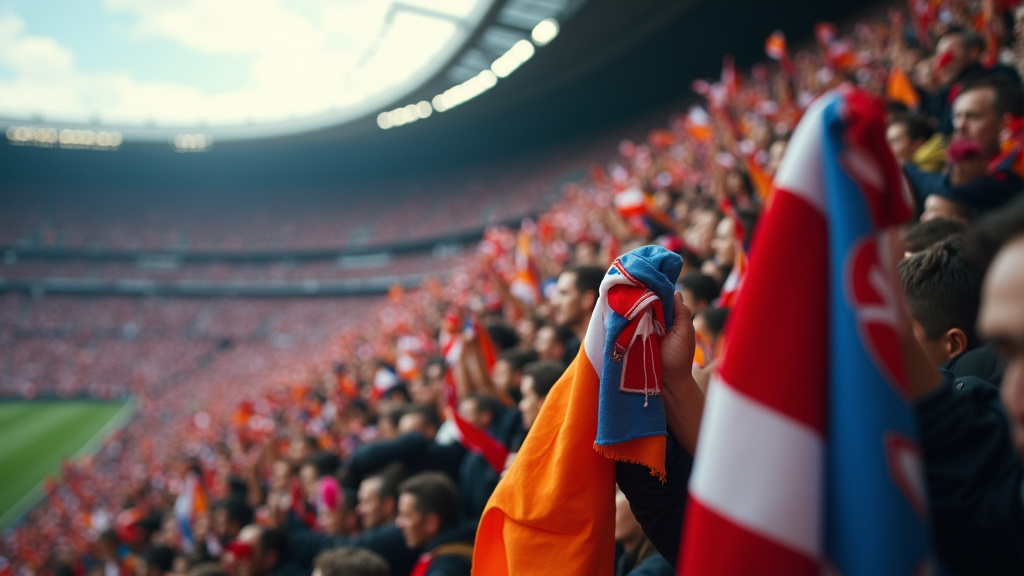
Atmosphere beats architecture every time. You can build the most beautiful bowl, but if it’s silent on matchday, it fails. The best MLS venues generate noise through design. Steep stands like those at TQL Stadium in Cincinnati press fans toward the field, turning chants into a wall of sound. A full roof canopy, as at Red Bull Arena, traps that noise and amplifies it back onto the pitch.
Location is the unchangeable factor. A downtown stadium woven into the city’s fabric, like Portland’s Providence Park, creates a pre-match ritual of fans walking from bars and transit stops. A stadium stranded in a suburban business park, reachable only by car, starts the experience with a traffic jam and ends it with one. The league has learned this. Newer projects aggressively target urban infill sites.
Common mistake: Prioritizing sheer seat count over fan proximity — a 40,000-seat bowl with distant sidelines feels emptier and quieter than a sold-out 22,000-seat venue where everyone is on top of the action.
The ingredients list is short but non-negotiable. Safe standing sections for supporter groups. Concourses wide enough for halftime beer lines. Natural grass or the highest-grade hybrid turf. Easy access from a train station. Get three of these right, and you have a good stadium. Get all five, and you have a legendary one.
TL;DR: Great stadiums are loud, intimate, and easy to reach. Design forces fans together, and location brings them in.
Soccer-Specific vs. Shared Stadiums: The Fan’s Experience
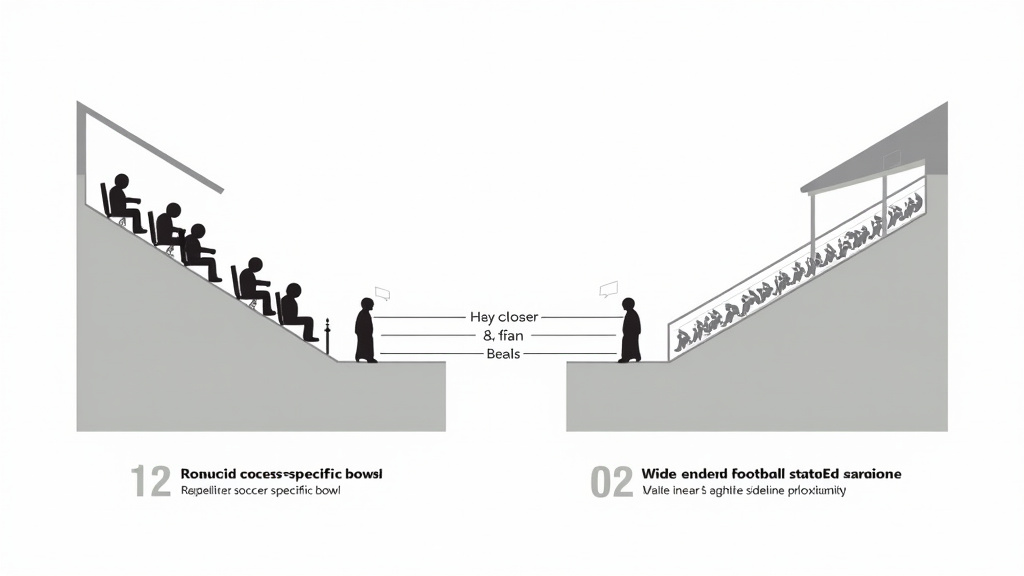
The difference hits you in the first five minutes. Walk into a soccer-specific stadium, and your sightline is straight down the touchline. You see the sweat on the players’ faces. In a shared NFL stadium, even in the “best” lower bowl seats, you’re set back by the massive football sideline buffer. The game becomes a distant spectacle.
Sound behaves differently. The enclosed, steep bowl of a place like BMO Stadium in LA contains the supporters’ drums and chants, creating a pressurized environment. In an open-ended NFL stadium, the noise escapes into the night sky. The league’s own broadcast audio mixes prove this—SSS broadcasts are cacophonous; shared stadium broadcasts often need crowd noise pumped in.
The economic model diverges completely. In an SSS, the club controls every revenue stream: parking, concessions, signage, naming rights. In a shared venue, they are a tenant, paying rent and often receiving a limited slice of ancillary income. This financial reality is why the push for SSS is about survival, not just aesthetics. It directly funds better players and academy investments.
A Brief History: From Football Fields to Soccer Cathedrals
The early years were a rental agreement. MLS launched in 1996 with teams playing in borrowed NFL stadiums, baseball parks, and even a converted track-and-field facility. The image of sparse crowds in a 70,000-seat giant hurt the league’s credibility. Fans felt insignificant, and television broadcasts highlighted empty upper decks.
The Columbus Crew broke the mold. Their 1999 opening of Columbus Crew Stadium (now Lower.com Field) was a revelation—the first major-league stadium in the U.S. built specifically for soccer. It proved a 22,000-seat venue with perfect sightlines could sell out and generate an electric atmosphere. This model became the blueprint.
The 2010s saw an explosion. Sporting Kansas City’s Children’s Mercy Park (2011), Orlando’s Exploria Stadium (2017), and LAFC’s BMO Stadium (2018) refined the concept, adding downtown-adjacent locations, better amenities, and architectural flair. The success of these venues created a domino effect, making an SSS a prerequisite for any expansion bid. Today, it’s the default, not the exception.
New Stadiums & Future Developments (2025-2027)
Stadium development never stops. The most significant recent opening is Inter Miami’s Miami Freedom Park. It replaces the temporary DRV PNK Stadium and gives the club a permanent, modern home befitting its global profile. The project includes commercial and park space, aiming to be a destination beyond matchdays.
The most anticipated project is in New York. NYCFC’s long stadium saga is nearing its end with Etihad Park (also called Willets Point Stadium) in Queens. With a planned capacity around 25,000 and an expected 2027 opening, it will finally provide the club with a true home and end the awkward tenancy at Yankee Stadium.
Other projects are in the pipeline. FC Dallas is rebuilding the main stand at Toyota Stadium. The Chicago Fire have explored a move back to the city for years. Every few months, another club announces feasibility studies or land acquisitions. The stadium arms race is a permanent feature of the MLS competition format, directly tied to franchise valuation and competitive ambition.
I followed Schalke’s move from the Parkstadion to the modern Veltins-Arena. The change in atmosphere and global perception was immense. MLS clubs are on the same journey. A proper home isn’t just a building; it’s the heart of the club’s identity. NYCFC playing in a baseball stadium always felt like watching a concert in a gymnasium—the event was there, but the soul was missing.
Frequently Asked Questions
What is the largest MLS stadium?
By MLS configuration, it’s Atlanta United’s Mercedes-Benz Stadium with 42,500 seats. It can expand far beyond that for events like the Champions League final. The largest soccer-specific stadium is Nashville SC’s GEODIS Park, holding 30,000 fans.
Do any MLS teams share a stadium with an NFL team?
Yes, four teams do: Charlotte FC (Bank of America Stadium), Chicago Fire FC (Soldier Field), New England Revolution (Gillette Stadium), and Seattle Sounders FC (Lumen Field). They use reduced seating configurations to improve atmosphere.
What is the oldest stadium in MLS?
Chicago’s Soldier Field, opened in 1924. The oldest soccer-specific stadium in MLS is Portland’s Providence Park, which opened in 1926 but was comprehensively renovated for soccer in 2019.
How does the MLS playoff format work with these stadiums?
The higher-seeded team hosts each playoff match. This makes a loud, intimidating home stadium a massive competitive advantage, turning the regular-season quest for a top seed into a fight for home-field advantage throughout the MLS playoff structure.
Are MLS stadiums used for other events?
Absolutely. Soccer-specific stadiums host international friendlies, CONCACAF club competitions, and sometimes concerts. Larger shared venues like Mercedes-Benz Stadium are designed for NFL games, college football, and major concerts year-round.
How do MLS stadiums compare to Premier League grounds?
They are newer, with more consistent amenities, but generally smaller. The average Premier League stadium holds about 37,000, compared to MLS’s 23,333. The trade-off is that older Premier League grounds have more history, while MLS venues offer modern comfort and are part of a distinct conference-based system.
Before You Go
The stadium map tells the league’s story. The clustered soccer-specific venues in the Midwest and West Coast show where the sport took root deepest. The shared stadiums in traditional American sports markets highlight the remaining frontiers. The new constructions in Miami and New York signal the next phase.
Use this guide as a checklist. When you watch a match, note the sightlines, listen to the crowd noise, and check the transit options. You’ll instantly understand the club’s ambition and its challenges. The journey from borrowed gridiron to dedicated pitch is the physical manifestation of Major League Soccer’s thirty-year climb. The next chapter is being poured in concrete right now.
I come from the “soccer heart” of Germany, the Ruhrpott. I have played, trained and followed soccer all my life and am a big fan of FC Schalke 04. I also enjoy following international soccer extensively.