Soccer Throw-In Rules & Technique: The Complete Guide
**
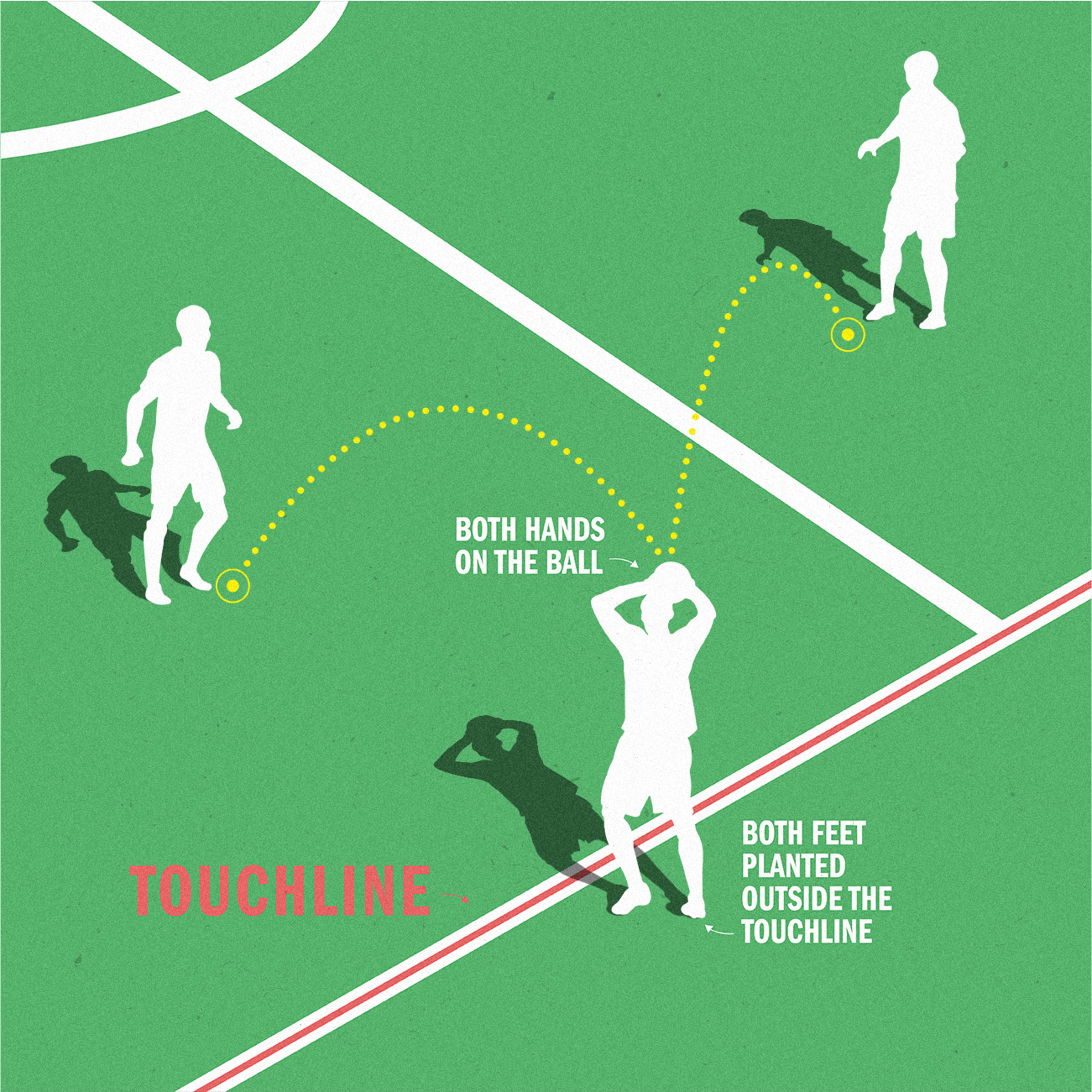
A legal soccer throw-in requires three specific actions: facing the field of play, keeping part of each foot on or behind the touchline, and delivering the ball with both hands from behind and over the head. The ball is in play the moment it crosses the plane of the touchline.**
A legal soccer throw-in requires three specific actions: facing the field of play, keeping part of each foot on or behind the touchline, and delivering the ball with both hands from behind and over the head. The ball is in play the moment it crosses the plane of the touchline and enters the field. Get any one of these three wrong, and the referee awards the throw to the other team.
Most players and coaches fixate on throwing the ball a long way. They drill the run-up and the arching back. They forget the basics. The real mistake isn’t a weak arm; it’s a lazy foot or a one-handed flick that gives away possession cheaply thirty, forty, fifty times a game. This guide walks through the official 2025/26 Law 15 rules, the mechanics that make a throw legal, and the tactical choices that turn a simple restart into a genuine attacking weapon.
Key Takeaways
- A foul throw is awarded for any breach of the three core rules: foot placement, hand use, or delivery direction. It’s not a foul in the Law 12 sense; it’s a procedural restart for the opposing team.
- The thrower cannot touch the ball again until another player has made contact. A second touch results in an indirect free kick for the opposition.
- Opponents must stay 2 meters (about 2.2 yards) away from the point of the throw. Encroachment is an unsporting behavior offense.
- No goal can be scored directly from a throw-in. If the ball flies directly into the opponent’s net, it’s a goal kick. Into your own net, it’s a corner kick.
- Data from American Soccer Analysis shows backward or lateral throws in the midfield third have a 15-20% higher possession retention rate than hopeful long balls forward.
The Three Non-Negotiable Rules (Law 15)
The International Football Association Board (IFAB) defines the throw-in procedure in Law 15. Forget everything you think you know. The rule boils down to three checkpoints a referee watches. Miss one, you lose the throw.
First, you must face the field of play. This seems obvious until you see a player under pressure try to sneak a blind, backward flick onto the pitch. The law is literal. Your chest and shoulders must be oriented toward the field. Chucking the ball backwards over your shoulder is never allowed.
The ball must be delivered with both hands from behind and over the head. There is no stipulation in the laws about an upward trajectory; a direct, flat throw is legal as long as the ball starts behind the head and goes over it.
Second, part of each foot must be on the touchline or on the ground outside it. This is where weekend warriors get caught. You can slide, you can squat, you can have your toes dangling over the line. Your heels must maintain contact with the line or the ground behind it. Lifting a foot for momentum — the classic hop-skip — is illegal. So is stepping fully onto the field before release. The line is your anchor.
Third, use both hands and start from behind your head. A one-handed heave is a foul. So is an underarm sling. The ball must start behind the crown of your head and be propelled in a continuous motion forward. The referee looks for a clear “behind-and-over” path. A short, jabbing motion from beside the ear will get called every time at a competitive level.
TL;DR: Face the field, ground both feet on or behind the line, and throw with two hands from behind the head. Fail any of these, and you’ve handed the ball to the other team.
What Triggers a Foul Throw?
Coaches and commentators shout “foul throw!” but the term is slightly misleading. Under Law 15, an incorrect throw isn’t a foul like a trip or a push. It’s a procedural violation. The consequence is simple: the throw-in is awarded to the opposing team at the same spot.
The most common triggers are foot faults and hand faults. Lifting a foot, even slightly, to gain leverage is a fault. So is dragging the toe of your back foot across the line during the delivery. Hand faults are just as frequent — not getting the ball fully behind the head, or letting one hand come off the ball early during the release. Referees at higher levels are trained to watch the ball’s point of origin. If it starts level with or in front of the ears, it’s a foul.
Then there’s the direction. You must face the field. I’ve seen a clever youth player try a no-look, over-the-shoulder throw to a runner. It looked brilliant for about two seconds. Then the referee’s whistle blew, and the other team got the ball. The law offers no room for creativity on this point.
A less common but critical violation is the second touch. Once you release the ball, you cannot be the next player to touch it. If the ball deflects off an opponent and comes back to you before anyone else touches it, that’s an indirect free kick against you. If you handle that ball deliberately, it’s a direct free kick — or a penalty if you’re in your own box.
| Violation | Typical Cause | Result |
|---|---|---|
| Foot Fault | Lifting a foot; stepping over the line before release | Throw-in awarded to opposing team |
| Hand Fault | One-handed delivery; ball not starting behind head | Throw-in awarded to opposing team |
| Direction Fault | Not facing the field of play | Throw-in awarded to opposing team |
| Second Touch | Thrower plays the ball again before another player touches it | Indirect free kick to opposing team |
| Deliberate Handball | Thrower handles the ball after the throw | Direct free kick (or penalty) to opposing team |
Common mistake: Taking too long to throw the ball — referees can start a five-second countdown if they deem you are delaying the restart. Exceed it, and the throw goes to the other side.
The Mechanics: How to Actually Throw the Ball
Strength helps for distance, but technique is everything for accuracy and legality. The basic standing throw is the foundation. For longer throws, you need the coordinated full-body motion often called the catapult or slingshot technique.
Start with your grip. Place your hands on the sides of the ball, fingers spread, thumbs nearly touching behind it. For a standard throw, stand with your feet shoulder-width apart, one foot slightly ahead. Your back foot stays planted on the line. Bring the ball back behind your head, elbows flared out. Your back should arch slightly. Then, in one fluid motion, snap your torso forward, drive with your legs, and release the ball as your hands pass over your head. Follow through toward your target.
For the long catapult throw, you incorporate a run-up. It’s a rhythm: a few quick steps, a drag of the back foot, and a powerful coil-and-release. The power comes from the legs and core, not the arms. You use your arms more as guides. The classic error is to over-rotate and lose your foot placement. You see players finish with both feet in the air or crossed over the line. That’s a foul.
I coached a talented winger who could launch a ball 35 yards. In our first cup match, he had three long throws called back for foot faults. He was so focused on the heave that his back foot would lift an inch off the ground at the last second. We spent the next week drilling the motion with a stationary back foot. His range dropped by five yards, but we kept possession.
Your follow-through matters. Let your momentum carry you onto the field. This instantly makes you a live passing option. The opponent marking you must respect that. If you release and just stand there, you’re a spectator.
TL;DR: Power comes from the legs and core, not the arms. The run-up for a long throw is useless if your back foot leaves the ground. Drill the motion with a stationary foot first.
Advanced Technique: The Run-Up and Delivery
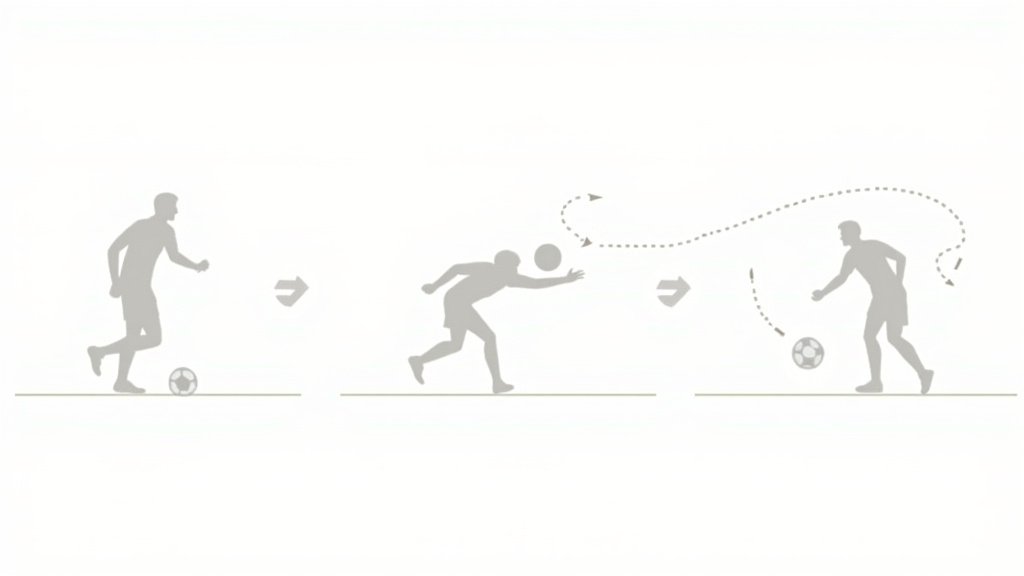
The long throw is a set-piece weapon, but it’s a specialized skill. It demands consistent repetition of a precise sequence. The run-up is typically 3-5 quick steps. The final step is a long, dragging plant of the back foot right on the line. This is your anchor. As you plant, you coil your upper body backward, arching your back. The ball should be well behind your head at this point.
The delivery is an explosive uncoiling. You drive forward off your back foot, whip your torso and shoulders, and finally your arms snap through. The ball should come out on a high, looping trajectory if you’re aiming for the penalty area. It’s a full-body kinetic chain. The arms are almost the last link.
Timing is the invisible component. Release too early, and the ball sails over everyone. Release too late, and it drills into the ground five yards in front of you. You need to feel the peak of your forward momentum. That feel only comes from doing it hundreds of times.
Four tools separate a good long throw from a wasted one:
1. Consistent foot anchor: Your back foot must stay grounded. Use a line on the training ground and have a partner watch it.
2. Ball placement: The ball must start deep behind your head, not at ear level.
3. Follow-through direction: Your hands should finish pointing at your target, not at the ground.
4. Re-entry speed: The moment the ball is gone, sprint onto the field. You are now the most open player.
Somersault or acrobatic throws? They look impressive in viral clips, but they sacrifice accuracy and balance. You rarely see them in professional football because the risk of a fault or a bad delivery is too high. Stick to the mechanics that work under pressure.
Throw-In Strategy: It’s Not Just a Restart
Most teams treat a throw-in as a simple way to get the ball back in play. That’s a wasted opportunity. With 30 to 50 throw-ins per match, they are the most frequent restart in football. Smart teams treat them as rehearsed set-pieces.
The first rule of throw-in strategy: secure possession. This seems obvious, but the data tells a brutal story. A 2024 analysis by American Soccer Analysis of MLS throw-ins found that throws taken in a team’s own defensive third have only a 55% chance of being retained. It’s basically a coin flip. A throw lost there immediately puts your goal under threat.
Common mistake: Launching a hopeful long throw up the line in your own half — the retention rate plummets, and you gift the opponent a chance to counter. A short, backward throw to a unmarked defender or the goalkeeper is almost always the safer, smarter choice.
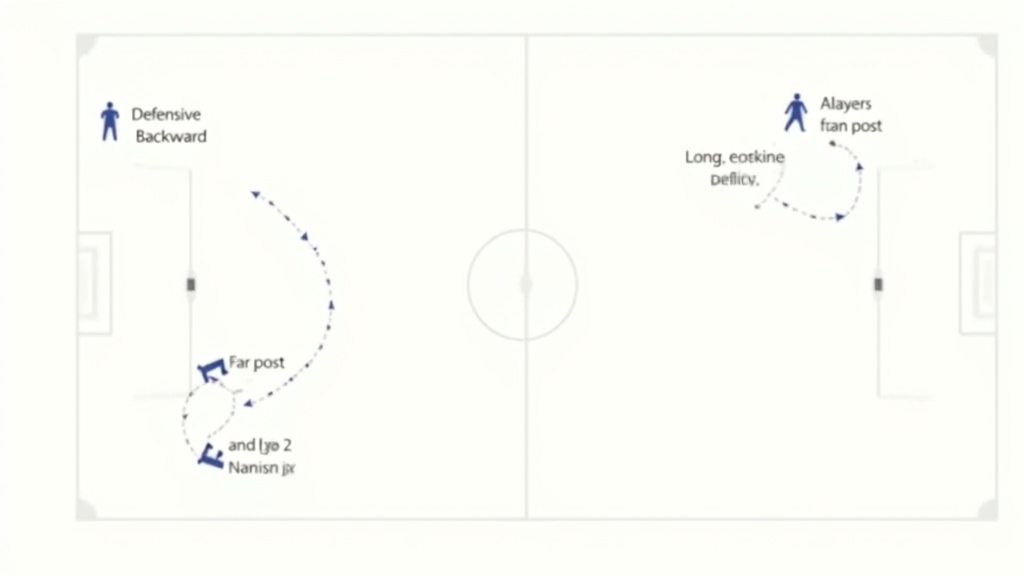
The value of a throw increases dramatically as you move up the field. In the attacking third, a long throw into the box becomes a direct scoring chance, similar to a corner. But even here, mindless hurling is ineffective. You need movement. The best teams use pre-arranged runs: a near-post flick, a far-post crash, and a player lurking at the edge of the area for the knockdown.
Quick throws are a potent weapon. If you can retrieve the ball and throw it in before the opposition organizes their defense, you can exploit huge gaps. The laws state you must take the throw from the correct location, but you don’t have to wait for the referee’s signal. If the ball is available and you’re at the right spot, play on.
| Field Zone | Recommended Tactic | Possession Retention (Approx.) | Rationale |
|---|---|---|---|
| Defensive Third | Short, backward/sideways to defender or keeper | 55-60% | Minimizes risk; safe possession is priority. |
| Midfield Third | Quick, short to feet of a dropping midfielder | 70-75% | Beats the press; turns defense into attack. |
| Attacking Third | Long throw to pre-set plays in the box | 40-50% | High-risk, high-reward direct chance creation. |
Who should take the throw? It’s not always the nearest player. If you have a player with a long, accurate throw, they should take every throw in the final third, even if it means they have to sprint 30 yards to get to the ball. For other throws, the player with the best vision and composure should take it. This is often a full-back or a central midfielder.
TL;DR: In your own half, play safe and keep the ball. In their half, use rehearsed movements and a designated long-throw specialist. Speed beats organization every time.
Drills to Cement the Technique
Knowing the rules isn’t the same as executing under fatigue. You need muscle memory. These drills build the correct technique from the ground up.
Start with the stationary foot drill. Stand with your back foot firmly planted on a line. Without a ball, practice the throwing motion — back arch, forward snap, follow-through. Do twenty reps. The goal is to keep that back foot glued to the ground through the entire motion. Add a ball for the next twenty.
The wall target drill builds accuracy. Mark three targets on a wall at different heights and distances. Practice hitting them with both a basic standing throw and a short run-up catapult throw. Start close, then move back. This isn’t about power; it’s about consistent, controlled placement.
For team integration, run the quick restart drill. In a small-sided game, any time the ball goes out, the team with the throw must take it within three seconds. This forces players to scan, communicate, and find the open option instantly. It kills the habit of waiting for the perfect throw.
Finally, the pressure drill. Have a defender actively, but legally, trying to distract the thrower (staying 2 meters away, of course). The thrower must execute a legal throw to a teammate while ignoring the verbal pressure. This replicates the last minutes of a tight game.
Integrate these drills into your regular soccer agility training sessions. The footwork and body control translate directly. A player with good footwork coordination will naturally maintain better balance during the throw.
Frequently Asked Questions
Can you score directly from a throw-in?
No. Law 15 is explicit: a goal cannot be scored directly from a throw-in. If the thrown ball enters the opponent’s goal, a goal kick is awarded. If it enters your own goal, a corner kick is awarded to the opposing team.
What happens if the thrower touches the ball twice?
If the thrower plays the ball again before it has touched another player, the referee awards an indirect free kick to the opposing team from the spot of the offense. If the thrower deliberately handles the ball, it’s a direct free kick (or a penalty kick if inside their own penalty area).
How far away do opponents have to stand?
All opponents must be at least 2 meters (approximately 2.2 yards) from the point on the touchline where the throw-in is taken. If an opponent fails to respect this distance and interferes with or distracts the thrower, the referee can caution the player for unsporting behavior and award an indirect free kick for the encroachment if the throw had already been taken.
Can you take a throw-in with one hand?
No. The ball must be delivered with both hands. A one-handed throw, even if it starts behind the head, is a foul throw and results in the throw being awarded to the other team.
What is the punishment for a foul throw?
The punishment is that the throw-in is awarded to the opposing team. It is not a cautionable offense (a yellow card) unless the player is persistently infringing or deliberately wasting time.
Can the thrower be offside?
No. A player cannot be offside directly from a throw-in. This is one of the three restarts (along with goal kicks and corner kicks) where the offside law does not apply.
The Bottom Line
The throw-in is a test of discipline. It’s easy to get lazy with your feet when you’re tired, or to try an ambitious one-handed flick when you’re under pressure. That laziness costs possession. Drill the three rules until they’re automatic: feet on the line, two hands behind the head, face the field.
Beyond the basics, think of the throw as a tactical tool, not just a restart. In your own half, the priority is safety. In their half, it’s a chance to strike. Designate your long-throw specialist and practice a couple of simple set-piece movements. The difference between a team that just throws the ball in and a team that uses the throw-in is five or six extra possessions a game. In a tight match, that’s everything.
I come from the “soccer heart” of Germany, the Ruhrpott. I have played, trained and followed soccer all my life and am a big fan of FC Schalke 04. I also enjoy following international soccer extensively.