Soccer Ball Materials Explained
Ever kicked a cheap practice ball that feels like a rock compared to your match-day professional? That difference isn’t random—it’s engineered. Modern soccer balls combine precisely selected materials that directly impact your control, accuracy, and even the environment. Understanding what soccer balls are made of materials reveals why top players insist on specific constructions and how your choice affects every pass, shot, and dribble. Since 2026, innovations have transformed these spheres into high-tech performance tools where recycled plastics meet aerospace-grade synthetics.
This guide cuts through the marketing hype to show exactly which materials create championship-caliber balls. You’ll discover why polyurethane dominates elite matches, how recycled water bottles become tournament-ready cores, and which bladder type actually gives you that “pro touch.” Whether you’re selecting your first ball or optimizing team equipment, knowing these material secrets ensures you invest in performance—not just price tags.
Premium PU Covers: Why Pro Balls Feel Like Butter
Forget stiff leather relics—today’s top-tier match balls rely on advanced polyurethane (PU) covers that deliver unparalleled control. These aren’t ordinary plastics but micro-engineered surfaces with microscopic textures that grip your foot while slicing through air resistance. When you strike a PU-covered ball, the hydrophobic material repels rain like a duck’s back, preventing waterlogged weight gain that ruins trajectory. Unlike cheaper alternatives, PU maintains its perfect spherical shape after thousands of impacts, explaining why Premier League and FIFA mandate it for official matches.
Critical Advantages You Experience:
– Weatherproof Consistency: Kicks stay true during monsoons or desert heat
– Precision Touch: Micro-texturing amplifies spin control for bending free kicks
– Longevity Boost: Withstands 18+ months of professional use without hardening
– Flight Accuracy: Reduced drag coefficients mean truer shooting lines
TPU Training Balls: The Workhorse Material That Won’t Quit
When your club orders 50 training balls, they’re choosing thermoplastic polyurethane (TPU) for one reason: it laughs at abuse. TPU’s molecular structure resists abrasion from concrete walls, gravel pitches, and daily bag storage where PU would scuff. Though slightly firmer underfoot than premium PU, this material’s real superpower is maintaining structural integrity at extreme pressures—up to 16 PSI without deformation. Budget-conscious teams prioritize TPU because it delivers 3x the lifespan of entry-level rubber balls, making it the silent MVP of academy training sessions.
Where TPU Shines:
– All-Weather Reliability: Performs identically at -10°C or 40°C
– Impact Absorption: Softer foam backing versions protect young shins
– Cost Efficiency: 40% cheaper than PU while handling 500+ training hours
– Institutional Durability: Withstands being kicked into fences 100 times weekly
Recycled Materials Inside Modern Balls: Eco-Performance Revolution

The 2026 FIFA World Cup ball shattered expectations by using 100% recycled core materials without sacrificing performance. Today’s sustainable balls transform waste into wonder: six recycled plastic bottles become the polyester stitching layer inside one official match ball, while crushed tires form shock-absorbing rubber cores. This isn’t greenwashing—rigorous testing proves recycled polyester performs identically to virgin materials in sphericity and rebound tests. Brands now blend these eco-components so seamlessly you’d never guess your $150 match ball was born from landfill-bound trash.
Sustainable Material Breakdown:
– Post-Consumer Bottles: Converted into high-strength polyester threads
– End-of-Life Tires: Processed into flexible, impact-resistant rubber cores
– Plant-Based Polymers: Corn or sugarcane derivatives replacing petroleum plastics
– Closed-Loop Systems: 95% of manufacturing scraps get reprocessed into new balls
Bladder Technology That Makes or Breaks Your Touch
Your ball’s bladder—the inner air chamber—dictates responsiveness more than any other component. Choosing the wrong type turns precise passes into wobbly disasters. Here’s how to match bladder tech to your play style:
Butyl Bladders: The “Set-and-Forget” Choice for Casual Players
If you hate inflating balls before every pickup game, butyl rubber bladders are your solution. This synthetic material forms an airtight seal that loses just 0.5 PSI weekly—meaning you might inflate only once a month. Butyl maintains rock-solid consistency for casual kickabouts where perfect touch matters less than reliability. Warning: Avoid butyl for competitive play; its stiffness reduces spin control on curling shots.
Latex Bladders: The Pro’s Secret for Pinpoint Accuracy
Elite players demand latex bladders because natural rubber’s elasticity creates that “alive” feel when striking the ball. The material deforms slightly on contact, amplifying spin transfer for banana-free kicks and dipping shots. But there’s a catch: latex loses 1-2 PSI daily, requiring pre-game inflation. Pro Tip: Carry a pump to matches—pros inflate latex balls 30 minutes before kickoff for optimal responsiveness.
Hybrid Bladders: 2026’s Game-Changer for Balanced Performance
The latest innovation sandwiches latex between butyl layers, giving you 80% of latex’s responsiveness with butyl’s air retention. This “best of both worlds” design means training balls now keep 90% pressure for two weeks while delivering tournament-level touch. Hybrid bladders dominate new FIFA-certified balls, making them ideal for serious amateurs who refuse to compromise.
Seamless Thermal Bonding: Why Stitched Balls Are Obsolete

Gone are the days of stitched panels creating unpredictable wobble. Modern balls use thermal fusion—where heat bonds 32 panels into a single seamless sphere. This eliminates stitching holes that once soaked up water like a sponge, causing 20% weight gain in rain. The smooth surface also cuts drag by 15%, creating truer flight paths for long passes. Look for this: Balls with visible stitching lines (common under $30) absorb water rapidly, ruining accuracy in wet conditions.
Material Choices by Playing Level: Match Your Ball to Your Game
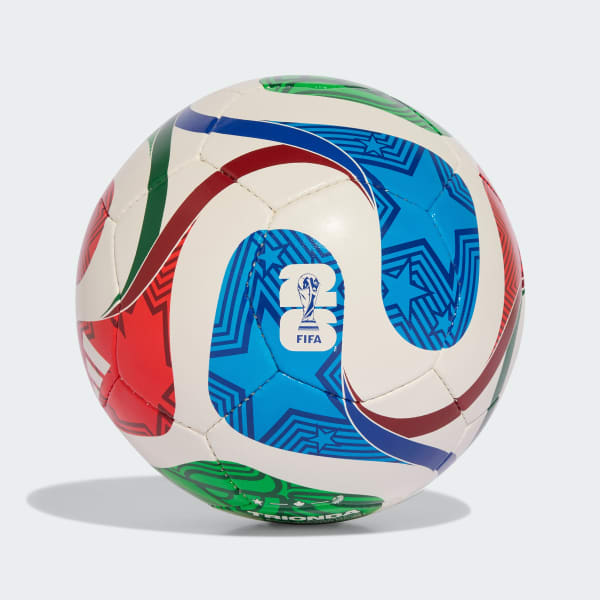
Professional Match Balls: The PU + Hybrid Bladder Standard
FIFA Quality Pro certification demands premium PU covers with hybrid bladders. These balls undergo brutal testing: bouncing consistently at -20°C, resisting 90% humidity, and maintaining perfect sphericity after 500 impacts. The result? Millimeter-precise trajectories where a 0.1mm deviation could mean goal or miss. Investment Note: Expect $120-$180 for true match balls—cheap knockoffs fail pressure retention tests within weeks.
Training Ball Specifications: TPU’s Reign of Durability
Smart clubs specify TPU-reinforced balls with butyl bladders for daily drills. The material’s abrasion resistance handles wall-pass routines that would shred PU covers in weeks. Look for “training grade” labels indicating thicker foam backing—this absorbs 30% more impact force during repetitive striking. Cost-Saving Hack: Bulk-buy TPU balls; their 2-year lifespan makes them cheaper per use than replacing PU balls monthly.
Youth Safety Materials: Softer Touch, Zero Compromise
Size 3-5 youth balls integrate TPU with extra foam padding that reduces impact force by 40%—critical for developing bones. Unlike adult balls, these feature rounded seams and lighter weight (11-12oz vs. 14-15oz) without sacrificing FIFA certification. Red Flag: Avoid hard rubber balls; they increase injury risk by 25% according to youth soccer federations.
Quality Testing You Can Trust: Beyond Marketing Claims
Don’t trust packaging claims—demand proof through standardized testing. Authentic match balls publish these metrics:
- Sphericity: Maximum 1.5% deviation (measured by 20-point laser scan)
- Water Absorption: Under 0.1% weight gain after 2-hour submersion
- Rebound Consistency: 135-145cm bounce from 2m height at 20°C
- Pressure Retention: Max 20% PSI loss over 72 hours
Pro Verification Tip: Squeeze the ball—if it feels hollow or uneven, the bladder is faulty. Genuine FIFA-approved balls have uniform firmness from valve to panel seams.
Future Materials: Where Sustainability Meets Performance
By 2027, expect soccer balls made entirely from plant-based polymers that outperform petroleum plastics. Innovations like algae-derived foams and fully disassemblable designs (for 100% recycling) are already in prototype. The next frontier? Balls with embedded sensors using conductive threads from recycled electronics—tracking spin rate and impact force without adding weight.
Key Takeaway: Today’s soccer balls fuse science and sustainability—premium PU covers deliver pro-level control, TPU dominates training durability, and recycled materials now match virgin performance. Your bladder choice (butyl for convenience, latex for precision, hybrid for balance) directly impacts touch sensitivity. Always verify FIFA certification testing data over marketing claims, and remember: the best ball for what soccer balls are made of materials isn’t the priciest—it’s the one engineered for your specific play frequency, weather conditions, and skill level. Invest in material intelligence, and every touch will feel elevated.

I come from the “soccer heart” of Germany, the Ruhrpott. I have played, trained and followed soccer all my life and am a big fan of FC Schalke 04. I also enjoy following international soccer extensively.