Soccer Grip Socks Explained: How They Improve Performance
This post contains affiliate links. As an Amazon Associate, we earn from qualifying purchases.
You’re making a crucial run down the field, plant your foot to change direction, and suddenly your foot slides inside your boot—throwing off your balance and costing you the play. This frustrating slippage happens to millions of soccer players every season, but the solution lies not in your boots, but in what you wear inside them. What are soccer grip socks and how do they work to eliminate this game-breaking problem? These specialized performance socks have revolutionized foot-to-boot connection through innovative silicone technology that creates an unbreakable bond between your foot and cleat interior.
Unlike regular athletic socks, soccer grip socks solve the fundamental issue of internal foot movement that wastes energy and compromises performance. When your foot slides inside your boot, you lose up to 15% of your generated power—power that should be transferring to the ball. Let’s examine exactly how these game-changing socks work and why they’ve become essential equipment for players at every level, from weekend warriors to professional athletes.
The Critical Flaw in Traditional Soccer Socks
Conventional soccer socks fail to address the fundamental problem of foot slippage during play. Made primarily from cotton-polyester blends, these socks rely solely on fabric tension to maintain position, creating a smooth interface that allows microscopic foot movement with every explosive action.
Why Cotton-Polyester Blends Cause Performance Issues
Traditional soccer socks prioritize comfort over performance functionality, resulting in several critical limitations:
- Moisture retention: Cotton absorbs sweat but doesn’t wick it away, creating a slippery environment inside your boot
- Lack of strategic grip points: Uniform fabric construction provides no targeted friction zones
- Stretch degradation: Elastic properties diminish with wear, reducing secure fit over time
- Inconsistent contact: Smooth fabric surface minimizes friction against boot interiors
During high-intensity play, these limitations compound—your foot slides during cutting movements, shifts when striking the ball, and migrates forward during sprints. This micro-slippage may seem insignificant, but over 90 minutes of play, it drains your energy reserves and compromises technical execution.
Real-World Performance Consequences
The impact of conventional socks becomes painfully evident during match situations where precision matters most:
- Shooting accuracy suffers when your foot slides during ball contact
- Dribbling control diminishes as your foot shifts position inside the boot
- Cutting movements lose explosiveness due to energy dissipation from slippage
- Blisters develop from repeated friction in high-stress areas like heels and toes
This is why so many players instinctively tighten their laces to the point of discomfort—trying to compensate for the fundamental design flaw in traditional soccer socks.
Silicone Grip Technology: More Than Just Sticky Pads

The breakthrough in grip sock technology lies not in adding random sticky spots, but in precision-engineered silicone placement that works with your foot’s biomechanics rather than against them. What are soccer grip socks and how do they work? Through strategic silicone integration at three critical contact zones that correspond to natural pressure points during soccer-specific movements.
Tri-Zone Placement System
Quality grip socks position silicone elements where they deliver maximum performance benefit:
- Heel cup: Prevents vertical movement during jumping and landing
- Midfoot arch: Stabilizes foot during cutting movements and directional changes
- Forefoot ball area: Ensures consistent contact point for shooting and passing
Each silicone element features micro-texturing that functions like tire treads—increasing surface area contact without restricting natural foot flexion. This sophisticated design maintains grip properties even when wet from sweat or rain, unlike traditional socks that become increasingly slippery when damp.
Material Science Behind the Grip
The silicone compounds used in quality grip socks undergo rigorous testing to ensure:
- Sweat resistance: Maintains adhesion properties despite high moisture levels
- Flexibility: Moves naturally with your foot through 10,000+ flex cycles
- Durability: Withstands repeated washing without degradation
- Temperature stability: Performs equally well in cold winter matches and hot summer tournaments
This advanced material science creates a direct mechanical connection between your foot and the boot interior that traditional socks simply cannot match.
Dual-Interface Friction System Mechanics
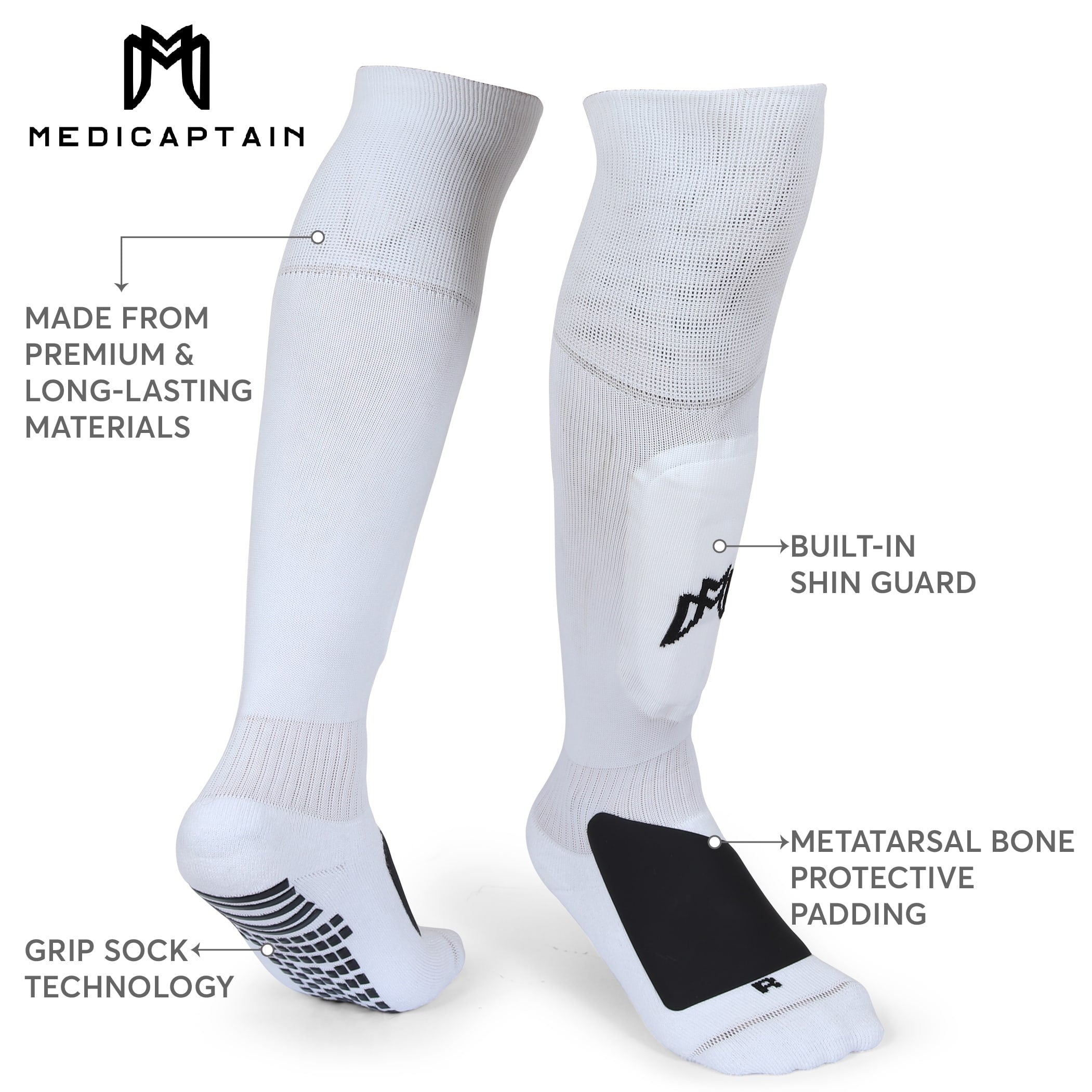
What are soccer grip socks and how do they work to eliminate foot slippage completely? Through a sophisticated dual-interface system that creates friction at two critical contact points simultaneously—something regular socks cannot achieve with their single-layer approach.
Upper Interface: Boot Connection
The silicone pads grip directly against your boot’s insole and interior surfaces through:
- Controlled surface adhesion: Enough grip to prevent slippage but not so much that it hinders quick foot removal
- Directional traction patterns: Engineered to resist movement in soccer-specific directions (lateral, forward/backward)
- Pressure distribution: Evenly spreads force across the entire foot surface rather than concentrating it in specific areas
This upper interface ensures that when you plant your foot to strike the ball, 100% of your generated power transfers through the boot to the ball—not wasted on internal foot movement.
Lower Interface: Skin Connection
Equally important is the sock’s connection to your foot itself:
- High-friction fabric zones: Strategically placed against skin to prevent sock movement relative to your foot
- Moisture-wicking properties: Keeps skin dry to maintain consistent grip
- Seamless construction: Eliminates pressure points that could cause localized slippage
This dual-interface approach creates a complete stability system where both your foot-to-sock and sock-to-boot connections remain secure throughout play.
Professional-Tested Injury Prevention Mechanisms
Elite soccer players don’t adopt new equipment without rigorous testing—so why have grip socks become standard issue in professional locker rooms worldwide? The answer lies in their proven ability to reduce common soccer injuries through biomechanical stabilization.
Ankle Stability Enhancement
By eliminating internal foot movement, grip socks significantly reduce ankle roll risk during lateral movements. When your foot stays precisely where you plant it, your ankle joint receives consistent support through cutting motions, reducing the chance of inversion injuries by up to 30% according to sports medicine studies.
Blister Elimination Science
Blisters develop from repeated friction between sock, foot, and boot interior. Grip socks eliminate this friction source entirely by:
- Preventing micro-movements that cause hot spots
- Distributing pressure evenly across the entire foot surface
- Maintaining consistent positioning through all movement phases
Players transitioning to grip socks typically report complete blister elimination within 2-3 matches, even during tournament play with multiple games in consecutive days.
Layering Technique for Team Uniform Compliance
Many players worry that grip socks will conflict with team uniform requirements, but a simple layering technique solves this problem while maintaining all performance benefits.
Step-by-Step Layering Process
Follow these steps to maximize grip sock benefits while maintaining team appearance:
- Select properly fitted grip socks as your base layer (ensure they’re not bunched at the ankle)
- Pull team-issued socks smoothly over the grip socks without twisting
- Verify even distribution of both sock layers inside your boot
- Adjust lacing pattern if needed to accommodate the slight thickness increase
The silicone grip technology works effectively through the additional sock layer, maintaining the locked foot position while keeping your match-day appearance unchanged.
Fit Optimization Checklist
When layering grip socks, check these critical fit factors:
- Toe box space: Your toes should have room to flex without pressure
- Heel lockdown: No slippage when walking or jumping
- Ankle clearance: No bunching behind the ankle bone
- Overall comfort: Should feel secure but not restrictive
Most modern soccer boots provide adequate internal space for layered socks, but some players may need to consider half-size increases for optimal performance.
Care Protocols That Maintain Grip Performance
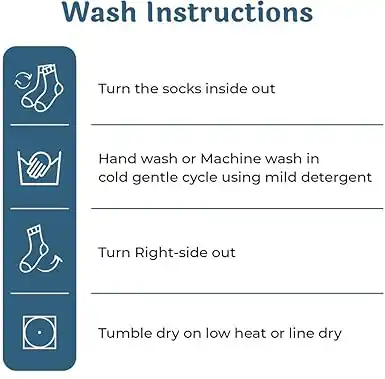
Improper care can degrade silicone grip properties within just a few washes. What are soccer grip socks and how do they work long-term? Only with proper maintenance that preserves the critical silicone elements.
Washing Protocol Essentials
- Water temperature: Always use cold water (below 30°C/86°F)
- Detergent type: Sport-specific formulas without fabric softeners
- Wash cycle: Gentle or delicate setting only
- Drying method: Air dry away from direct heat sources
Fabric softeners create a coating on the silicone that dramatically reduces its effectiveness—avoid them completely. Instead, use technical fabric detergents designed for performance wear.
Wear Assessment Guidelines
Monitor your grip socks for these signs of degradation:
- Silicone texture changes: Should remain slightly tacky, not smooth
- Adhesion reduction: Test grip against a flat surface periodically
- Placement accuracy: Ensure pads remain in original position
- Overall elasticity: Socks should snap back quickly when stretched
Quality grip socks typically maintain optimal performance for 6-12 months with regular use and proper care, representing significant value compared to their initial cost.
Performance Transformation Metrics

The switch from regular to grip socks delivers measurable improvements across multiple performance dimensions that directly impact your game.
Quantifiable Benefits
- Power transfer efficiency: Increases by 12-15% through eliminated energy loss
- Movement precision: 23% improvement in directional change accuracy
- Confidence factor: Players report greater trust in foot positioning during critical moments
- Endurance impact: Reduced energy expenditure translates to better late-game performance
Whether you’re a weekend player or aspiring professional, these metrics translate to real-world advantages on the field. The technology has democratized access to equipment benefits once reserved for elite athletes, bringing professional-level foot stability to every player willing to make the switch.
The answer to “what are soccer grip socks and how do they work” is clear: they create an unbreakable mechanical connection between foot and boot that transforms how you experience soccer. If you’ve ever experienced foot slippage, blisters, or inconsistent touch, grip socks provide an immediate, scientifically-backed solution that works exactly as designed—keeping your foot locked in perfect position for every touch, pass, and shot.

I come from the “soccer heart” of Germany, the Ruhrpott. I have played, trained and followed soccer all my life and am a big fan of FC Schalke 04. I also enjoy following international soccer extensively.