What Is An Attacking Midfielder? Soccer Role Explained (58 chars)
An attacking midfielder (AM) or central attacking midfielder (CAM) is the primary creative link between a soccer team’s midfield and its forwards. Operating in the space just behind the strikers, often called “the hole”, their main job is to create goal-scoring chances through visionary passing, dribbling, and intelligent movement. They are the team’s offensive pivot, typically wearing the iconic Number 10 shirt.
Most articles get this wrong by treating the attacking midfielder like a museum piece. They describe the old-school “trequartista”, the luxury player with no defensive duties, and call it a day. The modern game killed that archetype about a decade ago. Today’s elite attacking midfielder presses, tracks runners, and dictates tempo under intense physical pressure. If you picture a player who only floats around waiting for the ball, you’re picturing a player who doesn’t start for a top club anymore.
This guide breaks down the real role. We’ll cover the core responsibilities that never change, the non-negotiable skills you need, and how the position has evolved into a hybrid of creator and combatant. You’ll learn how to spot a true modern Number 10 and why the job is harder than it’s ever been.
Key Takeaways
- The modern attacking midfielder must be a creative engine and a defensive contributor, with high-intensity pressing now a mandatory part of the role.
- Technical mastery in tight spaces is the absolute baseline; without elite close control, passing, and first touch, a player cannot function in the congested central zones.
- “Playing in the hole” is an active search for space between the opponent’s defensive and midfield lines, not a static waiting game.
- The role varies drastically by formation: a “10” in a 4-2-3-1 is a pure playmaker, while a “Free 8” in a 4-3-3 is a hybrid creator-box-to-box runner.
- Advanced metrics like progressive passes, expected assists (xA), and passes into the penalty area are now more telling evaluation tools than just goals and assists.
The Core Responsibilities: More Than Just Passing
Head design changes the entire process. Look at the business end of your trimmer.
The attacking midfielder operates as the team’s primary creative conduit, receiving the ball in advanced areas between opposition lines. Their core function is to turn possession into dangerous attacks through incisive passing, dribbling to disrupt defensive shape, and making penetrative runs into scoring positions. This requires constant spatial awareness and the technical ability to execute under immediate defensive pressure.
The job starts with linking play. A midfielder wins the ball and looks forward. The attacking midfielder’s first duty is to show for that pass in a pocket of space, receive it under pressure, and instantly pivot the attack toward goal. This turn, often with a defender on their back, is the moment that separates good players from world-class ones.
Their second responsibility is chance creation. This isn’t just about the final pass. It’s about the pass before the pass, the switch of play that stretches the defense, the through ball that cuts the lines, the disguised flick that puts a winger in behind. They are the offensive quarterback, reading the defense two steps ahead.
Scoring is the third pillar. Defenses now mark the classic Number 10 out of games by denying them time on the ball. The modern response is for the attacking midfielder to become a direct goal threat themselves. This means arriving late in the box for rebounds, taking shots from distance, and making runs beyond the striker to pull defenders apart.
TL;DR: An attacking midfielder links, creates, and scores. They are the team’s chief problem-solver in the final third.
What Skills Define a World-Class Attacking Midfielder?
You can’t fake these. Either you have the technique or you spend your career on the bench.
The foundation is technical skill. We’re talking about a first touch that kills a 50-yard pass stone dead. Close control that lets you dribble in a phone booth. Passing range that includes weighted through balls, whipped crosses, and disguised chips. Shooting ability with both power and placement. Without this toolkit, the vision and ideas are useless.
Common mistake: Prioritizing physical pace over technical first touch, a fast player who can’t control the ball in traffic will consistently lose possession in the attacking third, stalling the team’s momentum every time they receive it.
Vision and creativity are the software that runs the hardware. This is the ability to see passing lanes before they open, to understand how a defender’s weight distribution creates a weakness, and to invent solutions that aren’t in the coaching manual. It’s a mix of innate talent and studied pattern recognition.
Mental attributes are the glue. Composure under pressure is everything. Decision-making speed, pass, dribble, shoot?, must be instantaneous. Spatial awareness means constantly knowing where your teammates and opponents are without looking. This positional sense is what allows a player to “play in the hole” effectively; they aren’t just standing there, they’re actively hiding from markers and finding seams.
| Attribute Category | Specific Skills | Why It’s Non-Negotiable |
|---|---|---|
| Technical | First touch, close control, passing (short/long), shooting | Without these, you cannot receive, protect, or deliver the ball in congested central areas. |
| Cognitive | Vision, creativity, decision-making speed, spatial awareness | This is the playmaking CPU. It processes the game and finds solutions others miss. |
| Physical | Agility, balance, short-area quickness, stamina | Needed to twist away from pressure, sustain intensity for 90 minutes, and execute skills at pace. |
| Psychological | Composure, confidence, leadership, resilience to frustration | The star player faces constant attention and physical fouls. Mental strength dictates consistency. |
Notice “pure sprinting speed” isn’t a top-tier requirement. A player like Kevin De Bruyne isn’t the fastest. His game is built on the first three categories, technique, brain, and the physical strength to hold off a challenge while delivering a perfect cross.
How Has the Attacking Midfielder Role Evolved?

The romantic, lazy Number 10 is extinct. High pressing and tactical systems strangled it.
I watched it happen in the Bundesliga. Around 2010, coaches like Jürgen Klopp at Dortmund and later Pep Guardiola at Bayern transformed the league’s intensity. The old-school German “number ten,” a player like my childhood hero Andreas Möller at Schalke, was a magician. He had freedom. His defensive work was sporadic, mostly about intercepting lazy passes. The system protected him.
That changed within five seasons. By 2015, if your attacking midfielder didn’t press from the front, your entire defensive structure collapsed. The luxury player became a liability.
The biggest shift is the defensive mandate. Modern attacking midfielders are the first line of defense. Their pressing triggers the team’s defensive shape. If they don’t close down the opposing center-back or defensive midfielder with intensity, the press breaks and the team gets played through. This requires incredible athletic stamina and tactical discipline.
The second evolution is positional versatility. The classic “trequartista” occupied a central zone. Now, attacking midfielders drift wide to overload flanks, drop deep to help with build-up against a high press, and even make runs in behind the defense. Thomas Müller, though not a traditional technician, mastered this through his infamous “raumdeuter” (space interpreter) role.
Formations have adapted. The 4-4-2 diamond, built around a pure Number 10, is now rare. The dominant 4-2-3-1 formation still features a central “10,” but that player is flanked by two hard-working wingers and backed by a double pivot of defensive midfielders for cover. In a 4-3-3, the “attacking midfielder” is often a “Free 8”, a central midfielder (like a box-to-box midfielder) with license to join the attack, requiring even more defensive ground coverage.
TL;DR: The modern attacking midfielder is a pressing, versatile, two-way operator. The days of standing around and waiting for the ball are over.
Attacking Midfielder vs. Other Midfield Roles: What’s the Difference?
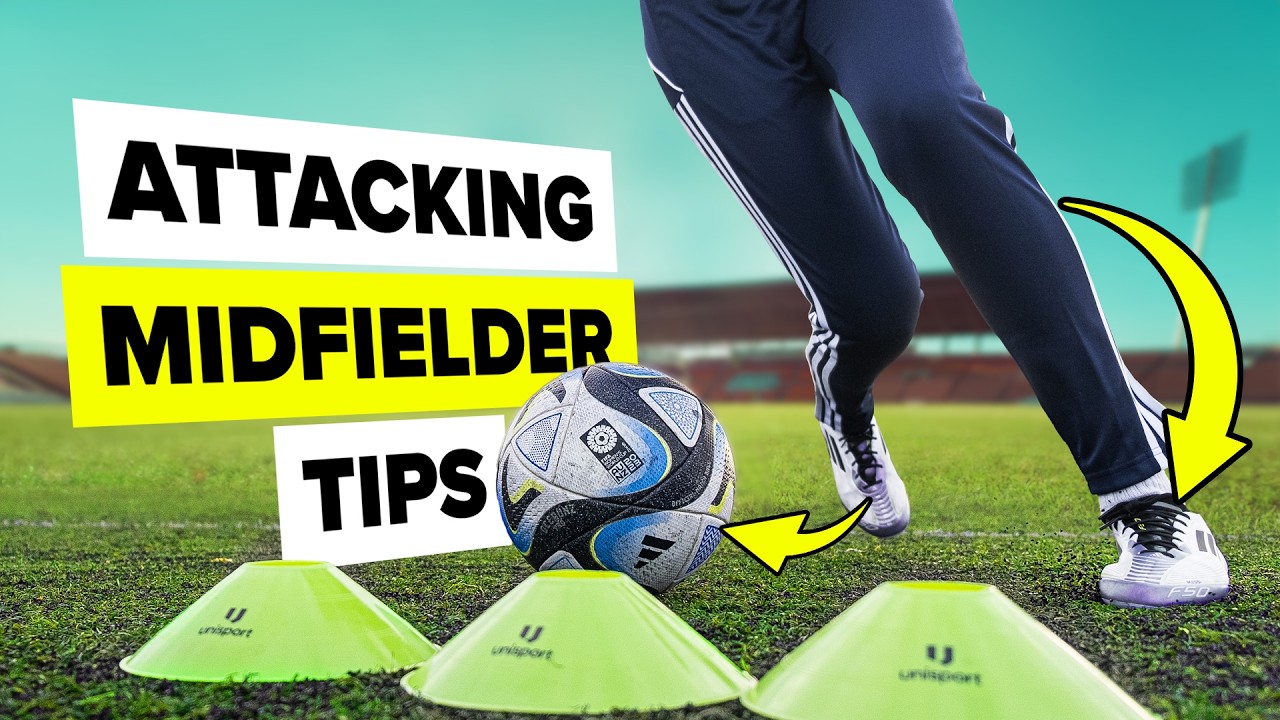
Confusion here is why fans argue. The jobs look similar but have different core mandates.
The comparison with a defensive midfielder is the clearest contrast. Think of it as offense-first versus defense-first. The defensive midfielder (the “number six”) shields the defense, breaks up plays, and recycles possession safely. The attacking midfielder’s world is risk. Their job is to attempt passes that break lines, to take on defenders, to try the difficult option. A defensive midfielder’s success is a clean sheet; an attacking midfielder’s success is a goal created.
The box-to-box midfielder is the hybrid. They must do both jobs, covering every blade of grass. An attacking midfielder’s work is more concentrated in the final third. While a box-to-box player might make a tackle in their own penalty area and then sprint to support the attack, the attacking midfielder is already positioned high, waiting to receive the ball in the danger zone. Their defensive work is about pressing and intercepting in advanced areas, not last-ditch tackling.
Then there’s the deeper playmaker, like the regista role. A regista (think Andrea Pirlo) operates from a deep-lying position, quarterbacking the game with long passes from near the defense. An attacking midfielder does their damage much closer to goal, in tighter spaces, with less time. The regista has a panoramic view; the attacking midfielder has a microscope.
| Role | Primary Zone | Core Mandate | Defensive Focus |
|---|---|---|---|
| Attacking Midfielder (CAM/10) | Final third, “the hole” | Create goal-scoring chances | High press, intercept in advanced areas |
| Defensive Midfielder (CDM/6) | In front of defense | Protect back line, distribute safely | Tackling, positioning, breaking up attacks |
| Box-to-Box Midfielder (CM/8) | Entire pitch | Link all phases, contribute at both ends | Recovery runs, tackling, supporting press |
| Deep-Lying Playmaker (Regista) | Deep midfield | Dictate tempo with long-range passing | Intercept passing lanes, minimal tackling |
Understanding these distinctions is crucial for any soccer tactics guide. You don’t ask a Porsche to plow a field, and you don’t ask a tractor to win a Grand Prix.
Formations and Systems: Where Does the Attacking Midfielder Fit?

The player’s role is a product of the system. The same talented individual will be used differently in a 4-2-3-1 versus a 4-3-3.
The 4-2-3-1 is the attacking midfielder’s classic home. The “3” behind the striker features one central attacking midfielder flanked by two wingers. This setup provides the “10” with a clear target (the striker) and wide outlets (the wingers). It also gives them defensive security, with two holding midfielders behind. This allows the attacking midfielder to focus on creation. Most youth academies teaching the classic Number 10 role use this formation as the template.
The 4-3-3 changes the dynamic. Here, the midfield is usually a flat or staggered three. The most advanced central midfielder in this trio becomes a “Free 8” or “advanced 8,” not a pure “10.” They have to contribute significantly to both the defensive and build-up phases, often starting their runs from deeper positions. It’s a more physically demanding and tactically disciplined role.
I prefer the 4-2-3-1 for developing a pure playmaker, not because it’s easier, but because it gives the young player a clear, defined zone to master creativity before layering on the complex defensive and build-up responsibilities of a 4-3-3.
Other modern systems like the 3-4-2-1 use two attacking midfielders, often called “inside forwards,” playing narrowly behind a striker. This creates a central overload and requires immense understanding between the two players. They must interchange, create space for each other, and share creative duties.
Your choice of soccer formations directly dictates what you ask of your attacking midfielder. A coach must read formations and understand if their star creator fits as a pure “10,” a “Free 8,” or one half of an advanced pairing.
Training Like an Attacking Midfielder: Drills That Build the Instincts

You don’t learn this by just playing matches. Specific, repetitive drills wire the brain for the role’s unique demands.
Vision and awareness training is first. The “scanning” drill is fundamental. Before receiving a pass in a possession rondos, players are forced to look over their shoulder. Coaches hold up numbers or colored cones that the receiver must call out before they turn. Do this for 20 minutes a day, and the habit of checking your surroundings becomes unconscious. It’s boring. It’s also why top playmakers always seem to have eyes in the back of their head.
Common mistake: Only practicing passing in static drills, game situations involve receiving on the half-turn with a defender closing; if you don’t train that specific mechanic, your technique fails under pressure.
Tight-space mastery is next. Set up a 5×5 meter square with two defenders inside. The attacking midfielder must receive a pass from outside, protect the ball, and find a way to pass or dribble out. The constraints are brutal. It forces the first touch to be perfect, the body positioning to shield the ball, and the decision to be lightning fast. This replicates the reality of playing in “the hole.”
The final third decision-making drill uses a small-sided game (4v4) in a condensed area extending from the top of the penalty box to the halfway line. The rule: goals only count if the final pass is a through ball or a cross from within the final third. This discourages pointless possession and rewards the incisive, risk-taking pass the position demands. You lose the drill if you play safe.
These drills build the box-to-box attributes of stamina and ball retention, but they sharpen them for a specific, advanced purpose. They turn a good midfielder into a specialist.
Frequently Asked Questions
What’s the difference between a CAM and a CF (Center Forward)?
center forward’s primary objective is to score goals. They are the focal point of the attack, making runs in behind, holding up play, and finishing chances. An attacking midfielder’s primary objective is to create those chances for the CF and others. While a CAM will score, their main metrics are assists, key passes, and chance creation. The CF is the tip of the spear; the CAM is the hand that throws it.
Can a team play without a traditional attacking midfielder?
Absolutely. Many top teams use systems that forgo a dedicated “Number 10.” A 4-3-3 with three workmanlike central midfielders, or a 3-5-2 with wing-backs providing width, often distributes creative responsibility among several players. In these setups, creativity comes from overloads on the wings, midfield pivot systems, or the movement of the forwards themselves, not a single playmaker.
Who are the best modern examples of attacking midfielders?
Kevin De Bruyne is the archetype: devastating passing range, relentless work rate, and a powerful shot. Bernardo Silva exemplifies the technical dribbler and presser in tight spaces. Jamal Musiala represents the new generation, a dribbling wizard who operates between the lines. For the “Free 8” variant, look at Jude Bellingham’s powerful, late-arriving runs from midfield.
Is the “Number 10” jersey still important?
Yes, but the meaning has evolved. It still carries the weight of being the team’s creative star. However, it no longer guarantees a player is exempt from defensive work. Today, wearing the 10 means you are the player trusted with the most creative responsibility, but you must also embody the team’s collective spirit and work ethic. It’s a symbol of leadership, not luxury.
How do I know if the attacking midfielder position is right for me or a player I’m coaching?
Take an honest assessment. Do you/they have the technical skill to receive and pass under extreme pressure? Is the brain wired for creative, risky solutions rather than safe ones? Is there the mental resilience to be kicked, marked out of games, and still demand the ball? If the answer to all three is a strong yes, then the ideal soccer position might just be in the hole. If not, a wider role or a deeper midfield position might be a better fit.
The Bottom Line
The attacking midfielder position is soccer’s most demanding creative role. It requires the technical genius of a violinist, the strategic mind of a chess grandmaster, and the engine of a distance runner. The romantic “trequartista” is gone, replaced by a complete, intense, and versatile modern operator.
To truly understand it, watch Kevin De Bruyne for 90 minutes. Don’t just watch the highlights of his passes. Watch his first touch when a hard pass is fired at his feet. Watch his head, constantly swiveling, reading the game three moves ahead. Watch him sprint 20 yards to press a center-back, then immediately turn to be an option for the counter-press. That’s the job. It’s creation born from controlled chaos, and it’s the most beautiful, brutal role on the pitch.
I come from the “soccer heart” of Germany, the Ruhrpott. I have played, trained and followed soccer all my life and am a big fan of FC Schalke 04. I also enjoy following international soccer extensively.