What is the Number 10 Role in Soccer? The Playmaker Explained
The number 10 role in soccer is the team’s primary attacking midfielder and creative playmaker. This player operates in the space between the midfield and the forwards, tasked with receiving the ball, turning, and creating scoring chances through incisive passes, dribbling, and vision. The role is defined more by function than a fixed spot on the pitch, demanding high technical skill, intelligence, and often, a prestigious jersey number.
Most people see the number 10 as just the “creative guy.” They miss the specific tactical instructions, the defensive expectations, and the different stylistic breeds of player that can fill the role. Calling someone a “number 10” tells you about their job description, not their exact GPS coordinates during a match.
This guide breaks down the history, the specific duties, the player profile, and how the role survives in modern high-pressing football. You will learn why it is more than a jersey number and what separates a classic trequartista from a modern hybrid.
Key Takeaways
- The number 10 is the attacking midfielder and principal playmaker, operating in “the hole” to link midfield and attack.
- Technical mastery is non-negotiable: first touch, passing vision, dribbling in tight spaces, and shooting are the core tools.
- The role has evolved from a pure luxury to include mandatory defensive work rate, especially in pressing systems.
- Different styles exist: the free-roaming trequartista, the linking enganche, and the modern “false 10” who drifts wide.
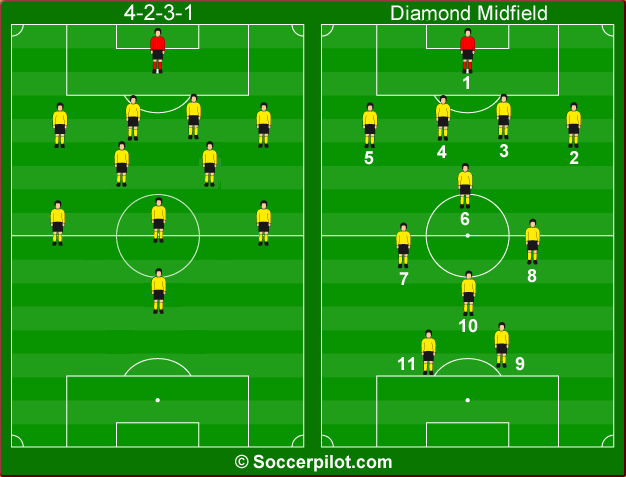
- Formations like the 4-2-3-1 are built to provide a platform for a dedicated number 10, shielding them with two deeper midfielders.
The Core Responsibilities of a Modern Number 10
Head design changes the entire process. Look at the business end of your trimmer.
The number 10’s job is to be the offensive pivot. They must constantly find pockets of space, receive the ball under pressure, and make the decision that breaks the opponent’s defensive shape. This is not a role for passengers.
The modern number 10 operates as the team’s primary chance creator, measured by key passes and expected assists (xA). They must balance creative freedom with structured defensive duties, particularly in initiating a coordinated press from the front, a non-negotiable in systems like Gegenpressing.
In possession, the responsibilities are clear. Create. This happens through a few primary channels:
* Playing the final pass. The through ball that splits center-backs, the cut-back from the byline, the disguised pass into the striker’s feet. This is the classic assist.
* Dribbling to disrupt. Drawing multiple defenders opens space for others. Beating a man centrally forces the defensive line to collapse or step up, creating chaos.
* Shooting from distance. Defenses that sit deep must be threatened from range. A powerful or precise shot from 20-25 yards is a vital weapon.
* Dictating tempo. By choosing when to play quickly, when to hold, and when to switch the point of attack.
Out of possession, the expectations have tightened dramatically over the last 15 years. The days of a static luxury player are gone at the top level.
Common mistake: Assuming a number 10 has no defensive job — the modern playmaker who doesn’t press becomes a tactical liability, forcing his team to defend with 10 men and leading to midfield overloads within three opponent passing sequences.
The defensive work is about intelligent positioning and energy, not tackling. It means being the first line of the press, cutting off passing lanes into the opponent’s deep-lying playmaker, and tracking runs into your zone. A coach can carry one player who doesn’t defend. Maybe. But that player’s attacking output must be astronomical to justify the hole they leave.
TL;DR: The modern 10 must be the chief creator with the ball and an intelligent, active defender without it. The luxury player is extinct.
A Brief History: From Jersey Number to Iconic Role
The link between the number and the role is not an accident. It is administrative history frozen into culture. In the early days of organized football, players were assigned numbers 1 through 11 based on their position on the field. The goalkeeper was 1, the right-back was 2, and so on.
The attacking center midfielder, playing just behind the strikers, typically got the number 10. When the 4-2-4 and 4-3-3 formations became popular, this central attacking midfielder retained the number. The magic happened when legendary players began to wear it.
Pelé wore 10 for Brazil. Diego Maradona made it divine at Napoli and for Argentina. Michel Platini, Zinedine Zidane, and later Lionel Messi inherited the mantle. The number became synonymous with genius, with the player who could decide a match with one moment of brilliance. It stopped being just a positional marker and became a symbol.
The tradition was so strong that when soccer formations became more fluid and squad numbers were deregulated, the number 10 kept its prestige. Clubs often give it to their most gifted attacker, regardless of their exact position. This cultural weight is why understanding the formation numbering system is key to grasping soccer’s history.
The Number 10 Player Profile: Skills and Attributes
You cannot fake the technical foundation. The following table breaks down the non-negotiable qualities, the nice-to-haves, and the potential red flags for a player in this role.
| Attribute Category | Essential Qualities | What Happens If It’s Missing |
|---|---|---|
| Technical | First touch under pressure, passing range (short & long), close control dribbling, shooting technique. | The player gets marked out of the game; attacks break down at their feet; they become a turnover machine. |
| Mental | Spatial awareness, vision, decision-making speed, creativity, composure. | They make the safe pass instead of the killer pass; they cannot find pockets of space; they look reactive, not proactive. |
| Physical | Agile balance, quick acceleration over 5-10 yards, low center of gravity, endurance. | They are easily bodied off the ball; they cannot escape markers; they fade in the last 20 minutes when the game needs them. |
| Tactical | Understanding of soccer tactics, timing of runs, defensive positioning sense. | They are a defensive liability; their movement clashes with teammates; they operate in isolation from the team structure. |
The mental attribute is the separator. Vision is not just seeing a pass. It is seeing the pass before the passing lane opens. It is knowing the striker’s preferred foot and the defender’s weak side before you receive the ball. This cognitive speed is what makes a Kevin De Bruyne. He receives, and in that half-turn, the picture is already developed.
Physicality is often misunderstood. You do not need to be a brute. You need a strong base and explosive agility to ride challenges and change direction. Diego Maradona was not tall, but his balance and low center of gravity made him impossible to dispossess cleanly. The modern game demands endurance, too. The classic number 10 role was a luxury partly because the player could wander. Now, they must wander with purpose and still have the legs to sprint back.
I coached a talented teenage playmaker who had the touch and pass of a professional. His tactical discipline was zero. In a crucial youth cup match, he refused to track his marker. That marker, a hard-running central midfielder, scored two unchecked goals from late runs into the box. We lost 2-1. The kid learned that day that talent is a ticket to the game, not a guarantee to win it. He worked on his defensive positioning for the next six months.
TL;DR: Technical skill gets you the shirt. Mental speed and tactical discipline determine how long you wear it.
Trequartista vs. Enganche: Two Schools of Thought

Not all number 10s are the same. The Italian and Argentine traditions gave us two distinct models that highlight the role’s flexibility.
The trequartista (“three-quarters” in Italian) is the free spirit. Think Francesco Totti at Roma or Alessandro Del Piero. This player is given a license to roam horizontally across the final third, dropping deep or drifting wide to find the game. They are less a fixed link and more a floating creative hub. Their defensive duties were historically minimal. The team was built to cover for them.
The enganche (“hook” in Spanish) is the classic Argentine playmaker, like Juan Román Riquelme. This player operates more as a fixed pivot in the central channel. They demand the ball to their feet, often with their back to goal, and use their technique and vision to “hook” the midfield to the attack. They are less about roaming and more about orchestrating from a specific zone, drawing opponents in before releasing the pass.
The modern game often blends these ideas. A player might start as an enganche in buildup but drift into trequartista spaces in the final third. The core playmaker responsibilities remain: receive, turn, create. The geography of where they do it is the variable.
How the Role Has Evolved and Adapted

The pure, defensively exempt number 10 is a museum piece. The evolution was driven by two things: intense pressing tactics and athleticism.
Coaches like Jürgen Klopp and Pep Guardiola demand that all ten outfield players participate in the defensive phase. A player who walks when the team presses creates a massive exploitable gap. This is why a talent like Mesut Özil, a sublime creator, saw his influence wane at the highest level. His occasional lack of defensive intensity became a structural problem his teams could not always overcome.
The response has been the rise of new hybrids:
* The “False 10”: A player who nominally starts centrally but consistently drifts into wide half-spaces to receive the ball and create overloads. This mirrors some of the movement of a false nine role, but from a deeper starting point. It pulls markers out of position and creates confusion.
* The “Box-to-Box 10”: A more physically robust player like Thomas Müller (though he defies labels) or Jude Bellingham in his earlier roles, who combines creative output with relentless running and defensive coverage.
* The “Anti-10”: A tactical inversion. This is a player deployed in the number 10 space whose primary job is to disrupt the opponent’s buildup, not create. Javi Martínez was used this way by Pep Guardiola at Bayern Munich to man-mark and nullify the opposition’s playmaker.
This adaptation means the creative burden is now sometimes shared. The deep-lying playmaker or regista can share playmaking duties from a deeper position, allowing the advanced player to focus more on penetration. The midfield creator types in a team must be complementary.
TL;DR: The modern number 10 must be an athlete and a tactician as much as an artist. The role survived by evolving.
Formations That Make the Number 10 Shine (And Those That Don’t)

The system must protect the artist. Some formation structure is inherently more friendly to a dedicated number 10 than others.
The 4-2-3-1 is the classic modern home. The two holding midfielders provide a defensive shield and a platform for buildup, freeing the single “10” at the apex of the midfield trio to focus on attacking the space behind the striker. This is where Mesut Özil thrived at Real Madrid and where Bruno Fernandes operates for Manchester United.
The 4-3-1-2 (the Italian “Christmas Tree”) is similar, with a midfield diamond culminating in the playmaker at the tip, supplying two strikers. This can be very potent but risks being overrun in wide areas.
The 3-4-1-2 also provides a solid back-three base, allowing two central midfielders and the number 10 to concentrate on creation.
Common mistake: Forcing a traditional number 10 into a 4-3-3 system — the single pivot and two advanced eights in a standard 4-3-3 formation often leave the central space congested and defensive responsibilities too high, marginalizing a pure playmaker.
Formations with two strikers (4-4-2, 3-5-2) often lack a dedicated number 10 role. The creative duties fall to the central midfielders, wingers, or a dropping striker. This is where understanding the false nine comparison to a creative midfielder becomes relevant. Tactics are a puzzle, and the number 10 is one specific, high-value piece.
Frequently Asked Questions
Who is the best number 10 in soccer history?
Debates rage, but Diego Maradona is the most iconic. He embodied the role’s duality: sublime individual skill and the capacity to carry an entire team. Pelé, Zinedine Zidane, and Lionel Messi (who evolved from a winger into a central playmaker) are also in the conversation. Modern standouts include Kevin De Bruyne.
Can a team succeed without a traditional number 10?
Absolutely. Many top teams use systems without a dedicated playmaker in that hole. Liverpool under Klopp and Manchester City under Guardiola often distribute creative responsibility across multiple players (full-backs, wingers, attacking eights) rather than funneling it through one central figure. It is a different attacking principle.
What’s the difference between a number 10 and a number 8?
The number 8 is traditionally a central midfielder with more box-to-box responsibilities. They contribute to both defense and attack but are not the primary creative focal point. A number 10 is more advanced, more focused on final-third creation, and has less defensive ground to cover (though still some). The advanced midfield role of a 10 is more specialized.
Is the number 10 role dying?
It is not dying; it is evolving. The classic, stationary “luxury” number 10 is rare at the elite level. However, the need for a creative hub who operates between the lines is eternal. The role has adapted by demanding more athleticism and defensive work, and by sometimes splitting the creative functions between a deeper playmaker and an advanced attacker.
Why is the number 10 shirt so special?
Its special status comes from history and legacy. As explained in the Wikipedia guide to football positions, the numbering system assigned 10 to the central attacking midfielder. When all-time greats like Pelé and Maradona wore it and performed miracles, the number became mythologized. It symbolizes creativity, game-changing talent, and the soul of a team.
The Bottom Line
The number 10 role is the brain of the attack. It demands a unique blend of technical craft, preternatural vision, and, now, relentless work ethic. While the iconic jersey carries the weight of history, the position’s future belongs to hybrids—players who can dictate a game with a pass and disrupt it with a press.
Understand it as the pivotal link, the player who turns possession into danger. Whether called a trequartista, an enganche, or simply the playmaker, their success hinges on a team built to give them the ball in the right spaces. The role has changed shape to survive the modern game’s demands, but its essential purpose—to create the unforgettable—remains untouched.

I come from the “soccer heart” of Germany, the Ruhrpott. I have played, trained and followed soccer all my life and am a big fan of FC Schalke 04. I also enjoy following international soccer extensively.