What is Stoppage Time in Soccer? The Complete Guide
Stoppage time in soccer is the additional minutes a referee adds to the end of each 45-minute half to compensate for time lost during play. The clock runs continuously, so delays for substitutions, injuries, VAR checks, and time-wasting are tallied and added on. The fourth official signals the minimum amount, but the referee has final discretion and can extend play beyond the displayed number.
Most fans think the number on the board is a hard stop. They see “5” and start counting down. The reality is more fluid, and that’s where the real tension, and confusion, builds. The referee is the only true clock.
This guide breaks down the official rules, the referee’s mental math, and the modern factors like VAR that stretch games longer than ever. You will learn how stoppage time is calculated, why it’s not extra time, and what happens when the final whistle finally blows.
Key Takeaways
- The referee is the sole timekeeper, using a personal stopwatch to tally delays from substitutions, injuries, VAR reviews, and time-wasting.
- The number shown by the fourth official is a minimum, not a maximum; the referee can extend play for further incidents during stoppage time itself.
- Stoppage time is added to each regulation half, while extra time is a separate 30-minute period played only in knockout matches that are tied.
- Modern games average 7–10 minutes of second-half stoppage time due to VAR and stricter enforcement against time-wasting.
- If a penalty kick is awarded as time expires, the half is extended until the kick is completed, regardless of the indicated stoppage time.
The Core Rule: Why Stoppage Time Exists
A soccer match is two 45-minute halves of continuous play. The stadium clock counts up, not down, and it never stops. Not for a throw-in. Not for a goal. This is the fundamental mechanic most American sports fans miss. The game flows, and interruptions are pauses in the action, not pauses on the clock.
The problem is obvious. If a player lies injured for three minutes, that’s three minutes of actual playing time lost. The solution, introduced in 1891, was elegantly simple: the referee keeps a mental, and now physical, record of all major delays and tacks that time onto the end of the half. The official term in the IFAB Laws of the Game is “allowance for time lost.” Everyone else calls it stoppage time, injury time, or added time.
Technical Snippet: Law 7 of the IFAB Laws of the Game mandates allowance for time lost in each half. The allowance includes all delays from substitutions, assessment and/or removal of injured players, wasting time, disciplinary sanctions, medical stoppages permitted by competition rules, delays relating to VAR checks, and any other cause. The fourth official indicates the minimum decided allowance.
The historical trigger was a specific act of gamesmanship. In an 1891 match, a team winning 1-0 deliberately kicked the ball out of play to waste the final minutes and deny the opponents a penalty kick. The rule was born from that single act of cheating. Now, the referee has the tool to prevent it.
TL;DR: The clock never stops, so lost time is banked and paid back at the end of each half.
How Does a Referee Calculate Stoppage Time?
The referee’s calculation is not a precise science. It is an estimate, guided by experience and the specific events of the half. They start a personal stopwatch, often on their wrist, for every major interruption.
Here is what gets added to the tally, with typical time allowances:
| Delay Category | Typical Time Added | Why It’s Counted |
|---|---|---|
| Substitution | 30 seconds per sub | Player walk-off, walk-on, and equipment check. Three subs can add 90 seconds easily. |
| Injury Assessment | 1–3 minutes | Medical staff entry, treatment on field, and player removal. |
| Goal Celebration | 30–60 seconds | Team celebrations, returning to the center circle for the restart. |
| VAR Review | 1.5–4 minutes | Referee consultation at the monitor, decision communication, and resetting play. |
| Time-Wasting | Discretionary (often 30s+) | Slow goal kicks, throw-ins, or free kicks. The referee warns first, then adds time. |
| Cooling/Drinks Break | 1–3 minutes (mandatory) | Official breaks for player safety in extreme heat, per competition rules. |
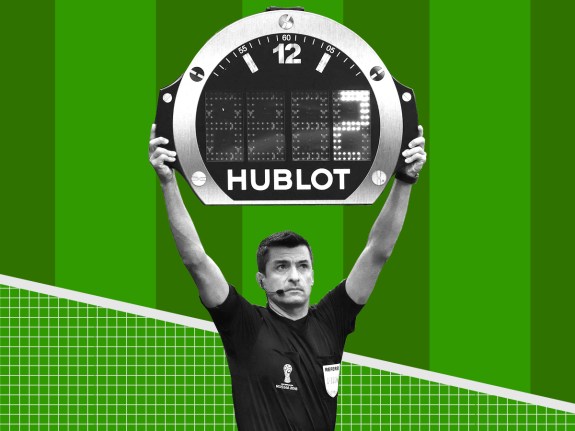
The referee does this math in their head as the half progresses. Near the 44th minute, they confer with the fourth official, who then prepares the electronic board. That board shows the minimum amount of time to be added. This is critical.
The referee can, and often does, add more time if there are further delays during the stoppage time period itself. A player goes down in the 94th minute of a 5-minute added time? The clock keeps ticking, and the referee will extend beyond the 95th minute. The board’s number is a floor, not a ceiling.
Common mistake: Assuming play ends exactly when the stadium clock hits the displayed stoppage time, the referee holds the whistle and can extend for any new delay, including a late corner kick or injury.
The injury time calculation is a blend of objective tally and subjective judgment for time-wasting. This is why you will see different amounts for similar matches.
Stoppage Time vs. Extra Time: Clearing the Confusion
This is the single biggest point of confusion for new fans. The terms sound similar but describe completely different stages of a match.
Stoppage Time (Added Time/Injury Time):
- When it happens: Added to the end of each 45-minute regulation half.
- Purpose: To compensate for time lost during that specific half.
- Duration: Variable, based on delays. Typically 1–10 minutes.
- Presence: In every match.
Extra Time (Overtime):
- When it happens: Played only if a knockout match (like a Cup final) is tied after the full 90 minutes plus stoppage time.
- Purpose: To try to find a winner before a penalty shootout.
- Duration: Two fixed 15-minute halves (30 minutes total).
- Key point: Each 15-minute half of extra time also has its own stoppage time.
Think of it as two separate layers. Stoppage time is part of the standard total match duration. Extra time is a whole new period that only exists in specific, high-stakes scenarios. The difference between added time and extra time is a fundamental rule.
If a knockout match goes to extra time rules, the duration of extra time is 30 minutes. If it’s still tied after that, you move to tie-breaking procedures, often a penalty shootout. Some of the most dramatic memorable extra time matches in history were decided in these added periods.
What Can and Cannot Happen During Stoppage Time?
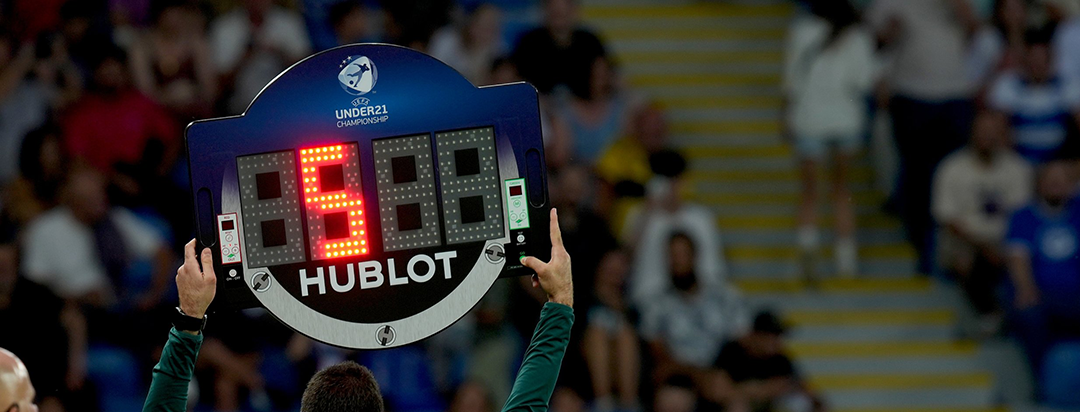
Anything that can happen in regular time can happen during stoppage time. Goals, red cards, penalties, substitutions, the game is fully alive. This is where legends are made and hearts are broken.
The referee has one primary directive: to ensure the full allowance of time is played. This leads to two important rules.
First, the referee cannot blow the final whistle during a promising attacking move. If a team is on a counter-attack or has a corner kick as the time expires, the referee will allow that phase of play to conclude. They will not cut off an attack mid-stream. This is an unwritten but universally respected principle.
Second, if a penalty kick is awarded, the half is extended until that penalty is taken and the play that immediately follows it is complete. This is an explicit rule. So, if a foul happens in the 98th minute of a 5-minute stoppage time, the referee will not blow the whistle. The penalty must be taken, and if it is saved or rebounds, the play continues until the ball is next out of play. This directly answers the question of ending a match in stoppage time.
What about substitutions? Yes, you can make them. But each substitution made during stoppage time itself adds more seconds to the clock. The referee will note it and extend accordingly.
The Modern Game: VAR, Time-Wasting, and Longer Added Time
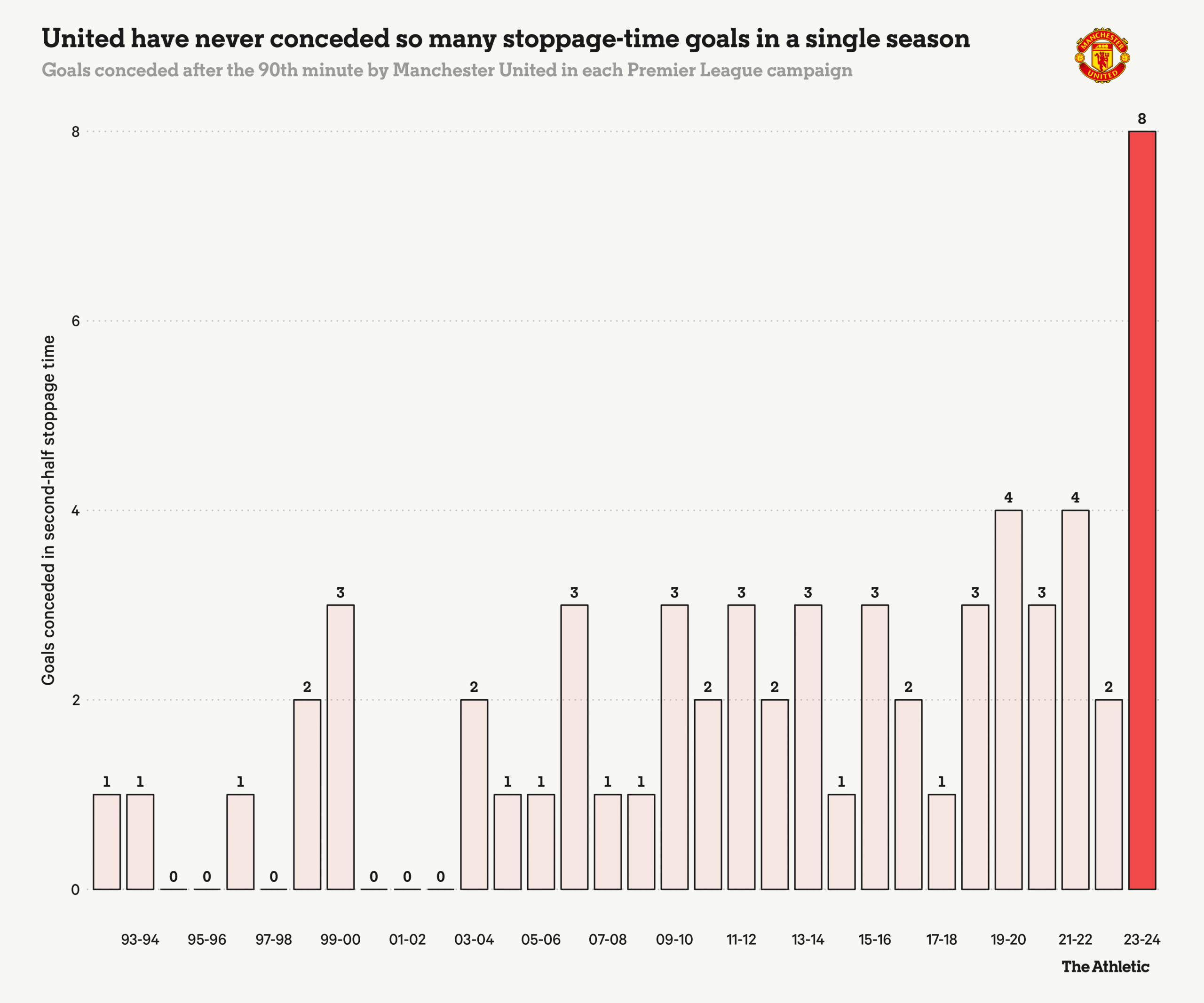
Stoppage time has gotten longer. A decade ago, 3 minutes was standard. Now, 7, 8, or 9 minutes in the second half is common in top leagues. Two modern forces drive this: Video Assistant Referee (VAR) and a crackdown on time-wasting.
Every VAR review is a significant stoppage. The referee goes to the monitor, reviews the footage, makes a decision, and communicates it. This process easily eats 2–3 minutes. That time is added directly to the stoppage time tally. The 2024 rule changes, which include public announcements of VAR decisions, add a few more seconds to the process.
Simultaneously, governing bodies have instructed referees to be stricter on time-wasting, particularly by goalkeepers. The rule is clear: a goalkeeper has 6 seconds to release the ball from their hands. Enforce it too rigidly, and you get indirect free kicks in the box. Enforce it pragmatically, and you add 30 seconds for every egregious delay. Referees are choosing the latter, padding the stoppage time instead of awarding contentious indirect kicks.
Cooling breaks in extreme heat, now standardized, also add mandatory 1–3 minute chunks. Put it all together. VAR checks, enforced delays, and safety breaks, and you get the bloated stoppage time figures we see today.
I watched a Bundesliga match where the fourth official held up the board for 8 minutes. A fan near me groaned, “That’s too long.” But within those 8 minutes, there was a VAR review for a potential penalty, two substitutions, and a player receiving treatment. The referee actually played 9 minutes and 20 seconds. The board was just the starting point.
Frequently Asked Questions
Why doesn’t soccer just stop the clock like other sports?
Stopping the clock would fundamentally change the rhythm and flow of the game. The continuous clock is a core part of soccer’s identity, creating urgency and preventing excessive commercial breaks. The stoppage time system is the elegant compromise to handle necessary pauses.
Can a referee add stoppage time to the first half?
Yes. Stoppage time is added to the end of each 45-minute half. First-half delays for injuries or VAR result in added time, though it’s often less than the second half because there are typically fewer substitutions and time-wasting incidents early on.
Who decides the number on the stoppage time board?
The referee decides the amount. The fourth official, after consulting with the referee, physically holds up the board to signal the minimum amount of added time to players, coaches, and fans. The referee can overrule the fourth official.
What is the most stoppage time ever added?
Extreme cases exist. In a 2023 English Premier League match, 21 minutes of stoppage time were added due to a serious injury requiring a long stoppage and multiple VAR reviews. More commonly, World Cup matches have seen 10–14 minutes added due to cooling breaks and VAR.
Does stoppage time apply in youth soccer?
Usually not. For younger age groups, matches have shorter halves (e.g., 30-40 minutes) and often use a stopped clock to simplify timekeeping. The continuous clock and stoppage time rules are standard for professional and high-level amateur adult soccer.
The Bottom Line
Stoppage time is not an afterthought. It is an integral, calculated part of the match designed to ensure fairness. The referee’s watch is the only one that matters, tallying every second lost to keep the contest honest. Forget the number on the board, it’s just the opening bid.
Understand that modern factors like VAR and anti-time-wasting measures are pushing added time longer, turning the final minutes into a distinct, high-pressure phase of the game. And never, ever confuse it with the separate world of extra time. Knowing these rules transforms those tense, final moments from confusing to crystal clear. The whistle comes when the referee says it does, not a second before.

I come from the “soccer heart” of Germany, the Ruhrpott. I have played, trained and followed soccer all my life and am a big fan of FC Schalke 04. I also enjoy following international soccer extensively.