Why Do Americans Call Football Soccer? The British Origin
Americans call football soccer because the term “soccer” originated in 19th-century Britain as a slang abbreviation for “association football.” When the sport reached the United States, American football had already claimed the name “football,” so Americans adopted the existing British term “soccer” to avoid confusion.
The common assumption is that “soccer” is a clumsy American invention. That assumption is wrong. It’s a British university slang term that crossed the Atlantic because another sport got the generic name first.
This guide traces the exact path from Oxford student slang to American stadiums. You’ll see the specific years, the key figures like Walter Camp who shaped American football, and the moment Britain decided “soccer” sounded too American. The story is less about national pride and more about practical linguistics in a crowded sports landscape.
Key Takeaways
- The word “soccer” is not an American invention. It was coined at Oxford University in the 1880s as a slang shortening of “association football.”
- Multiple forms of “football” existed in 19th-century England. “Soccer” and “rugger” were created to distinguish association football from rugby football.
- American football evolved from rugby and became dominant in the U.S. by the late 1800s. It took the name “football,” forcing the British import to use its alternative label.
- “Soccer” was common in Britain until the 1970s. Its decline is linked to the rise of the North American Soccer League, which made the term feel foreign.
- Other countries with their own “football” codes, like Canada and Australia, also use “soccer” for the same reason: clarity.
The British Slang That Crossed the Atlantic
In the 1860s, England had several popular ball games all called “football.” Rules varied by town and school. In 1863, the Football Association was formed to standardize one set of rules, creating “association football.” Another version, “rugby football,” kept its distinct rules involving handling and tackling.
By the 1880s, students at Oxford University were using the slang suffix “-er” to abbreviate long names. “Association football” became “assoc,” then “soccer.” “Rugby football” became “rugger.” This was a casual, insider term among the university elite, not a formal replacement.
The term entered wider British usage. For nearly a century, “soccer” and “football” were used interchangeably in Britain. Newspapers, clubs, and even the BBC used both. It was simply a nickname.
The class dynamic mattered. Some historians note “soccer” had a slightly upper-class ring, while “football” was the working-class word. This subtle social divide didn’t kill the term, but it meant it wasn’t universally beloved.
TL;DR: “Soccer” is 19th-century British university slang for “association football,” coined alongside “rugger” for rugby football. Britain used both terms for decades.
Why ‘Football’ Was Already Taken in America
Association football arrived in the United States in the late 19th century. A different sport was already there.
American football evolved from rugby in the 1870s and 1880s, largely through changes made by Walter Camp at Yale and other Ivy League schools. He introduced the scrimmage line, the down system, and the quarterback position. This new game quickly captured the American sporting imagination.
Common mistake: Assuming Americans renamed the sport out of ignorance — they adopted an existing British term because the generic name “football” was already occupied by a more popular domestic sport.
When you have two sports called “football,” you need a distinguisher. Americans logically picked the British slang “soccer” for the import. They didn’t invent a new word. They used the one the Brits had already provided.
Canada faced the same issue. Canadian football, a close relative of American football, was the dominant “football” code. So Canadians also use “soccer” for association football. Australia followed a similar path with Australian rules football. The pattern is consistent: wherever a local “football” is dominant, the imported game gets the specific label “soccer.”
This linguistic choice is about avoiding confusion, not national identity. If American football had never taken root, the U.S. would likely call it “football” today.
TL;DR: American football became the dominant “football” in the U.S. by the 1890s. To distinguish the British import, Americans used the existing slang “soccer,” a practical decision not an invention.
When Did Britain Stop Calling It Soccer?
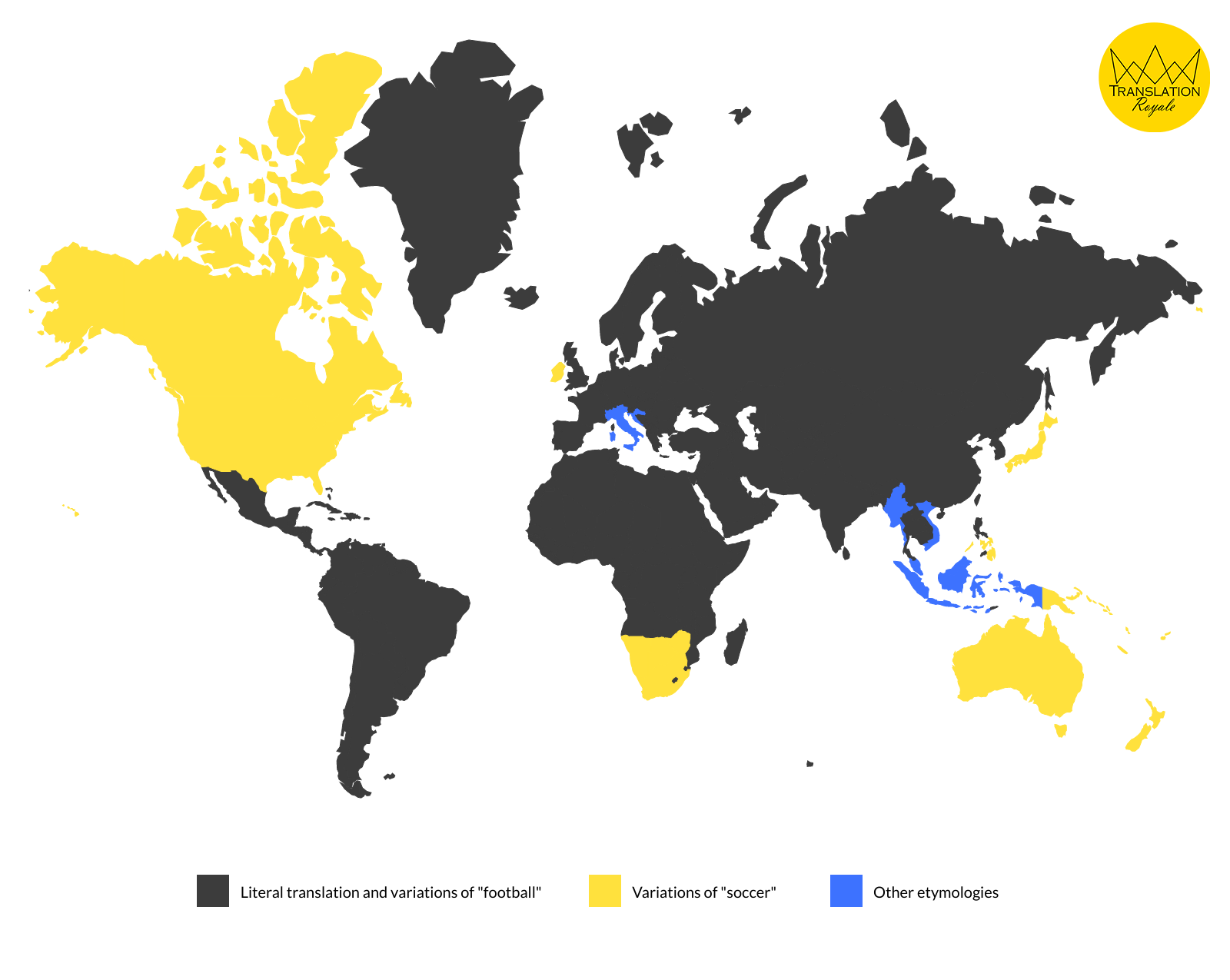
“Soccer” remained in common British use through the 1950s and 1960s. You’d hear it on the radio, read it in papers, and see it in club names. The shift happened gradually, but the 1970s mark a turning point.
The North American Soccer League (NASL) launched in 1968 and peaked in the late 1970s with stars like Pelé. It was explicitly called “soccer” in the U.S. and its coverage flooded back to Britain. As the term became associated with the American commercial league, it started to feel foreign to British ears.
I remember watching highlights of NASL games on German sports channels in the early 80s. The commentators always said “soccer.” When I visited England a few years later, my use of “soccer” with local fans was met with a slight, polite correction. “We call it football here,” they’d say. The term had clearly soured.
There’s also a post-World War II cultural element. American influence was strong in Britain after the war. Embracing American slang was common in some circles, but a backlash against “Americanisms” grew in others. “Soccer” became a casualty of that linguistic pride.
By the 1980s, “soccer” was fading from British media. By the 1990s, it was largely gone from everyday speech, reserved mostly for contexts involving the United States or Canada. Today, using “soccer” in Britain often signals you’re talking about the American context or being deliberately ironic.
| Period | British Usage | Key Driver |
|---|---|---|
| 1880s–1910s | Slang nickname at universities | Oxford “-er” suffix tradition |
| 1920s–1960s | Interchangeable with “football” in general media | Common colloquial usage |
| 1970s–1980s | Decline begins, feels increasingly American | NASL exposure & anti-Americanism sentiment |
| 1990s–Present | Rare, except for U.S./Canadian contexts | Full alignment with global “football” norm |
TL;DR: Britain used “soccer” commonly until the 1970s. The rise of the North American Soccer League made the term feel American, leading to its decline in British English.
Global Terminology: Who Uses Soccer vs. Football?
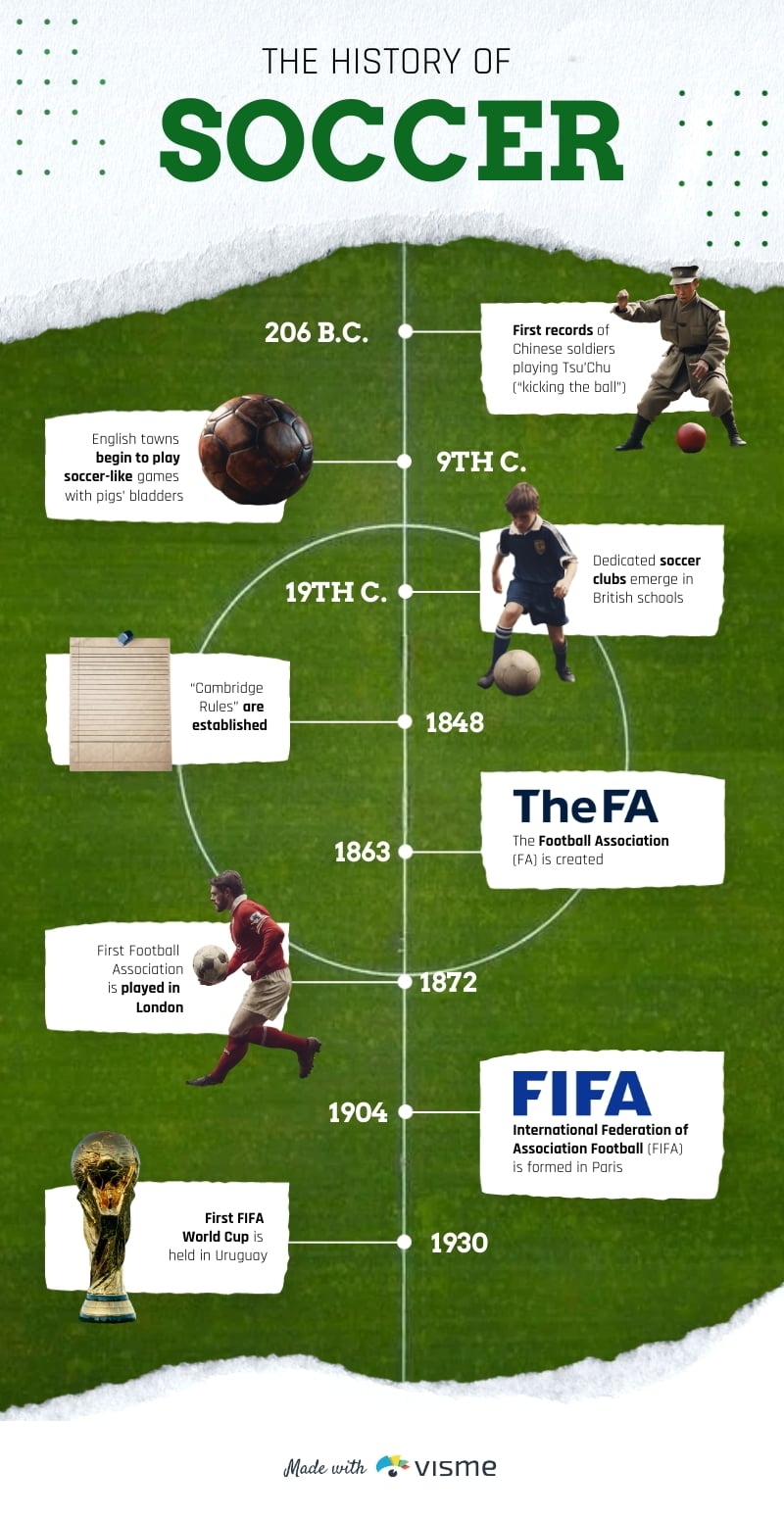
Most of the world uses a variation of “football”: fútbol in Spanish, futebol in Portuguese, fußball in German. The map is overwhelmingly green for “football.” The “soccer” countries are a small, specific cluster.
The rule is simple: countries that developed or adopted a different primary “football” code use “soccer” for association football. The United States, Canada, and Australia fit this rule. Ireland sometimes uses “soccer” because Gaelic football is the traditional Irish “football.” Even in these countries, official bodies sometimes push for “football” to align internationally.
For example, Australia’s governing body changed its name from “Australian Soccer Association” to “Football Federation Australia” in 2005. The U.S. Soccer Federation was originally the “U.S. Football Association” when founded in 1913; it dropped “football” in 1974. These changes reflect a desire for global consistency, but everyday speech still favors “soccer.”
The cultural friction is real. During World Cup tournaments, the terminology difference becomes a talking point. American fans saying “soccer” on global social media often get replies mocking the term. It’s a low-stakes cultural debate that flares up every four years.
Understanding the historical terminology map shows it’s not arbitrary. The split follows the historical presence of competing football codes. If your country’s “football” is a different sport, you call this one “soccer.”
The Irony of the Modern Debate
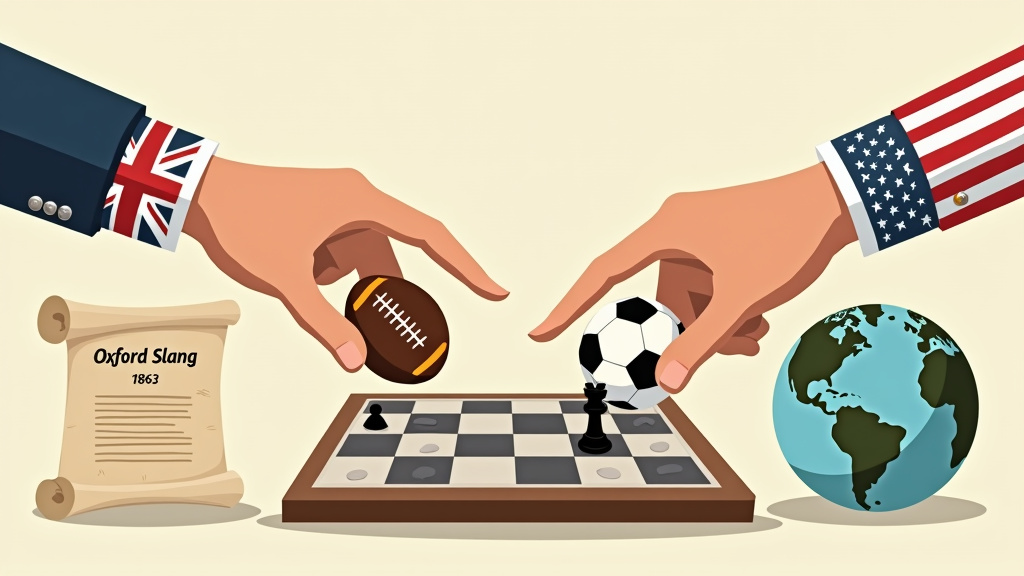
Today, the “soccer vs. football” debate is often framed as Americans being ignorant or stubborn. The historical truth flips that. Americans are using a British term that Britain itself abandoned.
The backlash in Britain is partly a reaction to American cultural influence. It’s linguistic pride. The fact that the term originated at Oxford is now a forgotten footnote.
Common mistake: Believing the debate is about correctness — it’s about cultural identity and historical amnesia. Both terms are historically accurate; “football” is the global standard, “soccer” is the specific British slang that stuck in certain countries.
This irony is perfect for sports banter. An American can correctly tell a British critic, “You invented the word.” The critic can correctly reply, “And we dropped it because you overused it.” Both statements are true.
The debate ultimately doesn’t matter for the sport. The games are the same. But understanding the history adds a layer of depth to those friendly arguments in pub or online forums. It turns a superficial jab into a conversation about 19th-century university slang, transatlantic sports migration, and linguistic evolution.
Frequently Asked Questions
Is “soccer” an American word?
No. “Soccer” originated in England in the 1880s as a slang abbreviation for “association football.” Americans adopted the term because “football” was already used for their domestic sport.
Why do Brits get annoyed when Americans say “soccer”?
Many Brits believe “soccer” is an American invention, which they see as a corruption of the sport’s name. They also associate the term with American culture due to the North American Soccer League’s influence in the 1970s. The annoyance stems from historical amnesia and cultural pride.
Did Britain ever use “soccer”?
Yes, extensively. British media, clubs, and everyday speech used “soccer” interchangeably with “football” from the late 19th century until the 1970s. Its decline was gradual and linked to the sport’s commercialization in America.
Why does Canada and Australia also call it “soccer”?
Both Canada and Australia have their own dominant “football” codes—Canadian football and Australian rules football. Like the United States, they adopted “soccer” to clearly distinguish association football from their local “football” sport.
Will America ever switch to calling it “football”?
Probably not. American football is deeply entrenched as “football” in U.S. culture. Official bodies like U.S. Soccer might use “football” in international contexts, but the popular lexicon is firmly “soccer.” The linguistic need for distinction remains.
Before You Go
The answer isn’t about national stubbornness. It’s about 19th-century British slang meeting 19th-century American sports evolution.
“Soccer” is a legitimate historical term that filled a practical need in countries where “football” meant something else. Britain used it, then discarded it as American influence grew. The United States kept it because their “football” was already taken.
Knowing this history turns a trivial debate into a lesson in linguistics and sports migration. Next time someone questions why Americans call football soccer, you can explain the Oxford origin, the Walter Camp influence, and the 1970s backlash. That’s more interesting than another round of “handegg” jokes.

I come from the “soccer heart” of Germany, the Ruhrpott. I have played, trained and followed soccer all my life and am a big fan of FC Schalke 04. I also enjoy following international soccer extensively.