Speed Dribbling vs Close Control Soccer: Which Skill Wins?
Speed dribbling in basketball is about advancing the ball at maximum pace in open space, using long strides and a push-ahead dribble. Close control in soccer is about manipulating the ball within a tight radius under defensive pressure, using all foot surfaces and quick, short touches. You master one for transition offense, the other for possession in congested midfield.
Most players and coaches confuse the two. They see a highlight of a soccer winger sprinting down the line and call it speed dribbling, or they watch a basketball point guard weave through traffic and label it close control. The mix-up costs you training time. You drill the wrong movement patterns for your sport.
This breakdown cuts through the confusion. We’ll define each skill by its biomechanics, its measurable performance metrics like the Dribble Deficit, and the exact game situations where it wins. You’ll learn how to test your own level and build a training plan that doesn’t waste a session.
Key Takeaways
- The Dribble Deficit is a key metric that isolates your pure dribbling technique from your raw sprinting speed. A high deficit means your hands or feet can’t keep up with your legs.
- Expert dribblers use an “in-phase” arm-leg coordination pattern (arms and legs moving together). Beginners use a less stable “anti-phase” pattern. Which one you use dictates your consistency.
- Your position decides the priority. Basketball point guards and soccer wingers need speed dribbling. Soccer central midfielders and basketball posts working in the paint need close control.
- Touch restrictions (1-touch, 2-touch) in small-sided games are the fastest way to improve close control under real pressure, but they spike physical demand and error rates.
- Speed dribbling correlates strongly with leg power and agility. A Springer study on soccer dribbling correlation found these physical traits can explain over 85% of dribbling ability variance in players.
The Core Difference: Speed vs. Precision
Head up, ball pushed several feet ahead, full sprint. That’s the visual signature of speed dribbling. The goal is territory. You are trading absolute ball security for maximum forward velocity. In basketball, this is how you ignite a fast break after a rebound. The ball spends more time in the air than on the floor.
Close control is the opposite. Head up, but the ball is rarely more than a foot from your boot. You use the inside, outside, and sole of your foot to constantly adjust the ball’s position. The goal is not to go through space, but to create it where none exists. A soccer midfielder receiving the ball with his back to goal and two markers on him has one job: close control.
Speed dribbling prioritizes linear momentum over micromanagement. Close control sacrifices forward progress for instantaneous directional change and protective possession.
The tools are different. A basketball player uses a crossover or behind-the-back dribble to change direction while maintaining speed. A soccer player uses a Cruyff turn or a step-over to unbalance a defender in a phone booth. Both are change-of-direction skills, but the crossover works at a full sprint, the Cruyff turn works from a near-standstill.
TL;DR: Speed dribbling is for crossing open ground; close control is for surviving in crowded ground.
How the Body Moves: In-Phase vs. Anti-Phase
Watch a novice player dribble a basketball. Their arms swing opposite their legs, right arm forward when left leg steps. Biomechanists call this an “anti-phase” coordination pattern. It’s inherently less stable. The body is fighting itself, which is why beginners lose the ball when they try to speed up.
Now watch an expert. Their arm and leg on the same side move forward together. This “in-phase” pattern is more efficient and stable. It’s the signature of a motor skill that has become automatic. The same principle applies to soccer dribbling, where arm swing balances the sharp cuts and feints.
You don’t choose your pattern consciously. It emerges from thousands of repetitions. If you’re stuck in an anti-phase pattern, you will always be inconsistent under pressure. Drills that force you to coordinate limbs under fatigue, like complex agility ladder drills combined with ball work, rewire this pattern.
Common mistake: Only practicing dribbling while fresh, your coordination reverts to the unstable anti-phase pattern as soon as game fatigue hits in the second half.
The shift from anti-phase to in-phase is the physical marker of skill acquisition. You can’t fake it. It’s why a player with slick moves in practice can look clumsy in a game. The game’s cognitive load, scanning, deciding, reacting, overwhelms their conscious control, and their underlying coordination reverts.
How to Measure Your Own Dribbling Skill
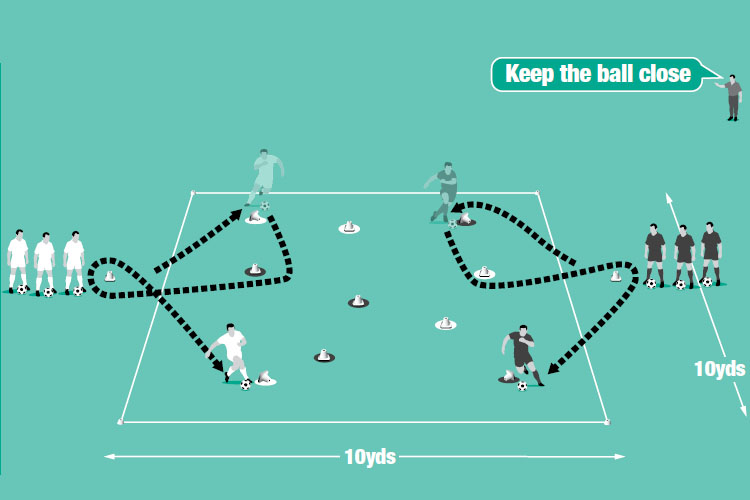
Forget subjective opinions. Use the Dribble Deficit. It’s a simple test validated in peer-reviewed research that separates your athleticism from your technique.
Here’s how you do it:
1. Mark a 20-meter straight sprint course.
2. Time your sprint without a ball. That’s your raw speed time.
3. Time your sprint while dribbling a basketball or soccer ball down the same course. That’s your dribbling speed time.
4. Calculate: Dribble Deficit = Dribbling Time – Sprint Time.
A lower deficit is better. It means your technical skill is keeping pace with your legs. A large deficit, say, 2 seconds or more, means your hands or feet are a bottleneck. You’re an athlete waiting for a technician to catch up.
| Deficit Range | Skill Interpretation | Primary Training Focus |
|---|---|---|
| < 1.0 seconds | Advanced Technique | Maintain under high fatigue, add complex moves. |
| 1.0 – 2.0 seconds | Developing Technique | Repetitive, consistent drills at high speed. |
| > 2.0 seconds | Foundational Gap | Slow, deliberate ball mastery; forget speed for now. |
This metric is powerful because it’s sport-agnostic. It works for a U10 basketball player and a collegiate soccer winger. It tells you exactly what to train. If your deficit is high, adding more soccer strength workouts won’t fix it. You need pure ball-work repetitions.
For soccer, also track your first touch. After receiving a pass, how many touches does it take to set the ball for your next action? Elite midfielders do it in one. If it takes you three or four, your close control isn’t game-ready. Use a soccer rebounder training wall to randomize returns and force quicker adjustments.
Positional Play: Which Skill Does Your Role Demand?
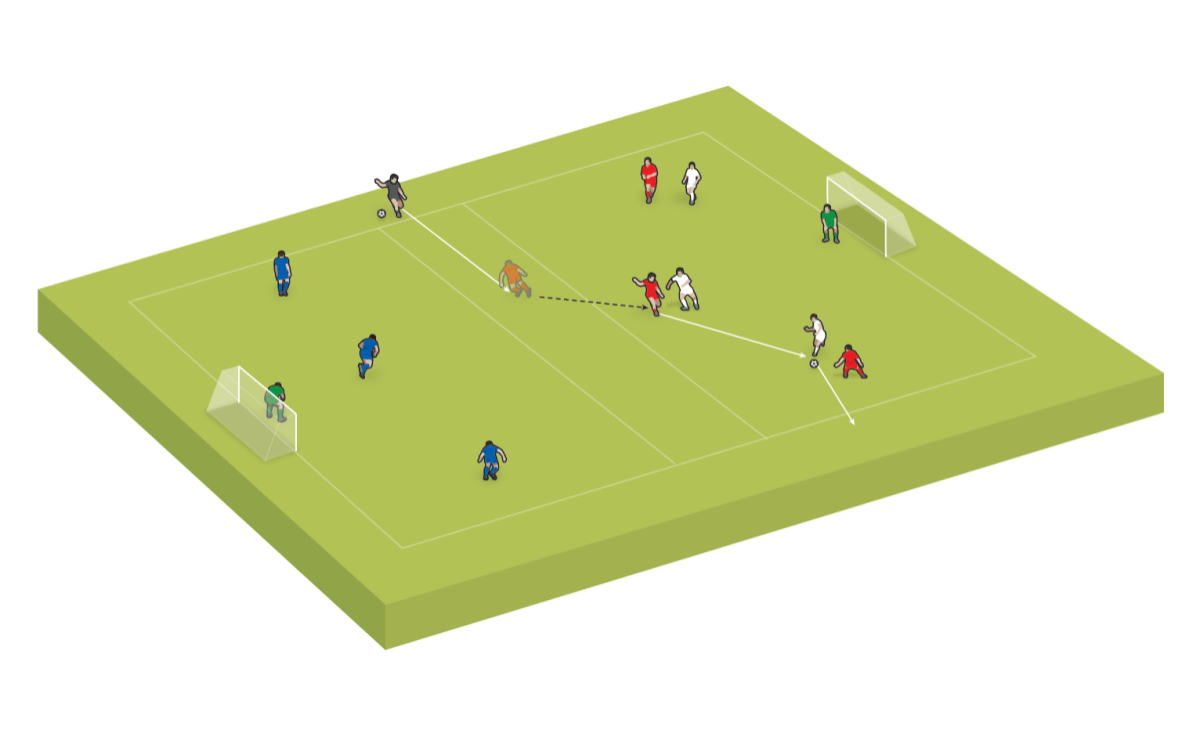
Your place on the pitch or court is the ultimate decider. Training the wrong skill for your role is like a carpenter perfecting his welding.
Basketball Positions:
- Point Guard: Your bread and butter is speed dribbling. You need to push tempo, break presses, and get into the lane. The crossover is your most important move. Your close control, the ability to dribble in traffic in the half-court, is secondary but still vital.
- Wing (Shooting Guard/Small Forward): You need a hybrid. Speed dribbling in transition, but also the close control to attack a close-out, take two hard dribbles, and pull up. Your shooting accuracy drills must integrate these dribble moves.
- Post (Power Forward/Center): Your primary need is close control in a congested paint. You’re making one or two powerful dribbles from the block against physical contact. Speed dribbling is almost irrelevant. Your footwork is about creating space, not covering distance.
Soccer Positions:
- Winger: You are the soccer equivalent of a basketball point guard in transition. You need explosive speed dribbling to beat a fullback down the line. The final product is a cross or cut-back, not a finish from distance, making your choice of soccer cleat types for firm ground critical.
- Central Attacking Midfielder / Playmaker: This is the purest close control position. You operate between the lines, back to goal, with defenders on your back. Every first touch must be perfect. Your training should be 80% small-space mastery and receiving under pressure.
- Central Defensive Midfielder: You need close control to turn away from pressure and distribute, but your game is more about one-touch passing. Your dribbling is functional, not flamboyant. Understanding your ideal soccer position helps clarify this balance.
- Fullback: Modern fullbacks need both. Close control to play out of a high press, and speed dribbling to overlap and deliver crosses. It’s the most physically demanding dual-skill role on the pitch.
If you’re a winger spending all your time doing intricate cone weaves at walking pace, you’re misallocating time. If you’re a center midfielder only practicing 40-yard sprint-dribbles, you’re building the wrong tool.
Training Methods: Building Speed or Cultivating Touch
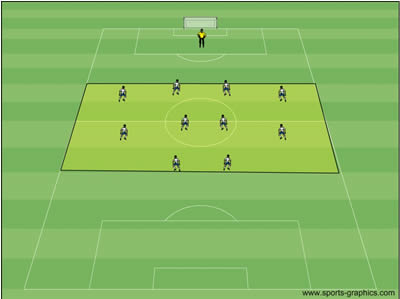
The drills are not interchangeable. The energy system, the cognitive load, and the desired outcome are opposites.
For Speed Dribbling:
- Sprint-Dribble Intervals: 30-second maximal effort dribble sprint (basketball full-court, soccer length-of-pitch), 90-second rest. Repeat 6-8 times. This builds the specific endurance to maintain technique while fatigued.
- Crossover at Speed: Set up a line of cones 10 meters apart. Sprint dribble to a cone, execute a hard crossover, and sprint to the next. The move must happen without breaking stride.
- Conditioned Games: In basketball, 3-on-2 fast break drills where the ball must cross half-court within 4 seconds. In soccer, large-sided games (7v7) on a long, narrow pitch that encourages vertical, direct play.
For Close Control:
- The 3×3 Meter Box: Confine yourself to a small square. Your goal is to keep the ball moving with every part of your foot without leaving the box or losing possession. Do this for 60-second intervals. The constraint breeds creativity.
- Touch-Restricted Small-Sided Games (SSGs): Play 4v4 in a tight area. Impose a 2-touch or 1-touch limit. This is the crucible. As a Frontiers in Sports article on SSGs details, this spikes physical demand and forces pre-scanning and quicker technique. Your error rate will soar at first. That’s the point.
- Pressure-Added Receiving: Have a partner serve you balls with varying pace and spin while you stand in a marked circle. A second partner applies light defensive pressure as you receive. You have two touches to control the ball and pass it back cleanly.
I used to think more touches in practice meant better control. Then I coached a youth team and mandated 1-touch play in our SSGs for a month. The first week was a disaster, passes went everywhere. By the fourth week, their first touch was sharper because they had to take a better first touch. They learned to read the game two steps earlier.
Nutrition supports this work. High-intensity speed dribbling drills deplete glycogen fast. Close control drills under fatigue challenge the central nervous system. A simple soccer recovery foods protocol with carbs and protein within 30 minutes of these sessions is non-negotiable for adaptation.
The Gear That Actually Matters
The wrong equipment amplifies your weaknesses. This isn’t about brand loyalty; it’s about functional design.
Basketball: The ball’s grip and inflation matter more than you think. A slick, over-inflated ball will pop away from your hand on a hard crossover at speed. Use a ball with a deep, pebbled grain and keep it inflated to the manufacturer’s spec, usually printed near the valve. Don’t just pump it until it feels hard.
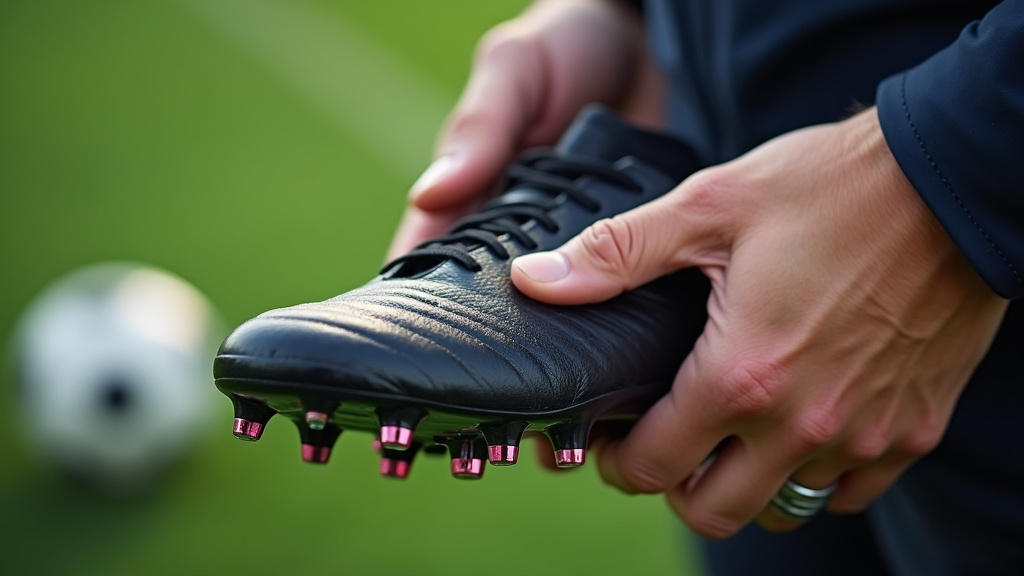
Soccer: Your cleat choice is a technical decision. For close control, many pros prefer a thin, flexible upper (like kangaroo leather or a synthetic mimic) for better feel. A bulky, padded boot numbs touch. For speed dribbling on firm ground, a boot with conical studs provides stability for pushing off during sprints, unlike the bladed studs designed for aggressive cutting. The cleat design differences between soccer and American football models highlight how studs are engineered for sport-specific movement.
Don’t forget protection. A reckless tackle during a close control drill can end your season. Proper shin guard protection that fits snugly under your socks is basic risk management. It’s not optional.
Frequently Asked Questions
Can a basketball player benefit from soccer close control drills?
Absolutely. Using your feet on a soccer ball improves overall coordination, balance, and proprioception, your sense of where your body is in space. This translates to better body control when changing direction on the basketball court. It’s a common cross-training method for improving footwork coordination drills.
I’m slow but have great close control. Can I still be effective?
Yes, but in a specific role. In soccer, you’d be a classic “midfield brain” like Xavi or Pirlo. You compensate for lack of pace with superior vision and one-touch passing. In basketball, you’d be a crafty post player or a floor-general point guard who uses changes of pace, not pure speed. You must maximize your sport’s cognitive elements.
How often should I train these skills?
For maintenance, 15-20 minutes of focused drills, 3 times per week. For development, 30-45 minutes, 5-6 times per week. Always integrate them into conditioned games. Pure drill work without pressure creates a practice player, not a game player.
Does age affect which skill is easier to learn?
Younger players (under 12) adapt to new coordination patterns more easily. This is the ideal window to build a broad technical base, including both skills. Older athletes can still improve, but the focus shifts to refining the skill their position demands and integrating it with tactical understanding.
Is the Dribble Deficit used by professional teams?
The concept is used, though often under different names. Performance analysts track “skill efficiency under fatigue” by comparing player speed with and without the ball at different game stages. The formal metric is more common in elite academy settings for talent identification and monitoring development.
The Bottom Line
Speed dribbling and close control are two different languages of ball mastery. One is for writing in broad strokes across open space, the other for drafting precise sentences in a crowded margin. Your sport, your position, and your own Dribble Deficit score tell you which language you need to become fluent in first.
Stop training them as if they’re the same. Design your sessions with intention: long, exhausting sprints with the ball for speed; cramped, touch-limited games for control. Measure your progress with a stopwatch and honest film review. The player who masters the right skill for their role isn’t just more effective, they’re harder to replace.
I come from the “soccer heart” of Germany, the Ruhrpott. I have played, trained and followed soccer all my life and am a big fan of FC Schalke 04. I also enjoy following international soccer extensively.