Why Soccer Is Called Football Around the World
This post contains affiliate links. As an Amazon Associate, we earn from qualifying purchases.
You’re watching the World Cup with international friends when the debate erupts: “It’s football, not soccer!” While Americans insist on “soccer,” the rest of the world calls it “football.” This linguistic divide isn’t random—it’s the result of medieval English villages, British colonial networks, and American football’s unexpected rise. Understanding why soccer is called football in most countries reveals how history, language, and cultural identity collide in the world’s most popular sport.
The answer lies in recognizing that “soccer” was actually born in England, not America, and that most nations simply kept using the original term while Americans needed a new word to avoid confusion with their own gridiron game. By the end of this article, you’ll know exactly when to say “football” versus “soccer” in any country and understand the fascinating historical accident that created this global naming puzzle.
Medieval English Villages Invented “Football”
The muddy fields of 13th-century England hold the key to understanding why soccer is called football in most countries. Historical records show villagers playing “foteballe” as early as 1280 in Ulgham, Northumberland, with the first written reference appearing in 1409. These chaotic games involved entire villages, unlimited players, and often ended with more injuries than goals.
Contrary to popular belief, these early “football” games didn’t always involve kicking. A 17th-century account from Perthshire describes a “Foot-Ball” game where “no person was allowed to kick it.” The term likely distinguished peasant games played on foot from aristocratic horseback sports. By 1486, the ball itself earned the name “football,” cementing the term’s place in English culture centuries before standardized rules existed.
When “Football” Meant Any Game Played on Foot
Medieval English records reveal multiple ball games sharing the “football” name despite different rules. In 1308, Irish documents mention John McCrocan watching a “football game” in Newcastle, County Down, where spectators regularly faced mortal danger from flying balls and swinging fists. The term served as a broad category rather than describing a specific sport.
This linguistic flexibility explains why soccer is called football in most countries today—association football simply inherited the original name when it became the dominant organized version. British colonial networks later exported this naming convention worldwide, establishing “football” as the default term long before American cultural influence emerged.
British Universities Created the Soccer-Football Split

The mid-1800s transformed chaotic medieval games into organized sports, inadvertently creating the naming confusion that puzzles Americans today. When England’s Football Association formed in 1863, they established “association football” rules that banned carrying the ball—a direct challenge to Rugby School’s code permitting running with it.
Oxford University students seeking quick verbal shortcuts coined “rugger” for rugby football and “assoccer” for association football. This latter term rapidly shortened to “soccer,” first appearing in print on September 16, 1889, in the Western Daily Press. Crucially, this nickname remained common British usage through the 1970s, appearing in newspapers and everyday conversation without controversy.
Why Brits Originally Said “Soccer” Too
Most Americans don’t realize that “soccer” was actually invented by Brits to distinguish association football from rugby football. Both sports shared equal claim to the simplified term “football,” creating regional linguistic patterns that would later confuse international audiences. In areas where rugby dominated, “football” meant rugby; where association football ruled, “football” referred to what Americans call soccer.
This historical context explains why soccer is called football in most countries—they simply kept using the original unqualified term while Americans needed a new word to avoid confusion with their own gridiron game. The British didn’t “change” their terminology; Americans developed a different usage pattern due to their unique sporting history.
American Football Hijacked the Name

The United States charted a different linguistic path through historical accident and cultural evolution. American colleges in the late 1800s experimented with rugby-style football, gradually evolving into gridiron football—a hybrid sport that eclipsed both parent games in popularity.
This new “football” monopolized the name so completely that association football required a distinctive label. The United States Soccer Football Association, founded in the 1910s, formally adopted “soccer” by shortening its name in 1945. Americans never faced the linguistic ambiguity plaguing other English-speaking nations; their dominant football variant claimed the simple name by default.
Why Americans Needed a New Word
The key reason why soccer is called football in most countries but not in America comes down to competition for the name. While most nations encountered only association football, Americans developed two major football codes simultaneously. With gridiron football becoming the dominant sport, association football needed a qualifier—hence “soccer” became necessary for clarity.
Canadian development mirrored this pattern, with Canadian football evolving from rugby traditions and appropriating the unadorned term. Canadian French compounds the naming complexity by using “le soccer,” demonstrating how linguistic necessity overrides etymological purity.
Colonial Networks Spread “Football” Globally
British colonial and commercial networks became unlikely language teachers, spreading the term “football” alongside the sport itself. Unlike intentional cultural exports, this linguistic transmission occurred organically as British soldiers, merchants, and administrators introduced their favorite pastime to new territories.
The critical factor: most colonies encountered only association football, never developing competing rugby-derived codes that required linguistic differentiation. When a British sailor in 1890s Mumbai organized a match, locals naturally called it “football”—the only football they knew. This pattern repeated across Africa, Asia, and South America, establishing “football” as the default term long before American cultural influence emerged.
How Non-English Languages Adapted the Term
Most languages adopted phonetic versions of “football” for association football—Spanish “fútbol,” French “football,” Portuguese “futebol.” Germanic languages often use calques: German “Fußball,” Dutch “voetbal,” Swedish “fotboll.” This global linguistic consistency explains why soccer is called football in most countries—they simply translated or adapted the original British term.
Only in regions with competing football codes did alternative terms emerge. South Africa uses both “football” officially and “soccer” colloquially, while the Bahamas and Bermuda exclusively use “football” despite American cultural influence.
Global Statistics Settle the Naming Debate

Contemporary usage data settles the “why is soccer called football in most countries” question definitively. Among 45 FIFA-member nations where English serves as an official or primary language, 43 use “football” in their associations’ official names. Only Canada and the United States retain “soccer,” creating a 43-to-2 global majority.
This overwhelming preference reflects practical necessity rather than cultural superiority. Countries without competing football codes never required semantic differentiation. When governing bodies in Australia and New Zealand changed from “Soccer Australia” to “Football Federation Australia” (2005) and “New Zealand Soccer” to “New Zealand Football” (2006), they aligned with this global consensus.
Why Most Nations Never Needed “Soccer”
The global preference for “football” stems from one simple historical fact: association football arrived first and faced no domestic competition for the name. British colonial and commercial networks exported association football exclusively, establishing linguistic patterns before alternative codes could confuse terminology.
Most nations experienced football as a singular concept rather than one variant among many. When Brazilian children learned “futebol,” Nigerian schools taught “football,” and Japanese clubs formed around “フットボール,” each context presented the sport as the definitive football game. No linguistic qualifier proved necessary because no competing domestic football existed.
How to Navigate Global Terminology Confusion
Understanding this history resolves countless international conversations. “Football” isn’t inherently correct—it’s historically dominant where association football faced no naming competition. “Soccer” isn’t an American corruption—it’s a legitimate British invention that solved regional ambiguity.
When traveling internationally, recognize that “football” almost certainly means association football unless context specifies otherwise. In the United States and Canada, “soccer” remains necessary for clarity. This isn’t stubborn nationalism; it’s practical communication shaped by centuries of historical development.
Pro tip: When discussing sports internationally, use “football” unless speaking with Americans or Canadians. If confusion arises, specify “American football” or “association football” for absolute clarity. Most non-Americans will appreciate your linguistic awareness when you correctly call the sport “football” in their country.
The next time someone insists you’re saying it wrong, remember those medieval villagers kicking balls through muddy fields. They couldn’t have imagined their simple game would spark global linguistic debates, but their choice of name echoes through every international match, World Cup final, and friendly argument about what to call the beautiful game. Understanding why soccer is called football in most countries isn’t just trivia—it’s the key to communicating effectively in our increasingly connected sporting world.
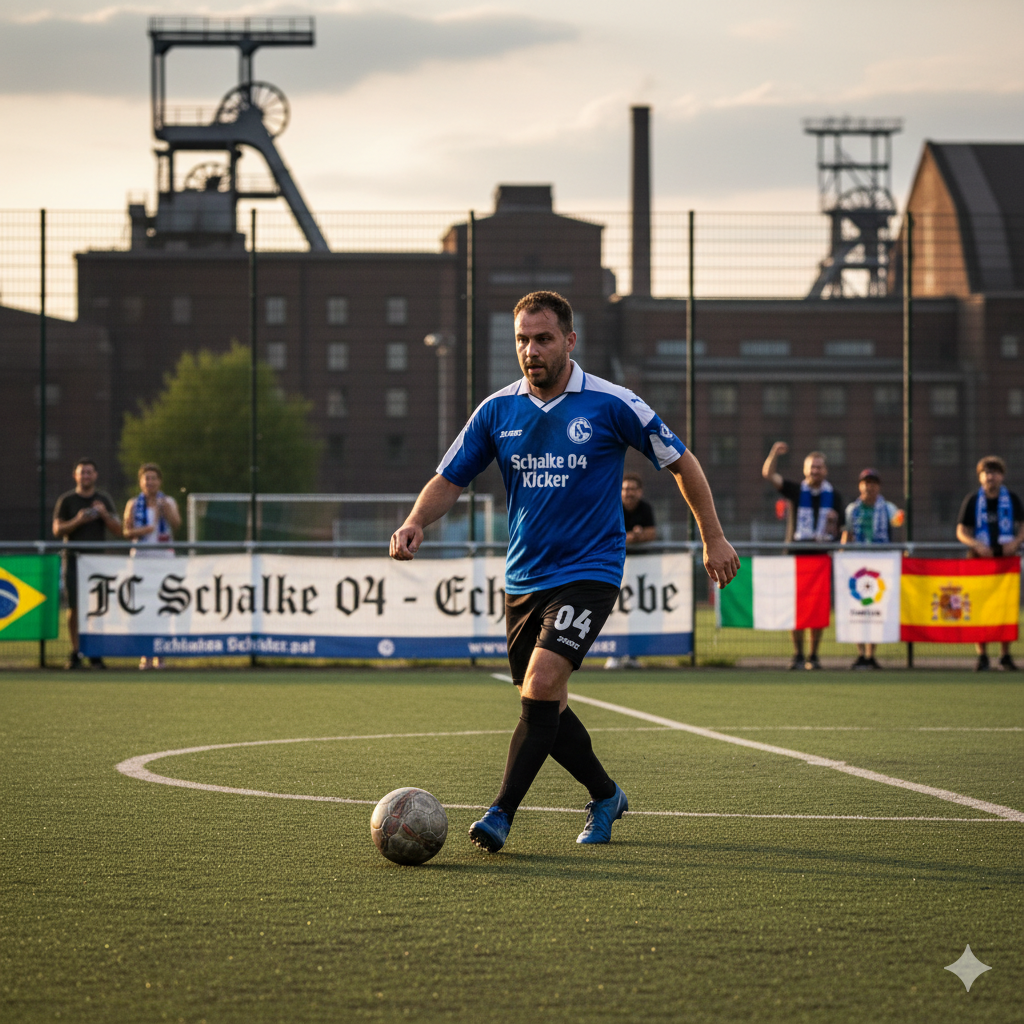
I come from the “soccer heart” of Germany, the Ruhrpott. I have played, trained and followed soccer all my life and am a big fan of FC Schalke 04. I also enjoy following international soccer extensively.