Will Ronaldo Win the World Cup? Portugal’s Chances & Odds
To answer “will Ronaldo win the 2026 World Cup,” you must assess three things: Portugal’s squad strength, Ronaldo’s specific role at age 41, and the brutal knockout path they will face. Portugal has an 8-9% probability (odds around +1100) and is a genuine dark horse, but winning demands perfection across seven matches against the world’s best.
Most people get this wrong by looking only at Ronaldo. They see the name, the legacy, the narrative of a final dance, and assume destiny will bend. Football doesn’t work like that. It works through midfield control, defensive solidity, and a squad surviving 120-minute wars in North American summer heat. Portugal has the pieces. The question is whether they can assemble the puzzle under maximum pressure.
This guide breaks down the real odds, the tactical adjustments Roberto Martínez must make, the specific opponents that could end the dream, and what a World Cup win would mean for Ronaldo’s legacy and a potential sixth Ballon d’Or.
Key Takeaways
- Portugal’s probability sits between 8% and 9%, making them the sixth favorite. They are a classic dark horse, talented enough to win it, vulnerable enough to lose in the quarters.
- At 41, Ronaldo’s role is no longer that of a 90-minute focal point. He is a specialist Number Nine and likely impact substitute in the tournament’s later, tighter stages.
- The squad’s unprecedented depth is its greatest asset. For the first time, Portugal has three viable players for every position, moving beyond the “Ronaldo and pray” model.
- The knockout path is brutal. Topping Group K likely leads to a quarterfinal clash with Argentina, a semifinal with England or Brazil, and a final against Spain or France.
- For Ronaldo to claim a sixth Ballon d’Or, Portugal likely needs to win the tournament, and he needs a defining moment, a goal or assist in a semi-final or final.
What Are Portugal’s Chances of Winning?
Bookmakers price Portugal at +1100 to win the 2026 World Cup. That translates to an implied probability of roughly 8.3%. Prediction models are slightly more generous, placing their chances between 8% and 9%. This slots them as the sixth favorite, behind the usual suspects: France, Argentina, England, Brazil, and Spain.
Portugal’s +1100 outright winner odds, reported by major sportsbooks like BetMGM, give them a 7.7% to 9.1% probability of lifting the trophy. This positions them squarely in the “dark horse” category, teams with the talent to make a deep run but lacking the consistency or historical dominance of the top-tier favorites.
Those numbers are not pessimistic. They are realistic. Winning a World Cup requires navigating seven high-stakes matches. A single off-day, a controversial red card, an injury to a key player, or a missed penalty in a shootout can end the campaign. Portugal’s 9% chance acknowledges they have the tools but also face immense hurdles.
Their near-certainty is reaching the knockout stage. Models give them a 98% chance to advance from Group K. Winning the group is more likely than not, around a 60-65% probability. The real tournament begins in the Round of 32.
TL;DR: Portugal has about a 1 in 12 chance. They are a serious contender, but the math says they are more likely to fall before the final than to reach it.
The Squad: This Is Not a One-Man Team
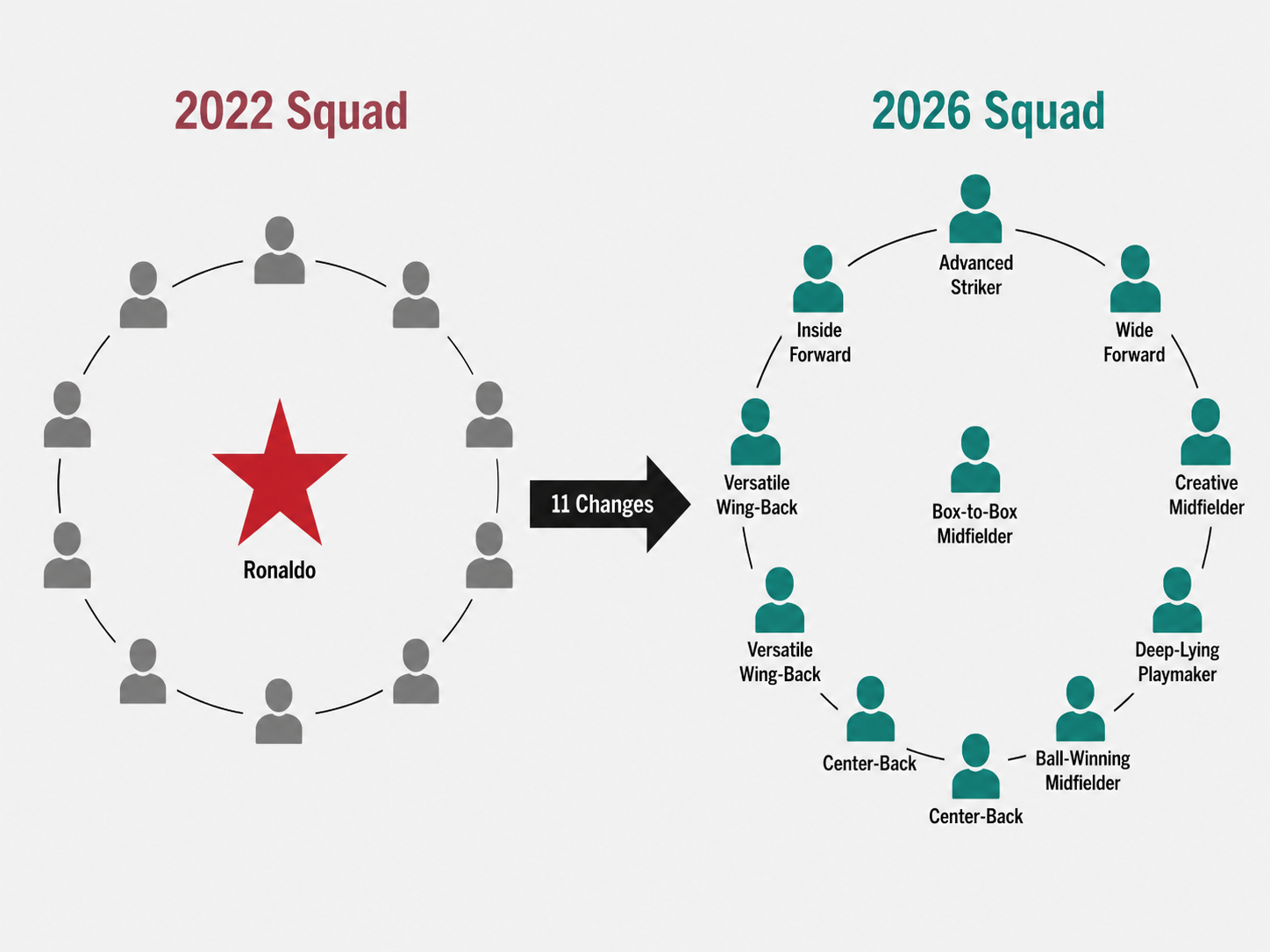
For over a decade, Portugal’s tournament blueprint was simple. Get the ball to Ronaldo and hope he does something miraculous. The supporting cast was often functional, sometimes aging, and rarely world-class across the board. That era is over.
Roberto Martínez has overseen a significant overhaul. The 2026 roster features 11 changes from the 2022 World Cup squad. Out are veterans like Pepe and Raphael Guerreiro. In is a generation of technical, versatile players who excel at the possession-based game Martínez favors. Portugal averages 71% possession under his tenure.
The depth chart is now the team’s strongest argument.
| Position | Starter | Key Depth | Why It Matters |
|---|---|---|---|
| Center-Back | Rúben Dias, Gonçalo Inácio | António Silva, Danilo Pereira | Dias provides elite leadership; Inácio’s left-footed passing unlocks buildup. |
| Full-Back | João Cancelo, Nuno Mendes | Diogo Dalot, Raphaël Guerreiro | Mendes, in particular, is arguably the world’s best in his role—he neutralized Lamine Yamal in the Nations League final. |
| Midfield | Vitinha, João Neves, Bruno Fernandes | Bernardo Silva, Matheus Nunes, Otávio | The PSG double-pivot (Vitinha & Neves) offers control; Fernandes is the creative engine. |
| Attack | Rafael Leão, Cristiano Ronaldo, Francisco Conceição | Gonçalo Ramos, Pedro Neto, João Félix | Leão provides blistering pace; Conceição offers direct dribbling; Ramos is a pure finisher. |
This is a squad where the players who don’t start would be key figures for most other nations at the tournament. That depth is crucial for managing the physical toll of a 48-team World Cup across North America. It also means the team’s fate isn’t tied to one man’s form.
The evolution from a one-star system to a cohesive unit is the single biggest reason for optimism. It’s what separates this Portuguese generation from the teams that fell short in 2010, 2014, and 2022.
Ronaldo’s Role at 41: Starter or Super-Sub?
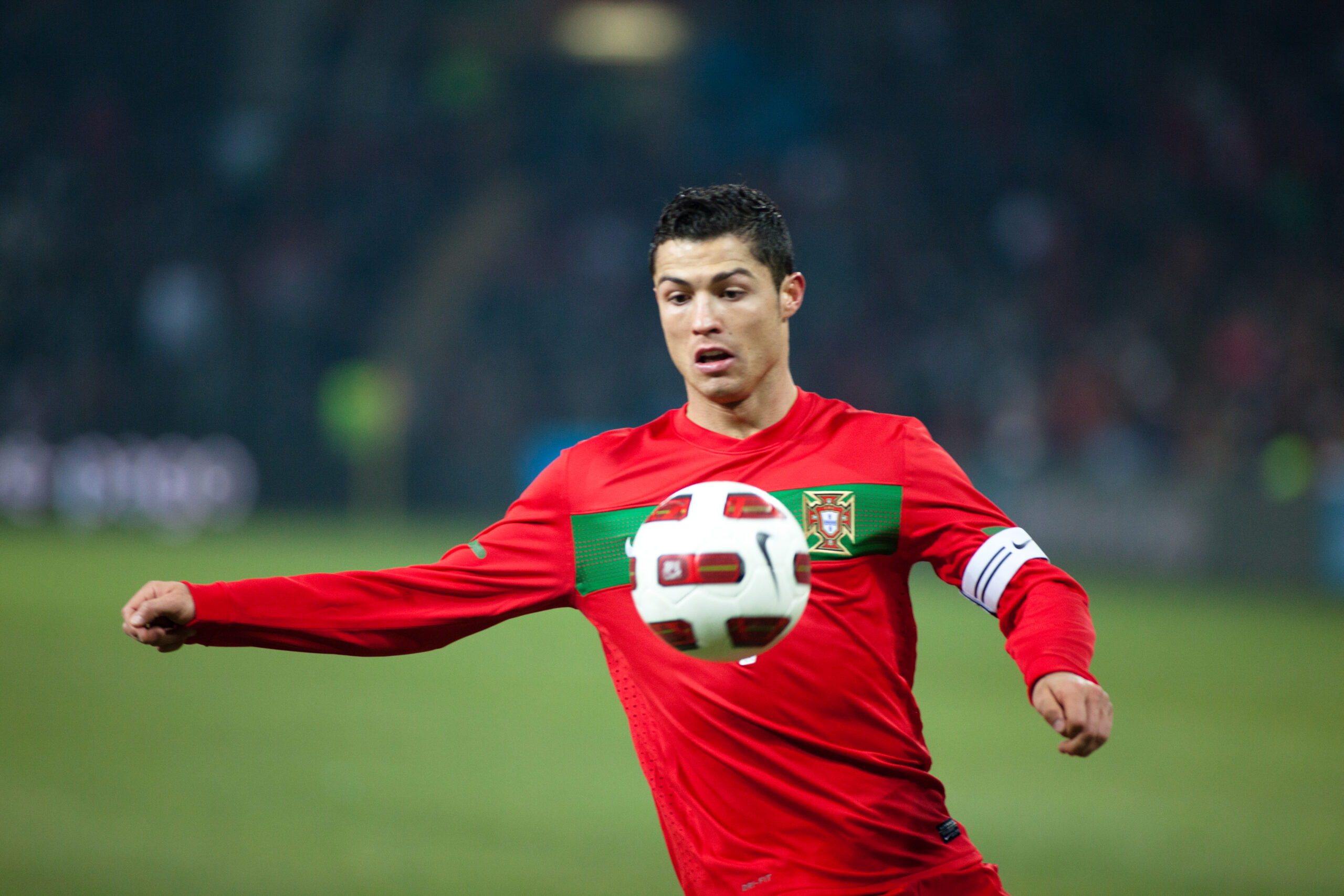
Photo: Ludovic Péron / Wikimedia Commons / CC BY-SA 3.0

Cristiano Ronaldo will be 41 years old at the 2026 World Cup. He remains a lethal finisher, 25 goals in his last 30 appearances for Portugal prove that. But his role has fundamentally changed. The all-action winger who could single-handedly dismantle a defense is gone.
Today’s Ronaldo is a pure Number Nine, a box poacher. His movement is about finding space between center-backs, not beating fullbacks on the dribble. His game is about one-touch finishes and aerial dominance, not 50-yard solo runs.
This evolution dictates his usage.
- He will not start every match. In the group stage against weaker opponents, his experience and goal threat are invaluable. Against elite pressing teams in the knockout rounds, his reduced mobility can be a liability. Roberto Martínez will manage his minutes.
- His most potent role may be as an impact substitute. Imagine a tense, 70-minute-old quarterfinal locked at 0-0. Introducing a fresh, hungry Ronaldo against tired defenders is a tactical weapon most teams cannot match.
- The team is no longer built around him. Previous managers bent their entire system to service Ronaldo. Martínez has built a system that functions with or without him. Ronaldo is now a part of the machine, not the entire engine.
This pragmatic approach is a sign of strength, not disrespect. It extends Ronaldo’s effectiveness and protects the team’s tactical shape. His leadership in the dressing room and his unparalleled big-game mentality remain irreplaceable assets. But his on-field contribution will be specialized.
Common mistake: Assuming Ronaldo must start every game for Portugal to succeed, this overlooks how his specific physical profile could be exploited in high-intensity knockout matches and ignores the potent alternative options on the bench.
The Path to the Trophy: A Brutal Knockout Run
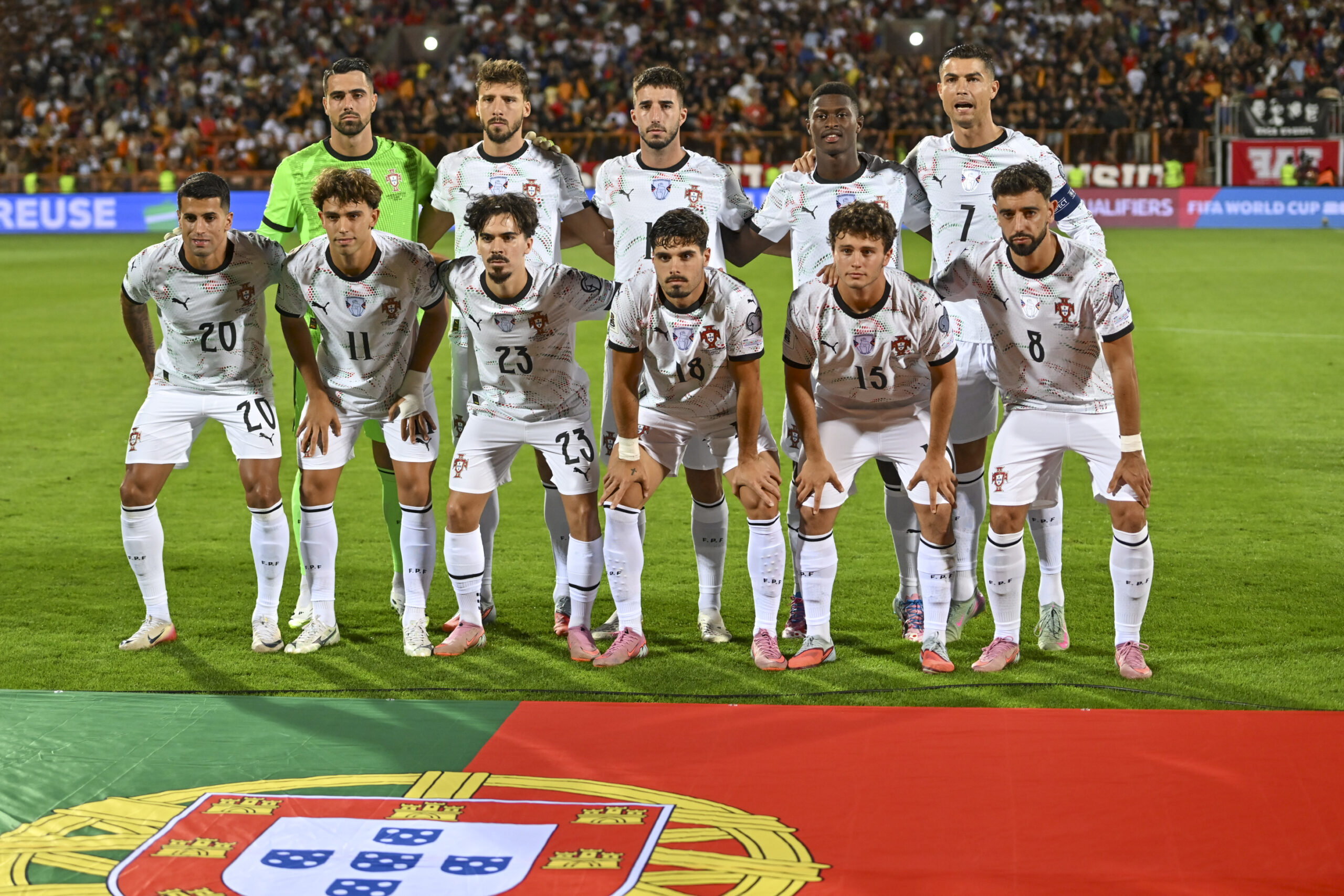
Photo: YantsImages / Wikimedia Commons / CC BY-SA 4.0

Portugal’s Group K draw is favorable. They should top it. The trouble starts immediately after. The expanded 48-team format creates a convoluted path, but if Portugal wins their group, the bracket sets up a gauntlet.
Let’s map the likely journey, based on current FIFA rankings and qualifying projections.
- Round of 32: They would face a third-place qualifier from Groups A, B, C, or D. This should be a straightforward victory.
- Round of 16: The opponent would likely be the runner-up of Group H, think Switzerland or a CONCACAF side like Canada. Another winnable match.
- Quarterfinal: This is where the dream often ends. Topping the group likely sets up a clash with Argentina, the reigning champions and Lionel Messi’s successor generation. This is the first true “final before the final.”
- Semifinal: The winner likely faces the survivor of a bracket containing England and Brazil. Both possess squads with equal or greater depth than Portugal’s.
- Final: Waiting would probably be Spain or France, the two most complete teams in international football over the last decade.
To win the World Cup, Portugal would likely have to beat Argentina, then either England or Brazil, and then Spain or France in a 19-day span. That is the definition of a Herculean task. It requires not just talent, but perfect health, tactical flexibility, and moments of individual brilliance.
The path is the biggest argument against their chances. It’s not that Portugal can’t beat those teams, they can, as their Nations League win over Spain proved. It’s that they have to beat three or four of them in a row without a single misstep.
The Manager: Roberto Martínez’s Proven Calm
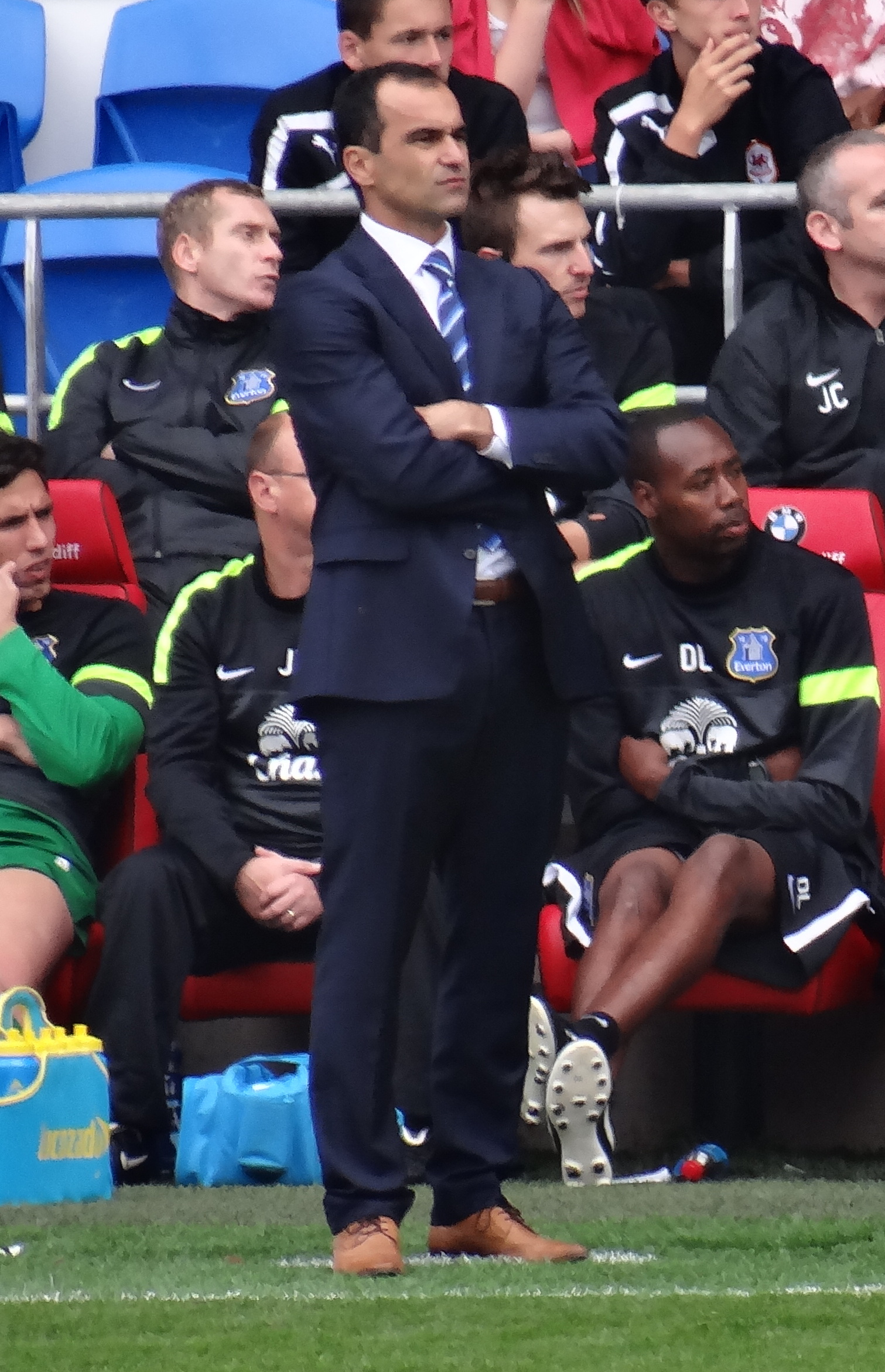
Photo: Jon Candy from Cardiff, Wales / Wikimedia Commons / CC BY-SA 2.0

Managing a squad of elite egos at a World Cup is a unique skill. Roberto Martínez has done it before. He helmed Belgium’s “Golden Generation” for six years, managing stars like Kevin De Bruyne, Eden Hazard, and Romelu Lukaku to a third-place finish in 2018, their best-ever result.
That experience is invaluable for Portugal’s 2026 campaign.
Martínez’s key strength is tactical flexibility. He is not dogmatic. He has shown a willingness to adjust his system based on the opponent, shifting between a back three and a back four, and altering his midfield press. This adaptability is essential for a long tournament with varied opponents.
More importantly, he has handled the “Ronaldo question” with a deft touch. He has kept Ronaldo central to the project, the captain, the record-breaker, the icon, without making the entire team dependent on him. He has built a team that features Ronaldo, not a vehicle for Ronaldo.
This psychological management might be his most important job. Keeping a squad of 26 world-class players unified, motivated, and ready when called upon over a month-long tournament is what separates good managers from tournament winners.
The Ballon d’Or Equation: What Ronaldo Really Needs
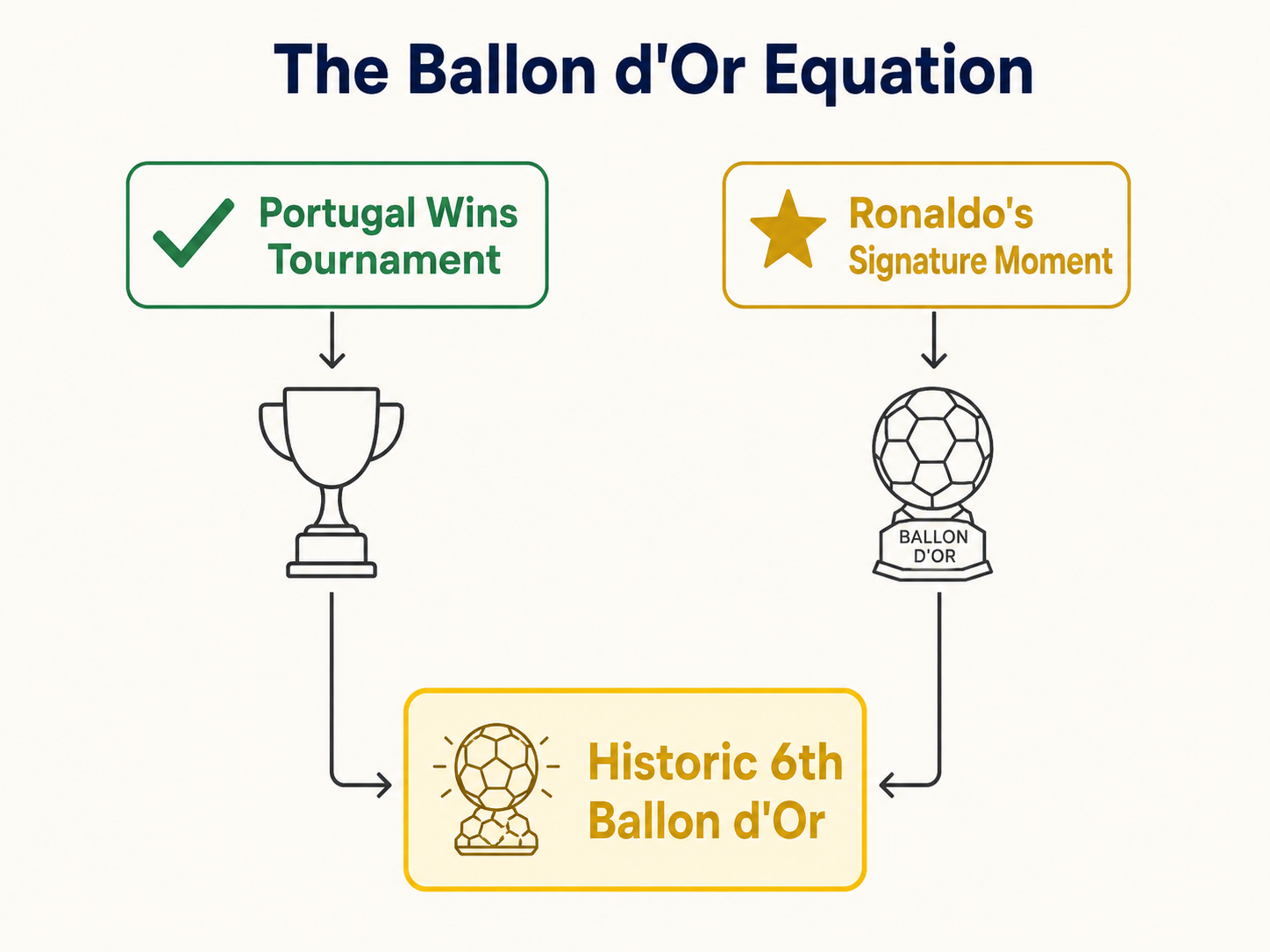
The Ballon d’Or is not officially tied to the World Cup, but in practice, it is. Industry consensus holds that World Cup performance accounts for roughly 80% of the voting criteria in a World Cup year. For Ronaldo to win a historic sixth award, the tournament must shape the narrative.
The formula is strict.
- Portugal must win the tournament. A runner-up finish, even with a heroic Ronaldo campaign, would likely see the award go to a key player from the champion.
- Ronaldo must be a decisive contributor. He doesn’t need to win the Golden Boot, but he needs a signature moment. A goal or assist in a semi-final or final. A game-winning penalty in a shootout. A performance that defines the narrative.
- He needs to outshine his direct rivals. If Kylian Mbappé leads France to the title with eight goals, or if a young superstar like Jude Bellingham dominates for England, Ronaldo’s case weakens.
His current odds for the 2026 Ballon d’Or are long, reflecting the difficulty of this double achievement. It’s a two-part challenge: first, drive Portugal to the title; second, ensure his individual contribution is indelible.
This external prize adds a fascinating layer of personal motivation. It’s the final, towering peak in his career.
Historical Hurdles and the Psychology of the “Final Dance”
Portugal’s history in major tournaments is a story of promise unfulfilled. Since their semi-final run in 2006, they have consistently entered tournaments with talent and exited with disappointment: a Round of 16 loss in 2010, a group stage exit in 2014, a quarterfinal upset by Morocco in 2022.
This history is a psychological weight. It creates a subconscious ceiling. Breaking it requires more than talent; it requires a mental reset. The 2024 UEFA Nations League victory was a crucial step. Beating Spain in a final proved this group can win a trophy on a big stage. That confidence is tangible.
Then there’s the “final dance” factor. This is universally understood to be Ronaldo’s last World Cup. That narrative is a powerful, unquantifiable variable. It can motivate teammates to fight for a legend. It can sharpen Ronaldo’s own legendary focus. It can also create overwhelming pressure, where every missed chance feels like a historic failure.
How Martínez and the senior players like Rúben Dias and Bruno Fernandes manage this narrative will be critical. They must harness the positive energy, the desire to send off a icon with the one trophy he lacks, without being crushed by the expectation.
Frequently Asked Questions
Will Ronaldo start every game at the 2026 World Cup?
Almost certainly not. At 41, managing his physical output is key. He will start in the group stage and in certain tactical setups, but expect him to be used as a strategic substitute in later knockout matches to exploit tired defenses.
Who are Portugal’s most important players besides Ronaldo?
The core is Bruno Fernandes for chance creation, Rúben Dias for defensive leadership, and Nuno Mendes for defensive stability and attacking width from left-back. The midfield control of Vitinha and João Neves is also fundamental to their possession game.
What is Portugal’s biggest weakness?
While the squad is deep, they can sometimes lack a true, physical defensive midfielder to break up play against the most powerful midfields. Also, their historical tendency to underperform in tournament knockout games remains a psychological hurdle until proven otherwise.
Could Portugal win without Ronaldo playing a major role?
Yes, and that’s the point. The squad has the depth in attack with Rafael Leão, Gonçalo Ramos, and João Félix to score goals. Their system under Martínez is designed to create chances through midfield control, not just crossing to Ronaldo. His greatest contribution might be leadership, not goals.
What would winning the 2026 World Cup mean for Ronaldo’s legacy?
It would settle the eternal debate. It would make him the only man to win six Ballons d’Or and complete the ultimate career treble: Champions League dominance, European Championship glory, and a World Cup. It would cement his argument as the most accomplished footballer in history, full stop.
The Bottom Line
Will Ronaldo win the 2026 World Cup? The answer is maybe, but probably not, and that’s not an insult. It’s the cold math of tournament football. Portugal has the best squad of Ronaldo’s international career surrounding him. They have a tactically flexible manager. They have the motivation of a final dance.
But the path is brutal, and the competition is fiercer than ever. Their 8-9% probability is a fair reflection: a real chance, but a slim one. To convert that chance, they need seven near-perfect performances, tactical genius from Martínez, and likely one last iconic moment from number 7 himself.
Win or lose, this is the final chapter. For the first time, Portugal has a team capable of writing a happy ending without relying on a single superhero. That, in itself, is Ronaldo’s most important legacy.
I come from the “soccer heart” of Germany, the Ruhrpott. I have played, trained and followed soccer all my life and am a big fan of FC Schalke 04. I also enjoy following international soccer extensively.