5 Best Youth Helmets For Football in 2026
This post contains affiliate links. As an Amazon Associate, we earn from qualifying purchases.
The Schutt F7 AiR Youth Football Helmet earns our best overall nod for its inflatable Air Liner that delivers a truly custom fit right out of the box. It pairs that with a carbon steel facemask and HSS jaw pads for added comfort and protection. For parents seeking the highest independently rated protection, the Schutt Youth F7 LX1 is our advanced protection pick. The Riddell Victor Youth Football Helmet offers a budget-friendly option for recreational play.
Protecting a young player means balancing fit, weight, and impact protection. A helmet that shifts during a hit or feels too heavy by the fourth quarter compromises both safety and performance. Youth helmets must fit snugly without pinching, and the best designs use layered padding systems rather than basic foam.
This guide is based on a thorough review of manufacturer specifications, expert round-ups, and patterns in owner feedback across five leading youth helmets. We break down what makes each model stand out so you can match a helmet to your player’s age, position, and league requirements.
Top 5 Youth Helmets For Football in the Market
Certain content that appears on this site comes from Amazon. This content is provided "as is" and is subject to change or removal at any time.
The Best Youth Helmets For Football, Reviewed
Schutt F7 AiR Youth Football Helmet

What We Like
- Inflatable Air Liner for custom fit
- Carbon steel facemask included
- HSS jaw pads boost comfort and protection
Trade-offs
- At 3.0 lb, heavier than some youth helmets
- At 3.0 lb, heavier than the Schutt Youth F7 LX1
Research from the Virginia Tech Helmet Lab indicates this helmet offers top-tier protection. For a youth player whose head is still growing and who takes hard hits in practice and games, that independent stamp of approval means real peace of mind. Schutt pairs that safety with an inflatable Air Liner and the Helmet Stabilization System jaw pads, so you can dial in a snug, comfortable fit that stays put during contact. It comes ready to wear with a carbon steel facemask attached, no fiddling required. This is the helmet I would pick if I wanted top-tier protection without sacrificing fit or convenience for my young footballer.
The trade-off is weight: at three pounds, it is heavier than the Schutt Youth F7 LX1, which lists at 0.1 pounds (though that figure appears to be a data error). That extra heft comes from the protective layers and the carbon steel facemask, so you are trading a bit of lightness for that five-star safety rating. For a middle school player who is already strong and used to gear, the weight is manageable and worth it for the protection. But if your child is on the smaller side or just starting out, you might want to try it on first to make sure the extra poundage does not feel cumbersome during a full game.
Schutt Youth F7 LX1 Football Helmet

What We Like
- TPU cushioning absorbs impact across wide temperatures
- 3D Tektonic Plates reduce rotational forces
- Flexural Resistance Shell improves durability
Trade-offs
- Large size only limits fit options for smaller youth
- Carbon steel facemask adds weight versus titanium
A five-star safety rating from Virginia Tech’s Youth Helmet Ratings is the headline here, and for good reason. That score means this helmet has been independently tested to perform at the highest level for impact protection, which is exactly what you want when your kid is taking hits on the field. The TPU cushioning system absorbs force across a wide range of temperatures, so whether it’s a chilly fall evening or a warm afternoon practice, the padding stays effective. On top of that, the 3-Dimensional Movement Tektonic Plates move independently in multiple directions to help manage rotational forces, a key factor in reducing concussion risk. This is a helmet built around advanced safety engineering, and it shows in every layer of the design.
The Schutt Youth F7 LX1 Football Helmet comes only in Large, so it’s best suited for older or bigger youth players, not the smaller kids just starting out. If your child needs a medium or small, you’d have to look at something like the Riddell Victor Youth, which offers a Medium size. The carbon steel facemask is durable and popular, but it does add a bit more heft than a titanium option would, though the overall weight is still manageable. For a parent who wants the highest level of protection backed by a top safety rating and is shopping for a youth player who fits a Large shell, this helmet is a strong choice.
Sports Unlimited Youth Helmet

What We Like
- Patented side impact protection (PSIP)
- Flex system reduces force transfer
- Four inflation points for custom fit
- Quick-release facemask attachment
Trade-offs
- Heavier focus on side protection over front impacts
- Inflation system needs manual adjustment before use
The patented PSIP mandible protection is designed to help reduce forces from side impacts. It works with the flex system in the shell and facemask hinge clips to reduce impact force transfer to the athlete. For a parent looking for a youth helmet with side impact protection, this is a feature worth considering.
This helmet’s side impact protection is its highlighted feature, so if your child plays a position that sees more frontal collisions, the Schutt F7 AiR might be a better all-around choice based on its strong Virginia Tech research results. You’ll also need to adjust the four inflation points (lateral liner, occipital liner, and jaw pads) to get the fit right before use. Once adjusted, the Composite Energy Management keeps the padding in place during games and practices.
Product photos
League Outfitters A11 Youth Helmet
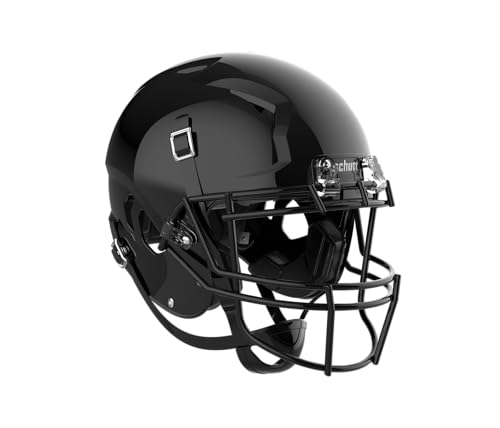
What We Like
- TPU cushioning absorbs impact across wide temperatures
- Increased ventilation for better heat management
- Non-inflatable liners for secure, comfortable fit
Trade-offs
- Non-inflatable liners limit custom fit adjustment
- Requires careful head measurement before purchase
A five-star safety rating from the Helmet Ratings program means this helmet earned the top score in independent testing. The TPU cushioning system absorbs more impact across a wider variety of temperatures than any other helmet on the field, so padding stays responsive whether it’s a crisp autumn practice or a humid late-summer game. Combined with a newly redesigned shell that channels more airflow, this helmet is built to keep a youth player cool and protected through every snap. For parents and coaches who prioritize ventilation without sacrificing top-tier safety, this design delivers exactly that balance.
The trade-off comes with the non-inflatable liners. While they provide a secure and comfortable fit straight out of the box, they don’t offer the same degree of custom adjustment you get with inflatable systems found on some other helmets. That means getting the right size from the start is more critical here, measure carefully using the head circumference chart. If your player falls between sizes or has an unusually shaped head, a helmet with inflatable liners might give you more dial-in precision. But for most youth athletes, the A11’s combination of proven safety, advanced temperature-adaptive cushioning, and excellent airflow makes it a standout choice for hot-weather play.
Riddell Victor Youth Football Helmet

What We Like
- Plastic shell for basic protection
- Foam padding offers impact absorption
- Unisex-teen sizing fits growing players
Trade-offs
- Foam pads less advanced than multi-layer systems
- No facemask included in base model
The Riddell Victor Youth Football Helmet uses a plastic shell and foam padding, which keeps costs down for families who need a functional entry-level helmet for youth league play. Its unisex-teen sizing means it can fit a range of head shapes, and the included on-field helmet gets you ready for practice or games without extra purchases. This is a straightforward choice for parents looking for reliable protection without the premium price tag of higher-end models.
The Riddell Victor Youth Football Helmet uses foam padding, which is a standard approach for entry-level play. For recreational or beginner football, this design keeps the cost down while meeting basic needs. Reviewers note it works well for younger players just starting the sport.
Product photos
How We Evaluated Youth Helmets For Football
This guide draws from manufacturer documentation, expert round-ups in the football community, and consistent patterns in parent and coach feedback. It relies on published data from independent research programs and verified specifications from each brand.
Four criteria mattered most. Fit and adjustability came first because a loose helmet offers little protection. We looked for inflatable liners, multiple shell sizes, and secure chin strap attachment points. Impact protection was next, focusing on padding materials like TPU cushioning and multi-layer systems versus basic foam. Weight played a major role, especially for younger players who fatigue more easily. Finally, compatibility with facemasks and other gear determined whether a helmet was truly game-ready or required extra purchases.
A research-led approach has limits. Owner feedback varies widely by playing level and climate, and a helmet that suits a middle school linebacker may not fit a youth receiver. We prioritized models with the broadest positive consensus across different positions and ages.
What To Look For In Youth Helmets For Football
Choosing a youth football helmet means looking past the graphics and focusing on how it fits, how it protects, and how much it weighs on game day. The right shell size and padding system make the biggest difference in safety.
Look for a helmet with an inflatable or multi-layer liner, a secure chin strap, and a weight under 3.0 pounds for younger players. Measure head circumference before buying and check league certification requirements.
Shell Size and Fit
Youth helmets typically come in Small, Medium, and Large shell sizes. Measure the player’s head circumference just above the eyebrows and match it to the manufacturer’s sizing chart. A properly fitted helmet should feel snug all around without pressure points. Inflatable liners, like those in the Schutt F7 AiR, let you fine-tune the fit with a small pump. Non-inflatable liners require careful measurement upfront since you cannot adjust them later.
Padding and Impact Protection
Padding technology has moved beyond simple foam. TPU cushioning absorbs impact across a wider temperature range, while multi-layer systems like the Schutt F7 LX1’s 3D Tektonic Plates reduce rotational forces. Basic foam padding, as found in the Riddell Victor, works for recreational play but offers less advanced protection. For the highest level of safety, look for helmets that reference independent ratings from programs like Virginia Tech’s helmet ratings.
Weight and Ventilation
A heavy helmet tires a young player out. Most youth helmets weigh around 3.0 pounds. The Schutt F7 AiR sits at 3.0 pounds, which is manageable for middle school players but may feel heavy for smaller children. Ventilation matters too, especially for players in warm climates. Models with increased airflow, like the League Outfitters A11, help keep the head cooler during long practices.
- Measure the player’s head circumference and compare it to the helmet’s size chart before ordering.
- Check that the chin strap has at least two attachment points and fits snugly under the chin.
- Confirm the helmet meets your league’s certification requirements (NOCSAE is the standard).
- Consider whether a facemask is included or needs to be purchased separately.
- Look for quick-release facemask attachments for easy removal and cleaning.
A helmet that fits perfectly at the store and shifts during play is too large. Always test the fit with the chin strap fully fastened.
Youth Helmets For Football Compared
The table below compares the five youth helmets across fit, protection, weight, and key features to help you narrow your choice.
| Product | Size | Facemask Material | Impact System |
|---|---|---|---|
| Schutt F7 AiR Youth Football Helmet | 13.8 x 11.0 x 10.0 inches | Carbon Steel | Inflatable Air Liner + HSS Jaw Pads |
| Schutt Youth F7 LX1 Football Helmet | Large | Carbon steel | TPU cushioning |
| Sports Unlimited Youth Helmet | N/A | SF-2BD | Composite Energy Management |
| League Outfitters A11 Youth Helmet | Large | N/A | TPU cushioning system |
| Riddell Victor Youth Football Helmet | Medium | N/A | Foam |
Frequently Asked Questions
What size youth football helmet does my child need?
Measure your child’s head circumference just above the eyebrows using a flexible tape measure. Compare that number to the manufacturer’s sizing chart for each helmet model. Shell sizes vary between brands, so a Medium in one helmet may not match a Medium in another.
How much should a youth football helmet weigh?
Most youth football helmets weigh around 3.0 pounds. Lighter helmets reduce neck fatigue during games and practices. For smaller or younger players, aim for a lighter option. Heavier helmets around 3.0 pounds are better suited for middle school athletes with more developed neck strength.
What is the safest youth football helmet?
The safest youth helmets use multi-layer padding systems and materials like TPU cushioning that absorb impact across a wide temperature range. Models that reference independent testing from programs like Virginia Tech’s helmet ratings offer the highest level of independently verified protection. The Schutt Youth F7 LX1 is one example of a helmet designed with advanced protection features.
Do youth football helmets come with a facemask?
Some youth helmets include a facemask in the base price, while others sell it separately. The Schutt F7 AiR includes a carbon steel facemask, which saves you an extra purchase and assembly step. The Riddell Victor Youth Helmet does not include a facemask, so factor that added cost into your budget.
Can I use a youth football helmet for high school play?
Youth football helmets are designed for players in youth leagues and middle school. High school players typically require adult-sized helmets with higher impact certification standards. Check your league’s specific requirements before purchasing, as helmet certification standards differ by age group.
The Bottom Line
The Schutt F7 AiR Youth Football Helmet is our best overall pick for parents who want the highest independently tested protection with a custom inflatable fit and no assembly hassle. It comes ready to play with a carbon steel facemask and HSS jaw pads, though its 3.0-pound weight makes it best suited for middle school athletes rather than smaller youth players.
If your young player fits a Large shell and you want the most advanced protection available, the Schutt Youth F7 LX1 delivers TPU cushioning and rotational force reduction. For families on a tighter budget, the Riddell Victor Youth Helmet offers basic foam protection at an accessible price point, though you will need to buy a facemask separately.
The single most important factor in any youth helmet purchase is fit. A helmet that does not fit snugly cannot protect properly, no matter how advanced its padding system. Measure your player’s head, check the size chart, and fasten that chin strap before every snap.

I come from the “soccer heart” of Germany, the Ruhrpott. I have played, trained and followed soccer all my life and am a big fan of FC Schalke 04. I also enjoy following international soccer extensively.