MLS Playoff Format Explained: How the -26 Postseason Works
The MLS playoff format explained: 18 teams qualify, with the top seven from each conference entering a Round One Best-of-3 series and the 8th and 9th seeds facing off in a Wild Card match. The postseason then progresses through single-elimination Conference Semifinals and Finals before the MLS Cup championship, hosted by the finalist with the better regular-season record.
Most fans coming from European leagues get this wrong on the first try. They expect a pure knockout tournament or assume the best regular-season team is automatically crowned champion. The MLS system is a hybrid, part American sports playoff, part global soccer cup competition, and it changes just often enough to keep everyone guessing.
Here is exactly how the postseason works, why it’s built this way, and what you need to know to follow the drama from Wild Card weekend to the final whistle at MLS Cup.
Key Takeaways
- The playoff field includes 18 total teams: the top nine from the Eastern Conference and the top nine from the Western Conference.
- The Round One Best-of-3 series is unique to MLS; tied games in this round and the Wild Card matches go straight to penalty shootouts with no extra time.
- Home-field advantage is determined by regular-season record, not just seeding, especially for the Conference Finals and MLS Cup.
- The Supporters’ Shield winner (best regular-season record) is guaranteed to host every playoff match, including MLS Cup, if they advance.
- All playoff matches are broadcast live on Apple TV, with select games on FOX Sports in the U.S. and TSN/RDS in Canada.
How Many Teams Make the MLS Playoffs?
The field is 18 teams deep, split evenly between the two conferences. After the 34-game MLS regular season format concludes, the top nine from the East and the top nine from the West earn postseason berths. This structure guarantees more than half the league’s 30 clubs a shot at the title.
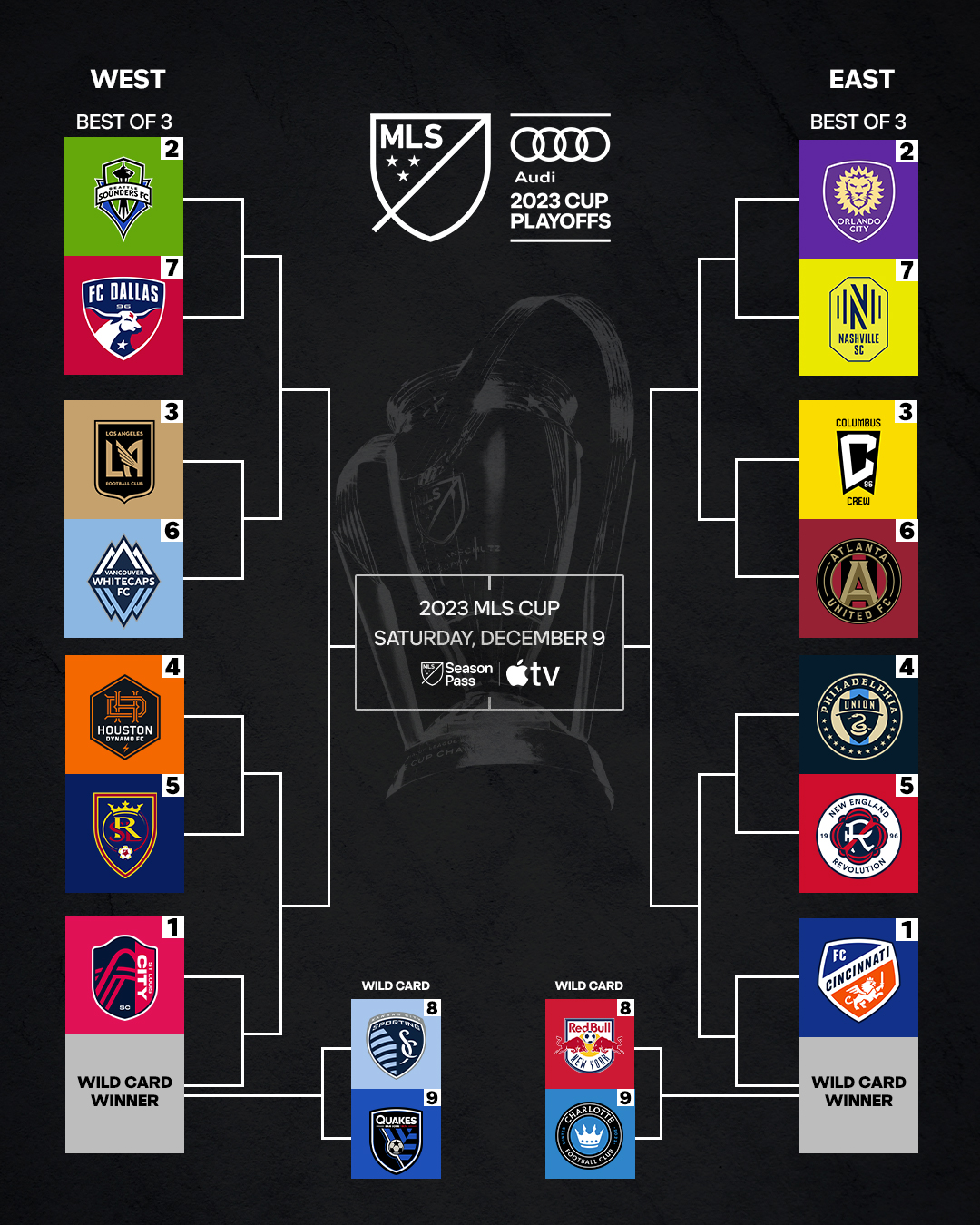
The qualification threshold is static: seeds 1 through 7 in each conference advance directly to the Round One Best-of-3 series. Seeds 8 and 9 must win a Wild Card match to join them. This setup adds a play-in round of drama before the main bracket even begins.
The seeding is purely mathematical, based on points per game. Tiebreakers cascade: total wins, then goal difference, then goals scored, then fewer disciplinary points. The system is designed to reward attacking play and clean discipline, not just grinding out draws. A team that finishes 9th with 45 points has had a solid year but still needs to win an extra game to truly start its playoff run.
TL;DR: Nine teams per conference qualify. The top seven get a bye to Round One; the 8th and 9th seeds battle in a Wild Card match for the final spot.
The Step-by-Step Playoff Roadmap
The path to MLS Cup has five distinct stages, each with its own rules. The format intentionally mixes series play with sudden death to test teams in different ways.
1. Wild Card Matches: The Single-Game Play-In
This is where the postseason pressure arrives instantly. The 8th seed hosts the 9th seed in a one-off match. There is no safety net.
The key mechanical detail is the tiebreaker rule. If the match is level after 90 minutes, it goes directly to a penalty shootout. No extra time. The league’s logic is straightforward: these are lower-seeded teams playing a midweek game; asking them to play 30 extra minutes before a shootout anyway would be pure fatigue for the winner, who then faces the top seed just days later. It forces a decisive outcome quickly.
Common mistake: Assuming the Wild Card winner becomes the 8th seed. They do not. The winner advances to Round One but slots in as the opponent for the No. 1 seed in their conference. Their seeding number disappears.
2. Round One: The Best-of-3 Series
This is the format’s most distinctive and debated layer. Introduced in 2023, it replaced a single-elimination round. Each matchup is a best-of-three series, not a two-legged aggregate scoring affair.
The higher seed hosts Game 1 and, if necessary, Game 3. The lower seed hosts Game 2. It’s a home-away-home sequence. The first team to win two matches advances. Crucially, if any individual match is tied after 90 minutes, it also proceeds directly to penalties, no extra time. Points are not accumulated; you either win the match or you don’t.
| Series Scenario | Higher Seed Hosts | Lower Seed Hosts | Deciding Mechanism |
|---|---|---|---|
| Sweep (2-0) | Game 1 | Game 2 | Series ends |
| Competitive (2-1) | Games 1 & 3 | Game 2 | Winner of Game 3 |
| Individual Tie | N/A | N/A | Penalty shootout |
The physical toll here is real. A series that goes the distance means three matches in about two weeks, with travel. Coaches must manage squad rotation in a way they never did in a single-elimination format. It favors deeper, more robust rosters over teams reliant on a star XI.
3. Conference Semifinals & Finals: Back to Sudden Death
After Round One, the field is cut to four teams per conference. The tournament reverts to classic single-elimination for the Conference Semifinals and Conference Finals.
The higher-remaining seed hosts the Semifinal. For the Conference Final, hosting rights go to the team with the better regular-season record, not merely the higher playoff seed. This is a critical detail. If a 4th seed with 55 points knocks out a 1st seed, and faces a 2nd seed with 58 points, the 2nd seed hosts the Final. It makes every regular-season point potentially valuable months later.
I preferred the old two-legged Conference Finals. The home-and-away format felt more equitable and produced legendary comebacks. The single-game final at the higher seed’s stadium is louder, more hostile, and often feels decided by one moment of quality or one mistake. It’s brutal theater.
Tiebreaker rules shift here, too. If a Conference Semifinal or Final is tied after 90 minutes, two 15-minute periods of extra time are played. If still tied, then penalties decide it. The reintroduction of extra time reflects the higher stakes, these matches determine a conference champion.
4. MLS Cup: The Championship Final
The final is a standalone event, scheduled for a prime weekend slot in early December. Hosting is determined by regular-season record, not playoff seeding. The Supporters’ Shield winner is guaranteed to host MLS Cup if they advance, a massive reward for a 34-game grind.
The tiebreaking procedure mirrors the Conference Finals: 90 minutes, then extra time, then penalties. There is no away-goals rule or other complication. It’s a pure winner-take-all match.
Home-Field Advantage: It’s More Than Just Hosting
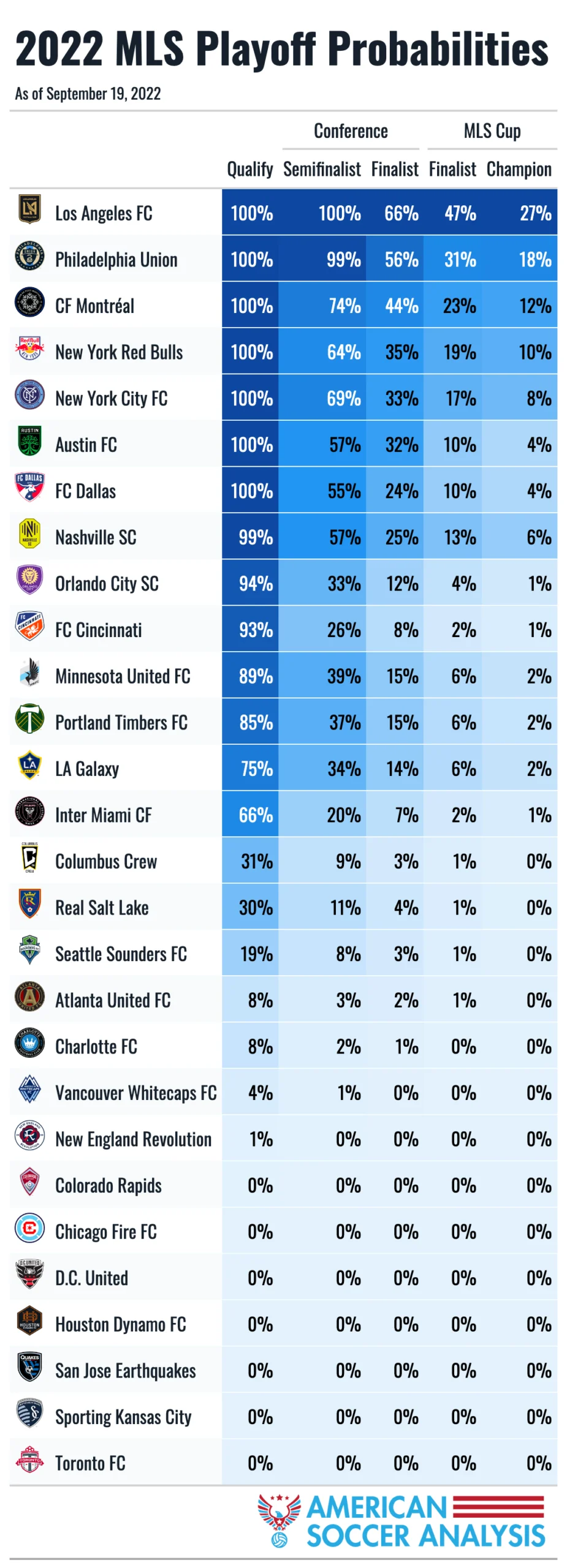
The phrase “higher seed hosts” oversimplifies a nuanced system. Home-field advantage is a currency earned during the regular season and spent strategically in the playoffs.
- In the Wild Card round and Round One, the higher seed simply hosts. The bracket is fixed.
- For the Conference Semifinals, the highest-remaining seed hosts. Reseeding does not occur after Round One.
- For the Conference Finals and MLS Cup, the team with the superior regular-season record hosts. This rule makes the Supporters’ Shield the ultimate prize for home-pitch enthusiasts.
This system creates a clear hierarchy of regular-season achievements. Winning the Shield is the top goal. Finishing first in your conference is next. Then comes securing a top-four seed to guarantee a potential home game in the Semifinals. Every position matters.
TL;DR: Hosting rights in the later rounds are determined by regular-season record, making every single point from February to October potentially decisive in December.
The 2025-26 MLS Playoff Calendar

The schedule is built backward from a target MLS Cup date. The league now plans years in advance, with formats locked in for multi-year cycles to provide stability for fans and broadcasters.
| Round | 2025 Key Dates | 2026 Key Dates | Format |
|---|---|---|---|
| Decision Day | Sat, Oct 18 | Sat, Nov 7 | Final regular-season games |
| Wild Card Matches | Wed, Oct 22 | Mid-Oct (TBD) | Single elimination |
| Round One | Oct 24 – Nov 9 | Late Oct – Mid-Nov | Best-of-3 series |
| Conference Semifinals | Nov 22-23 | Late Nov | Single elimination |
| Conference Finals | Nov 29-30 | Early Dec | Single elimination |
| MLS Cup | Sat, Dec 6 | Fri, Dec 18 | Championship final |
The calendar is tight. The 2025 playoffs, for instance, start just four days after the regular season ends. There is no extended break, momentum and health are immediate factors. This compression is a conscious choice to maintain intensity and fit the postseason into a broadcast window before the December holidays.
The entire MLS season end date is designed to avoid direct conflict with the NFL’s stretch run while carving out a distinct space in the American sports landscape.
Why This Format? History & Rationale
The MLS playoff format has never been static. It has morphed from a small knockout tournament to a conference-based system, to briefly including a two-legged aggregate score round, to the current hybrid model. Each change aimed to solve a perceived problem.
The shift to the best-of-3 series in Round One addressed two issues. First, it creates more inventory, more guaranteed games, for broadcast partners like Apple TV. Second, it was seen as a fairer test than a single-elimination fluke, rewarding the better team over a series while retaining the knockout excitement in later rounds. Whether it actually reduces upsets is still debated.
This American league structure, with its closed system and postseason, is fundamentally different from the promotion-and-relegation, single-table models common in Europe. The playoffs are the league’s signature event, a month-long spectacle designed to crown a champion in a dramatic, televised finale. The regular season determines seeding and hosting rights, but the trophy is won in the playoffs.
Supporters’ Shield vs. MLS Cup: Know the Difference
This is the most common point of confusion for new fans. They are two separate trophies with equal prestige but different paths.
- Supporters’ Shield: Awarded to the club with the best overall record across the entire 34-game regular season. It is a testament to consistency and dominance over a long haul. The winner earns a CONCACAF Champions Cup berth and the guaranteed home-field advantage throughout the playoffs.
- MLS Cup: The championship trophy, won through the playoff bracket. It recognizes the team that gets hottest at the right time and survives the knockout pressure.
A team can win both, but it’s rare. The last to do it was LA Galaxy in 2011. The physical and mental demands of each pursuit are different. Shield winners sometimes stumble in the playoffs; MLS Cup champions often enter the postseason as a lower seed. Both achievements are celebrated, but only one comes with a championship parade.
Broadcasting and How to Watch
Every playoff match is streamed live globally on Apple TV’s MLS Season Pass. This is a non-negotiable for fans, it’s the exclusive home of the playoffs. There is no local blackout.
Select games, including the Conference Finals and MLS Cup, are also broadcast on FOX Sports in the United States and on TSN and RDS in Canada. This dual strategy ensures maximum reach: hardcore fans subscribe to Apple for every game, while casual viewers can catch the biggest matches on traditional television.
The production quality is high, with multiple camera angles, dedicated commentary teams, and no commercial breaks during run of play. It’s a premium product built for the modern viewer.
Frequently Asked Questions
How is home-field advantage determined for MLS Cup?
The finalist with the better regular-season record hosts MLS Cup. If both finalists have identical records, the tiebreakers used for seeding (wins, goal difference, etc.) are applied. The Supporters’ Shield winner is guaranteed to host if they advance.
What happens if a Round One game is tied?
If any match in the Round One Best-of-3 series is tied after 90 minutes, it goes directly to a penalty shootout. No extra time is played. The shootout winner gets credit for a match win in the series.
Do away goals matter in the playoffs?
No. The away-goals rule is not used in any round of the MLS playoffs. Tiebreaking in series is based on match wins; tiebreaking in individual games uses extra time and/or penalties as specified for each round.
Can the same team win the Supporters’ Shield and MLS Cup?
Yes, it is possible, and it’s called a “double.” However, it is difficult due to the different competitive demands and the randomness inherent in knockout tournaments. It has not been accomplished since the league’s expansion and format changes made it more challenging.
Why does MLS use a playoff system instead of crowning the regular-season champion?
The playoff system is a core feature of North American sports culture, designed to maximize excitement, television ratings, and revenue. It provides a clear, dramatic climax to the season, unlike the single-table league common in Europe where the champion can be decided weeks before the season ends.
How does the playoff format affect player salaries and contracts?
Playoff performance bonuses are standard in MLS player salaries and contracts. Advancing each round typically triggers additional payments for players, which is part of the league’s player contract structure. Winning MLS Cup can significantly increase a player’s bonus earnings.
The Bottom Line
The MLS playoff format is a unique engine designed for one product: high-stakes drama. It rewards regular-season excellence with home games and byes, but it ultimately forces teams to prove their worth in a cascade of win-or-go-home moments. Understanding the journey, from the frantic Wild Card shootout to the three-game series grind, and finally to the single-game conference and league finals, is to understand the league’s competitive soul. Forget what you know from other leagues. Here, the season is a 34-game prologue. The real story is written in the cold nights of October, November, and December.

I come from the “soccer heart” of Germany, the Ruhrpott. I have played, trained and followed soccer all my life and am a big fan of FC Schalke 04. I also enjoy following international soccer extensively.