Understanding What Happens When a Soccer Team Is Relegated
When a soccer team gets relegated, it is demoted to a lower league for the following season. The immediate consequences are a catastrophic loss of revenue, often around two-thirds of total income, and a destabilization of the squad, staff, and club operations that can threaten its existence.
Most fans see relegation as a sporting failure. They focus on the dropped points, the bad tactics, the manager sacked. That’s the surface. The real damage happens in the boardroom, the accounting department, and the contract renegotiations that start the morning after the final whistle. Clubs structured for top-flight income cannot survive on second-tier revenue without drastic, painful cuts.
This guide maps the financial, sporting, and human costs of relegation using real club collapses. It explains why parachute payments are a temporary bandage, how wage bills become anchors, and what separates clubs that bounce back from those that spiral.
Key Takeaways
- Broadcast income, the largest revenue stream, falls by 60-70% immediately. A Premier League club losing that £130 million annual payment faces a financial reset.
- Player contracts without relegation clauses become unaffordable liabilities. A wage bill four times the Championship average must be cut within months, often through forced sales.
- Parachute payments from the Premier League last three years and decrease annually. They do not cover the full revenue gap, creating a financial cliff after year three.
- Non-playing staff in marketing, communications, and academy operations face redundancy. The human cost extends far beyond the playing squad.
- A “we will be fine” culture among ownership and management is the single biggest predictor of a second relegation. Accountability and decisive restructuring are the only paths to survival.
The Immediate Financial Shock
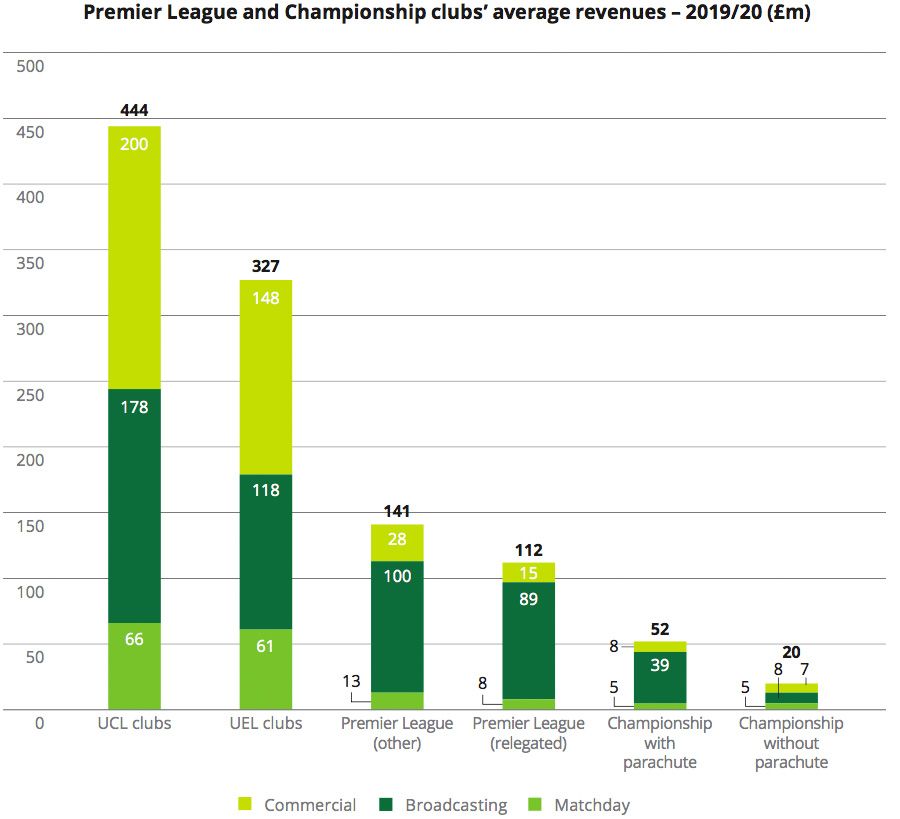
Broadcast income disappears overnight. For a Premier League club, that payment is around £130 million per season. The EFL Championship pays about £8 million per club. That’s a loss of over 90% of the most significant revenue line.
Commercial partners react within weeks. Many sponsorship deals include relegation release clauses. Even without a clause, renewal conversations change. A sponsor paying top-flight rates for global exposure will not pay the same rate for a second-tier club. Matchday income also drops, but less severely. A relegated club might see a 10-20% dip in ticket sales if the fanbase stays loyal.
A relegated Premier League club faces a revenue drop from roughly £180 million to around £60 million in the Championship. The wage bill, built for the £180 million environment, remains at £100-£120 million for the first season. That math does not work.
The cash flow problem hits before the new season starts. Summer transfer plans are scrapped. Contract renewals for existing players stall. The club’s credit rating with banks and suppliers drops. This is not a slow bleed. It is a hemorrhage.
TL;DR: Relegation cuts total revenue by about two-thirds, with broadcast income taking the biggest hit. A wage bill built for the top flight becomes an unsustainable anchor in the lower league.
How Relegation Hits the Balance Sheet
The three revenue streams, broadcast, commercial, and matchday, collapse in different ways and at different speeds. You need to separate them to see the full picture.
| Revenue Stream | Top-Flight Level | Lower-League Level | Timeframe of Loss |
|---|---|---|---|
| Broadcast Income | £130m (Premier League) | £8m (Championship) | Immediate, next season |
| Commercial Deals | £30-50m | £10-15m | Within 3-6 months |
| Matchday Income | £20-30m | £15-25m | Gradual, over next season |
Broadcast income is the giant. It’s tied to the league’s central distribution and vanishes on relegation. Commercial deals are more variable. A club like Leicester City, with recent Premier League and FA Cup success, might retain some premium partners. A club without recent pedigree will see those deals cut by half or terminated.
Matchday income is the most resilient, but it still suffers. Season ticket renewals drop. Corporate hospitality sales decline. The atmosphere in the stadium changes. That matters for player morale and future recruitment.
I watched Schalke 04 fall from the Bundesliga to the 2. Bundesliga. The first thing the new CFO did was slash the commercial department by 40 percent. The second was to tell the academy director that the youth program’s budget was frozen. Those cuts happen in the back offices, where fans never look.
The financial shock is not just about less money coming in. It’s about fixed costs that cannot be reduced fast enough. The biggest fixed cost is player wages.
The Wage Bill Anchor
A Premier League squad’s average annual wage bill is around £120 million. The Championship average is about £30 million. When a club carries a £100 million wage bill into the Championship, it operates with a cost base three times higher than its new competitors.
Some players have relegation clauses. These contracts automatically reduce salaries by 20-25% upon relegation. Many do not. Those players become liabilities. The club must sell them, often at a loss, or renegotiate their contracts under duress.
Common mistake: Assuming relegation clauses cover the entire squad, most clubs have them for only a portion of the roster. The remaining high earners become unsellable assets stuck on contracts the club cannot afford.
The transfer market for relegated players is brutal. Other clubs know the selling club is desperate. They offer low fees. They demand loan deals with no obligation to buy. The relegated club loses both the player’s talent and any chance of recouping his transfer value.
This wage-pressure cycle creates the yo-yo effect. Clubs promoted to the Premier League often spend heavily to compete, building a top-flight wage bill. If they are relegated after one season, that wage bill drags them down in the Championship, making immediate re-promotion unlikely. All three clubs promoted in 2023/24 were relegated after just one Premier League season.
TL;DR: A wage bill built for the Premier League is unsustainable in the Championship. Clubs must sell high-earning players at a discount or face financial penalties that hinder their ability to compete for promotion.
Parachute Payments: A Temporary Bandage
The Premier League’s parachute payment system is designed to soften the fall. A relegated club receives three years of decreasing payments: 55% of a Premier League club’s share in year one, 45% in year two, and 20% in year three.
These payments help. They do not solve the problem. A club losing £130 million in broadcast income might receive £70 million in parachute payments in year one. That still leaves a £60 million hole. And the payments shrink each year.
| Year After Relegation | Parachute Payment | Broadcast Income Lost | Net Financial Gap |
|---|---|---|---|
| Year 1 | ~£70m | ~£130m | ~£60m |
| Year 2 | ~£50m | ~£130m | ~£80m |
| Year 3 | ~£25m | ~£130m | ~£105m |
The system creates a cliff edge. By year three, the payment is minimal. Clubs that have not rebuilt their revenue streams or reduced their cost base face a crisis. This structure explains why some clubs suffer a second relegation before the payments end. Leicester City, relegated from the Premier League in 2023, fell to League One in 2024 while still receiving parachute payments from their first relegation.
Other major leagues have similar, but often less generous, support systems. The La Liga relegation system includes parachute payments, but they are smaller and shorter. The Bundesliga playoff for the 16th-placed club offers a chance to avoid the drop, but no financial cushion after the fall.
Parachute payments are a bandage, not a cure. Clubs must use them to restructure, not to maintain a top-flight lifestyle.
The Human Cost Beyond the Pitch
Relegation means redundancy rounds. Marketing departments shrink. Communications teams are cut. Academy staff face budget freezes or layoffs. The playing squad is the public face of the crisis, but the back-office employees are the first to feel the axe.
Academy status is threatened. Category 1 academies, like Leicester City’s, require significant investment. Relegation pressures clubs to downgrade their academy category to save money. That cuts youth development pathways and future talent production.
The manager is almost always sacked. The sporting director often follows. A new leadership team is installed, but it operates under financial constraints that limit its ability to rebuild. This cycle of instability makes long-term planning impossible.
Common mistake: Focusing only on player sales, the non-playing staff cuts destabilize club operations for years. A gutted commercial department cannot rebuild sponsorship revenue, which perpetuates the financial decline.
Fans feel the change too. Matchday atmosphere dims. Hope diminishes. For a community like Leicester, where the club is a central pillar, the psychological impact of a double relegation, from Premier League champions to League One in eight years, is profound. It erodes local identity.
Case Study: Leicester City’s Collapse
Leicester City won the Premier League in 2016 and the FA Cup in 2021. They were relegated to the Championship in 2023. Then they fell to League One in 2024. Their annual revenue dropped from £187 million in the Premier League to just over £100 million in the Championship. It is predicted to fall to around £60 million in League One.
Their wage bill remained a Premier League-scale liability. Players without relegation clauses stayed on high salaries. The club attempted to sell, but the market for their assets was weak. Financial mismanagement before the fall, operating with a wages-to-turnover ratio exceeding 100%, made the crisis inevitable.
The parachute payments from their 2023 Premier League relegation did not prevent the second drop. A “we will be fine” culture within the ownership and management failed to acknowledge the severity of the problem. Accountability was absent. The result was a historic collapse.
Leicester’s story shows that recent success does not immunize a club. Financial structure, wage discipline, and decisive ownership action are the true determinants of survival. The Premier League relegation rules sent them down, but their internal decisions kept them there.
Case Study: West Ham’s Precarious Position
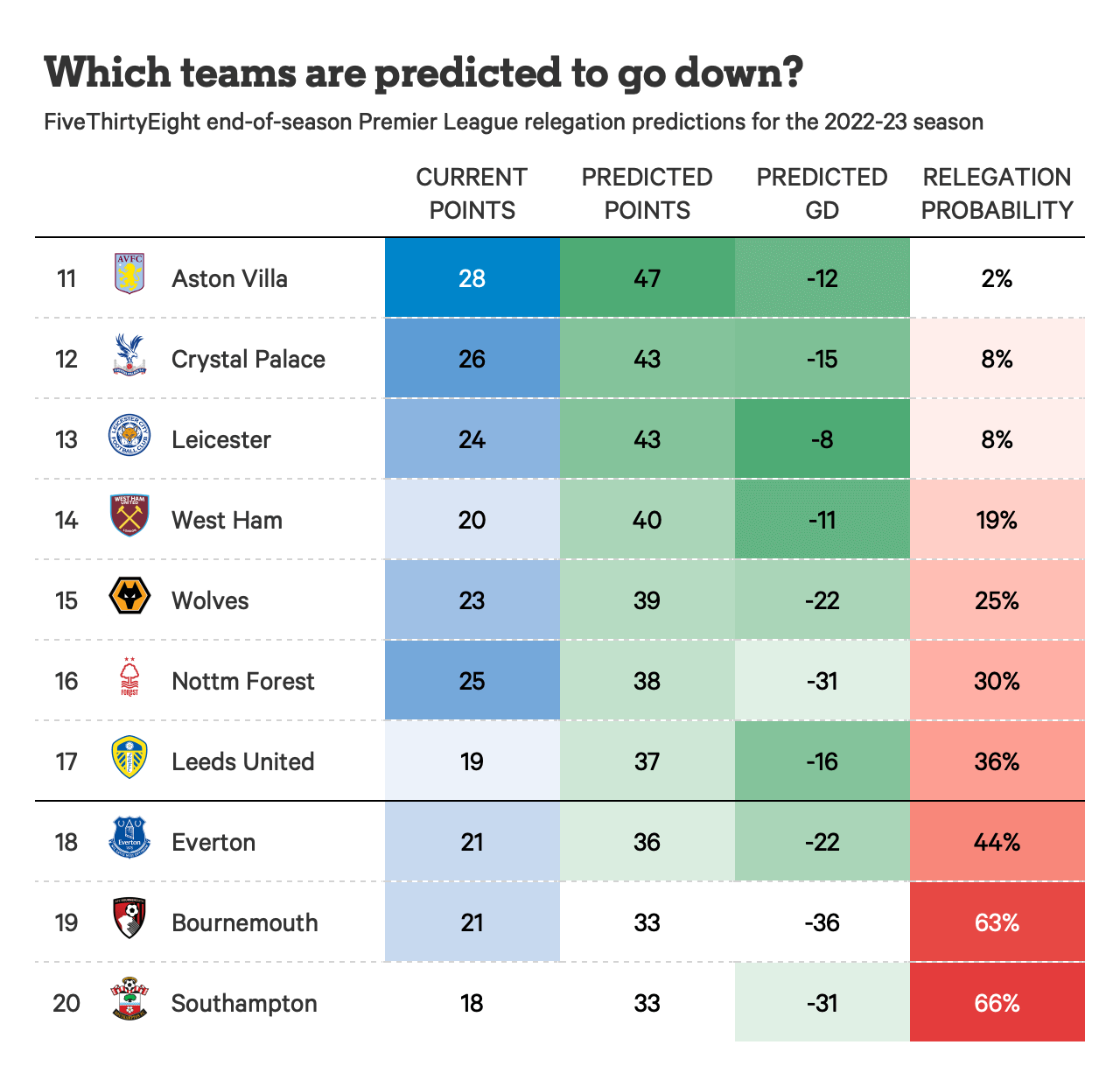
West Ham United faced potential relegation in recent seasons. A football finance expert projected a revenue loss of around £100 million if they fell. Their broadcast income would drop from £133 million to £48 million, even with parachute payments.
Their wage bill was well over four times the Championship average. Some players had relegation clauses reducing wages by 25%. Many did not. The cost of maintaining their large London Stadium would become a major burden under Championship income.
West Ham’s scenario illustrates the pre-fall tension. Clubs on the edge must plan for relegation before it happens. They must audit contracts, model revenue scenarios, and prepare redundancy lists. Those that do not, like Leicester, find the transition impossible to manage.
The promotion system that brings clubs up is a dream. The financial reality that greets them if they fall is a nightmare. Planning for the nightmare is the only way to survive it.
The Yo-Yo Effect and Long-Term Damage
The yo-yo effect describes clubs that bounce between the top flight and the second tier. It is often seen as a sign of resilience. In reality, it is a sign of financial instability.
A yo-yo club spends heavily upon promotion to compete in the Premier League. If relegated after one season, it carries that inflated wage bill back down. The club then struggles in the Championship, often missing promotion for several seasons. The financial drain continues.
Long-term damage accumulates. Academy investment suffers. Stadium maintenance is deferred. Club reputation erodes. Sponsors see the club as unstable. This cycle can last a decade, trapping the club in a second-tier purgatory.
The contrast with stable global league structures is stark. Closed league models, like MLS, eliminate this financial volatility. Promotion/relegation systems create dynamism but also existential risk.
True recovery from relegation requires more than one season. It requires a cultural reset, wage structure reform, and often a change in ownership strategy. Clubs that achieve this, like Brighton & Hove Albion after their 2017 promotion, become stable top-flight entities. Clubs that fail, like Leicester, spiral.
How Clubs Can Mitigate the Fall
Clubs must act before the final whistle. The planning starts when relegation becomes probable, not when it is confirmed.
- Audit every player contract for relegation clauses. Identify which salaries will drop automatically and which will remain fixed. Plan the summer transfer window around selling the fixed-cost players, even at a loss.
- Model the revenue drop with precision. Use the actual broadcast numbers from the lower league, not estimates. Project commercial income based on current partner reactions. This model drives the budget cuts.
- Prepare redundancy lists for non-playing staff. Departments like marketing and communications are often overbuilt for top-flight needs. Cutting them early reduces operational costs but must be done strategically to preserve future revenue-generating capacity.
- Engage the academy director immediately. Decide whether to maintain Category 1 status or accept a downgrade. This choice affects talent production for a generation.
- Communicate a clear plan to fans. Transparency about the financial reality and the restructuring steps builds trust during a crisis. Silence breeds speculation and anger.
The La Liga structure includes provisions for relegated clubs, but the responsibility for survival lies with the club’s leadership. A clear, decisive plan is the only difference between a club that rebounds and one that collapses further.
TL;DR: Mitigation requires auditing contracts, modeling revenue, cutting non-playing staff costs, protecting academy investment, and communicating a transparent plan to fans. Delay guarantees failure.
Frequently Asked Questions
Does relegation mean the club disappears?
No. Relegation means demotion to a lower league for the next season. The club continues to exist but operates with drastically reduced revenue and higher costs, which can threaten its long-term survival if not managed.
How long do parachute payments last?
In the Premier League, parachute payments last three years. They decrease annually: 55% of a top-flight share in year one, 45% in year two, 20% in year three. Other leagues, like La Liga, have shorter or smaller parachute systems.
Can a relegated club keep its best players?
Almost never. Players on high salaries without relegation clauses become financial liabilities. The club must sell them, often at a discounted price, to reduce the wage bill. Even players with clauses may leave for higher-level clubs.
What happens to the club’s stadium and facilities?
Stadiums and training facilities remain, but their maintenance budgets are often cut. A large stadium like West Ham’s London Stadium becomes a cost burden under Championship income because operating expenses do not drop proportionally.
How does relegation affect the fans?
Matchday atmosphere declines, hope diminishes, and community identity is eroded. For loyal supporters, the psychological impact of a double relegation, like Leicester City’s fall from champions to League One, is profound and lasting.
The Bottom Line
Relegation is a financial earthquake. The ground shifts under the club’s balance sheet, its wage structure, and its operational capacity. Parachute payments are a temporary cushion, not a solution. Clubs that survive plan for the earthquake while still in the top flight. They audit contracts, model revenue cliffs, and prepare for cuts.
The clubs that fail adopt a “we will be fine” culture. They ignore the math, carry top-flight costs into the lower league, and face a second relegation within years. Leicester City’s collapse from Premier League champions to League One is the textbook example.
The difference between a bounce-back and a spiral is not luck. It is the decisiveness of the boardroom the morning after the final whistle. That decision window lasts about three months. Use it or lose everything.

I come from the “soccer heart” of Germany, the Ruhrpott. I have played, trained and followed soccer all my life and am a big fan of FC Schalke 04. I also enjoy following international soccer extensively.