Soccer Formations Explained: How They Work
You’re watching a crucial match, the commentator mentions your team is switching to a “4-3-3 with inverted full-backs,” and you nod along—but what does that actually mean? Soccer formations aren’t just random numbers; they’re the tactical DNA of every team you watch. Understanding what soccer formations are and how they work unlocks the hidden chess match happening on the pitch, transforming you from a casual viewer into someone who can predict tactical shifts before they happen.
Whether you’re a weekend player struggling to understand why your team keeps getting counter-attacked, a youth coach building your first tactical system, or simply a fan wanting to grasp why your favorite team dominates possession, this guide explains exactly how formations function as living, breathing systems. You’ll learn to identify formation strengths and weaknesses in real-time, understand why coaches make specific tactical choices, and see how modern soccer has evolved beyond simple numerical labels into complex positional frameworks.
The Number Code Behind Every Team’s Strategy

Soccer formations use numerical sequences that describe player positioning from defense to attack, but these aren’t rigid positions—they’re dynamic starting frameworks that constantly evolve during matches. A 4-4-2 means four defenders, four midfielders, and two forwards, but modern soccer makes these labels increasingly fluid as players rotate positions based on tactical principles rather than fixed roles.
How Formation Numbers Translate to Real-World Tactics
4-4-2: Creates two solid defensive lines with twin strikers providing immediate counter-attacking threat
4-3-3: Establishes natural passing triangles across the pitch with three forwards stretching defenses
3-5-2: Uses three center-backs for defensive security while wing-backs provide attacking width
The sequence always counts from back to front. Additional numbers like in a 4-2-3-1 indicate specialized roles—showing two holding midfielders behind three attacking midfielders supporting a lone striker. Modern formations often include hybrid positions that blur traditional role boundaries.
Critical Position Zones Every Fan Should Recognize
- Defensive block: Center-backs anchor the defense while full-backs or wing-backs provide width
- Midfield engine: Defensive midfielders shield the backline while creative players dictate tempo
- Forward line: Strikers, wingers, and supporting attackers create scoring opportunities
- Goalkeeper role: Modern keepers function as sweepers who initiate attacking moves
Why Your Favorite Team’s Formation Actually Works
4-4-2: The Tactical Foundation That Still Delivers
Despite seeming outdated, the 4-4-2 remains soccer’s most enduring formation because it creates natural defensive compactness while providing immediate counter-attacking options. Two banks of four players defend narrow spaces effectively, while twin strikers force center-backs to cover more ground. This setup demands incredible fitness from wide midfielders who must track back like full-backs and attack like wingers.
When it shines: Against teams with slow full-backs who can’t cover the entire flank
Critical weakness: Can be outnumbered in central midfield against three-man midfields
Pro tip: Look for wide midfielders tucking inside when defending to create midfield overloads
4-3-3: The Modern Game’s Dominant Framework
Barcelona’s tiki-taka revolution made the 4-3-3 soccer’s most popular formation by creating natural passing triangles everywhere on the pitch. Three forwards stretch defenses horizontally while three central midfielders control possession. The formation’s genius lies in its seamless transitions—becoming 4-5-1 when defending or morphing into 4-2-3-1 when attacking.
Key strength: Midfield control through numerical superiority in central areas
Hidden requirement: Needs technically excellent midfielders and attacking full-backs
What to watch for: Full-backs tucking into midfield during build-up play to create central overloads
3-5-2: The Wing-Back Revolution That Changed Soccer
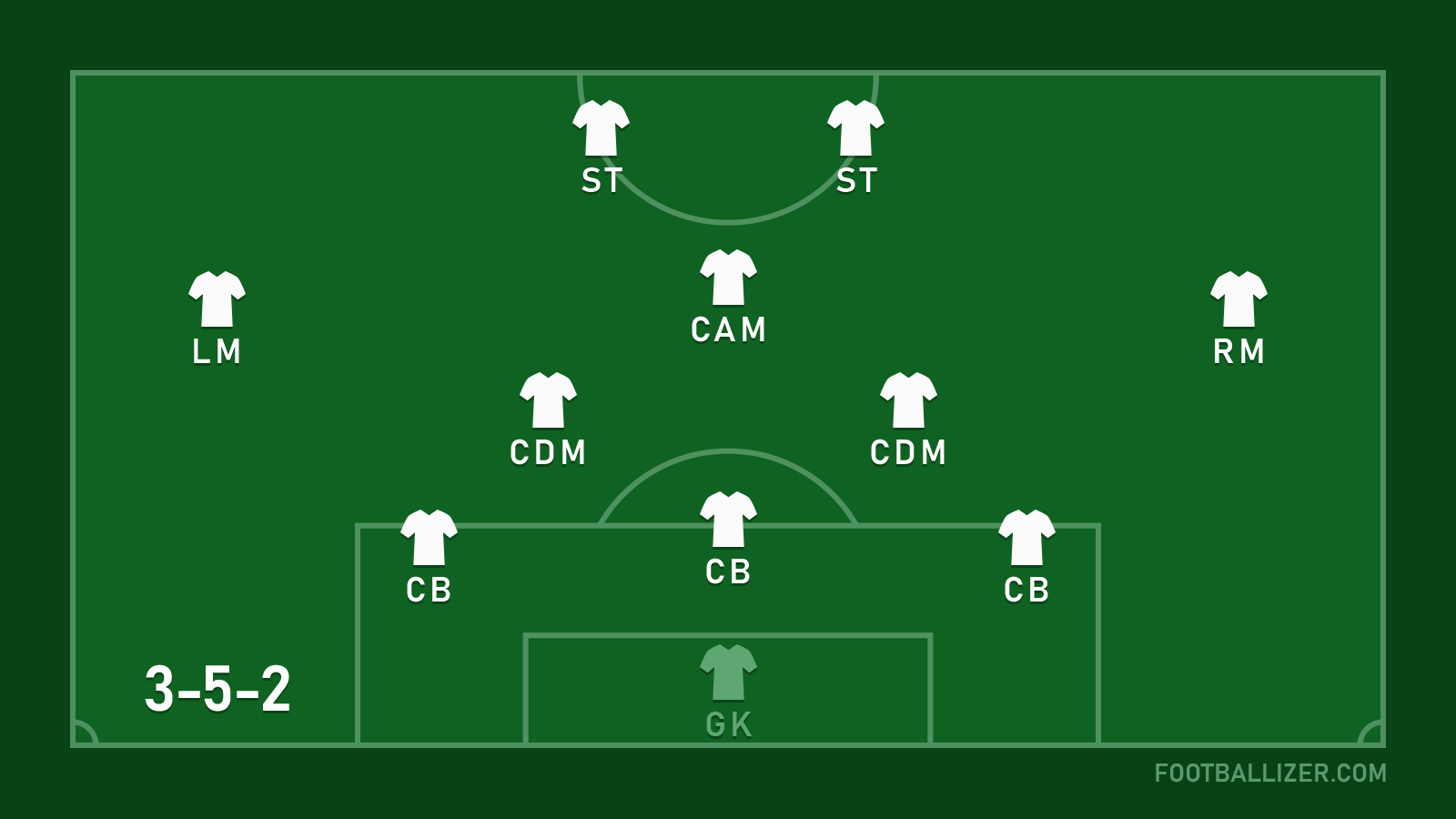
Antonio Conte’s title-winning Chelsea team showcased the 3-5-2’s power by using three center-backs for defensive security while wing-backs created width like traditional wingers. The central midfield trio controlled the game’s tempo, supported by two strikers who could combine or stretch defenses. This formation creates natural overloads against traditional 4-4-2 systems.
Game-changing advantage: Attacking width through wing-backs without sacrificing defensive numbers
Critical vulnerability: Demands exceptional fitness from wing-backs covering entire flanks
Real-world example: When Chelsea’s wing-backs pushed high, opponents’ wingers were caught between tracking them or staying wide
How Formations Actually Function During Matches
Beyond Static Numbers: The Fluid Reality of Modern Formations
Elite teams now treat formations as starting references, not rigid structures. Players rotate constantly based on specific zones and tactical principles. Manchester City’s “4-3-3” often becomes 2-3-5 when attacking, with full-backs becoming midfielders and wingers becoming strikers. This fluidity creates numerical superiority in key areas while maintaining optimal spacing for quick passing combinations.
Key tactical principle: Players maintain positional discipline within zones rather than fixed spots
What breaks formations: Individual players abandoning their zones without tactical purpose
Pro insight: Watch how teams maintain compactness between defensive, midfield, and attacking lines
In-Game Transformation: How Formations Shift Between Phases
Formations dramatically change between defensive and attacking phases. A defensive 4-5-1 can transform into an attacking 2-3-5 within seconds through intelligent player movement. These transitions require:
– Full-backs pushing high while center-backs tuck in during possession
– Midfielders adjusting positioning based on ball location
– Forwards creating passing options while maintaining defensive balance
Critical timing: Teams lose most goals during formation transitions after losing possession
Expert tip: Notice how pressing triggers determine when players abandon their positions to win the ball back
Choosing the Right Formation for Your Team
Matching Formations to Player Strengths (Not the Other Way Around)
The biggest tactical mistake coaches make is forcing players into formations that don’t suit their abilities. A team with slow center-backs should avoid high defensive lines, while teams lacking creative midfielders might struggle with possession-based systems. Smart coaches build formations around their squad’s specific attributes.
Physical matching: Fast defenders enable high lines; slow defenders require deeper positioning
Technical matching: Better technicians enable complex positional rotations
Mental matching: Tactical intelligence determines formation complexity your team can handle
How Elite Coaches Adjust Formations Against Specific Opponents
Top coaches constantly analyze opposition weaknesses to select formations that exploit them. Against teams with dangerous wingers, they might add defensive wingers. Facing possession-heavy opponents requires additional midfielders. The best tactical adjustments happen before kickoff based on detailed scouting.
Scouting checklist: Identify opponent’s weakest defensive areas and key creative players
Formation tweaks: Adding an extra midfielder against possession teams, extra attacker against deep blocks
Set-piece advantage: Organizing formations to maximize scoring opportunities on corners and free kicks
Practical Formation Implementation for Players and Coaches
How to Recognize Formations During Live Matches
You don’t need a playbook to identify formations—look for patterns in player positioning during different phases. When a team has the ball, count how many players are in each third of the field. During defensive transitions, notice how quickly players reorganize into compact shapes.
Quick recognition tips:
– Watch the defensive line height to identify high-pressing systems
– Track full-back positioning to distinguish traditional from inverted systems
– Note how many players drop deep during build-up play
Formation-Specific Training Drills That Actually Work
Effective formation training combines phase-specific exercises with full implementation. For a 4-3-3 system, practice build-up sequences where full-backs tuck inside while wingers stay wide. For 3-5-2 systems, drill wing-back overlaps and underlaps to create width.
Critical training element: Replicate match conditions with opposition pressure
Progression method: Start with small-sided games before moving to 11v11 scenarios
Video analysis: Study successful implementations to reinforce tactical understanding
The Future of Soccer Formations
Asymmetrical Systems: Breaking the Symmetry Mold

Modern tactics increasingly feature different structures for each flank. Guardiola’s Manchester City often plays with one inverted full-back and one traditional wide full-back, creating unpredictable attacking patterns that confuse opposition marking schemes.
Why it works: Creates mismatches that opponents can’t prepare for with symmetrical defenses
Implementation challenge: Requires exceptional tactical intelligence from all players
What to watch for: How teams maintain balance despite asymmetric positioning
Positional Play: Where Formations Are Heading Next
The cutting edge of soccer tactics treats formations as starting points for complex positional rotations. Players interchange based on specific zones rather than fixed roles, creating numerical superiority where it matters most. This approach emphasizes maintaining optimal spacing while enabling immediate counter-pressing after possession loss.
Key principle: Players occupy “spaces between the lines” to receive passes in dangerous areas
Tactical evolution: Formations becoming more about principles than specific positions
Future trend: Increased hybrid roles like the “half-winger” operating between midfield and attack
Understanding what soccer formations are and how they work transforms how you experience the beautiful game. These tactical blueprints aren’t static diagrams—they’re living systems that adapt, evolve, and ultimately determine success on the pitch. Start by recognizing basic shapes, then gradually appreciate the subtle movements and rotations that make modern soccer so tactically rich. Whether you’re implementing a simple 4-4-2 with your local team or analyzing Guardiola’s latest innovations, remember: the best formation is the one that maximizes your players’ strengths while exploiting opponents’ weaknesses. The next time you hear “4-3-3 false nine,” you’ll know exactly what’s happening—and why it matters.

I come from the “soccer heart” of Germany, the Ruhrpott. I have played, trained and followed soccer all my life and am a big fan of FC Schalke 04. I also enjoy following international soccer extensively.