How to Strengthen Legs for Soccer: Quick Tips
Weak legs sabotage your speed, limit your shot power, and increase injury risk—three things that keep even talented soccer players from reaching their potential. When your legs lack the explosive strength to outpace defenders or deliver powerful shots, you’re fighting an uphill battle on the field. This guide reveals exactly how to strengthen legs for soccer with proven methods that build functional power while keeping you injury-free all season long.
You don’t need hours of generic gym work that doesn’t translate to the pitch. Elite soccer players follow specific leg strengthening protocols that target the exact muscle groups used during matches. By implementing these soccer-specific exercises and training phases, you’ll develop the explosive power for faster sprints, more powerful shots, and the resilience to play through the final whistle without breaking down.
Target Soccer-Specific Muscle Groups for Maximum Impact

Quadriceps: Your Sprinting and Shooting Powerhouse
Your quadriceps generate the explosive force behind every sprint and shot. These front thigh muscles extend your knee when striking the ball and provide the drive for acceleration off the mark. When your quads lack strength, your first-step speed suffers and shots lose power. Focus on exercises that build both strength and explosive power—not just size—to maximize your on-field performance.
Hamstrings: The Critical Deceleration Muscle
Hamstrings act as your body’s braking system during rapid directional changes. They work eccentrically (lengthening under tension) to control deceleration when cutting or changing direction—essential for defensive positioning and avoiding ACL injuries. Weak hamstrings dramatically increase your risk of strains during sprinting. Incorporate eccentric-focused exercises like Romanian deadlifts to build resilient hamstrings that perform when it matters most.
Glutes: The Hip Power Generator
Your glutes drive hip extension for sprinting, jumping, and shielding the ball from opponents. Strong glutes prevent lower back pain and create the explosive hip extension needed for powerful shots and headers. When glutes underperform, other muscles compensate, leading to imbalances and potential injuries. Activate your glutes before every training session with bridges and clamshells to ensure they fire properly during soccer-specific movements.
Build Soccer-Specific Strength That Translates to the Pitch
Master Compound Movements for Functional Power
Barbell Back Squats for Game-Changing Explosiveness
Position the bar on your upper back with feet shoulder-width apart. Descend until your thighs run parallel to the ground while keeping your chest up, then drive powerfully through your heels to return. Start with bodyweight squats to perfect form before progressing to goblet squats, then barbell variations. Perform 3-4 sets of 6-8 reps using 70-85% of your max weight to build pure strength that translates directly to sprinting power.
Romanian Deadlifts for Injury-Resistant Hamstrings
Hold the bar at hip level with a slight knee bend, then push your hips back while lowering the bar along your thighs until you feel a stretch in your hamstrings. Drive your hips forward powerfully to return to standing. Execute with a 3-1-1 tempo (3 seconds down, 1 second pause, 1 second up) using 70-80% of your max weight. This builds the eccentric hamstring strength crucial for sprinting mechanics and preventing common soccer injuries.
Develop Explosive Power Through Soccer-Specific Plyometrics
Depth Jumps for Reactive Speed
Step off a 12-24 inch box, land softly on the balls of your feet, then immediately explode upward or forward. Start with a 12-inch box and gradually increase height as your landing mechanics improve. Perform 3-4 sets of 3-5 reps with 2-3 minutes rest between sets to develop the reactive strength needed for explosive direction changes during matches.
Single-Leg Bounds for Acceleration Dominance
Drive one knee forward while extending the opposite leg back, landing on the opposite foot while maintaining forward momentum. Complete 20-30 meters per set, 3-4 sets per leg, focusing on horizontal power rather than vertical height. This mimics the acceleration mechanics required to beat defenders off the dribble.
Structure Your Training Year for Peak Soccer Performance

Off-Season Strength Building (8-12 Weeks)
Focus on building your maximal strength foundation with 4 lower-body sessions per week. Follow this progression:
– Weeks 1-4: Hypertrophy phase (4-5 sets, 8-12 reps) to build muscle mass
– Weeks 5-8: Strength phase (3-4 sets, 3-6 reps) with heavier weights
– Weeks 9-12: Power phase (3-4 sets, 3-5 explosive reps) to convert strength to power
Use 70-85% of your maximum weight during compound lifts to build the foundational strength that will later translate to on-field power.
In-Season Maintenance Protocol
During competition, shift to 2 strength sessions per week, scheduled 48 hours before matches. Reduce volume to 2-3 sets of 4-6 reps using 75-85% of your max weight to maintain strength without causing fatigue. Prioritize injury prevention exercises like Copenhagen adductor planks and single-leg balance work to stay healthy throughout the season. Adjust intensity based on game schedule—lighter sessions before back-to-back matches.
Prevent Common Soccer Leg Injuries Before They Happen
Pre-Training Activation Routine (10 Minutes)
Complete this sequence before every training session:
– Glute bridges: 2 sets of 15 reps to activate posterior chain
– Clamshells with resistance band: 2 sets of 20 reps per side for hip stability
– Single-leg balance: 30 seconds each leg to improve proprioception
– Dynamic hamstring sweeps: 10 reps per leg to prepare for explosive movements
Targeted Injury Prevention Strategies
ACL Injury Prevention: Focus on single-leg stability exercises and proper landing mechanics. When performing plyometrics, stick each landing for 2-3 seconds to train controlled deceleration—the critical phase where most non-contact ACL injuries occur.
Hamstring Strain Prevention: Prioritize eccentric hamstring strengthening with Romanian deadlifts and Nordic curls. Build hamstring resilience through progressive sprint training—never jump straight into maximal sprints after inactivity.
Fuel Your Leg Development for Optimal Results
Post-Workout Recovery Nutrition (Within 30 Minutes)
Consume 25-30g fast-absorbing protein with 1-1.2g carbohydrates per kg of body weight to maximize muscle repair. Ideal options include a protein shake with banana, chocolate milk, or Greek yogurt with berries. This precise nutrient timing accelerates recovery so you can train harder at your next session.
Daily Protein Targets for Leg Growth
Aim for 1.6-2.2g of protein per kg of body weight daily to support muscle repair and growth. Distribute this evenly across 4-5 meals rather than consuming most at dinner. For a 70kg (154lb) player, this equals 112-154g of protein daily—critical for rebuilding the leg muscles taxed by soccer-specific training.
Track Your Leg Strength Progress Like a Pro
Power Testing Methods That Matter
Test these soccer-relevant metrics monthly:
– Vertical jump: Measures explosive leg power for headers
– Broad jump: Assesses horizontal power for sprint acceleration
– Single-leg hop test: Reveals strength imbalances between legs
Warning signs of overtraining or improper progression include a 10% decrease in strength, excessive soreness lasting more than 72 hours, or disrupted sleep patterns—scale back immediately if you notice these.
Sample In-Season Leg Strengthening Session
Tuesday – Strength Maintenance (48 Hours Before Match)
- Back squats: 3×4 at 80% 1RM (focus on explosive concentric phase)
- Romanian deadlifts: 2×5 with 3-1-1 tempo
- Bulgarian split squats: 2×8 each leg (bodyweight or light dumbbells)
- Copenhagen adductor planks: 3×30 seconds each side
- Single-leg calf raises: 3×15 each leg
Complete this entire session in 45 minutes to maintain strength without causing fatigue before your match. The focused volume preserves your hard-earned leg strength while prioritizing injury prevention work crucial during the competitive season.
Final Note: How to strengthen legs for soccer isn’t about lifting the heaviest weights—it’s about building functional strength that directly enhances your performance on the pitch. By targeting the specific muscle groups soccer demands, structuring your training throughout the season, and prioritizing injury prevention, you’ll develop the powerful, resilient legs that separate good players from great ones. Start implementing these soccer-specific leg strengthening protocols today, and you’ll notice the difference in your speed, power, and endurance within weeks. Your stronger legs will deliver more powerful shots, faster sprints, and injury-free seasons—exactly what you need to dominate on the field.
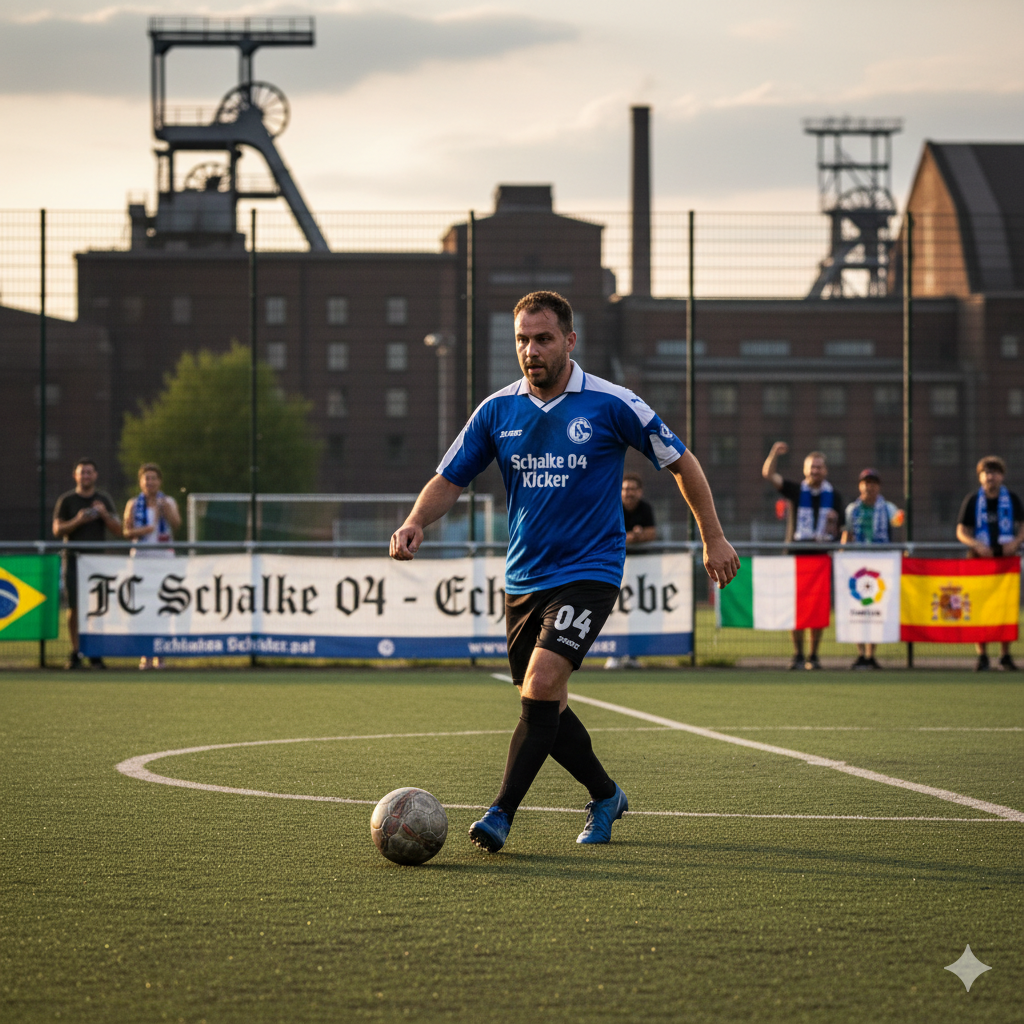
I come from the “soccer heart” of Germany, the Ruhrpott. I have played, trained and followed soccer all my life and am a big fan of FC Schalke 04. I also enjoy following international soccer extensively.