How to Read Soccer Formations: A Tactical Guide for Fans
To read soccer formations, you decode the numbers (defenders-midfielders-forwards), then ignore the static graphic. Watch where players stand when their team is out of possession in the first 15 minutes. Count the lines of defense and midfield to find the real shape, then identify who provides width and who protects the center-backs.
Most fans stop at the numbers on the screen. They see “4-3-3” and think they understand the game. The graphic is a lie, or at best, a polite suggestion. The real formation reveals itself only when the other team has the ball, in the spacing between players who are thinking three moves ahead.
This guide walks you through the process, from decoding the basic notation to spotting a team’s true tactical intent within the opening quarter of an hour. You will learn what to look for before the whistle and how to interpret the fluid chess match that unfolds on the pitch.
Key Takeaways
- The TV formation graphic is almost always wrong. Find the real shape by counting defensive and midfield lines when the team is out of possession.
- The first 15 minutes are for diagnosis. Watch for the team’s pressing trigger, defensive line height, and which player occupies the space in front of the center-backs.
- Formations signal intent. A 4-3-3 with high fullbacks wants to press and attack; a 5-3-2 invites pressure and looks to counter.
- Player profiles dictate success. A slow center-back breaks a high-line 4-3-3; a creative “number ten” unlocks a defensive 4-4-2.
- Teams use at least three different shapes: one for attacking possession, one for defensive organization, and one for pressing. The listed formation is just the “home base.”
What Do the Numbers in a Soccer Formation Mean?
A formation is a shorthand for organizing players on the field. The sequence of numbers always reads from defense to attack: defenders, midfielders, forwards. Goalkeepers are never included.
A 4-3-3 means four defenders, three midfielders, and three forwards. A 3-5-2 means three defenders, five midfielders, and two forwards. It is that simple. This numbering system provides the basic soccer formations framework every coach starts with.
The standard 4-3-3 formation employs a single pivot (a number six) as the deepest midfielder, flanked by two number eights who shuttle between defense and attack. The front three typically consist of a central striker (number nine) and two wide forwards who cut inside, relying on overlapping fullbacks to provide attacking width from deep.
The numbers tell you nothing about how those players will move. A “right back” in a Jurgen Klopp Liverpool 4-3-3 acts as an auxiliary winger. That same position in a Diego Simeone Atletico Madrid 4-4-2 is a pure defender who rarely crosses the halfway line. The label is identical. The job is not.
TL;DR: Formation numbers list defenders, midfielders, then forwards. They give you the starting coordinates, not the flight plan.
The TV Graphic is a Lie: How to Find the Real Shape
Your broadcast will flash a neat, symmetrical shape at kickoff. Disregard it immediately. That graphic shows a nominal, theoretical arrangement. The real tactical formation is defined by average player positions when the team is not in possession. This is the shape they use to defend, to rest, and to reorganize.
To find it, wait for the opponent to have a sustained period of possession in their own half. Pause your stream if you can. Now look at the team you’re analyzing. How many players are in the last line? That’s your number of defenders. How many are in a distinct line ahead of them, but behind the forwards? That’s your midfield count.
For example, a team listed as a 4-3-3 might actually defend in a 4-5-1. The two wide forwards drop back alongside the central midfielders to form a bank of five, leaving only the central striker up top. You confirm this by counting five players in that midfield band. This shift is fundamental to modern soccer tactics.
Common mistake: Trusting the opening graphic — you’ll spend the first half confused about why players are “out of position,” when they’re actually executing a planned tactical shift.
The real formation is fluid. A team might show a 4-2-3-1 on paper, but in a desperate search for a goal, the fullbacks push so high it becomes a 2-4-4. The shape breathes with the game state. Your job is to identify the default defensive structure. Everything else flows from that.
Your Pre-Match Homework: Reading the Lineup Sheet

The battle starts an hour before kickoff when the official lineups drop. This is your intelligence briefing. Don’t just scan names. Interrogate the sheet.
First, identify the key men in each unit. Who are the center-backs? Is there a specialist defensive midfielder (the “six”) listed? Who is the primary creative player (the “ten”)? This tells you the skeleton of the team’s plan. A listed six like Chelsea’s N’Golo Kante for years signaled a team built to protect and counter.
Second, consider the clash. If your team lines up in a 4-3-3 with attacking fullbacks, and the opponent names two traditional wingers in a 4-4-2, you have a problem. Those wingers will have acres of space to attack behind your advanced fullbacks. The 3-5-2 formation often exists specifically to counter such wide threats with its own wing-backs.
| Lineup Clue | Possible Tactical Signal | What to Watch For |
|---|---|---|
| Two strikers paired | Likely a 4-4-2 or 3-5-2 | Direct passing, striker partnerships, less midfield control. |
| A single pure defensive midfielder | A “pivot” in a 4-3-3 or 4-2-3-1 | This player dropping between center-backs to build play. |
| Three center-backs named | A back three/five (e.g., 3-5-2, 3-4-3) | Wing-backs providing all the width, central defensive solidity. |
| No recognized striker (“false nine”) | A fluid 4-3-3 or 4-6-0 | Central forward dropping deep, creating space for midfield runners. |
Finally, if you can, watch the warm-up. Teams often rehearse attacking patterns. Are they drilling crosses from wide areas, or intricate short passes through the middle? Are the defenders practicing a high line with coordinated offside traps? These are unscripted tells.
The 15-Minute Rule: Spotting Intent and Structure

The opening quarter-hour is your diagnostic window. The initial adrenaline settles, and patterns emerge. Focus on three things: the pressing trigger, the defensive line, and the key connector.
Where and when do they press? A team with an aggressive coach like Pep Guardiola might press high the moment the opponent’s center-back receives a pass. This is a high press, typical of an attacking 4-3-3 formation. Other teams might wait until the ball reaches the midfield (a mid-block), or sit deep in their own half (a low block), which you often see with a 5-3-2 formation.
How high is the defensive line? A line that sits on the halfway line signals confidence and a desire to compress space. A line that retreats to the edge of its own box is prioritizing safety. This height is a direct reflection of the team’s risk appetite.
Who is the “six”? Find the player whose main job is to protect the space between the midfield and defense. Is he always available for a pass from the center-backs? Does he chase opponents or hold his position? His discipline dictates the stability of the entire tactical setup.
If you answer these questions in the first 15 minutes, you’ll understand the game’s tactical storyline before the first goal is scored.
Decoding Common Formations and Their Signals
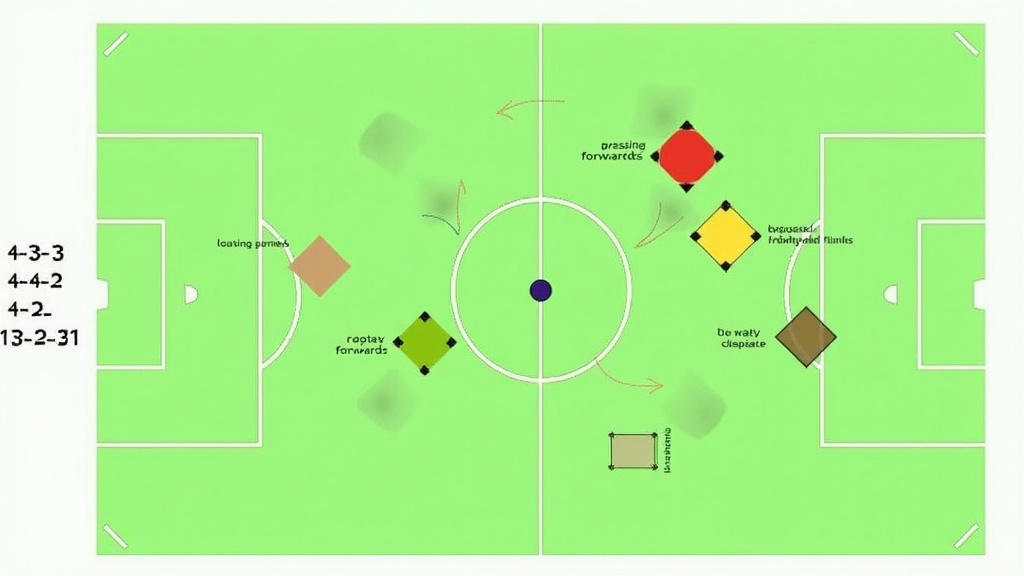
Each common formation comes with a built-in philosophy, a set of strengths it aims to exploit, and inherent weaknesses it must hide. Recognizing which one you’re seeing helps you predict the flow of the game.
The 4-3-3: The Modern Pressing Machine
This is the signature formation of the pressing era. Its three forwards are the first line of defense, tasked with cutting off passing lanes and forcing errors. The midfield three must cover enormous ground, and the fullbacks are expected to provide attacking width. It demands supremely fit, technically gifted players. When you see it, expect high energy, possession dominance, and attacks launched from the wings. The weakness is the space left behind those marauding fullbacks, which can be exploited by quick counter-attacks.
The 4-4-2: The Classic Battle Formation
Don’t call it outdated. The 4-4-2 formation offers a balanced, hard-to-break-down structure with two solid banks of four. It provides natural width through traditional wingers and a direct outlet via a striker partnership. It’s less about controlling possession and more about effective transitions and set-piece strength. Its weakness can be a lack of numbers in central midfield against a three-man opposition midfield, potentially leading to being overrun.
The 3-5-2 / 5-3-2: Control and Counter
This shape is all about winning the midfield battle and managing space. With three center-backs and two wing-backs, it can morph from a 5-3-2 in defense to a 3-5-2 in attack. It creates a numerical overload in the center of the park and provides security against teams with dangerous wingers. The wing-backs are the engine; if they aren’t athletic enough to run the entire flank all game, the system collapses. It’s a common choice for teams facing superior opposition or those with excellent target strikers.
| Formation | Best For | Inherent Risk |
|---|---|---|
| 4-3-3 | High pressing, possession play, wide attacks | Exposed flanks if fullbacks attack; requires elite midfield stamina. |
| 4-4-2 | Defensive solidity, direct play, striker partnerships | Can be outnumbered in central midfield; less possession control. |
| 3-5-2 | Midfield control, counter-attacks, matching wide teams | Relies completely on wing-backs’ fitness; can be passive in possession. |
| 4-2-3-1 | Tactical flexibility, linking midfield and attack | The single striker can become isolated if the number ten is marked out. |
Other shapes like the 4-2-3-1 formation offer a hybrid approach, using a “double pivot” of two defensive midfielders to free a creative number ten. The 3-4-3 formation is an all-out attacking gamble, often used when chasing a game. Recognizing these tells you the coach’s mandate: control, counter, or overwhelm.
Positional Roles: The “Six,” “Eight,” and “Ten”
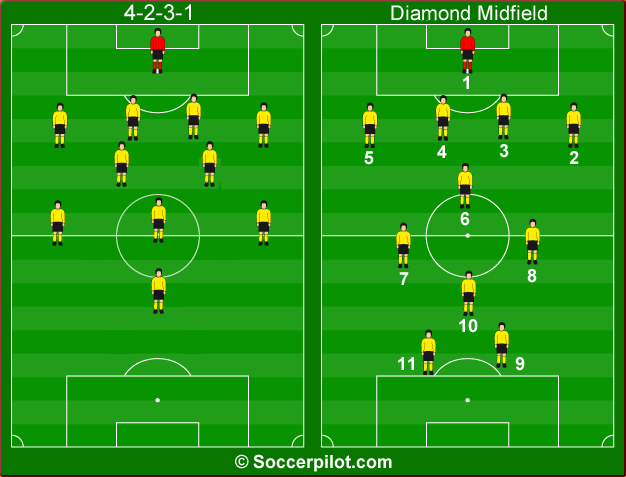
The numbers 6, 8, and 10 refer to specific midfield roles, not just jersey numbers. Understanding them is crucial to reading the game’s rhythm.
- The “Six” (Defensive Midfielder / Pivot): This is the team’s anchor. A good six like Sergio Busquets reads the game two passes ahead, intercepts danger, and starts attacks with simple, progressive passes. He positions himself between or just in front of the center-backs to receive the ball under pressure. If he has a bad game, the defense is exposed.
- The “Eight” (Central Midfielder / Box-to-Box): This is the engine. Number eights shuttle between penalty areas. They support the attack with late runs, link play, and also track back to defend. Their energy and passing range dictate the team’s tempo. Think of players like Steven Gerrard or Jude Bellingham in his earlier roles.
- The “Ten” (Attacking Midfielder / Playmaker): This is the artist. The classic number ten operates in the “pocket” between the opponent’s midfield and defense. Their job is to receive the ball, turn, and deliver the killer pass. They are marked tightly, so their movement off the ball is as important as their touch on it. When a 4-4-2 formation faces a ten, one midfielder is usually assigned to man-mark him out of the game.
A team’s choice of which roles to emphasize shapes its entire approach. A double pivot of two sixes (like in a 4-2-3-1) makes a team very secure but can lack creativity. A midfield of an eight and a ten (with no dedicated six) is adventurous but vulnerable.
How Player Profiles Change the Formation
A formation is just a theory. The players are the practice. The best tactical plan fails if the personnel can’t execute it.
I once watched a talented youth coach insist on playing a high-line 4-3-3 with a center-back who was brilliant in the air but slow over five yards. Every long ball over the top was a crisis. The formation didn’t fail. The player’s profile was a catastrophic mismatch for its core requirement. They switched to a deeper 5-3-2 and won the league.
Consider these profiles:
* A Slow Center-Back: Breaks any formation requiring a high defensive line (e.g., aggressive 4-3-3). Forces the team to sit deeper, which stretches the midfield and breaks the press.
* A Creative “Ten” with No Defensive Work Rate: Can unbalance a 4-2-3-1. The team effectively plays with ten men out of possession, forcing the two pivots to cover extra space.
* A “Target Man” Striker: Bends a 4-3-3 into a more direct style. The wingers become crossers, not inverted scorers, and midfielders play more vertical passes.
This is why the same 4-3-3 formation looks different at Manchester City (technical, possession-based) than at a lower-league side (more direct, reliant on physicality). The system adapts to the tools available. As highlighted in a recent Frontiers in Sports survey on formations, this dynamic relationship between static structure and player-specific movement is the core challenge of formation identification.
Watching a Game: Your Step-by-Step Analysis Plan
- Pre-Game (60 mins before): Get the lineup. Identify the key six, ten, and striker. Guess the base formation and its main weakness.
- Kickoff to 15 mins: Ignore the ball. Watch the team without possession. Count their defensive and midfield lines. Confirm the real formation.
- Identify the Pressing Trigger: Do they press the center-backs (high), the midfielders (mid-block), or not at all (low block)? Note it.
- Pick One Player to Track: Follow the defensive midfielder for 10 minutes. Where does he receive the ball? Who does he pass to? Is he disciplined in position?
- Spot the Width: Are attacks coming from overlapping fullbacks, or traditional wingers? This tells you if it’s a modern 4-3-3 or a classic 4-4-2.
- Look for the Change: After 60 minutes or a goal, does the shape shift? A leading team might switch to a 5-3-2 formation to lock down the game.
This process turns passive watching into active analysis. You stop seeing 22 players chasing a ball and start seeing a structured conflict of philosophies.
Frequently Asked Questions
What’s the best soccer formation?
There isn’t one. The “best” formation depends entirely on your players’ strengths, your opponent’s weaknesses, and the match situation. A 4-3-3 might be best for pressing a weak defense, while a 5-3-2 might be best for protecting a lead against a superior team. It’s a tool, not a trophy.
Why does the formation on my TV look wrong?
The TV graphic shows the nominal or attacking formation—where players might start when their team has the ball. Defensive organization is different. Teams often use 2-3 different shapes in a single match: one for attack, one for defense, and one for set pieces.
How do I know if a team is playing a 4-2-3-1 or a 4-3-3?
Watch the central midfielders. In a 4-2-3-1, you’ll see two deeper midfielders (the double pivot) sitting close together, with a clear attacking midfielder ahead of them. In a 4-3-3, the three midfielders are usually in a flatter or triangular line, with one often dropping deeper than the others to receive from the defense.
What’s the difference between a 3-5-2 and a 5-3-2?
It’s often the same players in a different phase. When the team has possession and the wing-backs push high, it looks like a 3-5-2 (three defenders, five midfielders). When defending deeply, the wing-backs drop back to form a line of five defenders, making it a 5-3-2. The terms are used interchangeably.
Are formations important in youth soccer?
Less so. For young players, the focus should be on basic skills, understanding space, and simple principles (like forming triangles). Rigid adherence to complex 11v11 formations can stifle development. Smaller-sided games with basic 7v7 formations are more effective for teaching the game.
Before You Go
Reading formations is not about memorizing numbers. It is about understanding a language of space, movement, and intention. Start by forgetting the graphic. Use the first 15 minutes to diagnose the real defensive shape. Then, watch how player profiles and in-game adjustments bring that shape to life, or break it.
The game reveals itself to those who know where to look. Watch the lines, not just the ball. Follow the connector, not just the scorer. You will see the chess match behind the chaos, and football will become a richer, deeper sport because of it.

I come from the “soccer heart” of Germany, the Ruhrpott. I have played, trained and followed soccer all my life and am a big fan of FC Schalke 04. I also enjoy following international soccer extensively.