How to Read Soccer Formations: A Simple Guide
You’re watching a crucial Champions League match when the commentator mentions “they’ve switched to a 3-4-3” – but what does that actually mean? If you’ve ever felt lost when coaches discuss formations or wondered why teams suddenly change shape during games, you’re not alone. Learning how to read soccer formations unlocks the hidden tactical battle beneath the surface action. These numerical codes reveal strategic priorities, player responsibilities, and potential weaknesses that determine match outcomes. Whether you’re analyzing your child’s youth game or dissecting Premier League tactics, mastering formation recognition transforms you from a passive viewer into an informed observer who understands why certain teams dominate others.
This guide cuts through the jargon to teach you practical formation analysis. You’ll learn to instantly decode those mysterious numbers, spot real-time tactical adjustments, and predict how formations clash during matches – all using techniques professional analysts employ.
Spot Defensive Structures in Under 10 Seconds
The defensive line is your formation starting point because it rarely shifts during play. Count players between the goalposts and midfield line to identify the core structure. A 4-3-3 shows four defenders (two center-backs flanked by full-backs), while a 5-3-2 reveals five defenders with wing-backs tucked inside traditional full-back positions.
Identifying Defender Roles Instantly
Center-backs anchor the defense in pairs or trios, but their spacing reveals tactical intent. In three-center-back systems like 3-5-2, the middle defender often steps into midfield as a “sweeper” during possession. Full-back positioning is critical: traditional full-backs stay near their penalty box, while wing-backs push into midfield – a dead giveaway for formations like 3-4-3. When you see center-backs drifting wide to receive passes, that’s an “inverted full-back” tactic common in modern 4-3-3 setups.
Why Defensive Numbers Predict Match Strategy
Four-defender systems (4-2-3-1, 4-4-2) prioritize balance but leave space behind full-backs if they push high. Three-defender formations (3-5-2, 3-4-3) create central overload protection against dual strikers but risk wing vulnerability. Five-defender setups (5-3-2) scream defensive priority – you’ll see these when teams protect narrow leads late in games. Notice how low numbers in attack like 5-4-1 indicate “parking the bus” tactics, while four-defender systems with high full-backs signal attacking ambition.
Critical Mistake: Counting Goalkeepers
Never include the goalkeeper in your count – it’s tactical convention because keepers have fixed roles. A 4-4-2 would become 1-4-4-2 if counted, confusing discussions about defensive structure. Focus solely on outfield players to avoid misreading formations.
Decode Midfield Battles That Win Matches
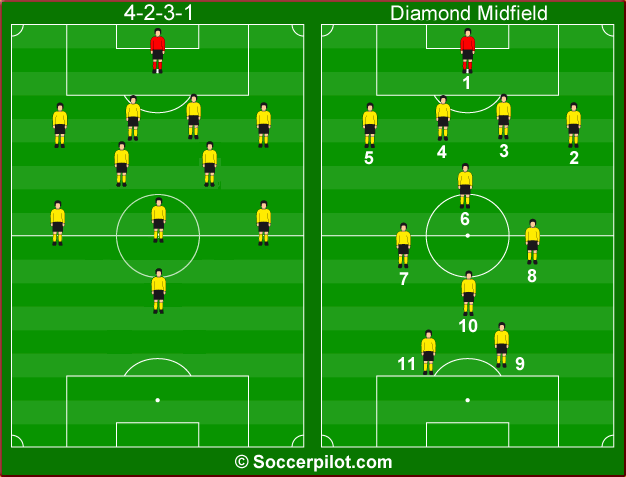
Midfield configuration determines whether a team controls possession or absorbs pressure. The central numbers reveal everything: a double-pivot (two defensive midfielders in 4-2-3-1) prioritizes defensive stability, while a single-pivot (one #6 in 4-3-3) risks defense for creative freedom.
Recognizing Midfield Roles During Play
Defensive midfielders (#6) position themselves between center-backs and opposition forwards – their pass completion rate often decides build-up success. Box-to-box midfielders (#8) cover massive ground; in 4-4-2 systems, they form a flat line with wingers. Attacking midfielders (#10) hunt space between lines – in 4-2-3-1, they’re the creative engine behind the lone striker. When you see inverted wingers cutting inside (like right-footers on the left flank), they’re effectively becoming central midfielders.
Spotting Midfield Overloads
Elite teams create numerical advantages through formation fluidity. A 4-3-3 often becomes 3-2-5 in attack as full-backs push high and center-backs split wide. Watch for central overloads where three midfielders swarm one opponent – common in Klopp’s gegenpressing systems. Conversely, midfield gaps between defensive and central units become counter-attack highways when formations stretch too thin.
Time-Saving Tip: Follow the Pivot
Find the deepest midfielder first – this “pivot” player reveals formation identity. One pivot = 4-3-3 or 4-2-3-1. Two pivots = 4-4-2 diamond or 4-2-3-1. No dedicated pivot? Likely an ultra-attacking 3-4-3.
Predict Forward Threats From Formation Numbers
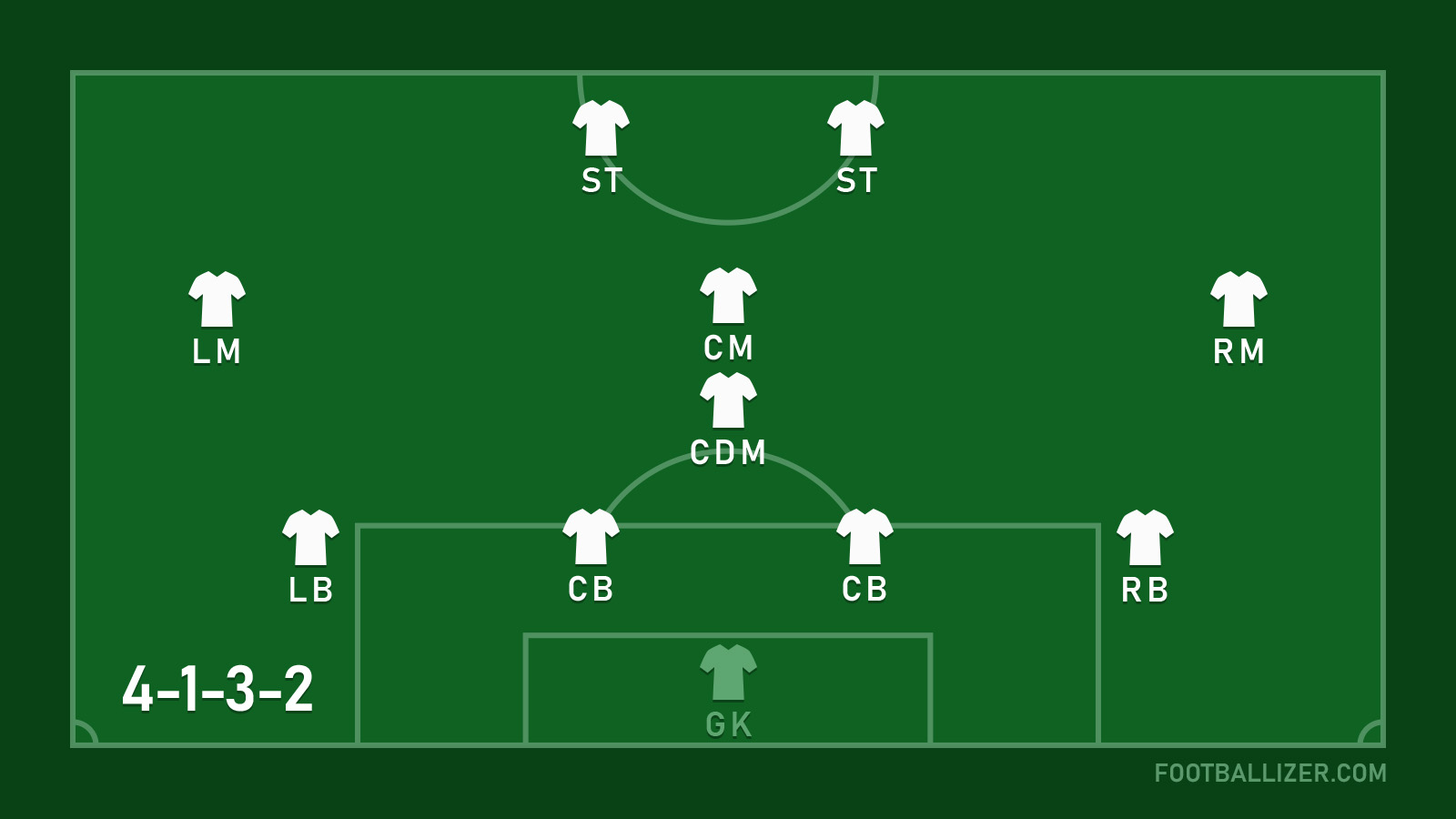
Forward positioning dictates attacking patterns. Two-striker systems (4-4-2, 3-5-2) create central pressure but sacrifice width, while winger-dependent formations (4-3-3) stretch defenses horizontally. The key is recognizing how numbers translate to movement.
Striker Responsibilities by Formation
In 4-2-3-1, the lone #9 striker must be a target man holding up play. 4-4-2 uses strike partnerships where one drops deep (second striker) while the other stays high. Modern “false nine” systems see the striker withdrawing into midfield to create overloads – watch for spaces opening behind when this happens. Winger roles vary wildly: traditional touchline-hugging wingers (common in 4-4-2) provide crosses, while inverted wingers cutting inside (like Salah in Liverpool’s 4-3-3) become shooting threats.
Exploiting Formation Weaknesses
Identify isolated full-backs when wingers neglect tracking back – this happens frequently in 4-3-3 systems when wing-backs push high. Channel gaps between center-back and full-back become dangerous when formations aren’t compact. Smart teams press the defensive pivot to force turnovers; notice how Manchester City isolates the #6 in 4-3-3 systems to trigger counter-pressing.
Pro Tip: Track Transition Moments
Formations morph dramatically when possession changes. A 4-3-3 in attack becomes 4-5-1 when defending as wingers drop deep. Count players within 25 yards of the ball during transitions – this reveals the real formation, not the theoretical one.
Read Live Match Adjustments Like a Coach
Substitutions signal tactical shifts. A defensive midfielder replacing a winger? The team is shifting to 5-4-1 for defensive solidity. Bringing on a second striker against a single-pivot midfield? They’re targeting that 4-3-3 vulnerability to dual strikers.
Spotting In-Game Shape Shifts
Watch for asymmetrical formations where one side operates differently – common when a team pushes one wing-back high while the other stays deep. Player interchanges reveal tactical fluidity: when a midfielder drops between center-backs, a 4-man defense becomes 3-man. Striker withdrawal into midfield (like Messi in Barcelona) creates numerical overloads – count how many players suddenly occupy central zones.
Data-Driven Recognition Shortcuts
Modern analysts track PPDA (Passes Per Defensive Action) – low numbers indicate aggressive pressing formations like Klopp’s 4-3-3. Expected threat (xT) maps show where formations generate danger: wingers cutting inside in 4-3-3 systems create high xT zones centrally. You don’t need stats – just notice where 80% of attacks originate.
Critical Warning: Avoid Static Thinking
Formations aren’t rigid. Real Madrid’s 4-3-3 becomes 2-5-3 when Carvajal and Mendy push high. Recognize phase-based morphing: in possession (attacking shape) vs. out of possession (defensive block). A team may start 4-2-3-1 but shift to 4-4-1-1 when leading.
Youth Adaptation Secrets for Parents and Coaches

Don’t overwhelm young players with complex systems. 7v7 matches use simple 2-3-1 shapes where everyone understands basic zones. 9v9 setups (3-2-3 or 3-4-1) introduce wing roles while maintaining clear responsibilities. The focus should be on positional awareness – “stay between the cones” works better than explaining 4-3-3 intricacies.
Age-Appropriate Progression
Under-12s: Teach two basic shapes – defensive (all behind ball) and attacking (everyone forward). Teens: Introduce positional interchanges with one “free” player. Adult amateurs: Balance complexity with execution – a well-drilled 4-4-2 often beats poorly implemented 3-5-2. Remember: formation effectiveness depends on player understanding, not tactical sophistication.
Mastering how to read soccer formations turns every match into a tactical thriller. Next time you watch, start by counting defenders – that four-man line immediately tells you if you’re seeing 4-3-3 or 4-4-2. Then track the pivot player: one deep midfielder versus two reveals fundamental strategic differences. Notice how wingers position themselves – hugging touchlines or cutting inside defines the entire attacking pattern. The beautiful game’s hidden layer awaits your observation. When you see Manchester City’s center-backs splitting wide during buildup, you’re witnessing positional play evolution. When Liverpool’s wingers press the full-back immediately after losing the ball, that’s counter-pressing in action. These aren’t random movements – they’re formation principles in motion. Start applying these techniques during your next match viewing, and within weeks, you’ll spot tactical shifts before commentators mention them. The numbers aren’t just codes; they’re the playbooks unfolding before your eyes.

I come from the “soccer heart” of Germany, the Ruhrpott. I have played, trained and followed soccer all my life and am a big fan of FC Schalke 04. I also enjoy following international soccer extensively.